
November 20, 2026
Planning LED Trucks & Mobile Billboards in Sacramento
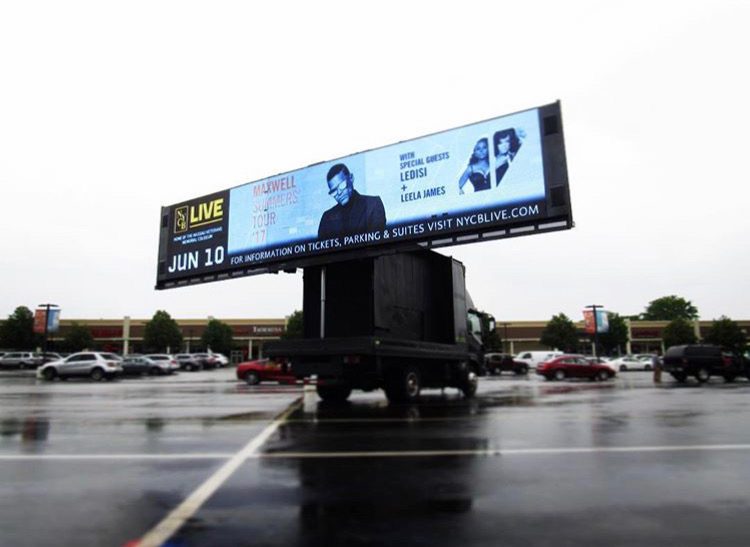
Every other format we run in Sacramento argues for the central grid. This one argues for everything outside it.
That is the whole planning insight for this city, and it is the opposite of what most briefs assume.
Sacramento's central city is a numbered and lettered grid with short blocks, and the corridors that matter sit on top of each other. The bar and restaurant blocks around 20th and K, the R Street Corridor and Lavender Heights at Midtown Central are close enough that a crew on foot covers all three in one route. If your audience is the people walking those blocks, a static campaign reaches them repeatedly, all night, every night, without a vehicle or a driver.
Put a truck on that same route and you are paying to drive past pedestrians who are already surrounded by surfaces.
At the metro scale, though, Sacramento is car-dependent, and the grid is the walkable exception rather than the rule. Cal Expo, the outer neighbourhoods and the routes between them are driving territory. The audiences out there are in vehicles, moving on known roads at known times, and no amount of wall surface in Midtown touches them.
That is the truck's job here. It is the format that goes where the foot route cannot, and it is strongest when there is a specific destination drawing a specific crowd along a predictable path.
The second thing that shapes a Sacramento plan is weather, and it acts on a vehicle differently than on anything else. A box truck with a large flat side is a sail, and this city has an evening wind that arrives exactly when the truck is working.
This page covers where the format earns its place in this market, how routing works in a grid with light rail in the street, what the valley climate does to a vehicle-based display, and what we push back on.
The truck is for everything the grid is not
Cal Expo on Exposition Boulevard is the clearest example. The California State Fair is a large regional draw, and it is sited well away from the central grid. It pulls audience outward rather than inward, which means a Midtown campaign runs quieter during exactly the weeks the city is busiest. The people at Cal Expo arrived by car and they will leave by car.
That is a vehicle audience on defined approach roads, and it is the kind of pattern this format exists for.
Golden 1 Center is the second. It anchors downtown arena programming at the K Street end of the grid, including Kings games and touring artists, and it generates an arrival and departure pattern that is sharp, concentrated and scheduled. That end of the city fills on event nights and empties otherwise. The hour before doors and the half hour after the final whistle are the two densest vehicle-and-pedestrian moments the downtown core produces, and they happen on a published calendar.
A truck can be in the right place for both. A fixed surface can only be in the right place for one of them and has to sit through all the quiet nights in between.
The festival calendar is the third. Aftershock is one of the largest annual draws into Sacramento and lands in October, which is also one of the two best weather months of the year. GoldenSky and Holo Holo are the other named festival draws. Events of that size move large numbers of people into and out of the city along a limited set of routes, within a known window. That is a routing problem a truck solves well.
And then there is reach across a dispersed metro. If a campaign needs presence beyond the central grid, the honest alternative to a truck is a scattered static buy across neighbourhoods with far weaker pedestrian density than Midtown, which usually is not worth doing. The truck is the practical answer for that brief.
Routing a vehicle through this grid
The same grid that makes foot work easy makes vehicle work interesting.
Short blocks mean frequent intersections and frequent signals. For a normal delivery that is a nuisance. For a mobile display it is genuinely useful, because the vehicle spends a high proportion of its time stationary or moving slowly, which is when the display is actually being read. Dwell on a Sacramento grid route comes free with the street pattern.
The numbered and lettered layout also makes route planning precise in a way most cities do not allow. You can specify a loop in plain terms and the crew executes exactly that loop, with no ambiguity about which road someone meant.
The R Street Corridor needs its own note. Light rail runs down the street itself on R Street, which puts transit vehicles and transit infrastructure directly into the roadway of the busiest weekend pedestrian corridor in Midtown. For a high-sided vehicle that is a constrained environment. Lane availability, clearance and the movement of transit in the running way all matter, and a truck route through that corridor needs planning rather than improvisation. It is excellent audience and awkward driving, and anyone who tells you otherwise has not driven it.
The 20th and K blocks run hot on weekends. Slow crawling traffic beside crowds on the pavement is ideal display conditions and difficult driving conditions at the same time. Congestion that would frustrate any other vehicle is, for this format, the product working.
Capitol Mall is the ceremonial civic street and it closes to traffic for major events, including the principal Farm-to-Fork festival. Sacramento markets itself as America's Farm-to-Fork Capital, so this is a genuine civic fixture rather than a minor one. For a vehicle format, a street closure is not a detail. It removes a route from the map for the day, and any loop that depended on it has to be rebuilt. Closures get checked before the route is committed, not on the night.
Heat, glare, fog and a high-sided vehicle in the breeze
Four climate factors in this city act specifically on a vehicle-based display.
The Delta breeze is the one crews notice first. It is the onshore flow up the Delta that drives Sacramento's evening cooling, with gusts recorded in the high twenties of miles per hour, and it tends to arrive in the evening. That is precisely the working window for this format.
A box truck presents a large flat vertical surface to a crosswind. High-sided vehicles handle differently in gusts, particularly on open approach roads outside the sheltered grid, and particularly for a driver who is concentrating on a route rather than on the wind. The practical response is route selection that favours sheltered streets when the breeze is up, lower speeds on exposed stretches, and a driver briefed on the condition rather than surprised by it.
Summer glare is the second. Sacramento summers are hot, sunny and dry for a long stretch, and direct valley sun washes out an LED display badly. Daytime running in July delivers a fraction of the readability that the same route delivers at dusk. The format is at its strongest from late afternoon into the night, and in high summer that means a genuinely late start, because darkness arrives late here.
Summer heat is the third, and it is a load problem. High ambient temperature makes a display and its power source work harder, and a long hot Sacramento afternoon is a sustained thermal load rather than a brief peak. Operating into the cooler end of the day-to-night swing is better for the equipment as well as for the image.
Tule fog is the fourth, and it is the hard stop. It settles into the valley typically between October and February, usually after rainfall, most characteristically in December and January, and it can cut visibility to under one hundred feet and persist for days or weeks at a time.
For this format fog fails twice over. A display that can only be seen from under a hundred feet away has lost most of its value, since the whole point is being visible down a road. And visibility that low makes driving genuinely hazardous. We do not run routes in it. A Sacramento winter campaign should be planned with lost nights assumed, and the client should know that before committing rather than after.
Winters here are mild and rainy rather than hard-freezing, so ice is not the issue it would be in a northern market. The relevant winter effect is simpler. Wet weather thins the pedestrian audience on the grid, which shifts the value of a run toward the vehicle audience on arterials and away from the bar blocks.
April and October are the two reliably warm, dry and clear months and the best working windows in this city. October is the strongest overall, because it combines that weather with Aftershock, Día de los Muertos and the heaviest visitor traffic of the year, and because darkness arrives earlier than it does in spring.
Where a truck can stand, and the grey area around it
Vehicle-based advertising raises a different set of questions from posting, and they are worth separating.
A moving display on a public road is a vehicle doing what vehicles do. A stationary display parked for a sustained period in a particular spot is a different proposition, and that distinction is where most of the practical complication lives in any city.
Sacramento, like most American municipalities, is a grey area on this. It varies with where the vehicle is, how long it stays, what it is doing while it is there, and local interpretation. Enforcement here runs through a Code Compliance function within Community Development, whose stated remit is maintaining safe businesses and neighbourhoods through the City Code. The City Code is published and publicly accessible. I have not verified a specific Sacramento provision governing mobile billboard operation, parking duration for advertising vehicles, or stationary display, so I am not going to describe one, and I would be cautious about an operator who quotes a section number without having read it.
What we do instead is straightforward.
For stationary dwell, private property with the owner's permission is the defensible ground. Private lots and forecourts near an event venue, with a documented arrangement, give a truck a position it can legitimately hold. That is a better plan than looking for an open kerb and hoping.
For moving routes, the vehicle behaves like a vehicle. It keeps moving, it obeys the road, and it does not obstruct. A crew that is driving a normal route in a normal way is in a very different position from one that has parked a display somewhere awkward and walked away.
Event venues and festival organisers control their own footprints and approaches, and where they do, that is a single conversation with a clear answer rather than a guess.
The Capitol and Capitol Mall are state government ground with their own security and their own expectations, and that is a distinct conversation from anything in Midtown.
Transit infrastructure along the R Street Corridor belongs to a separate agency with its own posture, and we treat it as its own category rather than part of the general streetscape.
The format's structural advantage in this conversation is that it leaves nothing behind. When the run ends, the vehicle drives away and there is no material to remove and no residue to argue about. For a cautious property owner offering a private lot, that is usually the point that settles it.
Crew, routes and realistic windows
A run is a driver and an operator, with route planning done in advance rather than improvised. In a grid this legible, a route can be specified precisely and executed exactly, which makes reporting straightforward and removes most of the argument about whether a campaign ran where it said it would.
Timing follows the audience rather than the clock. Event nights around Golden 1 Center have two peaks, the hour before doors and the window after the event ends, and a route built around those two moments does more than one built around an arbitrary evening block. Cal Expo during the State Fair has its own arrival and departure rhythm on Exposition Boulevard and its approaches.
Weekend evenings on the grid around 20th and K and the R Street Corridor are the high-dwell pedestrian moments, with the trade-off that moving through them is slow. For this format slow is acceptable.
Second Saturday activates the whole of Midtown once a month with art walk, markets, outdoor film, live painting and live music, concentrating at known anchors including the Midtown Farmers Market and Fremont Park. It is a strong night in the district, though it is also the night where a static presence on Midtown frontage does most of the work and the truck adds least.
Concerts in the Park runs Friday evenings through the summer in the central city, a dependable weekly gathering, though summer brings the late-darkness and glare problem with it.
The practical limit on a Sacramento route is distance between target zones. The grid is compact, but Cal Expo and the outer areas are a drive. A route that tries to serve both the grid and Cal Expo in one evening spends a lot of its time in transit rather than in front of anyone. Two focused shorter routes usually beat one sprawling loop.
Sacramento State and UC Davis both feed this market, but I have not verified their term dates and will not guess at them. Take the published academic calendars before building student-facing timing.
What we talk clients out of, and what goes wrong
We talk clients out of using a truck as their primary way of reaching Midtown pedestrians. The central grid is walkable and compact, which means static surfaces reach those people continuously for the whole campaign while a truck reaches them only when it drives past. If the audience is on foot at 20th and K, Wheatpasting & Poster Campaigns on private frontage in those blocks is the stronger instrument, and the truck is better spent on the routes and destinations that static work cannot touch.
We talk clients out of December and January runs unless the dates are immovable. Fog takes the nights and the format loses its distance visibility entirely when it rolls in.
We talk clients out of daytime summer running. Direct valley sun in July washes out the display, and a client paying for daylight hours in high summer is paying for the weakest version of the product.
We talk clients out of routes that try to cover the grid and Cal Expo in the same shift. That is a transit-heavy loop that spends its evening driving between audiences instead of sitting in front of them.
We talk clients out of planning a route over Capitol Mall without checking the closure calendar, because civic events take that street out entirely and a loop built on it will have to be rebuilt on the night.
And we talk clients out of long stationary dwell on open kerbside as a default tactic. Private ground with a documented arrangement is a better position and generally a better placement anyway.
What goes wrong is usually one of four things. A route planned on a map rather than driven, which discovers the R Street transit environment or a closure the hard way. A summer shift starting too early for darkness. A winter night lost to fog that nobody had allowed for in the schedule. And a campaign that bought a truck to do a job the walkable grid was already doing better with static surfaces.
All four are planning failures rather than execution failures, which is why the route conversation matters more in this market than the creative one.
Frequently asked questions
When does an LED truck make more sense than static work in Sacramento?
When the audience is outside the walkable central grid or arriving by vehicle. Cal Expo on Exposition Boulevard during the State Fair, arena nights at Golden 1 Center, and major festival traffic all produce vehicle audiences on predictable routes at known times. For pedestrians in the compact Midtown grid, static surfaces reach them continuously and usually perform better.
How does tule fog affect a mobile billboard campaign?
It stops it. Fog can cut visibility to under one hundred feet and persist for days or weeks between roughly October and February, most reliably in December and January. A display readable only from within a hundred feet has lost its purpose, and driving in that visibility is genuinely hazardous. We plan winter campaigns here with lost nights already assumed.
Is mobile billboard advertising permitted in Sacramento?
It sits in a grey area that depends on where the vehicle is, how long it stays and local interpretation. Enforcement runs through a Code Compliance function within Community Development. I cannot point to a verified Sacramento provision on mobile billboards, so I will not describe one. We use private property with documented permission for stationary dwell and keep moving routes behaving as ordinary traffic.
What is the best time of year for an LED truck run here?
October is strongest, combining reliably warm, dry, clear weather with Aftershock, Día de los Muertos and the heaviest visitor traffic of the Sacramento year, plus earlier darkness than spring. April is the other good month. High summer works but needs a late start because of long daylight and heavy glare on the display.
Why does the Delta breeze matter for a truck?
A box truck presents a large flat side to the wind, and the Delta breeze arrives in the evening with gusts recorded in the high twenties of miles per hour, which is exactly the working window. High-sided vehicles handle differently in gusts, particularly on exposed roads outside the sheltered grid. Routes favour sheltered streets when the breeze is up, and drivers are briefed on it.
Can a truck work the R Street Corridor?
It can, with planning. Light rail runs down R Street itself, which puts transit vehicles and infrastructure into the roadway of the busiest weekend pedestrian corridor in Midtown. That is excellent audience and constrained driving for a high-sided vehicle. The route needs to be driven and checked in advance rather than planned from a map.
Request a campaign quote
If you are planning mobile work in Sacramento, start with the destination and the audience rather than the hours. Tell us which crowd you want and when they move, and we will come back with routes, realistic timing against darkness and season, dwell positions and the permission approach for any stationary placement.
If the honest answer is that static work in the grid serves your audience better, we will tell you that too.
Request a campaign quote and we will scope the route against this city rather than a generic loop.

Ready to Run Your Campaign?
Call us or email us. We’ll tell you exactly what we can do in your market and what it costs.
Related Services
Explore similar advertising solutions offered by American Guerrilla Marketing.
American Guerrilla Marketing — Los Angeles
Street-level campaigns in Los Angeles and nationwide. Wheatpasting, LED trucks, street teams, and more.
(646) 776-2770
Related Articles
-
Mobile Billboard Advertising Rates: What Drives Scope
November 20, 2026
-
LED Trucks & Mobile Billboards in Virginia Beach
November 20, 2026
-
LED Truck Billboard: How It Actually Works
November 20, 2026
-
Electronic billboard companies: How It Actually Works
November 20, 2026
-
LED Trucks & Mobile Billboards in Milwaukee, Wisconsin
November 20, 2026