
November 23, 2026
What to Expect From an Advertising Campaign Poster
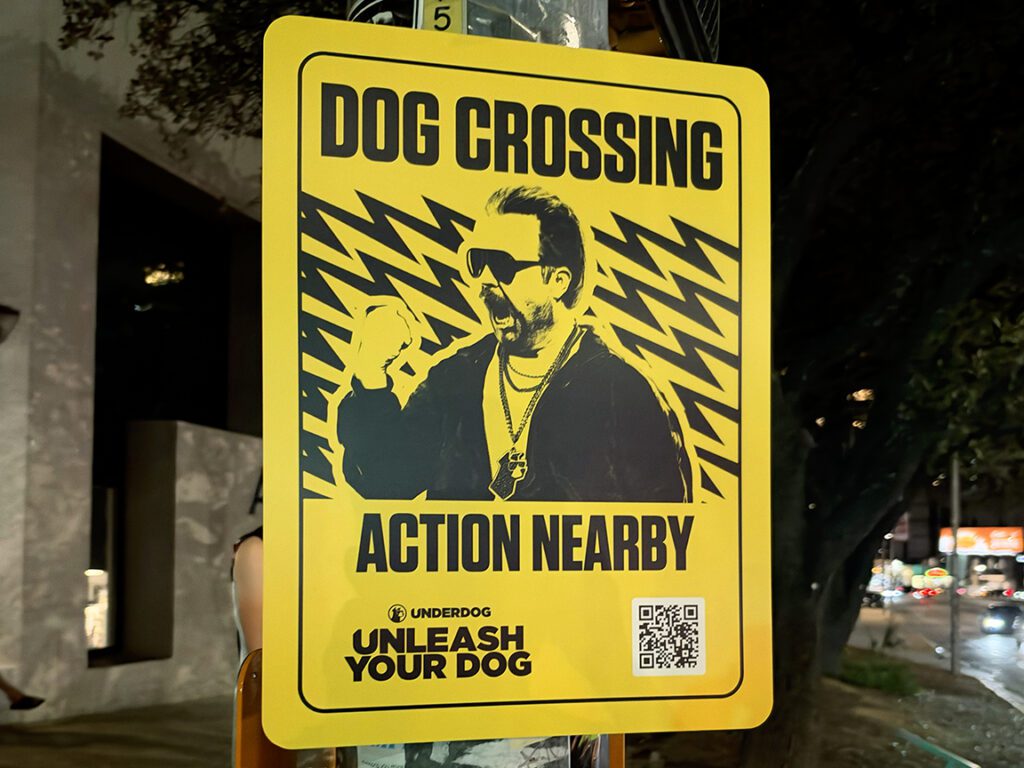
An advertising campaign poster is the oldest street format there is and the one buyers understand the least, because almost everything about it happens while they are asleep.
Clients approve artwork at 3pm on a Tuesday. The posters go up between 1am and 5am on a Thursday. By the time anyone from the brand side walks past, the paste has dried, the crew has gone home, and the only evidence is a wall of paper and a photo set in an inbox.
So the expectations gap is wide. I get asked whether posters are glued or stapled, whether they survive rain, how long they stay up, who owns the wall, and whether any of it is allowed. All fair questions. Most proposals do not answer them.
This page is what I would tell a client on a first call. What the format is, what the crew actually does at 3am, what the paper does over the following weeks, what fails, and what I would talk you out of.
I write this as someone who has stood on a sidewalk in February with a bucket of paste going cold in my hand, so the detail is from the street, not from a deck.
What the format actually is
Our poster work runs under Wheatpasting & Poster Campaigns, and it comes in two broad builds.
Pasted paper. Uncoated poster stock applied with a water based paste, usually wheat or starch based. The paste soaks the paper, the paper keys into the texture of the wall, and the whole thing dries as one skin. It is not glued on top of the surface. It becomes part of the surface for as long as it lasts. Pasted paper is the format that gives you the stacked, repeated, tiled look people associate with street poster campaigns.
Snipe Advertising. Smaller format posters and panels mounted mechanically or adhesively to approved structures, hoardings, construction barricades and similar surfaces. Faster per unit, cleaner edges, more placement control, less of the mass effect.
Both are short lived by design. Neither is a permanent fixture. That impermanence is a feature. It is also the thing buyers have to accept before they commit, because a poster campaign is a flight, not an installation.
Sizes vary, but the working logic is the same everywhere. Single sheets read as noise. Tiled blocks of the same image read as a campaign. Six of the same poster side by side on a construction hoarding is one of the strongest things you can do in outdoor media and it costs nothing extra in design.
Why repetition is the whole strategy
The mistake I see most often is treating poster placements like billboard placements. One strong site, one big image, job done.
Posters do not work that way. A single poster on a long wall is a piece of litter. Twelve of the same poster across that wall is a statement, and a pedestrian walking the block registers it whether they want to or not.
Then the same logic applies at the corridor level. A person walking from a transit stop to a bar should pass your campaign four or five times in ten minutes. That is what makes posters stick in memory. Not reach. Frequency inside a known route.
So when a client gives me a list of thirty scattered locations across a city, my counter is nearly always the same. Give me six corridors and let me saturate them.
Named examples of what a corridor actually means, from markets we run in.
In Brooklyn, Bedford Avenue through Williamsburg and the streets feeding the bridge path. Construction hoardings there turn over constantly, which means surfaces appear and disappear month to month and a survey has a short shelf life.
In Chicago, Milwaukee Avenue through Wicker Park, and the Randolph and Fulton restaurant blocks in the West Loop. Winter is the constraint. Freezing walls do not take paste.
In Los Angeles, the Arts District, the blocks around Melrose, and Hollywood near the venues. Dry air and heat mean paste flashes off fast, which changes how a crew works.
In Austin, East Sixth, Red River and the campus edge near the Drag, with the festival calendar driving everything.
In Boston and Cambridge, the campus corridors and Allston, where the academic calendar matters more than the weather calendar.
In Nashville, the Gulch and the blocks off Broadway, where music venue turnover keeps the audience coming through nightly.
The reason to name streets rather than cities is that the survey happens at street level. Surfaces, not neighbourhoods, are what get bought.
The crew, the hours and what happens on the wall
A standard poster crew is two to four people. I prefer three.
One person pastes and hangs. One person carries, feeds posters and keeps the stack dry and flat. One person watches the street, handles the ladder if there is one, and talks to anyone who comes over. That third role sounds optional until the first time somebody comes out of a building to ask what you are doing, and the answer needs to be calm, immediate and accurate.
Hours run roughly 1am to 5am for street level work.
The reasons are practical. Sidewalks are empty, so nobody is walking into wet paste. Traffic is low, so a crew is not working beside moving vehicles. Temperatures are stable. And the work finishes before the business day, which matters to every property owner who has given permission.
The actual hang, per poster, is fast once the crew is in rhythm. Prepare the surface, lay paste onto the wall, place the sheet, paste over the top of the sheet, brush out from the centre, overlap the next sheet. Brushing out matters. Air pockets dry as blisters and blisters tear in wind.
A crew of three working a good hoarding can cover a lot of wall in an hour. A crew of three on a difficult block with scattered small surfaces, awkward access and obstructed sightlines covers a fraction of that. Surface quality drives productivity more than anything else.
What we do not do is work above safe reach from the ground. Height brings equipment, and equipment brings a different kind of job and a different permission conversation.
Surfaces, weather and how long paper lasts
This is the section clients should read twice, because it sets the expectation for everything else.
Good surfaces. Construction hoarding and plywood barricades. Smooth painted concrete and block. Masonry with a moderate texture. Roller doors and flat metal where permitted. Anything flat, dry, absorbent or paint sealed, and in a place where paper is already a normal part of the visual environment.
Bad surfaces. Anything dusty or chalking, because paste bonds to the dust and the dust lets go. Bare untreated wood that drinks the paste before the paper keys. Deeply textured brick, where only the high points make contact. Glass and polished metal, where paste has nothing to grip. Anything wet, frozen or freshly painted.
Weather. This format is a weather product.
Rain during application is a non starter. Paste needs a window to dry, roughly a few hours for a surface skin.
Rain after the paper has dried properly is mostly fine. A pasted poster that has cured is more water resistant than people assume, because the paste has carried into the paper and the wall together. It will weather. It will not usually sheet off.
Freezing weather is the hard limit. Water based paste on a sub freezing wall does not bond, it crystallises. A northern city in deep winter is a reduced season for this format, and I would rather say so than take the booking and blame the weather later.
Heat and dry air speed everything up. In Phoenix, Las Vegas and Los Angeles in summer, paste starts to go off on the wall faster than a crew expects, so crews work in smaller sections and the ratio of water to paste changes.
Wind is an application problem more than a durability problem. A large sheet in a gust is unmanageable and tears.
Life span. On a good surface in mild weather, a pasted poster commonly looks strong for two to four weeks and remains legible beyond that as it weathers. Construction hoardings are the best case, because they are flat and they tend to be left alone.
What shortens it: heavy rain before full cure, freeze thaw cycling, deliberate tearing, property cleaning crews, and other paper going up over yours. In high traffic poster corridors, being covered by someone else is the most common end of life, and it happens faster in the busiest blocks.
That cycle is why refresh matters. A serious poster flight usually includes at least one refresh pass mid flight, because a wall that was fully covered in week one is patchy in week three.
Permission, ordinance and removal, which is a grey area
I will not tell you this format is legal or illegal, and I would not trust anyone who gives you a flat answer.
The rules that reach poster application vary by municipality, and often by district within a municipality. Some cities have explicit sign code or posting provisions. Some have nothing aimed at it and fall back on general property, right of way or nuisance language. Enforcement is inconsistent between cities, between neighbourhoods and over time, and it depends heavily on who owns the surface. It is a grey area and the determining facts are surface ownership, local ordinance and whether permission exists.
We do not give legal advice. What we do is reduce risk in ways a brand can inspect.
We work surfaces where permission can be obtained from the party who controls them. Property owners, landlords, building managers, construction site contacts and hoarding owners, venue operators, campus facilities teams and event organisers.
We document. Time stamped photographs of surfaces before application and of the finished work, with enough context in frame to identify the location.
We commit to removal as part of the scope. At the end of a flight the crew goes back, wets the paper down, scrapes it off and clears the debris. Pasted paper comes off wet much more easily than dry. Trying to remove a dry pasted poster is slow, messy and leaves a worse surface than doing it properly with water.
We tell the surface owner the dates, including the removal date, before the first poster goes up.
For brands with real reputational exposure, that posture is usually the difference between a format legal will approve and one they will block. It also means some of the best looking walls in a city get cut from a plan because there is no clear permission path, and I think cutting them is the right call.
What we talk clients out of
Tiny type and long copy. A poster is read at walking pace from across a sidewalk. One idea, a few words, a strong mark. If the headline needs reading twice it will not be read once.
Fine detail and subtle gradients. Street paper weathers. Low contrast art turns into a grey rectangle inside a fortnight.
QR codes as the primary action. Scanning a poster on a wall from a moving sidewalk is a hopeful ask. Codes work better where people stand still. A memorable short word or handle outperforms them on a wall.
Single sheets spread thinly. The strategy is saturation on chosen corridors, not one poster everywhere. I will push every time for depth over spread.
Deep winter flights in northern cities. The physics are against it. We will shift the schedule or move that part of the plan to a format that does not depend on a wall accepting water based paste.
Launch day only. Posters work through repetition over weeks. A one night hang before a one day event is a stunt, and if that is the goal, fine, but it should be understood as a stunt.
Residential blocks. Pasting in a quiet residential street annoys the people who live there and creates exactly the attention a brand does not want. We route around them.
Promising a poster will be there on a specific later date. Nobody can promise that. Walls get cleaned, hoardings come down, other paper goes up. We can promise the hang, the documentation and the refresh schedule.
What you get as proof
Because everything happens overnight, documentation is the deliverable the client actually holds.
Our standard set is, per location, a wide shot that shows where it is, a straight on shot of the posters, and a shot of the surface before application. All time stamped. Plus a location list and a note of anything that changed on the night, because surfaces disappear between survey and hang more often than people believe. A hoarding comes down. A wall gets repainted. A site goes active.
A good crew adapts and logs the substitution. A bad one hangs it somewhere easy and says nothing.
Ask for the proof set. Ask whether refresh passes are included. Ask what the removal plan is. Those three questions tell you a lot about who you are dealing with.
Pairing posters with something louder
Posters are a persistence medium. They sit on a corridor day and night for weeks, building familiarity through sheer repetition. What they do not do is create a moment.
The pairing I recommend most is a poster flight running two or three weeks ahead of an activation, with Projection Advertising on a night when the audience is concentrated in that same corridor. Projection is loud, temporary and impossible to miss after dark, and it lands on an audience that has already been walking past the printed campaign for a fortnight. The paper does the memory work. The projection does the event.
For venue and nightlife briefs, LED Trucks & Mobile Billboards fill the same role, arriving in the hours when the audience is actually out.
The point is that the poster flight makes the loud format land better, because the audience already knows the brand by the time it shows up.
What drives the scope of a flight
Clients ask what makes one poster campaign bigger work than another. The levers are all physical.
Surface count and total wall area, obviously. Then surface quality, because a run of clean flat hoarding goes up several times faster than scattered small patches on textured masonry.
Number of markets matters, since each city needs its own survey, its own permission conversations and its own crew.
Corridor difficulty is real. Narrow sidewalks, restricted access, active construction and blocks with heavy overnight activity all slow a crew down.
Flight length and the number of refresh passes change the crew schedule directly.
Season sets the rest. A mild spring night and a marginal cold one are not the same job.
And removal, which is a return trip with water, scrapers and debris handling, not an afterthought.
Frequently asked questions
How long does a pasted poster stay up?
On a sound surface in mild weather, typically two to four weeks looking strong, and legible for a while after that as it weathers. Construction hoardings last best. Freezing conditions, heavy rain before full cure, property cleaning crews and other paper going up over yours all shorten it. Refresh passes keep a flight looking fresh.
Does rain destroy poster campaigns?
Not once the paste has cured. Paste carries into both the paper and the wall, so a dried poster is more water resistant than people expect. Rain during application is the real problem, because the paste needs a few hours of dry weather to skin over. We schedule around the forecast and will postpone a hang rather than waste a night.
What time of night does the crew work?
Street level hangs usually run between 1am and 5am. Sidewalks are empty, traffic is light, temperatures are stable, and the work is finished before the business day starts. That last point matters to every property owner who has given permission. Interior and venue work is scheduled around closing times instead.
Is poster advertising allowed?
It is a grey area. Rules vary by municipality and sometimes by district, enforcement is inconsistent, and the deciding factors are who controls the surface, the local ordinance and whether permission is in hand. We work on surfaces where permission can be secured, document before and after, and commit to removal. We do not offer legal advice.
How many posters do I need in one area?
More than most clients first propose. Single sheets read as litter, tiled blocks read as a campaign. Our guidance is to saturate a small number of named corridors rather than scatter across a whole city, so a pedestrian passes the campaign several times on one normal walk. Depth beats spread every time.
Who takes the posters down?
We do, as part of the scope. The crew returns at the end of the flight, wets the paper thoroughly, scrapes it off and clears the debris, then photographs the surface. Wet removal is far cleaner than dry scraping and it protects the relationship with the property owner, which is what makes the surface available next time.
Plan the corridors, then the artwork
The poster campaigns that work are the ones where somebody walked the streets first, counted the usable surfaces, checked who controls them, and built the artwork and the schedule around what was actually available.
Tell us the cities, the corridors, venues or campuses you care about, the flight dates, and what you want someone to remember. We will survey the surfaces, tell you which blocks are worth saturating and which to skip, build the hang and refresh schedule around the weather windows, and handle removal at the end.
Request a campaign quote.

Ready to Run Your Campaign?
Call us or email us. We’ll tell you exactly what we can do in your market and what it costs.
Related Service
Explore similar advertising solutions offered by American Guerrilla Marketing.
American Guerrilla Marketing — Los Angeles
Street-level campaigns in Los Angeles and nationwide. Wheatpasting, LED trucks, street teams, and more.
(646) 776-2770
Related Articles
-
Wheatpasting and Poster Campaigns in Miami, Florida
November 23, 2026
-
Choosing Poster Locations in a City: Full Planning
November 23, 2026
-
Wheatpasting & Poster Campaigns in Pittsburgh, PA
November 23, 2026
-
Wheatpasting & Poster Campaigns in Eugene, Oregon
November 20, 2026
-
Wheatpasting & Poster Campaigns in Spokane, WA
November 20, 2026