
November 19, 2026
How Many Posters for a City Campaign Actually Needs
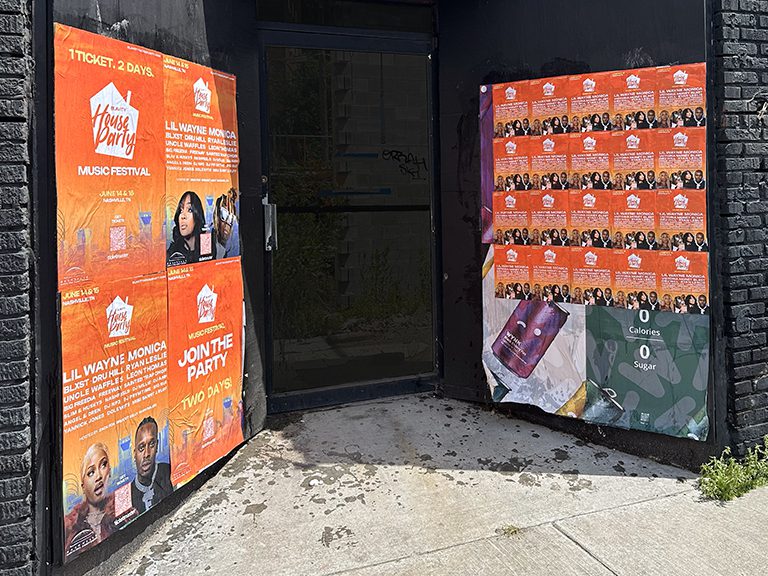
The question I get most often, usually in the first five minutes of a call, is some version of "how many posters do we need?"
The honest answer is that the number is an output, not an input. It falls out of how many corridors you are trying to own, how long you want to stay visible, and what surfaces actually exist in those corridors. Pick a number first and you will almost always buy the wrong campaign.
I have watched brands order a big round quantity, print it, and then discover that the neighbourhood they care about has maybe a few dozen workable surfaces. The rest of the print sits in a box. I have also watched a brand order a conservative quantity, spread it across four cities to be fair to every market, and achieve nothing anywhere because no single corridor ever felt covered.
This page is how we actually arrive at a count, what makes it go up and down, and the specific mistakes that produce the wrong number.
Density beats spread, every time
If you take one thing from this page, take this: a poster campaign works on repetition within a walking radius, not on coverage across a map.
The effect you are buying is a person seeing your sheet, then seeing it again two blocks later, then again on the way back. Three impressions on one walk is what makes a campaign feel like a wave. One poster every half mile across an entire city reads as litter.
So the first question is not how many posters. It is how many corridors, and which ones.
A corridor is a continuous stretch where the same pedestrians move repeatedly. Bedford Avenue through Williamsburg. Milwaukee Avenue through Wicker Park in Chicago. Melrose in Los Angeles. South Congress in Austin. Mission Street in San Francisco. Those are real walking routes with real repeat traffic, and they are where posters do what posters do.
Once you have named the corridors, the count becomes a surface question.
Surfaces set the ceiling, not your budget
There is a finite number of legitimate poster surfaces on any given stretch. We find them by walking it, not from a desk.
The surfaces that work:
The surfaces we do not use: residential property, anything historic or restored, freshly painted facades, surfaces where we cannot identify who controls them, and anything that would obstruct signage, sightlines or a doorway.
Here is the part buyers do not expect. On a dense, active corridor you might find a healthy run of workable surfaces in a few blocks. On a corridor with no construction activity and fully occupied retail, you might walk a mile and find almost nothing. Construction cycles drive supply. A neighbourhood mid build is poster rich. The same neighbourhood two years later, finished and leased, is poster poor.
This is why we survey before we quote a count. The survey is a crew member walking the route, photographing and logging every candidate surface with a location and a note on who controls it. That list, not a guess, is the campaign.
Run length multiplies the number
A poster does not stay up for the length of your campaign. It stays up until weather, a cleaning crew, another operator's paper, or the property owner takes it off.
Realistically, on exterior surfaces, you plan in waves rather than a single install. A four week presence in a corridor usually means refreshing placements during the run, because attrition is constant and uneven. Some sheets will be perfect at week four. Others will be gone in five days because a hoarding panel got replaced or a shop reopened.
So the arithmetic is roughly: surfaces per corridor, times corridors, times the number of refresh waves across the run. That is your print quantity, plus overage for damage, waste and the sheets that get ruined in handling.
Always print overage. Paper gets torn, soaked, mis cut, and occasionally a whole bundle gets wet in a van. Running out mid wave is worse than having a few spare.
Weather and season change the count
Attrition rate is a weather function, and it is different everywhere.
In **Chicago**, winter wind along Milwaukee Avenue and through Logan Square lifts edges fast. Freeze thaw cycling gets behind the paper and pops it off in sheets. Winter runs need more refresh waves than summer ones.
In **Seattle** and **Portland**, sustained damp keeps paste soft and never lets the paper fully set. Posters hold in appearance but go translucent and start sagging. You are refreshing for legibility rather than for loss.
In **Los Angeles**, sun is the enemy of the image, not the bond. South and west facing exposures fade visibly. We will put a poster on a north facing hoarding panel over a south facing one on the same block for exactly that reason, and if the whole corridor faces the sun, you plan on refreshing sooner.
In **Austin** and through the Southeast, summer humidity plus afternoon storms means paper stays workable but takes a beating. Expect more replacements.
In **New York**, the main attrition driver is not weather at all. It is competition for surface. On the busiest corridors in Brooklyn and the Lower East Side, your sheet may be covered by somebody else's within days. Density of other paper is a planning input there in a way it is not in most cities.
This is the part that gets under quoted by people who have not worked the format. The install number and the campaign number are not the same number.
Crew reality and what a night actually produces
A standard install crew is two people. One pastes the surface, one places and smooths the sheet. Two people is faster than four working separately, because paste timing matters and a rhythm develops.
We work overnight, typically starting after midnight and finishing before the morning commute begins. That window exists for practical reasons: sidewalks are clear, parking near the surface is possible, and you are not obstructing pedestrians. It is also simply easier to work carefully when nobody is walking through your ladder.
A two person crew moving along a dense corridor where surfaces are close together covers ground steadily. The same crew in a spread out corridor where the surfaces are a quarter mile apart produces far fewer placements in the same hours, because the night is spent in the van. Surface spacing affects your count as much as surface availability does, because it determines how many nights the run takes.
Weather stops work. Paste does not bond in rain and it does not bond well below freezing. In northern cities in winter we build contingency nights into the schedule. A client who books a one night install in Chicago in February with no backup night is going to be disappointed about a third of the time.
The numbers mistake almost everyone makes
**Spreading across too many cities.** A brand with four priority markets wants all four covered. If the quantity only supports thin coverage in each, the right answer is two cities properly. I say this on nearly every multi market call and I say it knowing the client does not want to hear it.
**Treating one poster per block as coverage.** It is not. It is a sighting, not a campaign.
**Ignoring the refresh.** Budgeting a single install for a six week campaign and expecting week six to look like night one. It will not.
**Buying by map radius.** Drawing a circle around a venue and assuming posters inside it will perform. What matters is whether pedestrians actually walk that line. Half a radius is usually parking structures, a highway edge and residential blocks where we would not post anyway.
**Choosing quantity before surface survey.** The most common and the most expensive. Print first, discover the surfaces later, end up with boxes of unused paper.
**Over indexing on one hero wall.** Clients fall in love with a single big visible surface. One big wall is a photograph, not a campaign. The repetition is what works.
Permission and ordinance: a grey area
Rules around posting on outdoor surfaces are a genuine grey area and they vary by municipality. Some cities address it through specific posting ordinances, others through general property or nuisance provisions, and enforcement is inconsistent between cities, between neighbourhoods, and across time. A corridor that is quietly tolerated one season can get attention the next. None of what I write here is legal advice, and I would be suspicious of any operator who tells you the position is simple.
What we do is work the permission layer and let that define the plan.
We seek permission from whoever controls the surface. For construction hoarding that is usually the general contractor or the site owner. For a vacant storefront it is the landlord or the managing agent. For an operating business it is the operator. We log who gave permission and when, and that log is part of the campaign record.
Surfaces where we cannot identify a controlling party do not go on the plan. That rule removes locations clients want, and it is still the right rule, because an unpermissioned placement that draws a complaint costs the brand far more than the impression was worth.
We also commit to removal. Taking paper down on schedule is what keeps surfaces available to us in the same corridors next year. Removal scope is part of the count conversation too, because every sheet installed is a sheet somebody has to take off.
So what is the actual process
This is how we get to a number with a client.
**Step one: define the audience geography.** Not a city. A set of walking corridors where the target audience actually moves. If a client cannot name those, that is the first piece of work and we do it together.
**Step two: survey.** Crew walks each corridor and logs candidate surfaces with photos, locations and a control note. This produces a hard ceiling on what the corridor can take.
**Step three: set the run length and wave count.** How long does the campaign need to be visible, and therefore how many refresh passes does that require given the city, the season and the exposure.
**Step four: multiply and add overage.** Surfaces times waves, plus spare stock.
**Step five: sanity check against density.** Look at the plan on a map. If a corridor is getting thin coverage, cut a corridor rather than thinning further. Concentration wins.
**Step six: build the removal plan.** Who takes it down, when, and how surfaces are documented on return.
That sequence produces a number that is defensible. A number picked before step two is a guess with a receipt attached.
What drives the scope up or down
Without touching figures, these are the real levers.
**Surface count.** The core driver. More surfaces, more work, more print.
**Surface spacing.** Tight corridors are efficient. Scattered placements eat nights.
**Run length and wave count.** A long campaign is multiple installs, not one.
**Season and city.** Winter in the upper Midwest and sustained rain in the Northwest mean more refresh. High sun exposure means more refresh.
**Surface difficulty.** Height, access, texture, and whether a surface needs prep.
**Permission complexity.** Corridors where surfaces are controlled by many small parties take more lead time than a corridor dominated by a couple of active construction sites.
**Removal obligations.** Sensitive surfaces take longer to clear and that is real crew time.
**Print specification.** Stock choice affects handling, install speed and takedown effort.
How we measure whether the number was right
Poster Campaigns do not come with a dashboard, and anyone who hands you a precise impression figure for paper on a hoarding panel is making it up. I will not do that.
What we can document is the campaign itself, and that documentation is what tells you whether the count worked.
Every placement gets photographed at install with its location. That gives the client a map of where the campaign actually exists, not where it was supposed to exist. Clients are frequently surprised by this map, because it shows the real shape of a corridor rather than the shape they imagined.
We photograph again during the run. The mid campaign walk is the most useful document in the whole project. It shows attrition rates by block, which surfaces held, which were covered over, which hoarding got replaced. After one campaign in a corridor we know that corridor's attrition behaviour, and the second campaign there is planned far more accurately than the first.
Then a density read. Walk the corridor as a pedestrian would and count how many times you encounter the campaign on one pass. If the answer is once, the count was too low or spread too wide. If it is three or four times across a reasonable walk, the corridor is working. That walk is a more honest test than any projected number, and it is the one I use.
The thing to resist is judging a campaign on whether every single sheet survived. Attrition is normal and expected. The question is whether the corridor stayed covered, which is a function of wave planning, not of individual placement luck.
First campaigns in a new city should be treated as the survey that informs the second one. Brands that run the same corridors repeatedly get better numbers every cycle, because the surface log and the attrition data carry over.
When posters are the wrong answer
Sometimes the honest recommendation is a smaller poster count and a different format alongside it.
If the brief is a single date driven moment, a launch night, a show, a opening, posters alone are a slow build. Paper works by accumulation over days. For a hard date, pairing a reduced poster footprint with LED Trucks & Mobile Billboards gives you the accumulation in the corridor plus a high visibility presence on the day itself, moving along the same streets where the posters already are.
That combination also solves the corridor problem for clients who genuinely need multi neighbourhood reach. Posters hold the one or two corridors you can properly saturate. The truck covers the routes between them. I would rather sell that than sell a thin poster run across six neighbourhoods that satisfies nobody.
Frequently asked questions
How many posters do you need for a city campaign?
There is no universal number, because it is driven by how many workable surfaces exist in the corridors you are targeting, how long the campaign runs, and how many refresh waves that requires. We survey the corridors first, log every usable surface, then multiply by wave count and add overage. A number chosen before that survey is almost always wrong.
Is it better to cover more neighbourhoods or saturate one?
Saturate one. Posters work through repetition inside a walking radius, where the same pedestrian sees your sheet several times on one trip. Spreading the same quantity across many neighbourhoods produces isolated sightings rather than presence. If a client has multiple priority markets and limited quantity, I recommend doing fewer markets properly rather than all of them thinly.
How long does a wheatpaste poster stay up?
It varies by city, season and exposure more than by anything else. Freeze thaw cycling in northern winters lifts edges quickly, sustained damp in the Pacific Northwest keeps paper soft and sagging, and strong sun fades the image well before the bond fails. On busy corridors the most common cause of loss is another operator covering your sheet, not weather.
Do you need to reinstall posters during a campaign?
Usually, yes. Attrition is constant and uneven across a corridor, so a multi week campaign is planned as several waves rather than one install. Some placements survive the full run and others are gone within days because a hoarding panel was replaced or a vacant unit reopened. Refresh passes are what keep a corridor looking covered.
What surfaces can posters actually go on?
Construction hoarding, boarded or papered vacant storefronts, scaffold fascia, rolling security gates, some utility boxes, and private surfaces where the operator has agreed. We avoid residential property, historic or restored masonry, freshly painted facades, anything obstructing signage or doorways, and any surface where we cannot identify who controls it.
How far in advance should a poster campaign be planned?
Early enough to survey the corridors, establish permission with the parties controlling the surfaces, print with overage, and schedule install nights with weather contingency. Permission lead time is the usual constraint, especially in corridors where surfaces are held by many small parties rather than a couple of active construction sites.
Request a campaign quote
If you are starting with a quantity in mind, bring it, but be willing to let it change. The useful conversation is which corridors you need to own, how long you need to own them, and what surfaces are actually there.
We run Wheatpasting & Poster Campaigns nationwide, with corridor surveys before we commit to a plan, permission established with whoever controls each surface, refresh waves built into the run, and removal scoped from the start.
Tell us the cities, the audience and the dates, and we will come back with a surface plan and a count you can defend.
Request a campaign quote.

Ready to Run Your Campaign?
Call us or email us. We’ll tell you exactly what we can do in your market and what it costs.
Related Service
Explore similar advertising solutions offered by American Guerrilla Marketing.
American Guerrilla Marketing — Los Angeles
Street-level campaigns in Los Angeles and nationwide. Wheatpasting, LED trucks, street teams, and more.
(646) 776-2770
Related Articles
-
Wheatpasting & Poster Campaigns in Oklahoma City
November 19, 2026
-
Wheatpasting & Poster Campaigns in Milwaukee, Wisconsin
November 19, 2026
-
The Operator’s View of the Digital Marketing Agency Poster
November 19, 2026
-
Wheatpasting & Poster Campaigns in Portland, Oregon
November 19, 2026
-
How Wide Poster Sizes Actually Get Installed
November 18, 2026