American Guerrilla Marketing
Nationwide Service
Media planning, media buying, billboard advertising, & guerrilla marketing
Case Study:
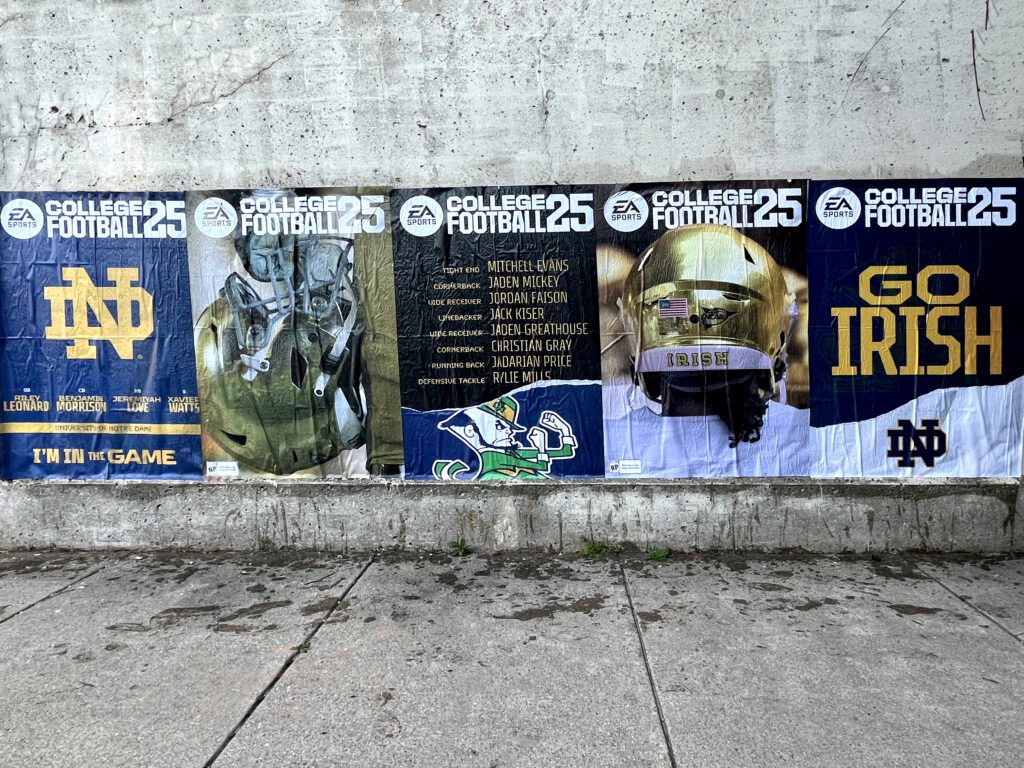
Downtown Cincinnati has a busy mix of offices, restaurants, entertainment venues, and residential neighborhoods, with people moving through the same streets throughout the day and evening. For Gold Star, this made the downtown area a good location for a wheatpaste advertising campaign. The goal was to get the brand in front of pedestrians in high-traffic areas and keep the posters visible for several weeks rather than relying on a single round of installations.
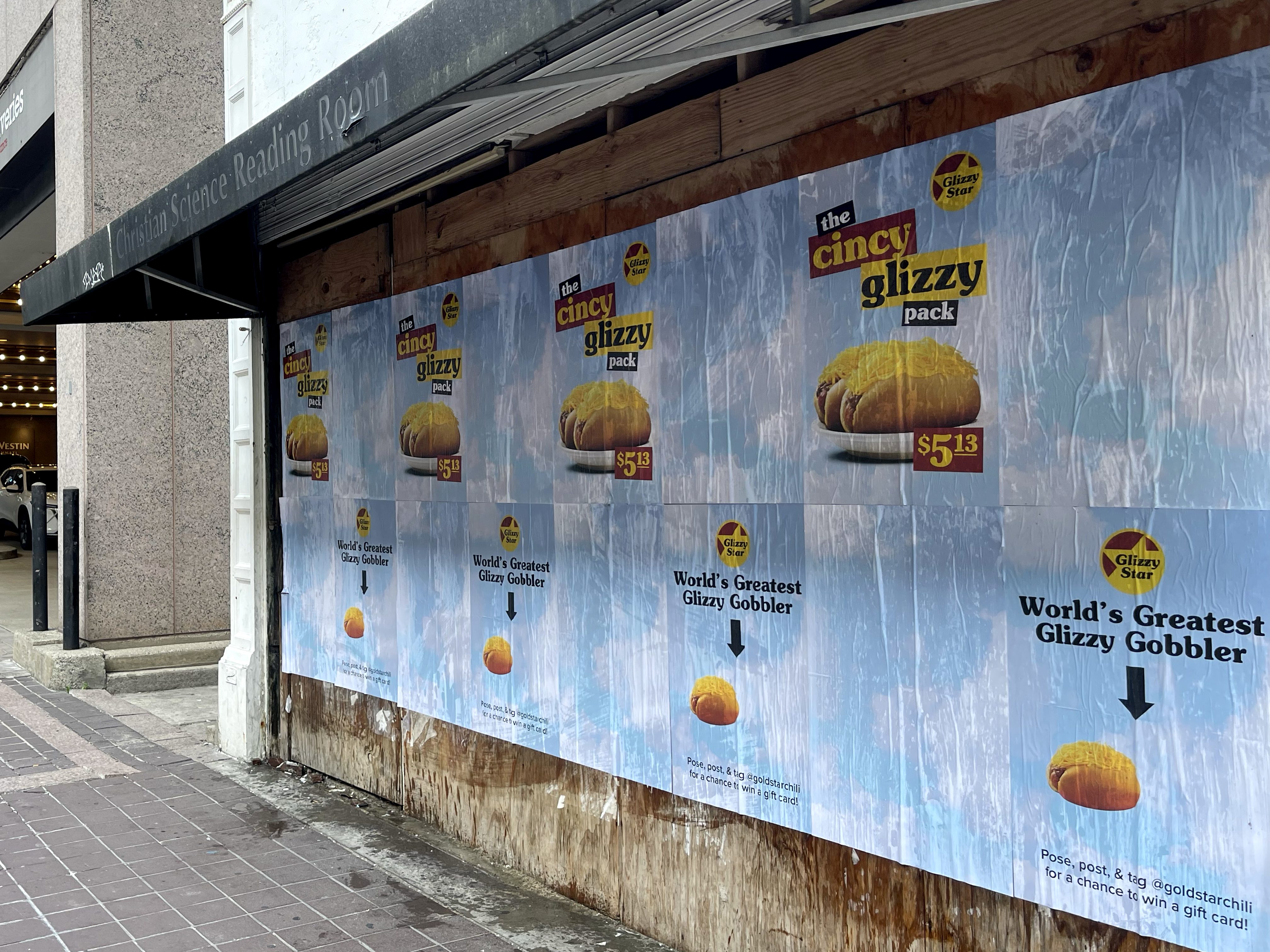
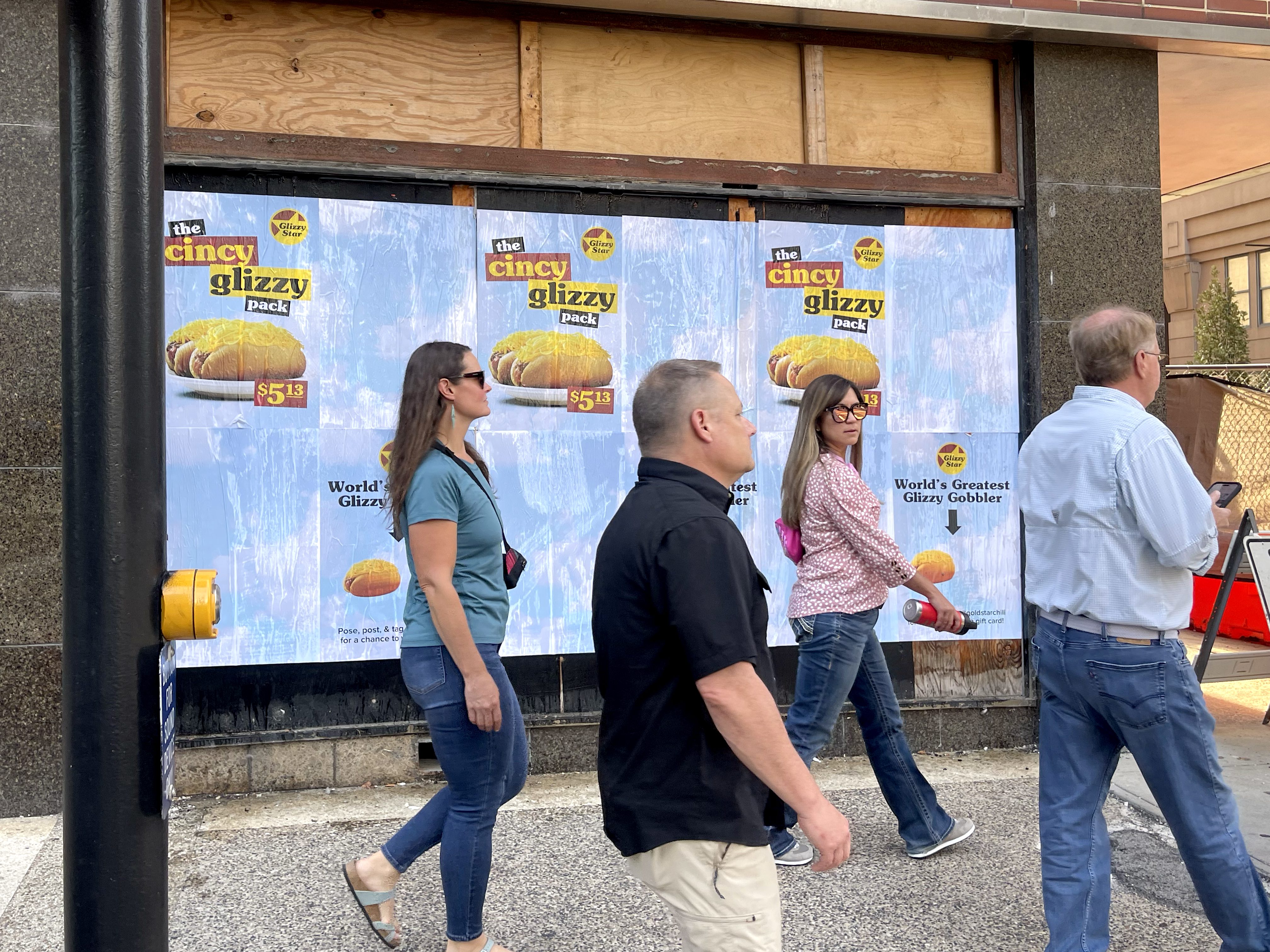
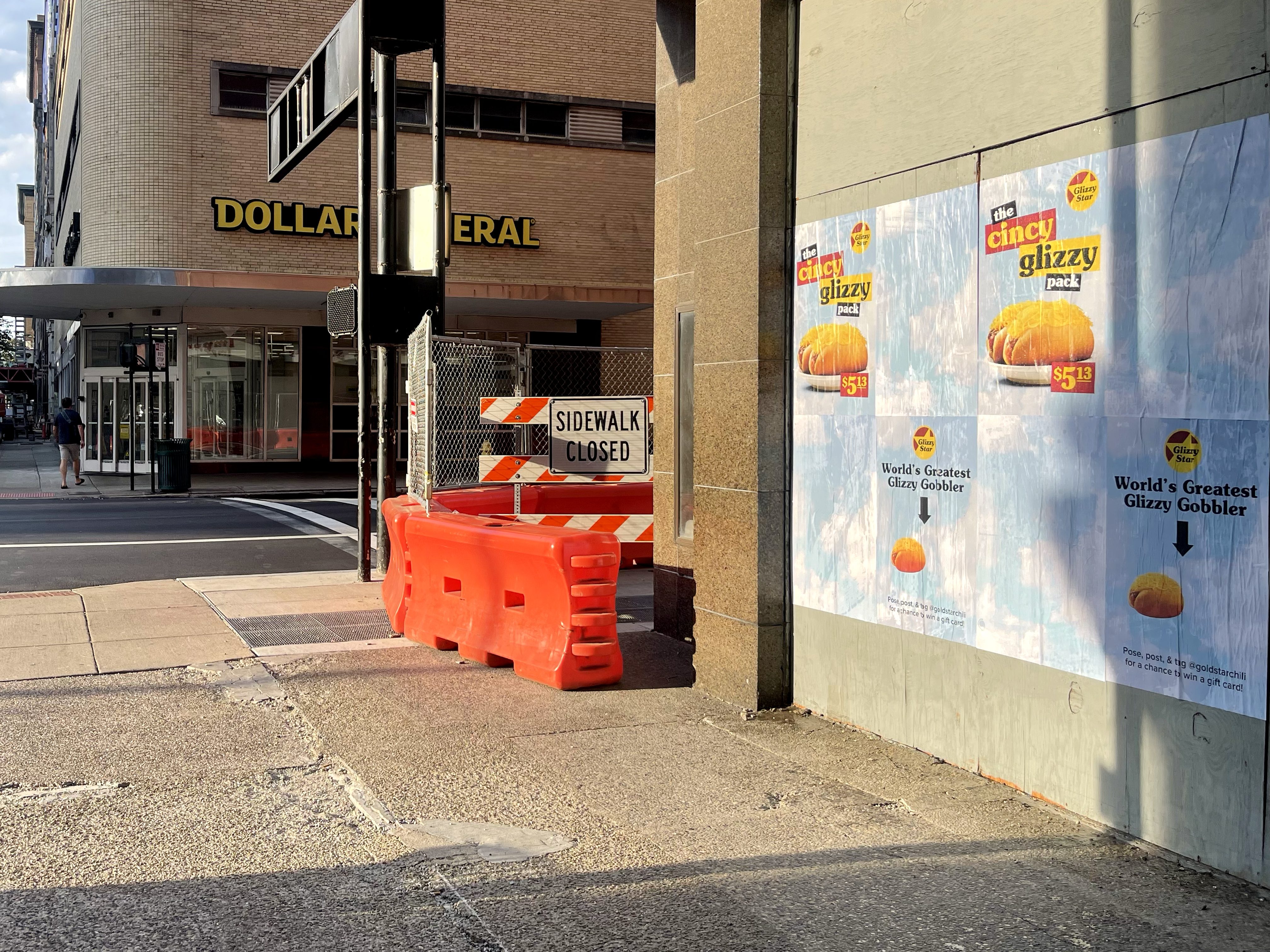
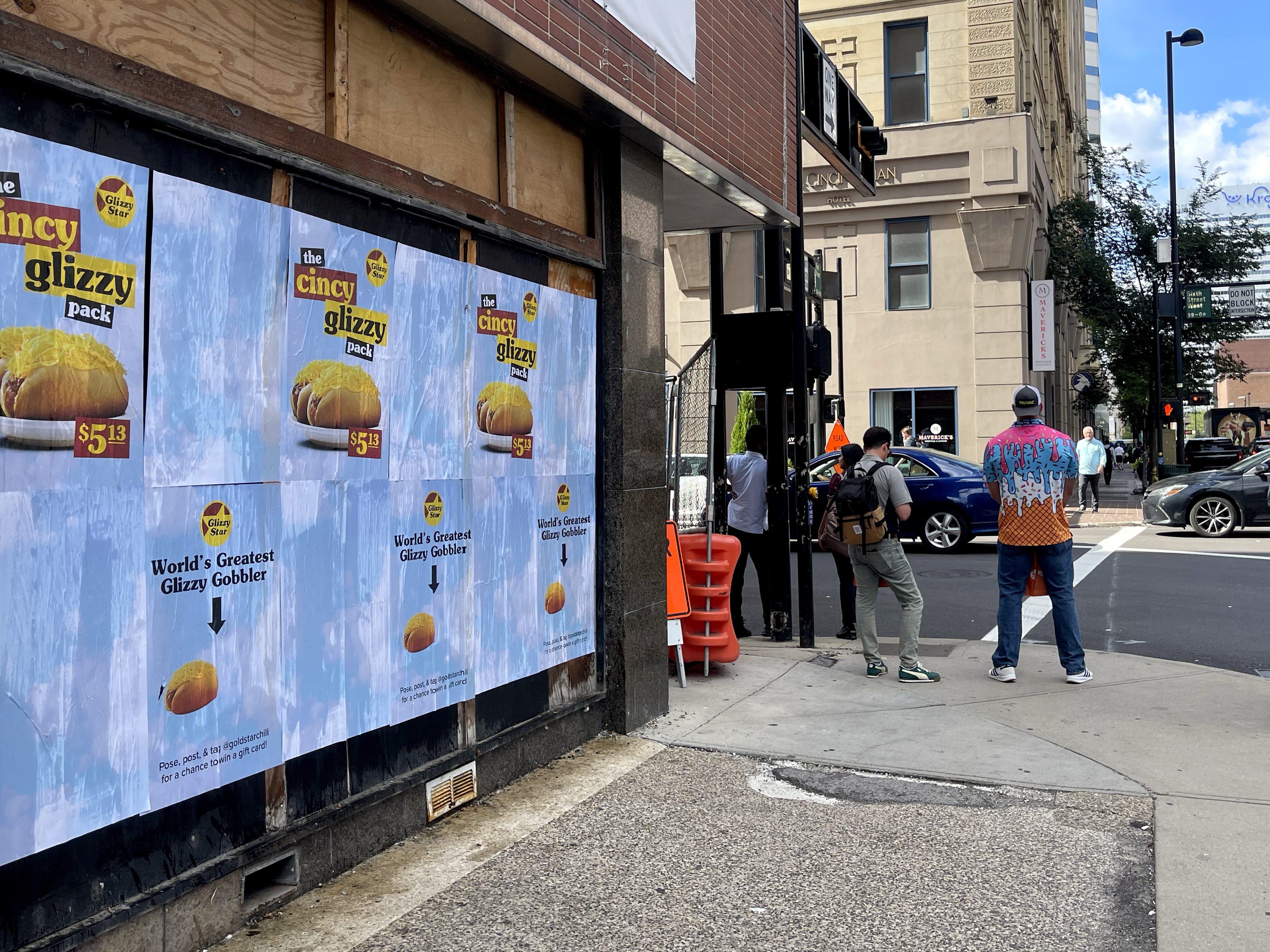
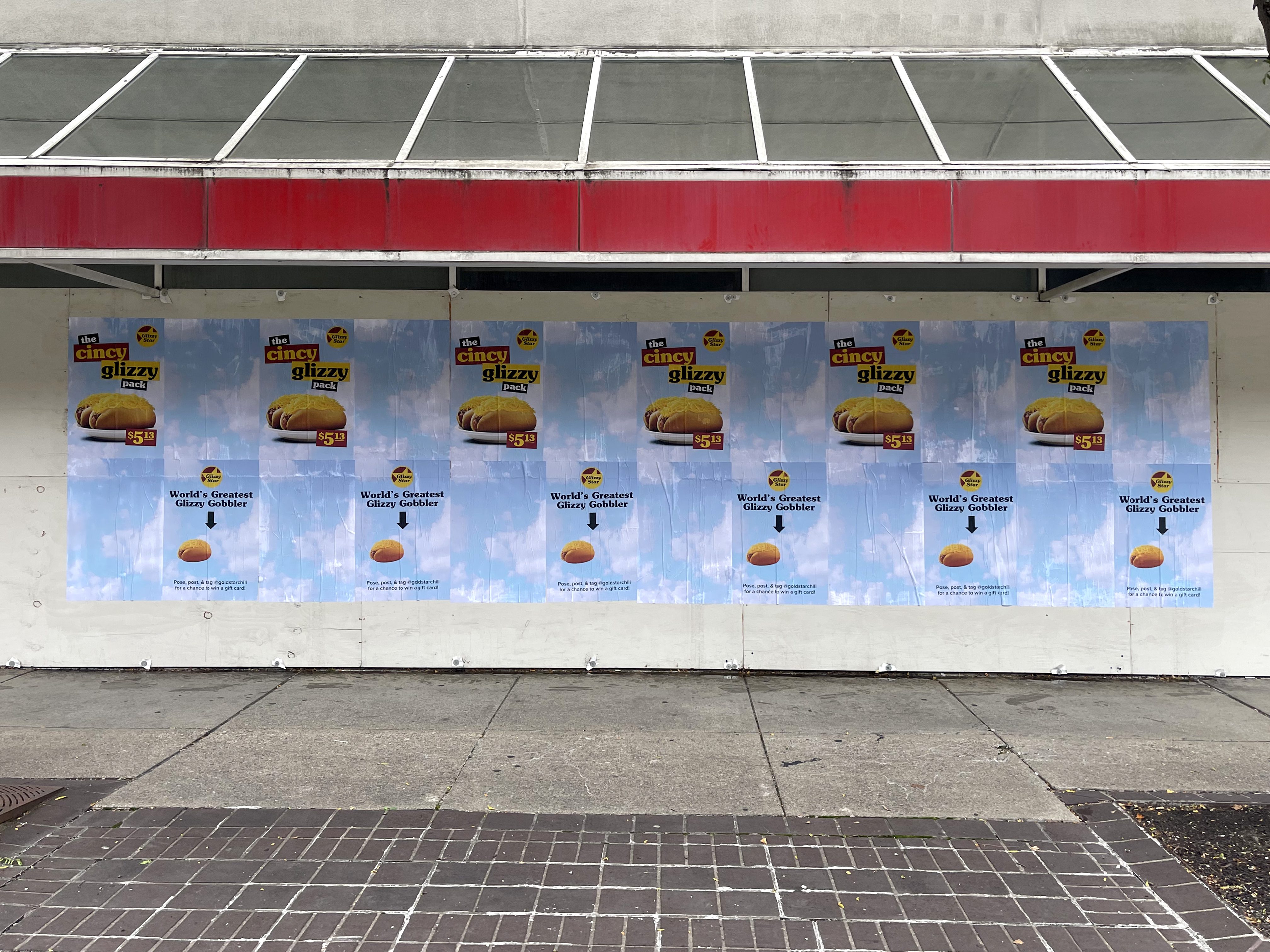
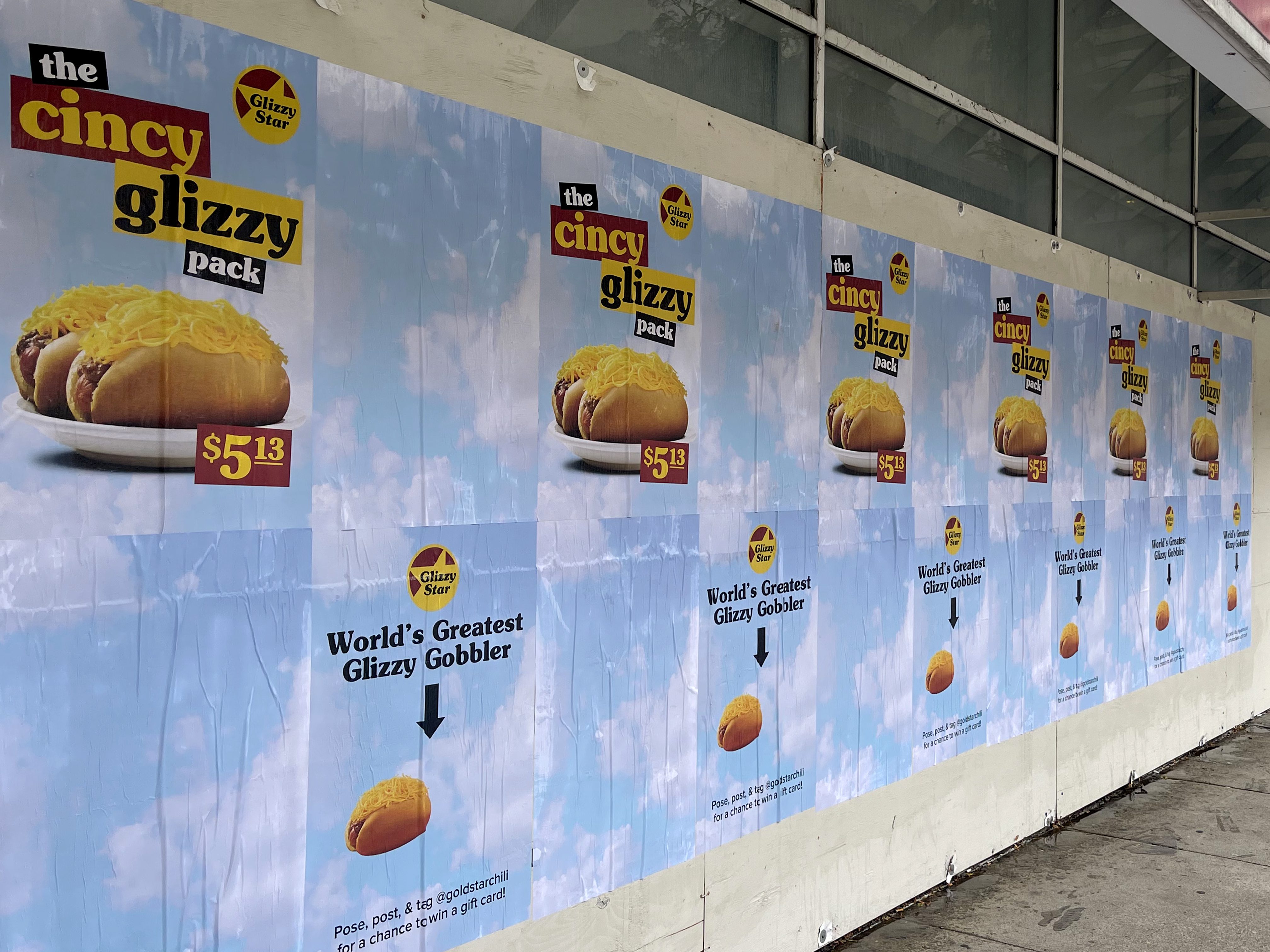
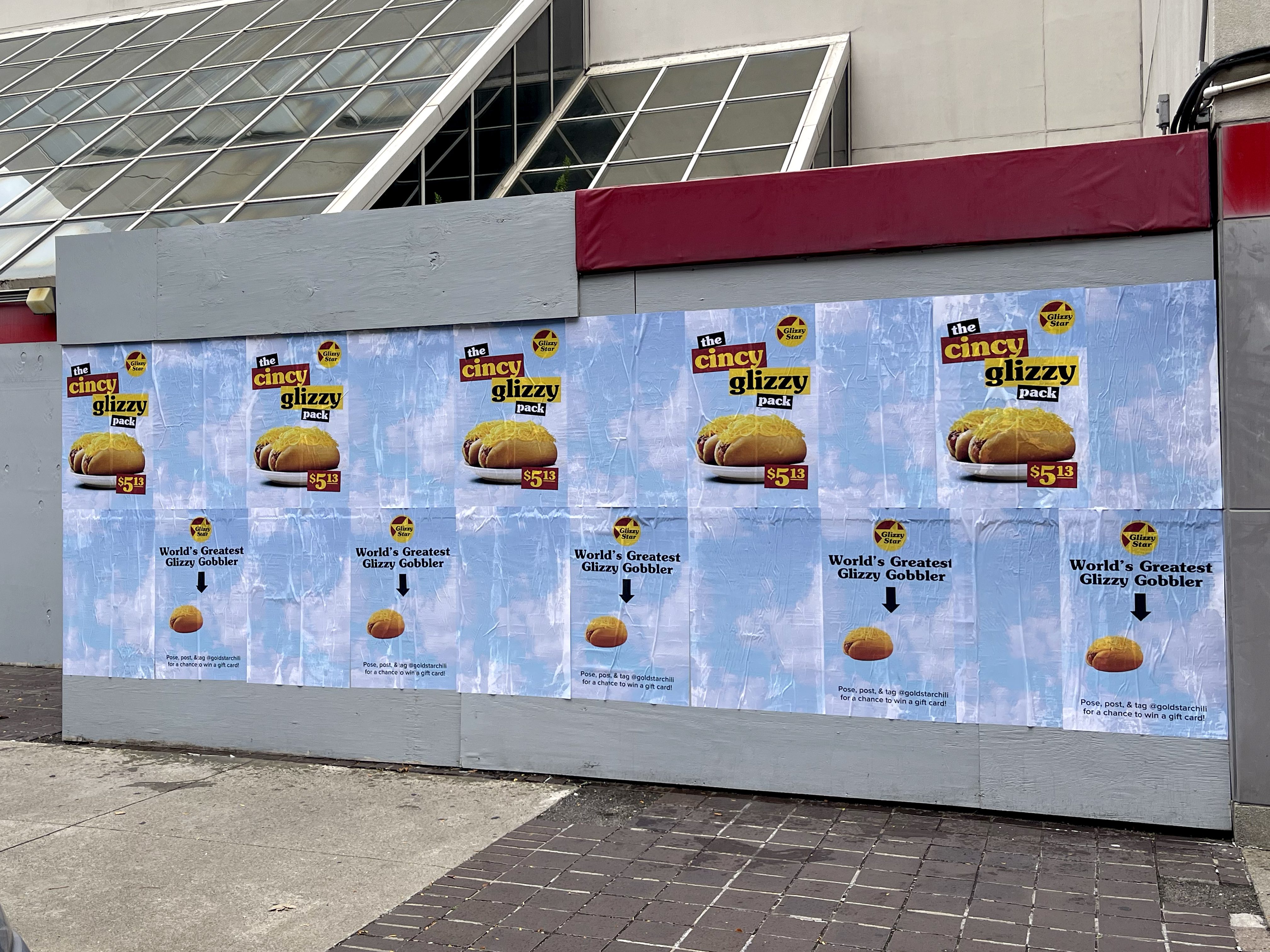
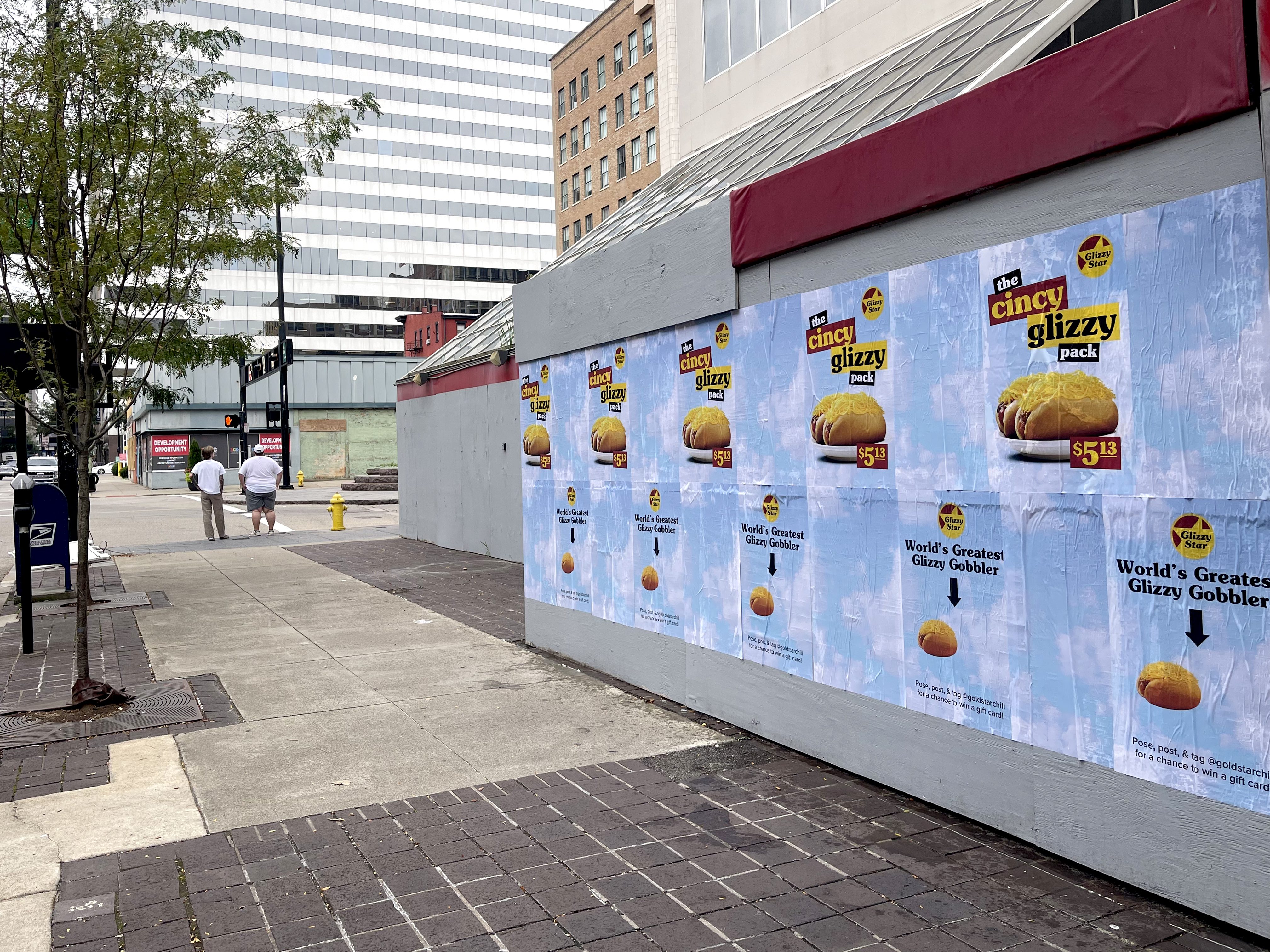
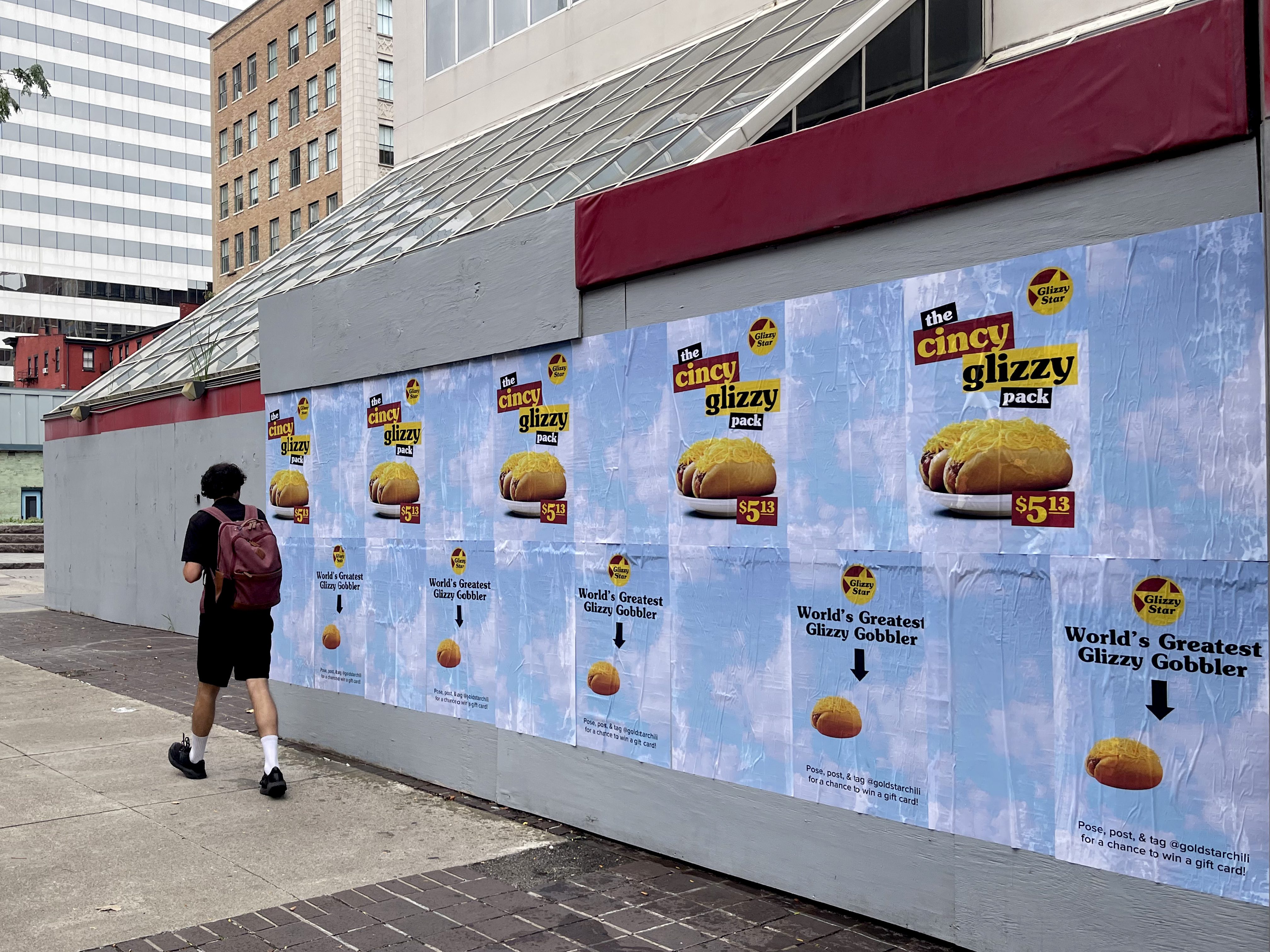
American Guerrilla Marketing executed a two-wave wheatpaste campaign for Gold Star across more than 10 locations in Downtown Cincinnati. The campaign used 24×36-inch posters placed on visible street-level surfaces throughout the downtown area. The first wave launched on August 17, 2026, establishing the initial poster placements along targeted streets and pedestrian corridors.
The second wave began on August 31, 2026, with an additional two-week maintenance period to refresh existing placements and keep the campaign visible through mid-September. This gave AGM an opportunity to replace worn or damaged posters and maintain Gold Star’s presence in the downtown area.
By spreading the installations across two waves, Gold Star maintained a consistent street advertising presence in Downtown Cincinnati for several weeks. The campaign combined wheatpaste advertising, targeted locations, and scheduled maintenance to keep the brand visible in the neighborhoods and commercial areas where people regularly walk, shop, and spend time.
The Gold Star wheatpaste campaign ran across Downtown Cincinnati in two waves, beginning August 17 and continuing through mid-September 2026. American Guerrilla Marketing installed 200 wheatpaste posters measuring 24×36 inches across more than 10 locations in the downtown area. The campaign used one creative design throughout, with final artwork completed by July 15, 2026, ahead of the first installation on August 17.
The second wave began August 31 and included an additional two weeks of maintenance. During this period, AGM refreshed existing posters, replaced placements showing signs of wear, and added new coverage throughout the targeted downtown area. This helped keep the posters looking fresh and extended Gold Star’s street presence through the remainder of the campaign.
American Guerrilla Marketing handled the wheatpaste installations and maintenance on behalf of the agency partner managing the Gold Star account.
A 200-poster wheatpaste campaign focused on Downtown Cincinnati is about building a strong presence in a specific area rather than trying to reach the entire city. Downtown Cincinnati has a steady mix of office workers, residents, restaurant customers, and visitors moving through its streets every day. Areas around Over-the-Rhine, the Central Business District, the Banks waterfront, and the streets connecting downtown’s restaurants, offices, and entertainment venues see regular pedestrian activity. For Gold Star, these neighborhoods offered an opportunity to reach people who frequently walk through the same areas.
The campaign placed 200 wheatpaste posters across more than 10 locations throughout Downtown Cincinnati. AGM focused on visible walls, construction barriers, and other street-level surfaces along busy pedestrian routes. Concentrating the posters within a smaller geographic area meant people could encounter Gold Star advertising more than once while walking through downtown. Instead of spreading the posters across the entire Cincinnati metro, the campaign kept the brand visible in the neighborhoods where the targeted audience was most active.
The two-wave installation schedule was an important part of keeping the campaign looking fresh. Wheatpaste posters naturally experience wear from weather, street activity, and other advertisements, especially in busy downtown areas. After 10 to 14 days, some placements may begin showing signs of fading, peeling, or damage. By scheduling the second wave for August 31, exactly two weeks after the initial August 17 installation, AGM could refresh posters as the first round began to show wear.
The second wave also included an extended two-week maintenance period, allowing AGM to replace damaged posters and add fresh placements throughout the downtown area. This kept Gold Star visible through mid-September and gave the campaign roughly four weeks of street advertising coverage. Rather than installing everything at once and allowing the posters to deteriorate, the two-wave approach helped maintain a consistent presence across Downtown Cincinnati for the full campaign period.
Award Winning Personalized Service
You will get thoughtful, devoted, and individualized attention from our experienced, qualified, and professional personnel. Being one of the most illustrious agencies in Brooklyn, New York, American Guerrilla Marketing has been awarded the Best of Brooklyn title.
Nationwide
Industry City, Brooklyn, New York 11232
American Guerrilla Marketing
Hours
Mon - Fri: 9 AM - 5 PM
Sat & Sun: Closed
Automate your campaign with AGM’s Request for Proposal Builder. Simply answer a few quick questions about your campaign goals, markets, and timeline, and the system will generate a tailored presentation with recommended strategies, quantities, and pricing. Click the RFP Builder to instantly receive your customized proposal.
The 24×36 format is the workhorse of the wheatpaste industry — large enough to command a wall section and communicate clearly at sidewalk pace, compact enough to deploy across the dense surface inventory of an active downtown environment. At 24 inches wide and 36 inches tall, a well-placed poster is visible from across the street, legible while walking, and occupies enough wall real estate to register as a brand presence rather than a passing impression.
For a downtown Cincinnati wheatpaste campaign with a single design rotating across 10-plus locations, creative consistency is an asset: the same design encountered at multiple points throughout the downtown corridor creates cumulative brand recognition in a way that multiple competing designs cannot. A person who passes the same Gold Star 24×36 poster at different locations during a week of downtown movement builds a progressively stronger brand impression with each encounter. The single-design approach concentrates that cumulative effect rather than distributing it across multiple creative treatments.
AGM’s downtown Cincinnati installation concentrated on the street-level surface inventory most relevant to the target pedestrian audience: the construction hoarding along active development sites, building transition surfaces on the corridors connecting the Central Business District to Over-the-Rhine, the high-foot-traffic blocks adjacent to downtown’s dining and entertainment zones, and the pedestrian routes most traveled between major transit points and the city’s core commercial geography.
Downtown Cincinnati’s physical environment supports a wheatpaste campaign at a level that many Ohio markets cannot match. The city’s active development activity in the Over-the-Rhine border zone and the continued evolution of the Banks and riverfront district create a consistent supply of construction hoarding and temporary surface inventory — exactly the high-visibility, flat-surface real estate that supports large-format wheatpasting at street level. AGM’s field team deployed within that environment, identifying the highest-sight-line surfaces along the downtown pedestrian corridors and prioritizing placements where Gold Star’s poster would be encountered head-on by foot traffic rather than glimpsed at an angle.
The Wave 2 maintenance deployment on August 31 allowed the field team to assess which Wave 1 placements were performing best — surfaces with the highest pedestrian visibility, the lowest competitive poster activity, and the best physical condition after two weeks of exposure — and concentrate the Wave 2 refresher placements where they would deliver the most sustained value through the maintenance window.
The Gold Star downtown Cincinnati wheatpaste campaign placed 200 posters across the pedestrian corridors and high-visibility surfaces of one of Ohio’s most active urban downtowns — and kept them fresh across two full installation waves. By the end of Wave 2’s maintenance window in mid-September, the Gold Star campaign had been actively visible on the streets of Downtown Cincinnati for approximately four weeks, with fresh poster conditions maintained through the campaign’s conclusion.
The two-wave structure with extended maintenance delivered something a single-installation campaign cannot: sustained brand presence. In the week after Wave 1, Gold Star was new on the wall. In the week after Wave 2, Gold Star was still there — refreshed, current, and visible to anyone who moves through the downtown corridor regularly enough to have seen it before. That repeated exposure across a four-week window in a concentrated urban geography is what converts a street advertising campaign from a one-time impression into a brand presence that the market actually registers.
Downtown Cincinnati’s walkable core is a market that responds to street-level advertising because its audience moves through it on foot, repeatedly, across a defined geography. The Gold Star campaign was built for exactly that environment — and it ran the full four weeks it needed to make its mark.
A single wheatpaste installation reaches peak visual quality in the first 10-14 days after placement. After that window, urban environmental factors — weather, foot traffic, competing poster activity — begin to affect poster condition. A two-wave campaign with maintenance relaunches at exactly that inflection point, refreshing the visual quality of the campaign’s street presence just when the original installation is beginning to show wear. The result is a sustained campaign window roughly twice the length of a single-installation approach, with fresh creative on the wall through the full intended period.
Downtown Cincinnati’s walkable core concentrates the city’s most active pedestrian population — office workers, residents, dining and entertainment visitors — into a compact geographic area where they move on foot through predictable corridors. A wheatpaste campaign in that environment reaches the same audience repeatedly across the campaign window, building cumulative brand recognition with each encounter. The downtown’s active development activity also creates consistent supply of construction hoarding and high-visibility temporary surface inventory — the physical real estate that makes street-level wheatpasting effective in a dense urban environment.
Ten-plus locations across Downtown Cincinnati means the Gold Star campaign was distributed across the downtown pedestrian grid rather than concentrated in a single block or corridor. A pedestrian moving through the Central Business District toward Over-the-Rhine, through the Banks, or along the major dining corridors encountered the campaign from multiple directions at multiple points throughout their movement through the downtown. That distributed footprint produces the kind of saturation that makes a brand feel like a fixture of the environment — consistently present, not just a single placement someone happened to pass once.
The 24×36 format balances visibility, wall compatibility, and deployment volume in a way that makes it the most versatile format in urban wheatpasting. It is large enough to read clearly at sidewalk pace from across the street, which gives it the visual authority needed to register in a competitive downtown environment. It is compact enough to fit a wide range of surface types — construction hoarding sections, building facade panels, temporary fencing — without requiring the dedicated large-format wall real estate that bigger formats demand. And it can be deployed at volume across 10-plus locations with a crew and timeline that makes the campaign operationally efficient.
Location selection is made by AGM’s field installers based on pedestrian flow, sight line from the sidewalk at normal walking pace, surface quality and condition, and position relative to the corridors where the target audience moves most predictably. In Downtown Cincinnati, that means prioritizing the blocks where foot traffic is most consistent — the corridors connecting transit to commercial zones, the streets adjacent to dining and entertainment clusters, and the surfaces with the best unobstructed sight lines from both directions of pedestrian travel. A technically available surface that is invisible to moving foot traffic delivers a fraction of the value of a well-positioned placement on the same block.
An extended maintenance package is a dedicated second-wave deployment in which AGM’s field team returns to the campaign footprint, assesses the condition of existing placements, refreshes posters that have degraded, and extends coverage on the highest-performing surfaces for an additional defined period — in this case, two weeks beyond the initial Wave 2 installation. The maintenance package is designed to close the gap between a campaign that looks great for two weeks and one that looks current and fresh through the full intended window. For a brand building sustained presence in a market, that extended window is the difference between a campaign the market remembers and one it barely noticed.