American Guerrilla Marketing
Nationwide Service
Media planning, media buying, billboard advertising, & guerrilla marketing
Guerrilla Projections in North Dakota
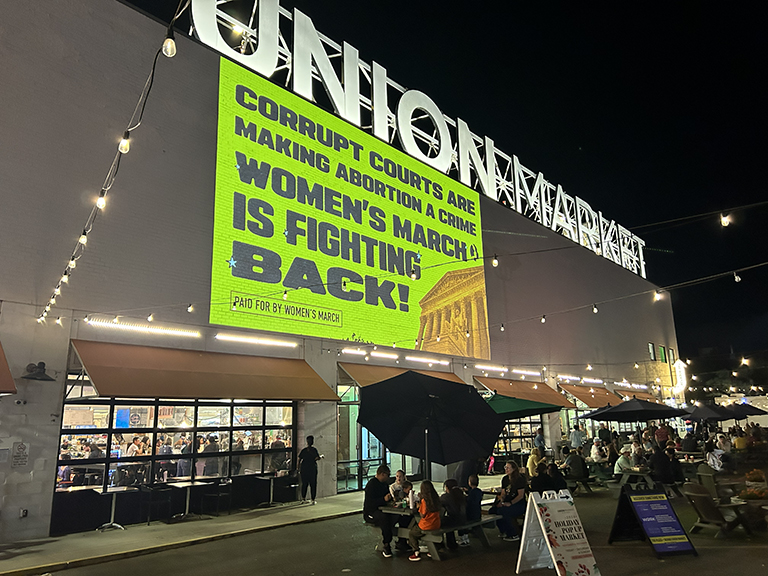
Building projection advertising across the plains state — Bismarck, Fargo, Grand Forks, and Minot. Where the media environment goes quiet after dark and a single projection commands the entire block.
The Plains State Projection Advantage
Most American advertising markets are saturated. Digital billboards stack up along commercial corridors. LED signage bleeds from storefronts and bar fronts. Ambient commercial lighting turns nighttime streets into a continuous visual argument for attention. In that environment, even a 20,000-lumen projection campaign has to compete hard to stand out. North Dakota operates under a categorically different set of conditions, and those conditions translate directly into higher impact for every campaign American Guerrilla Marketing deploys here.
Step outside in Bismarck, Fargo, Grand Forks, or Minot after nine in the evening and the commercial visual environment simplifies dramatically. The competing outdoor advertising infrastructure thins out. Digital billboards don’t crowd every arterial road. The storefronts go dark and the nighttime downtown settles into genuine visual quiet. When a building projection activates in that context — a brilliant image landing on a blank masonry face across a pedestrian street — it doesn’t compete with anything. It simply owns the block from the moment it switches on.
AGM operates regularly in New York, Los Angeles, Chicago, and Miami, where guerrilla projection campaigns fight through layers of visual noise to reach audiences. Those markets require different positioning strategies precisely because competition for visual attention is fierce. North Dakota doesn’t have that problem. The state’s population density is among the lowest in the country, which means outdoor advertising infrastructure hasn’t accumulated the way it has in coastal metros. For projection campaigns, that structural characteristic is an asset, not a limitation. When an image lands on a Fargo building face and nothing else in the immediate visual environment competes for the pedestrian’s attention, the impression holds differently — longer dwell time, higher likelihood of a photograph, and greater organic social amplification from people who genuinely stop in their tracks.
That organic documentation effect is one of the most undervalued dimensions of guerrilla projection in low-clutter markets. When people encounter something visually striking in an environment where they’ve been trained to expect nothing unusual, they pull out their phones. Those photographs and videos move through social media feeds, extending the reach of the campaign far beyond the geographic footprint of the original projection. North Dakota’s media-quiet nighttime environment sets the table for exactly that outcome on every activation.
Project Your Message Across North Dakota
AGM deploys 20,000-lumen guerrilla projection campaigns in Bismarck, Fargo, Grand Forks, Minot, and beyond. Every campaign is executed by AGM's direct technical crew with GPS-documented location analysis and post-campaign reporting.
Browse Cities in North Dakota
Select a city to explore Guerrilla Projections opportunities.
North Dakota's Industry Mix And Why It Creates Strong Projection Demand
The Bakken oil formation has anchored an energy economy in western North Dakota that sends professional and executive-class audiences through Bismarck’s commercial districts and Minot’s downtown business zone on a regular basis. Energy corporations headquartered in Bismarck or maintaining significant government affairs operations in the state capital need to reach regulatory and legislative audiences in a market that doesn’t have many high-visibility outdoor advertising channels. Guerrilla projection fills that gap — placing corporate or advocacy messaging directly in front of the decision-maker class without requiring those decision-makers to be watching television or scrolling a specific platform.
North Dakota’s university markets add a second demand driver that operates on an entirely different rhythm. North Dakota State University in Fargo and the University of North Dakota in Grand Forks each anchor a compact entertainment district where student audiences concentrate densely on weekend evenings and during major university events. Student-facing brands, university athletic departments launching campaigns, civic organizations working to reach young voters, and regional businesses trying to establish brand recognition among the 18-to-30 demographic all find projection in those entertainment zones to be a highly efficient channel. The pedestrian density is high, the demographics are concentrated, and the audiences are exactly the kind of people who document and share unusual visual experiences.
The agricultural sector generates a steady calendar of trade events, conventions, and producer meetings in Fargo and Bismarck that concentrate agricultural industry professionals into specific hotel and convention districts at predictable times of year. A projection campaign timed to those event windows reaches buyers, producers, and industry executives in the physical environment they’re moving through — no media subscription required, no targeting parameter needed beyond knowing which buildings sit across from the convention entrance. The same logic applies to military-adjacent industries in Minot, where Minot Air Force Base drives contractor and defense industry audiences through the market year-round.
Advocacy organizations have historically found North Dakota’s markets highly receptive to guerrilla projection strategies. Legislative session windows in Bismarck concentrate exactly the audiences that advocacy campaigns target — legislators, legislative staff, lobbyists, journalists covering the capitol, and politically engaged residents who circulate through the downtown entertainment zone during session months. A projection near the capitol district during an active legislative push generates visible impressions at the precise moment they have the most relevance.
Where Agm Works In North Dakota
Bismarck
The state capital houses North Dakota’s government, its most significant energy industry offices, and the advocacy organizations and lobbying firms that orbit both. Main Avenue runs through a commercial corridor of flat-faced masonry buildings and dining establishments where the professional class concentrates on weekday evenings during the legislative session. Third Street’s bar and restaurant cluster provides evening pedestrian traffic on weekends. For energy companies, government contractors, advocacy organizations, and any brand trying to reach the decision-maker class that concentrates in a state capital, Bismarck is the market where a projection campaign has maximum professional relevance.
Fargo
North Dakota’s largest city and the region’s most active entertainment market, Fargo draws audiences from across the upper Midwest for NDSU Bison football, the Fargo Film Festival, concerts, and the city’s growing arts and dining scene. The Broadway corridor runs through a dense concentration of historic theaters, restaurants, and bars with flat-faced masonry building stock that accepts projection well. The Warehouse District offers former industrial building faces with large blank walls, low ambient light competition, and strong visual impact potential. Fargo consistently punches above its population weight as an events and media destination, which means projection campaigns here reach audiences with genuine diversity — students, professionals, out-of-town visitors, and regional residents all moving through the same compact entertainment zone.
Grand Forks
The University of North Dakota sets the rhythm of Grand Forks’ commercial life. When the Fighting Hawks play at home — particularly during hockey season, which draws intensely loyal crowds — the downtown entertainment zone fills. University Avenue serves the UND community directly, with consistent student and young professional foot traffic throughout the academic year. The compact geography of Grand Forks’ entertainment district means pedestrian density is high and impression counts per projection night are strong relative to the market size. For student-facing brands and university program launches, Grand Forks is one of the most efficient college market projection opportunities in the northern plains.
Minot
Minot’s economy is shaped by three dominant forces: Minot Air Force Base, the Bakken-adjacent energy sector, and regional agricultural commerce. Each generates a steady flow of professional and contractor audiences through downtown Minot’s commercial core. The North Dakota State Fair — held in Minot every August — draws regional attendance that creates one of the highest-density event windows in the state outside Fargo. The downtown footprint is compact, competing outdoor advertising infrastructure after dark is essentially absent, and the audiences who move through the area are professionally employed and spending money. For brands that serve the military, energy, or agricultural sectors, Minot represents an underutilized and highly targeted projection market.
Plan Your Guerrilla Projection Campaign in North Dakota
Tell us about your campaign goals, target audience, and preferred locations. Our team will help you plan a high-impact guerrilla projection campaign tailored to your needs.
Award Winning Personalized Service
You will get thoughtful, devoted, and individualized attention from our experienced, qualified, and professional personnel. Being one of the most illustrious agencies in Brooklyn, New York, American Guerrilla Marketing has been awarded the Best of Brooklyn title.
Nationwide
Industry City, Brooklyn, New York 11232
American Guerrilla Marketing
Hours
Mon - Fri: 9 AM - 5 PM
Sat & Sun: Closed
Automate your campaign with AGM’s Request for Proposal Builder.
Automate your campaign with AGM’s Request for Proposal Builder. Simply answer a few quick questions about your campaign goals, markets, and timeline, and the system will generate a tailored presentation with recommended strategies, quantities, and pricing. Click the RFP Builder to instantly receive your customized proposal.
Projection Formats That Work Across North Dakota
Corporate & Energy Industry Campaigns
Energy corporations, agricultural businesses, and defense-adjacent contractors use guerrilla projection to place brand messaging in professional environments where traditional advertising rarely reaches. Bismarck and Minot offer direct access to the energy and government audiences these campaigns require. A building-face projection in the right location delivers impressions to the precise professional audience without broadcasting broadly to irrelevant demographics.
University & Campus Market Launches
Program announcements, athletic campaign rollouts, and student-facing brand launches. University audience zones in Fargo and Grand Forks are geographically compact, making projection one of the most cost-efficient impression channels available for reaching students and young professionals during evening hours when they’re most mobile and most likely to document what they see.
Legislative & Advocacy Campaigns
Advocacy organizations working in or around Bismarck’s legislative environment use projection to place messaging at scale without broadcast media costs. The earned media value generated by a well-placed projection near a state capitol entertainment zone during an active legislative push frequently exceeds what direct impression counts alone suggest, as journalists, legislative staff, and policy professionals document and share what they encounter.
Event & Entertainment Promotions
Film festival activations, concert announcements, and athletic event campaigns. North Dakota’s event calendar creates predictable windows when specific audiences concentrate in specific urban zones. Projection campaigns timed to those windows — Fargo Film Festival week, Bison football home games, the State Fair in Minot — deliver impressions to audiences who are already in a receptive, social, out-of-their-routine mindset.
Regional Brand Launches
Consumer brands entering North Dakota markets or expanding regionally use projection advertising to create immediate high-visibility awareness across specific city markets simultaneously or sequentially. The low-clutter environment amplifies visual impact in ways that are structurally difficult to replicate in saturated metros — the same creative, the same equipment, a fundamentally different impression quality.
Case Study: Wakeup Coalition — Austin, Texas
The WakeUp Coalition retained AGM to deploy projection advertising across Austin’s Rainey Street and 6th Street entertainment corridors during a major political mobilization event. The campaign targeted bar and restaurant patrons during peak evening hours — thousands of people concentrated in a compact entertainment zone, no traditional outdoor advertising competing for their attention at street level, and organic foot traffic producing exactly the kind of dwell-time that makes guerrilla projection land differently than static media.
The projections were placed on flat commercial building faces directly across from dining patios and bar terraces, creating natural viewing positions where audiences were already stationary and facing the projection surfaces. The campaign generated direct impressions from pedestrians moving through the corridor, documented social posts from bar patrons who photographed and shared the projections, and earned media coverage that extended the messaging reach well beyond the nightly audience count.
For advocacy organizations, civic groups, and brands planning projection campaigns in North Dakota — whether in Bismarck’s policy-driven professional environment or across Fargo’s student-heavy entertainment zones — the Austin campaign illustrates the two-channel value of guerrilla projection: ground-level impressions delivered live, and organic digital amplification that continues well after the projector has packed up and driven away. AGM’s national scouting team handled location analysis, surface selection, and post-campaign documentation for the Austin activation, and the same systematic approach applies to every campaign the team deploys in North Dakota markets.
Building Surface Selection in North Dakota
North Dakota’s downtown building stock includes a meaningful proportion of flat-faced masonry commercial buildings — brick and painted concrete construction that was built at scale during the mid-twentieth century and remains structurally intact in most downtown cores. When those surfaces carry a light enough base color to reflect a 20,000-lumen output clearly, they become strong projection candidates. When they’re dark brick that absorbs light rather than reflecting it, they reduce the contrast and vibrancy that make projection advertising visually arresting.
AGM’s national scouting team — which operates both digitally using satellite and street-level imagery and physically with on-the-ground scouts in target markets — evaluates candidate surfaces against a consistent set of criteria before any campaign activates. Flatness of the wall plane is paramount: curved or irregular building faces distort the projected image, while flat planar surfaces produce clean, sharp imagery at any scale. Freedom from obstructions matters equally — trees, poles, parked vehicles, and signage in the line of sight between projector and wall interrupt the image and reduce visual coherence. And viewing angle is a logistics factor that the scouting process maps carefully, identifying where pedestrian audiences will stand relative to the projection and whether the geometry of the street produces good natural viewing positions.
In Fargo’s Warehouse District, former industrial building faces offer some of the largest and cleanest projection surfaces in the state. In Bismarck’s downtown corridor, commercial building faces along Main Avenue and Third Street present usable options for mid-scale campaigns. Grand Forks’ historic commercial facades downtown provide flat masonry surfaces in the pedestrian zones where student audiences concentrate. Minot’s downtown arts district includes commercial building faces suitable for projection campaigns timed to civic center events and arts programming.
Cold-weather Operations And Seasonal Campaign Strategy
North Dakota winters are genuine — sub-zero temperatures, extended wind chill events, and sustained snowfall are standard from November through March across most of the state. AGM’s projection equipment and generator systems are built and maintained for cold-weather deployment. The direct technical crew — AGM’s own technicians, not subcontractors — operates these systems in winter conditions regularly, and the equipment’s performance in cold has been established through actual northern market activations rather than theoretical specification claims.
From a daylight standpoint, North Dakota winters extend the effective projection window in ways that benefit campaign economics. Full darkness arrives by 4:30 PM or earlier in Bismarck or Fargo during December and January, giving campaigns starting at dusk hours of additional dark time before venue closing hours end the pedestrian flow. A campaign that activates at 5 PM and runs six hours covers the full evening entertainment window, including the dinner rush, mid-evening bar traffic, and late-night crowd movement — all in genuine darkness.
Summer campaigns face the inverse challenge: North Dakota’s long summer days push sunset past 9 PM, compressing the effective nighttime projection window significantly. Summer activations work best when the campaign objective is tied to a specific event that draws audiences regardless of ambient light, or when the creative strategy accounts for the shorter dark-hours window. Spring and fall represent the most operationally efficient seasons — comfortable crew conditions, darkness arriving by 7 PM to 8 PM, and active downtown foot traffic as residents re-engage with entertainment after winter’s retreat.
Projection Campaign Pricing in North Dakota
Guerrilla projection campaigns across North Dakota markets are priced at contact us for a quote. That rate covers the full 20,000-lumen commercial projection unit, generator and complete power solution, electronics bundle, mobility unit, and a two-person AGM technical crew handling setup, operation, and breakdown from start to finish. Campaigns activate at dusk and typically run four to six hours per night. Multi-night runs extend audience reach across multiple evenings and reduce the effective per-impression cost significantly for organizations running sustained campaigns.
Location scouting by AGM’s national scouting team runs approximately contact us for a quote. for advance digital and physical surface analysis. Campaigns on permitted or private-property locations range from Contact us for a custom quote. per night depending on building specifics and market. Organizations working against legislative session calendars or event-specific windows in North Dakota should build lead time into their planning — surface scouting, permit coordination if applicable, and creative specification need to be completed before the campaign window opens.
To discuss a North Dakota projection campaign, contact AGM directly:
Brooklyn, NY: Industry City, Unit 28, Brooklyn, NY 11232 | (646) 776-2770
Las Vegas, NV: 5940 S Rainbow Blvd, PMB 1205, Las Vegas, NV 89118 | (702) 996-1806
Who Uses Guerrilla Projection Advertising In North Dakota
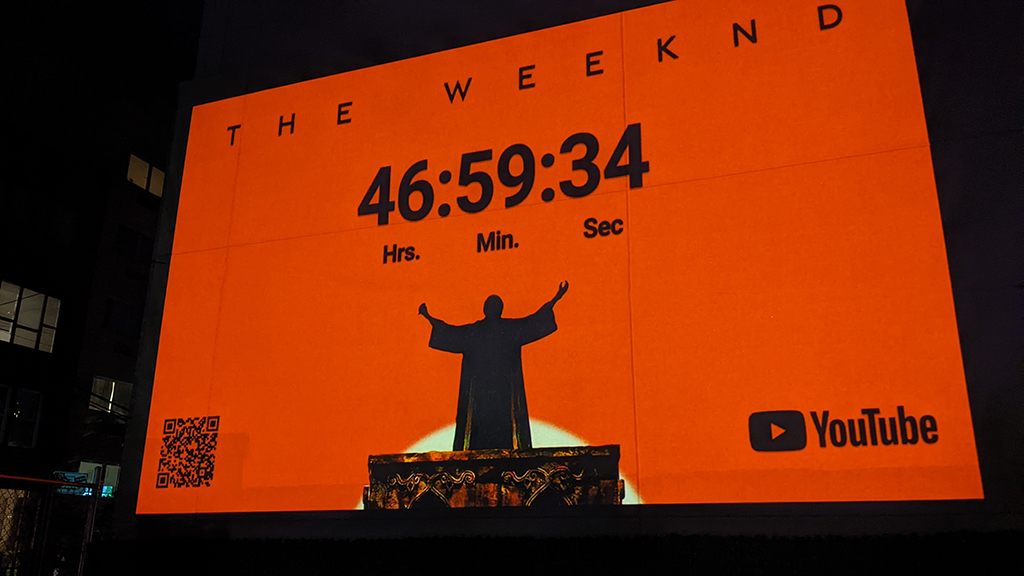
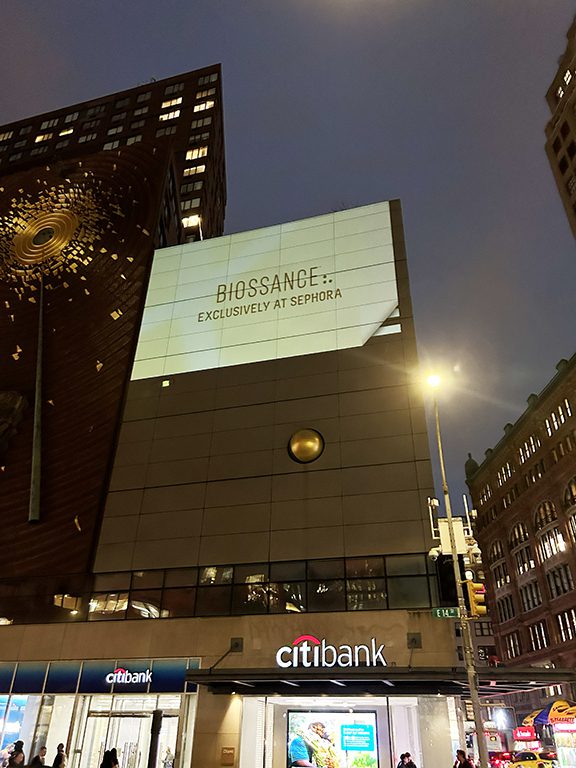
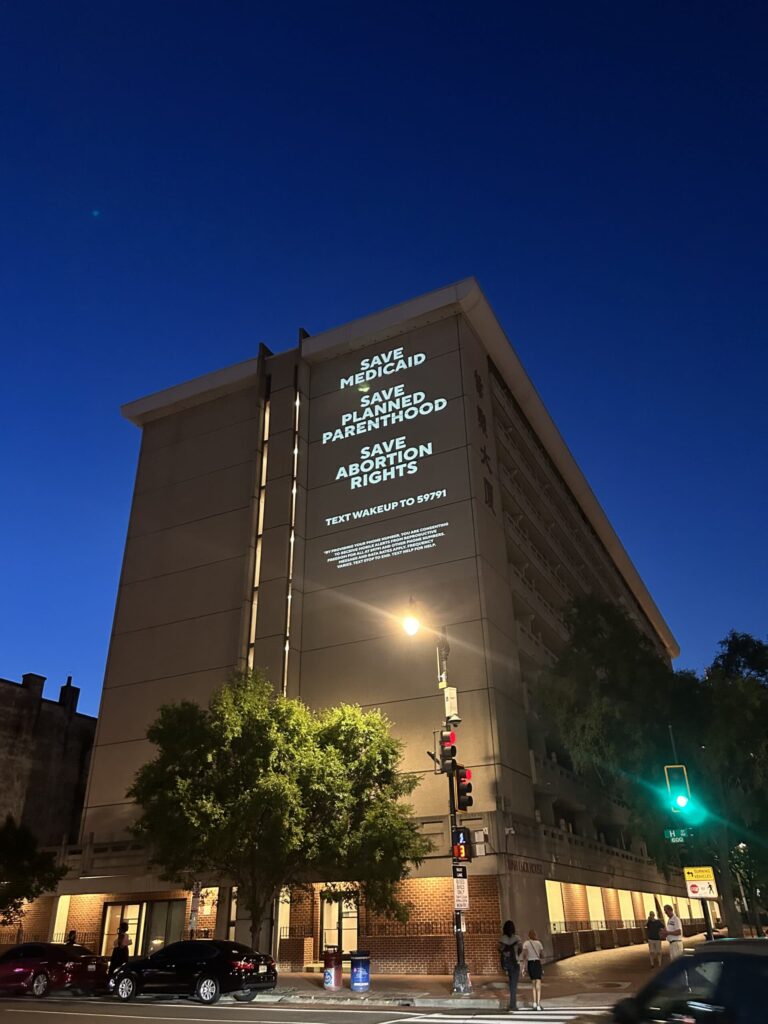
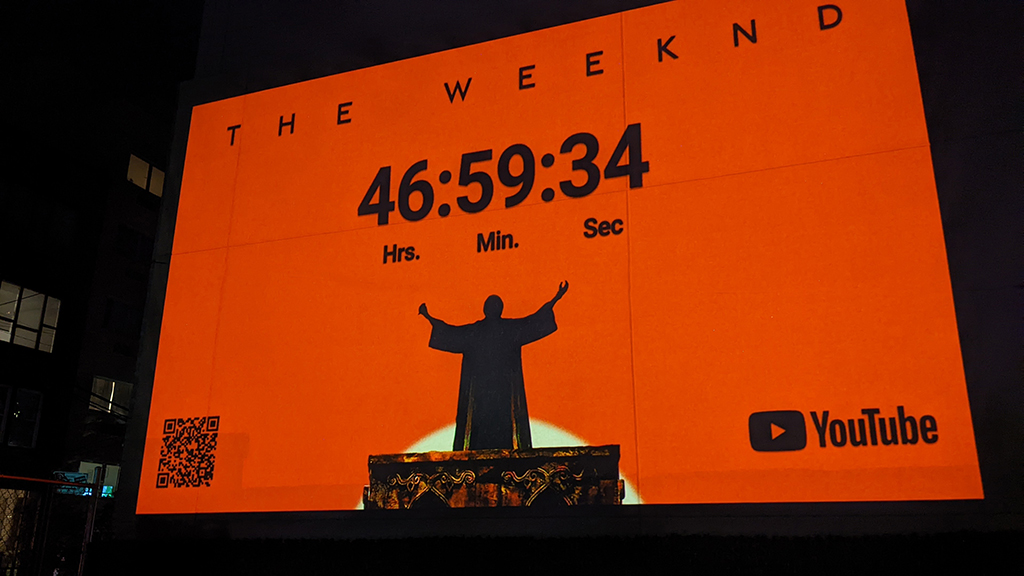
AGM’s client roster spans energy corporations, university athletic programs, advocacy organizations, consumer brands, political campaigns, and entertainment properties. The company has worked with Biossance, The Weeknd, the US Marine Corps, Women’s March, Reproductive Freedom for All, and YouTube, and is a Best of Brooklyn award winner with a national scouting team operating across dozens of markets simultaneously. In North Dakota specifically, the strongest demand comes from energy industry clients running campaigns in Bismarck’s legislative environment, advocacy groups targeting the state legislature during session, student-facing brands entering the Fargo and Grand Forks markets, and event promoters trying to reach concentrated regional audiences.
AGM’s projection client roster includes Netflix, Disney, Coca-Cola, FanDuel, Live Nation, iHeartRadio, and the US Marine Corps. A confirmed case study: the US Marine Corps × CMA Fest Nashville — multi-night projections onto architectural surfaces throughout the festival footprint, reaching 80,000+ attendees across the campaign window. Projection advertising scales across every brand category; what our campaigns share is scale, precision, and a physical presence digital cannot replicate.
For organizations considering guerrilla projection for the first time, the first conversation with AGM’s team is typically about operational parameters — surface options in the target city, logistics and equipment requirements, permit considerations for the chosen placement approach, and creative specifications for the projection system. GPS-documented location analysis and post-campaign reporting give organizations the data they need to evaluate results and make informed decisions about future campaign investments.
Coverage & Estimated Impressions
| Zone / Area | Peak Hours | Foot Traffic | Est. Nightly Impressions | Best For |
|---|---|---|---|---|
| Bismarck | 8PM–12AM | Moderate | 2,500–12,000 | Product Launch |
| Fargo | 8PM–12AM | Moderate | 2,500–12,000 | Event Promotion |
| Grand Forks | 8PM–12AM | Moderate | 2,500–12,000 | Brand Awareness |
| Minot | 8PM–12AM | Moderate | 2,500–12,000 | Political |
| Corporate & Energy Industry Campaigns | 8PM–12AM | Moderate | 2,500–12,000 | Sports |
| University & Campus Market Launches | 8PM–12AM | Moderate | 2,500–12,000 | Concert/Festival |
Frequently Asked Questions: Guerrilla Projections in North Dakota
Yes. AGM’s commercial projection units and generator systems are engineered for cold-weather deployment and have been activated in sub-zero conditions across northern markets. The direct technical crew — AGM’s own staff, not outsourced operators — handles cold-weather logistics as a standard part of campaign execution. Equipment performance in genuine winter conditions has been established through actual northern market activations.
It amplifies impact significantly and structurally. In markets like Chicago or Los Angeles, projections compete with digital billboards, LED signage, and dense ambient commercial lighting for viewer attention. In North Dakota’s downtown cores after dark, the visual environment is comparatively quiet — a 20,000-lumen projection on a building face has almost no competition for the pedestrian’s gaze. That translates directly into longer viewer dwell time, higher rates of photography and social documentation, and a fundamentally higher impression quality than equivalent campaigns in saturated metros.
Fargo’s Warehouse District contains some of the best surfaces in the state — former industrial building faces with large blank masonry walls, minimal window interruptions, and low ambient light competition in the areas away from the main Broadway strip. Bismarck’s Main Avenue and Third Street corridor offer viable commercial building faces for mid-scale campaigns. AGM’s scouting team evaluates all candidate surfaces in any target market before campaign activation to confirm geometry, surface color, and line-of-sight logistics.
Projection advertising in Bismarck’s downtown entertainment and commercial zones reaches the professional and government audiences that energy industry campaigns specifically target. Legislative sessions concentrate decision-makers — legislators, regulatory staff, lobbyists, and government affairs executives — in the capitol district and downtown dining corridor during evening hours when projections are active. A well-placed campaign delivers visible impressions to that professional class in the physical environment they’re moving through.
North Dakota’s long summer evenings push sunset past 9 PM in June and July, which shortens the effective dark projection window compared to fall and winter campaigns. Summer activations work best when tied to an event that concentrates audiences regardless of ambient light, or when the creative strategy is designed for a shorter nightly window. Spring and fall are operationally optimal — earlier darkness, comfortable crew conditions, and active downtown foot traffic across all four North Dakota markets.
Advocacy projections near the State Capitol require careful surface selection and attention to the regulatory framework governing that specific zone. AGM’s scouting team evaluates surface options and legal pathways for each proposed placement before any commitment is made. Projections from private property with clear lines of sight toward high-traffic pedestrian routes near the Capitol are typically the most viable approach, and early consultation with AGM’s team gives advocacy organizations the clearest picture of what’s achievable for their specific campaign objectives.
Trade events in Fargo that draw agricultural industry professionals create concentrated geographic audience windows well-suited to projection campaigns. A projection activated near the convention center or in the hotel district where event attendees are staying reaches buyers, producers, and executives in the exact physical environment they’re moving through — no media subscription, no algorithm, no targeting parameter required beyond timing and placement.
Permit requirements vary by municipality and specific placement approach. Projections from private property onto private property typically require landlord permission rather than municipal permits. Projections involving public property or public right-of-way involve different considerations depending on the ordinances of Bismarck, Fargo, Grand Forks, or Minot. AGM’s scouting team assesses the regulatory landscape for each specific campaign placement and advises on the applicable pathway before campaign planning advances.
NDSU Bison football weekends concentrate substantial foot traffic in Fargo’s Broadway corridor and surrounding bar districts, drawing a mix of students, alumni, families, and out-of-town visitors who move through the entertainment zone during game-day evenings. Campaigns timed to activate on those evenings reach the full concentrated audience volume — a significant and demographically consistent group with high receptivity to brand experiences. Advance planning is essential since surface scouting and logistics need to be locked before game dates fill the schedule.
Single-night campaigns can deliver meaningful results in North Dakota’s low-clutter environment, especially when timed to coincide with an event that concentrates large audiences. The combination of live impressions from pedestrian traffic and organic social documentation from people who photograph the projection can generate reach well beyond what a single night’s viewer count suggests. Multi-night campaigns extend that impact across multiple audience windows and deepen brand presence in the market.
The State Fair creates one of the highest audience density windows available in Minot each August, drawing regional attendance from across western and central North Dakota. A projection campaign timed to Fair week and activated in Minot’s downtown entertainment zone or near the Civic Center captures both the concentrated out-of-town audience and the local resident traffic that builds around the event. Early planning is essential since Fair week timing is fixed and campaign logistics need to be locked well in advance.
Grand Forks’ University Avenue corridor and the downtown entertainment district along DeMers Avenue and South 3rd Street are the concentration zones for UND students during the academic year. A projection campaign activated in those specific zones during high-traffic periods — weekend evenings, hockey game nights, homecoming week — reaches the student demographic at scale without the targeting complexity of digital advertising. Grand Forks’ compact geography makes it one of the most operationally efficient college market projection opportunities in the state.
More AGM Outdoor Advertising Services
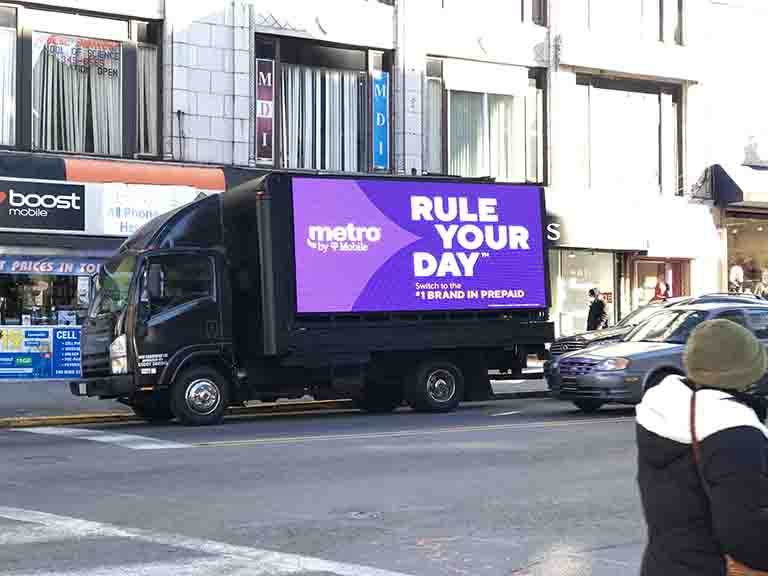
Led Billboard Trucks
Mobile LED displays that bring your brand to any location, any event.
Fly Posting
Street-level poster saturation across walls, construction sites, and corridors.

Sidewalk Decals
Ground-level branded decals at pedestrian hotspots and event entrances.

Sidewalk Stencils
Creative stencil campaigns that put your brand in the path of pedestrians.