🚀 NEW WHEATPASTING MARKETS Discover our wheatpasting campaigns in : 🇬🇧 London • 🇨🇦 Canada • 🇲🇽 Mexico City

American Guerrilla Marketing

Nationwide Service

Media planning, media buying, billboard advertising, & guerrilla marketing

Fly Posting in Bowling Green, KY

Sidewalk Decals Advertising in Bowling Green, KY

Twenty thousand WKU students and a genuinely walkable downtown bar scene share the same 10-block radius — AGM puts your campaign at the center of both with street posters that stick, GPS-documented proof, and no subcontractors.

Two Zones, Zero Gap — The Campus-Downtown Corridor That Makes Bowling Green Work

Bowling Green has a structural advantage that most mid-sized university cities spend years trying to engineer and never quite achieve: the campus and the downtown are not separate worlds connected by a shuttle route. Western Kentucky University’s pedestrian spine along Normal Drive and University Boulevard runs directly into the commercial and entertainment core along College Street and State Street — a geographic compression that places approximately 20,000 students within a 10-minute walk of the restaurants, bars, coffee shops, and independent retail that also serve Bowling Green’s young professional population. For fly posting campaigns, this means a single coordinated deployment can simultaneously reach students leaving afternoon classes, young professionals gathering after work, and the weekend arts and dining crowd — without requiring separate targeting zones, separate installation logistics, or separate creative for each audience.

That kind of demographic overlap in a compact geographic footprint is genuinely rare. In most college towns, the campus zone and the downtown entertainment district are separated by distance or by the commercial character of the intervening blocks — chain retail, parking structures, or residential streets that don’t carry meaningful foot traffic. Bowling Green’s layout eliminates that separation. College Street connects the northern edge of WKU’s academic core to the State Street bar and restaurant row within a few blocks. Fountain Square Park sits at the midpoint, functioning as a civic gathering hub that draws both populations toward the same outdoor space during fair weather. Park Street’s independent retail corridor anchors the creative professional audience that doesn’t fit cleanly into either the campus demographic or the conventional downtown entertainment crowd. The result is a walkable grid where a fly posting campaign installed across five or six key blocks reaches an audience range — 18-year-old freshmen through 35-year-old professionals — that a much larger campaign budget would struggle to replicate in a sprawling mid-sized city with a disconnected layout.

AGM campaigns in Bowling Green are built around this geographic reality. Rather than defaulting to a generic “cover the campus” approach, AGM maps the specific blocks where these audiences overlap and concentrates poster placement in the corridors where the target demographic density is highest at the times most relevant to the campaign’s category. An entertainment brand targeting the 18–24 cohort needs placement weighted toward the WKU campus zone and the State Street bar row on Thursday and Friday evenings. A fashion or lifestyle brand targeting the 25–35 creative professional segment needs placements weighted toward the Park Street retail corridor and the Fountain Square Park vicinity on weekend afternoons. Both campaigns exist within the same 10-block radius — only the weighting changes.


Reach Bowling Green's Campus and Downtown in a Single Campaign

AGM puts street posters in the exact corridors where WKU students and Bowling Green's young professional community overlap — with GPS-documented proof at every placement. Start planning your Bowling Green campaign today.

Browse Cities in Kentucky

Select a city to explore Fly Posting Advertising opportunities.

Bowling Green's Key Fly Posting Corridors

WKU Campus Zone — Normal Drive and University Boulevard

The WKU campus pedestrian zone along Normal Drive and University Boulevard concentrates foot traffic through multiple daily peaks: the morning commute from off-campus housing to academic buildings, the midday movement between classes and the campus dining areas, the afternoon surge toward the library and student union, and the evening flow toward the bar row and campus events. Western Kentucky University’s relatively compact campus layout means that these peaks occur within a walkable area rather than dispersed across a sprawling suburban campus geography. Poster surfaces along the Normal Drive–University Boulevard axis reach students during each of these movement windows, making the campus zone effective for categories — gaming, streaming, fashion, consumer tech, music — where the 18–24 demographic is the primary conversion target. WKU’s home football and basketball game windows add discrete event-driven foot traffic spikes that smart campaign timing can capture.

Downtown Bowling Green — College Street and State Street

The downtown commercial core along College Street and State Street serves as Bowling Green’s social epicenter from late afternoon through close. The bar and restaurant row concentrated along State Street carries the highest evening foot traffic in the market, drawing a demographic mix of WKU students, young professionals from the automotive manufacturing sector, visiting alumni, and out-of-town visitors attending university events. College Street connects the campus zone to this evening entertainment corridor, functioning as the transit spine between the two densest foot traffic areas in the city. Poster surfaces along both streets reach this blended demographic at peak social hours — a concentrated opportunity for entertainment, beverage, and lifestyle brand campaigns targeting the 19–32 cohort that dominates Bowling Green’s nighttime economy.

Fountain Square Park Corridor

Fountain Square Park occupies the civic center of downtown Bowling Green and functions as the natural gathering point for seasonal events, farmer’s markets, outdoor concerts, and the midday foot traffic that moves between the commercial blocks on either side of the park. During the warmer months, the park and its immediately surrounding blocks carry consistent daytime pedestrian volume from a mixed demographic — families from the residential neighborhoods, young professionals on lunch breaks, WKU students who prefer studying outside the campus proper, and the downtown arts community that congregates around the independent retail and coffee shops adjacent to the park perimeter. Fly posting surfaces along the Fountain Square corridor capture this midday and weekend foot traffic in a context where dwell time is naturally extended — people sitting in the park, waiting for a coffee, or walking slowly through the outdoor market are audiences with genuine engagement time, not commuters with a 10-second window.

State Street Bar and Restaurant Row

State Street’s concentrated bar and restaurant zone is the highest-volume evening pedestrian corridor in Bowling Green, running the full span of the entertainment district from early evening through late night on weekends. The street’s mix of craft beer bars, independent restaurants, and live music venues attracts a demographic that skews heavily toward the 21–30 cohort but includes enough 30–40 regulars — the young professionals who live in Bowling Green’s downtown-adjacent neighborhoods — to give it genuine cross-segment reach. For brands targeting the engaged, social young adult who spends Friday and Saturday evenings in walkable entertainment districts, State Street’s poster surfaces offer peak-hour impressions in the precise behavioral context where brand awareness and social sharing intersect most naturally. The concentration of bar destinations along a single walkable spine means that a pedestrian moving between venues will pass the same poster multiple times in a single evening — driving the repetition that builds brand recall.

Park Street Independent Retail Corridor

Park Street carries Bowling Green’s most creative-class-adjacent foot traffic — the independent boutiques, specialty food shops, coffee roasters, and design-forward retail that cater to the 25–40 demographic that isn’t fully captured by either the campus zone or the bar row. Weekend afternoons on Park Street bring out the segment of Bowling Green’s population that reads design publications, follows independent brands on social media, and makes purchasing decisions based on brand positioning rather than promotional pricing. For fashion labels, home goods brands, wellness companies, and lifestyle brands targeting the aspirational millennial consumer, Park Street’s poster surfaces provide reach into an audience that is relatively immune to conventional advertising but actively engaged with the visual environment of the walkable retail corridors they choose to spend their time in.

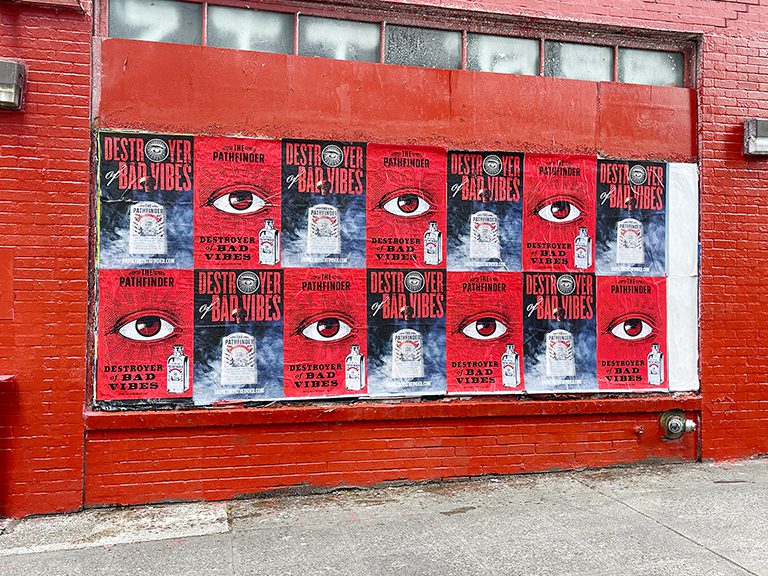
Case Study: The Onion — Media Corridor Wheatpasting In Manhattan And Washington Dc

When AGM executed The Onion’s wheatpasting campaign across Manhattan and Washington DC, the campaign’s central challenge was a precise targeting problem: reach the educated young adult news consumer — specifically the person who reads long-form journalism, follows media criticism, and regards themselves as culturally literate — without wasting budget on a broad awareness play that would dilute the message across the wrong demographic. The solution was a media-corridor targeting strategy that concentrated poster placement in the specific Manhattan neighborhoods and DC blocks where that demographic physically concentrates: the walkable professional corridors in Midtown, the media-dense blocks around K Street and Dupont Circle in DC, and the culturally engaged residential zones in neighborhoods where young professionals with media industry and government adjacent careers actually live and commute on foot.

The reason that case study maps directly to Bowling Green is the demographic profile of the primary audience, not the geographic scale of the market. The educated young adult news consumer that The Onion was targeting in Manhattan and DC has a precise Bowling Green equivalent: the WKU student enrolled in the journalism, communications, or social sciences programs, and the downtown Bowling Green professional who moved to the city after graduating from a mid-sized university and maintained the cultural consumption habits — podcast listening, independent media reading, satirical news literacy — that characterized their campus years. Both audiences share the same relationship to street-level creative: they notice it, they engage with it as a visual artifact rather than dismissing it as advertising, and they’re significantly more likely to photograph and share it than a demographic that doesn’t move through the city on foot.

The structural lesson from The Onion campaign is that editorial-quality creative — poster work that looks considered and intentional rather than promotional — reaches the educated young adult audience with a credibility that outperforms the same message delivered through conventional channels. In Bowling Green, that strategic logic applies to the WKU campus zone and the State Street social corridor equally. A poster campaign with genuine creative ambition, installed on the brick facades and utility structures of the blocks those audiences use every day, reaches them in a context where they are primed to engage with content that respects their intelligence. AGM brings that strategic framework to Bowling Green campaigns with the same direct-execution, documentation-first approach it brought to The Onion’s Manhattan and DC deployment.

Build Your Fly Posting Campaign

    Award Winning Personalized Service

    You will get thoughtful, devoted, and individualized attention from our experienced, qualified, and professional personnel. Being one of the most illustrious agencies in Brooklyn, New York, American Guerrilla Marketing has been awarded the Best of Brooklyn title.

    Nationwide

    Industry City, Brooklyn, New York 11232

    American Guerrilla Marketing

    +1 (646) 776-2770

    [email protected]

    Telegram: @americanguerillamarketing

    Hours

    Mon - Fri: 9 AM - 5 PM

    Sat & Sun: Closed

    Automate your campaign with AGM’s Request for Proposal Builder.

    Automate your campaign with AGM’s Request for Proposal Builder. Simply answer a few quick questions about your campaign goals, markets, and timeline, and the system will generate a tailored presentation with recommended strategies, quantities, and pricing. Click the RFP Builder to instantly receive your customized proposal.

    Poster Format Selection For Bowling Green

    Bowling Green’s compact geography means that format selection is primarily a question of coverage priority versus visual dominance, rather than a question of which market zone each format is designed to serve. Both the 24×36 and 48×72 formats can be deployed effectively within the same 10-block campaign radius — the choice comes down to the campaign’s strategic emphasis.

    24″ × 36″ — Campus and Bar Row Coverage

    • 72-hour rush available up to 500 qty

    The standard format for Bowling Green campaigns prioritizing saturation across the full campus-downtown corridor. At 100 posters, a 24×36 deployment covers the WKU campus zone along Normal Drive and University Boulevard, the State Street bar row, the Fountain Square corridor, and Park Street’s retail strip with enough repetition to build brand recognition across multiple movement paths through the deployment zone. Entertainment brands, music campaigns, gaming releases, and fashion labels consistently use the 24×36 format in Bowling Green because the target demographic moves through enough distinct blocks in a week that coverage breadth matters more than individual poster scale.

    48″ × 72″ — Dominant Intersection Placements

    Best suited for brands requiring unmissable visual presence at specific high-traffic nodes — the College Street–State Street intersection, the Fountain Square Park perimeter, or the entry points to the WKU campus along Normal Drive. The 48×72 format commands attention in contexts where a smaller poster would read as one visual element among many. For Bowling Green campaigns that want to establish a single dominant brand statement before expanding coverage with smaller formats, the 48×72 anchor placement strategy is the right starting point. Combined campaigns running both formats simultaneously achieve the broadest effective reach in this market.

    How AGM Plans and Installs a Bowling Green Fly Posting Campaign

    AGM’s Bowling Green campaign planning begins with a targeting brief that maps the specific demographic the campaign needs to reach against the actual blocks and corridors in the city where that demographic concentrates. The compact geography of Bowling Green’s campus-downtown corridor makes this targeting analysis relatively precise — there are a defined set of streets and blocks that carry the foot traffic this market’s fly posting campaigns are designed to reach, and the planning process focuses on identifying the optimal surface distribution within that footprint rather than debating which part of a sprawling metro area to prioritize.

    Surface identification in Bowling Green takes into account both the physical availability of appropriate installation locations and the pedestrian dynamics of each block. A surface on the WKU campus perimeter that faces a morning class pedestrian flow serves a different timing purpose than a surface on the State Street bar row that reaches peak volume on Thursday and Friday evenings. AGM’s installation timing in Bowling Green is calibrated to ensure that posters are freshly installed and visually intact for the specific pedestrian windows that matter most for each campaign — not installed days in advance of peak activity and subject to wear during the interim period.

    Print production is handled entirely in-house, with no handoff to outside vendors at any point in the production pipeline. The same AGM team that plans the Bowling Green targeting executes the print run and manages the field installation, maintaining quality control through every step. Wheat-based adhesive is applied to approved surfaces — blank building facades, utility structures, construction barriers, and other appropriate surfaces within the campus-downtown corridor. Installation is documented with GPS-tagged photography at each placement location, capturing the surface, the surrounding context, and the poster condition at installation. A complete photo report delivered at campaign close gives clients direct verification of the deployment without requiring on-site attendance during the installation window.

    Campaign duration in Bowling Green typically runs one to two weeks. The city’s climate — temperate spring and fall conditions, warmer and more humid summers — affects adhesive performance and surface stability, with spring and fall offering the most reliable installation windows. Campaigns timed around WKU’s academic calendar benefit from peak student presence on campus from late August through April. Summer deployments serve a smaller on-campus population but catch the downtown young professional demographic at its most consistent, with fewer competing poster campaigns for surface attention.

    Who Uses Fly Posting In Bowling Green, Ky

    Entertainment brands — streaming platforms, music labels, concert promoters, gaming companies — represent the most consistently active category in Bowling Green fly posting campaigns. The WKU student demographic is among the highest-value audiences for entertainment category campaigns targeting the 18–24 cohort, and the campus-adjacent downtown corridor provides the physical infrastructure for reaching that audience at scale within a compact geographic footprint. Film release campaigns, album rollouts, and gaming launches regularly use Bowling Green fly posting as part of broader university market activation strategies alongside Lexington and Louisville deployments.

    Fashion and streetwear brands targeting the college-age and young professional demographic find Bowling Green’s campus zone and Park Street retail corridor particularly effective — especially for brand launches and seasonal campaigns that benefit from street-level presence in the walkable corridors where this audience shops and socializes. Local and regional businesses in Bowling Green — restaurants, bars, entertainment venues, fitness studios, and independent retail — use fly posting to build awareness within their immediate service radius in a city where digital advertising is increasingly competitive and outdoor advertising is often either highway-scale billboard inventory or campus flyer boards that don’t carry genuine brand weight. National brands with a college-market focus increasingly include Bowling Green on Kentucky campaign footprints alongside Louisville and Lexington — recognizing that WKU’s 20,000 students represent a concentrated, high-engagement audience that is systematically underreached by digital channels and consistently responsive to street-level creative in their daily campus and downtown movement corridors.

    Campaign Summary — Bowling Green

    • 24×36 / 100 posters: contact us for pricing
    • 24×36 / 200 posters: contact us for pricing
    • 48×72 / 100 posters: contact us for pricing
    • 48×72 / 200 posters: contact us for pricing
    • Extra creative (24×36): contact us for pricing
    • Extra creative (48×72): contact us for pricing
    • Duration: 1–2 weeks typical
    • Documentation: GPS-tagged photo report included

    Bowling Green Fly Posting — Frequently Asked Questions

    Normal Drive and University Boulevard along the WKU campus perimeter carry the highest sustained daytime foot traffic from the student population. College Street functions as the main pedestrian connection between campus and downtown. State Street is the primary evening and weekend corridor for the 21–30 demographic. Fountain Square Park and its surrounding blocks draw midday and weekend foot traffic from a broader demographic mix. Park Street’s independent retail corridor is the strongest corridor for reaching the 25–38 creative professional segment outside of peak bar-row hours.

    WKU students encounter fly posting installations during their routine daily movement through the campus-downtown corridor — walking between academic buildings, heading to off-campus dining along College Street, moving toward the bar row in the evening, or passing through the Fountain Square area on weekends. Because these are walkable routes traveled repeatedly throughout the week, a student moving through the deployment zone typically sees a campaign multiple times over the course of a week rather than once. The repeated exposure on familiar streets builds brand recognition in a way that a single-impression digital ad does not replicate.

    Bowling Green fly posting campaigns start at contact us for pricing for 100 posters in the standard 24×36 format. A 200-poster deployment covering the full campus-downtown corridor runs contact us for pricing in the 24×36 format. Large-format 48×72 campaigns start at contact us for pricing for 100 posters. Additional creative designs for campaigns running multiple visuals — different artwork in the campus zone and the bar row, for example — are Contact us for pricing. for 24×36 and Contact us for pricing. for 48×72.

    Yes — and the campus-downtown overlap is the key factor. Bowling Green’s downtown core isn’t just a standalone commercial district; it’s the destination that WKU’s campus population walks toward. The 10-block radius encompassing WKU’s campus perimeter, College Street, State Street’s bar row, and Fountain Square Park carries genuine sustained pedestrian volume throughout the day and evening during the academic year. A fly posting campaign in this footprint doesn’t require a major metro population base — it requires the overlapping foot traffic patterns that Bowling Green’s layout naturally produces.

    Yes. AGM’s direct-execution model allows for campaign timing that aligns installations with specific event windows. A fly posting deployment timed to go up 48–72 hours before a major WKU home game or a high-profile campus concert ensures that the poster is freshly installed and visually intact when the concentrated foot traffic that an event generates moves through the campus-downtown corridor. AGM requires enough lead time to complete print production — typically 2–3 weeks minimum — before the target installation date for event-aligned deployments.

    At 100 posters in the 24×36 format, a Bowling Green deployment covers the primary campus-downtown corridor — WKU’s campus zone along Normal Drive and University Boulevard, College Street connecting campus to downtown, State Street’s bar row, and Fountain Square’s immediate surroundings — with meaningful repetition across each zone. The compact geography means that 100 placements in Bowling Green achieve denser corridor coverage than the same quantity would in a larger metro area where the same poster count would be stretched across a much wider footprint.

    Louisville and Lexington offer larger raw audience sizes and more complex neighborhood layering — but Bowling Green’s compact campus-downtown corridor offers something those markets don’t: a single, unified deployment zone that reaches multiple demographic segments simultaneously without geographic fragmentation. A Bowling Green campaign is typically faster to execute, more cost-efficient per demographic impression within its target footprint, and easier to time precisely around campus events. For brands building university market reach across Kentucky, Bowling Green is most effective as part of a coordinated multi-city deployment alongside Lexington and Louisville — not as a standalone market.

    Bold, visually confident creative with clear messaging performs strongest in Bowling Green’s pedestrian corridors — the campus zone carries a foot traffic pace where a poster has to communicate immediately without requiring the viewer to slow down. State Street and Fountain Square allow for slightly more complex creative because dwell time is longer in those social contexts. The most effective Bowling Green campaigns use a primary image with strong visual hierarchy and a message that lands in one read, without requiring explanatory copy that pedestrians walking past won’t absorb. The Onion’s editorial-quality creative approach — assured, visually clean, immediately recognizable — is a useful benchmark for the campus-downtown corridor.

    Yes, and many regularly do. National entertainment brands, streaming platforms, gaming companies, and fashion labels with college-market focus include Bowling Green in Kentucky-wide deployments specifically because WKU’s student demographic represents a high-value, concentrated audience for these categories. AGM handles the full campaign remotely — clients outside Kentucky provide approved artwork and a campaign brief; AGM manages everything else from print production through GPS-documented installation and final photo reporting. No client presence in Bowling Green is required at any point in the campaign lifecycle.

    For a standard Bowling Green deployment, AGM typically needs 2–3 weeks of lead time from brief approval and finalized artwork to installation. Rush timelines are available for 24×36 format campaigns with lead times as compressed as 72 hours for up to 500 posters. Event-aligned campaigns — timed to WKU game windows, campus concerts, or downtown events — should begin the planning process 4–6 weeks ahead to allow for surface identification, print production, and logistics coordination within the specific event timing window.

    Yes, with some overlap. Campus-zone placements along Normal Drive and University Boulevard reach a demographic that skews younger — primarily 18–22, heavily concentrated in the full-time student cohort, brand-aware through social media and campus culture. Downtown placements along State Street, Fountain Square, and Park Street reach a wider age range — from 21-year-old WKU seniors to 35-year-old local professionals — with higher disposable income among the older segment and stronger purchasing authority for lifestyle and premium consumer categories. Campaigns with dual demographic targets often run distinct creative in each zone rather than a single unified visual across the full deployment.

    Yes. Multi-city Kentucky deployments covering Bowling Green alongside Louisville or Lexington are among the most common campaign configurations AGM executes for brands with statewide Kentucky reach objectives. Bowling Green adds the WKU university market and the western Kentucky audience to a campaign that anchors in Louisville or Lexington’s larger urban footprints. Combined deployments are priced and executed as coordinated campaigns with unified creative and synchronized installation windows — not as separate campaigns that happen to run in the same general timeframe.

    Browse All States

    Explore Fly Posting Advertising opportunities across the United States.

    No locations found

    American Guerrilla Marketing Blog Posts