🚀 NEW WHEATPASTING MARKETS Discover our wheatpasting campaigns in : 🇬🇧 London • 🇨🇦 Canada • 🇲🇽 Mexico City

American Guerrilla Marketing

Nationwide Service

Media planning, media buying, billboard advertising, & guerrilla marketing

Fly Posting in Honolulu, HI

Sidewalk Decals Advertising in Honolulu, HI

Honolulu’s Kakaako murals, Chinatown galleries, and Waikiki entertainment corridor make this city one of the Pacific’s most visually dynamic fly posting environments. AGM places every poster in-house and delivers GPS-documented proof of every installation.

Honolulu’s Street Art Capital Is Built for Fly Posting

Honolulu has done something rare among American cities: it has built a genuine street art culture from the ground up, and that culture has become the organizing visual identity of one of its most important neighborhoods. Kakaako — the district stretching between Downtown Honolulu and Ala Moana — is home to hundreds of large-scale murals created during the annual POW! WOW! Hawaii festival, which since 2011 has brought internationally recognized street artists to Honolulu and transformed the neighborhood’s warehouse walls into one of the most photographed urban art environments in the Pacific. Residents, tourists, and creative professionals walk through Kakaako specifically to engage with its visual culture. That is the exact environment where fly posting carries its greatest authority.

Chinatown — Honolulu’s historic urban core along Nu’uanu Avenue and Hotel Street — has evolved into the city’s primary arts and nightlife district. Its mix of galleries, independent bars and restaurants, live music venues, and arts organizations draws a creative-class audience that is younger, more culturally engaged, and more attuned to street-level visual advertising than the mass tourism market of Waikiki. For brands that want to reach the Honolulu resident who drives the city’s cultural conversation — the artist, the designer, the musician, the independent business owner — Chinatown fly posting provides direct access to that community in the physical spaces they inhabit most frequently.

Waikiki’s entertainment corridor adds a third dimension to Honolulu fly posting that no other Hawaiian market can replicate: the global tourist audience. Waikiki draws millions of visitors annually, and those visitors spend significant portions of their days on foot — walking Kalakaua Avenue, exploring side streets, moving between beach, hotels, and entertainment venues. A well-placed street poster campaign in Waikiki’s pedestrian corridors reaches an audience with substantial discretionary spending, a leisure orientation that makes them receptive to advertising, and a genuine interest in experiencing what Honolulu’s entertainment and hospitality scene has to offer.

American Guerrilla Marketing executes fly posting campaigns in Honolulu with in-house crews who know the city’s neighborhoods at the operational level — which Kakaako walls carry the most foot traffic from both residents and the street art tourism crowd, which Chinatown blocks generate the highest evening entertainment density, which Waikiki corridors concentrate pedestrian flow at the hours that matter for a given campaign’s target audience. Every installation is GPS-tagged and photographed. Clients receive documented proof that their campaign landed exactly where planned.


Honolulu's Walls Are Ready. Is Your Brand?

AGM puts your campaign on the streets where Honolulu's creative professionals, arts tourists, and entertainment-oriented visitors walk every week — Kakaako's mural-lined corridors, Chinatown's gallery blocks, Waikiki's entertainment strip. In-house printing. In-house installation. GPS-documented proof of every poster placed.

Browse Cities in Hawaii

Select a city to explore Fly Posting Advertising opportunities.

The Neighborhoods That Drive Honolulu Street Poster Campaigns

Kakaako Arts District

Kakaako is Honolulu’s street art capital and its fastest-developing urban neighborhood — a combination that creates an extraordinary fly posting environment for brands that want to align with Hawaii’s creative identity. The POW! WOW! Hawaii festival has established Kakaako as a globally recognized destination for large-scale mural work, and the audiences that move through the neighborhood — creative professionals who live in the Ward Village high-rises, artists and designers who work in the district’s converted warehouse spaces, tourists who come specifically to photograph the murals, and the broad Honolulu population that uses Kakaako’s restaurants and retail as daily destinations — are among the most visually attuned urban audiences in Hawaii. The neighborhood’s physical infrastructure, particularly its concentration of concrete tilt-up warehouses with large blank wall faces on the blocks between Ala Moana and Queen Street, provides natural surfaces for fly posting that carry the same visual weight as the murals that made the neighborhood famous. A brand that shows up in Kakaako with a well-executed street campaign is participating in a visual culture, not interrupting it.

Chinatown / Nu’uanu Arts Corridor

Honolulu’s Chinatown is one of America’s oldest Chinatowns and one of Hawaii’s most genuinely gritty and creative urban environments. The Nu’uanu Avenue and Hotel Street corridor has become the spine of the city’s arts and nightlife scene — a dense strip of galleries, cocktail bars, farm-to-table restaurants, live music venues, and arts organizations that collectively represent the highest concentration of Honolulu’s creative professional community. The demographic that animates Chinatown’s evening and weekend economy is exactly the audience that responds most strongly to street-level advertising: 25–40 years old, design-conscious, employed in creative and professional fields, deeply attuned to brand authenticity and deeply skeptical of conventional advertising. Fly posting on Chinatown’s brick walls, on the building faces along Hotel Street’s bar corridor, and on the structures adjacent to the arts venues along Nu’uanu reaches this audience in the physical spaces that define their leisure and creative lives. The neighborhood’s historic architecture — narrow storefronts, open-air markets, old brick buildings with side walls facing pedestrian alleys — provides placement surfaces that hold posters with visual authority in a context where the audience is already primed for visual engagement.

Waikiki Entertainment Corridor

Waikiki’s international reputation as a tourist destination sometimes causes brands to underestimate its value as a fly posting environment. The reality is that Waikiki’s pedestrian density — generated by millions of annual visitors walking Kalakaua Avenue, Kuhio Avenue, and the connecting side streets between hotels, beach, and entertainment venues — creates one of Hawaii’s highest-impression-volume fly posting environments. The audiences moving through Waikiki include global tourists with significant discretionary spending, a substantial local population that uses Waikiki’s restaurants and entertainment as regular destinations, military personnel from the installations across Oahu who come to Waikiki for leisure, and the service and hospitality workers whose spending patterns in the surrounding neighborhoods create a secondary audience beyond the primary tourism demographic. For luxury hospitality brands, entertainment platforms targeting premium consumers, music acts and shows performing in Waikiki venues, and food and beverage concepts competing for the visitor dining dollar, the Waikiki corridor’s combination of foot traffic volume and audience spending power makes it one of Hawaii’s strongest fly posting zones.

Downtown Honolulu

Downtown Honolulu occupies the geography between Chinatown and the Capitol District — a zone of government offices, historic buildings, law firms, and the commercial infrastructure that serves Honolulu’s professional workforce. During business hours, Downtown generates substantial pedestrian traffic from the government and professional services workforce that fills its office buildings. On evenings and weekends, the adjacency to Chinatown’s arts and nightlife corridor extends foot traffic into Downtown’s blocks as the entertainment district’s gravitational pull reaches beyond its immediate geography. The ongoing development of the Honolulu Rail Transit project’s downtown stations is bringing additional pedestrian infrastructure that will further concentrate foot traffic in corridors adjacent to the transit line. For brands targeting professional and government-adjacent audiences, or for campaigns that want to bridge the gap between Chinatown’s arts crowd and the broader Honolulu professional community, Downtown placements provide a transitional zone that captures both demographics as they move through the same urban environment.


Sizing A Honolulu Fly Posting Campaign: 24×36 Vs. 48×72

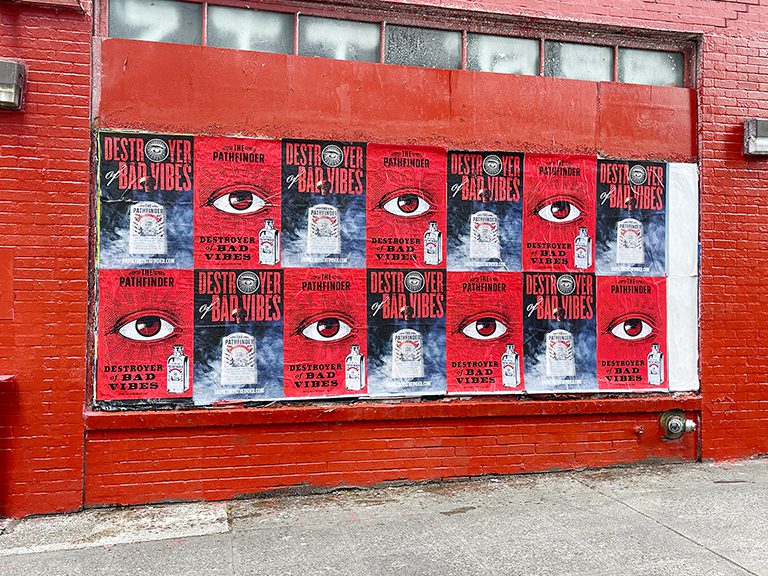
Honolulu’s neighborhood diversity rewards strategic thinking about format selection. The city’s pedestrian corridors — Chinatown’s narrow bar blocks, Kakaako’s mixed retail and residential streets, Waikiki’s broad entertainment avenues — each have different visual environments that shape how poster formats perform. Understanding the distinction between the 24×36 and 48×72 formats in Honolulu requires thinking about both the physical characteristics of the placement surfaces available in each neighborhood and the campaign goals that format choice is meant to serve.

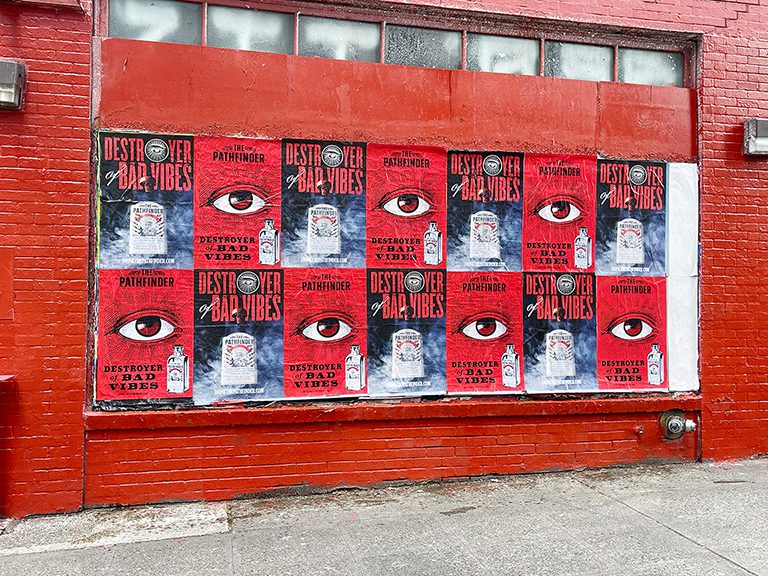
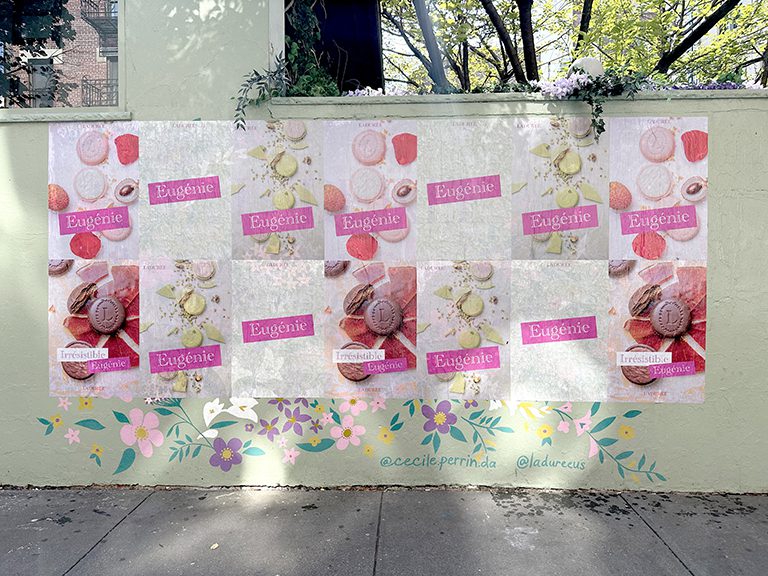
The 24×36-inch format is designed for the accumulated impression effect — the experience of encountering the same brand in multiple locations over the course of an evening in Chinatown, a morning walk through Kakaako, or a tourist’s afternoon moving between Waikiki’s entertainment venues. At this size, posters are large enough to read from across the street and register clearly at normal walking pace, but compact enough to be placed in concentrated clusters that build repetition. For a music act promoting a Honolulu show, a restaurant building awareness in the neighborhood before its opening, or an entertainment platform launching a Hawaii content push, 100 posters in the 24×36 format creates meaningful presence across Honolulu’s key entertainment corridors. Scaling to 200 posters adds the secondary neighborhood saturation that turns a presence into a saturation. Contact AGM for a quote based on your target neighborhoods and campaign goals.

The 48×72-inch format makes a statement that 24×36 cannot. At four feet by six feet, these installations stop people rather than simply registering as they pass. In Kakaako, where the existing mural culture has conditioned audiences to engage with large-scale visual work at the street level, a 48×72 poster on a warehouse wall carries the weight of genuine public art. A brand that places large-format posters in Kakaako adjacent to the POW! WOW! murals is participating in a visual conversation that the neighborhood’s audiences take seriously. In Waikiki, large-format posters on the building faces adjacent to major entertainment venues reach the pedestrian flow moving toward those venues with unmistakable visual authority. Contact AGM for a quote on large-format Honolulu campaigns.

Many Honolulu campaigns combine both formats: large-format installations on Kakaako’s warehouse walls and Waikiki’s major venue corridors, with 24×36 posters saturating Chinatown’s gallery and bar blocks and the residential streets of the neighborhoods adjacent to the entertainment zones. This two-tier approach delivers both the headline declaration that a major launch or announcement requires and the repetition frequency that makes a campaign genuinely memorable to audiences moving through the same neighborhoods across a one-to-two-week campaign window.

Build Your Fly Posting Campaign In Honolulu

    Award Winning Personalized Service

    You will get thoughtful, devoted, and individualized attention from our experienced, qualified, and professional personnel. Being one of the most illustrious agencies in Brooklyn, New York, American Guerrilla Marketing has been awarded the Best of Brooklyn title.

    Nationwide

    Industry City, Brooklyn, New York 11232

    American Guerrilla Marketing

    +1 (646) 776-2770

    [email protected]

    Telegram: @americanguerillamarketing

    Hours

    Mon - Fri: 9 AM - 5 PM

    Sat & Sun: Closed

    Automate your campaign with AGM’s Request for Proposal Builder.

    Automate your campaign with AGM’s Request for Proposal Builder. Simply answer a few quick questions about your campaign goals, markets, and timeline, and the system will generate a tailored presentation with recommended strategies, quantities, and pricing. Click the RFP Builder to instantly receive your customized proposal.

    How Agm Plans A Honolulu Street Poster Campaign

    Every Honolulu fly posting campaign begins with a targeting conversation that identifies three things: which neighborhoods matter most for the campaign’s specific audience, what the installation timeline looks like relative to any event or launch window, and what the campaign is trying to accomplish — awareness building, event promotion, brand entry into the Hawaii market, or sustained presence in specific corridors. From those answers, AGM builds a placement map that prioritizes the highest-value surfaces in the right Honolulu neighborhoods.

    Targeting in Honolulu requires understanding the city’s micro-geography with operational precision. Kakaako’s foot traffic concentrates on the blocks between Ward Avenue and Cooke Street, particularly around the Restaurant Row development and the retail corridors closest to the Ward Village high-rises. Chinatown’s peak hours are Friday and Saturday evenings, when the gallery and bar district pulls a creative-class crowd that walks between venues along Hotel Street and the connecting alleys. Waikiki’s pedestrian density is highest in the late afternoon and evening along Kalakaua Avenue and the blocks between it and Kuhio Avenue. AGM’s knowledge of these patterns comes from operational experience in Honolulu’s neighborhoods — the kind of knowledge that a brand planning its first Hawaii street campaign doesn’t have, and that makes the difference between placement that delivers and placement that misses.

    Hawaii’s climate shapes every production decision. Honolulu’s year-round warmth and the periodic trade-wind rainfall that sweeps through the city require materials appropriate for outdoor tropical conditions. AGM selects poster paper weights and adhesive formulations that maintain their visual integrity through Honolulu’s weather across the one-to-two-week standard campaign duration. Surfaces on the leeward sides of buildings, under awnings, and in the sheltered spaces of Chinatown’s dense block structure tend to offer superior durability to fully exposed warehouse walls in Kakaako or the open corridors of Waikiki. Campaign targeting accounts for these durability differences.

    Installation is executed by on-the-ground Honolulu crews at the optimal time for the target corridors — typically late evening for entertainment district placements, when foot traffic in active venues is at its peak and installation can proceed without interfering with neighborhood activity. Every placement is GPS-documented and photographed. The post-campaign report delivered to the client includes photographic proof and geographic confirmation of every installation point, removing any ambiguity about whether and where the campaign actually ran.

    Who Runs Fly Posting Campaigns in Honolulu

    Music promoters and independent artists are among the most consistent Honolulu fly posting clients. The city’s live music community — concentrated in Chinatown’s venues along Hotel Street and the small performance spaces scattered through Kakaako and Downtown — relies on physical street presence to reach the local creative-class audience that fills these venues. A band playing their first Honolulu headline, a promoter moving tickets for an imported mainland act performing at the Blaisdell Concert Hall, or a festival organizer seeding awareness for a multi-day event in the months leading up to the window all use fly posting because it reaches the entertainment-corridor audience at the exact moment that audience is out in the world and making plans.

    Luxury hospitality brands use Honolulu fly posting to reach both the visiting and resident consumer simultaneously. A new hotel property opening in Waikiki uses street campaigns in the surrounding entertainment corridors to generate anticipation among the local population that will become its ongoing customer base beyond the opening-week tourist push. A resort promoting a new restaurant concept uses Kakaako and Chinatown placements to reach the local dining public that will sustain the restaurant after the launch buzz fades. A spa or wellness brand entering Honolulu’s premium consumer market uses street campaigns in the neighborhoods where its target demographic lives and socializes, establishing brand recognition before a single service is performed.

    Streaming platforms and entertainment companies have targeted Honolulu fly posting to reach Hawaii’s premium digital consumer base. A streaming service launching a Hawaii-set series deploys street campaigns in the neighborhoods where its target demographic concentrates — Kakaako’s young professional population, Chinatown’s creative class — creating physical brand presence that amplifies the digital advertising running simultaneously across the same demographic. Gaming companies, content studios, and entertainment brands targeting Hawaii’s tech-adjacent professional population have found Honolulu fly posting particularly effective in Kakaako, where the intersection of creative professionals and digitally sophisticated consumers creates a dense high-value audience in a compact geographic footprint.

    Surf and outdoor lifestyle brands — among the most culturally native advertising categories in Hawaii — use Honolulu fly posting to establish brand presence in the city’s arts and lifestyle districts that corresponds to the brand’s values. A surf apparel company that places posters in Kakaako is engaging with a community that understands surf culture at a foundational level. An outdoor gear brand appearing in Chinatown’s creative corridor is reaching the urban adventurer demographic that makes up a significant portion of Hawaii’s premium outdoor equipment market. Fashion brands targeting Hawaii’s young professional and creative consumer use Honolulu fly posting as both an advertising vehicle and a brand signal — an indication that the brand is present in, and serious about, the Hawaiian market.

    The Netflix Campaign: What Premium Brand Fly Posting Looks Like

    Understanding what fly posting can accomplish for a premium brand in a market with Honolulu’s audience complexity and cultural richness is easier with a concrete example. AGM executed a wheatpasting campaign for Netflix in Miami, Florida — a market that shares with Honolulu the combination of heavy tourism, significant local creative-class population, intense heat and humidity, and a competitive visual advertising environment. Netflix needed physical presence in pedestrian entertainment corridors in a market where digital advertising was already saturated and where the target audience was actively filtering out conventional ads.

    AGM handled the Netflix campaign from production through installation, placing large-format and standard-density posters in Miami’s highest-value pedestrian environments. The campaign demonstrated what fly posting does for premium brands that digital advertising cannot: it creates physical presence in the real environment that audiences actually inhabit, without competition from other advertisers at the specific surfaces where the posters appear. Netflix on a Miami street corner said something about the brand’s investment and confidence that a sponsored post on Instagram cannot say. That logic applies with even greater force in Honolulu, where brand authenticity carries additional weight in a community with strong local identity and high cultural pride.

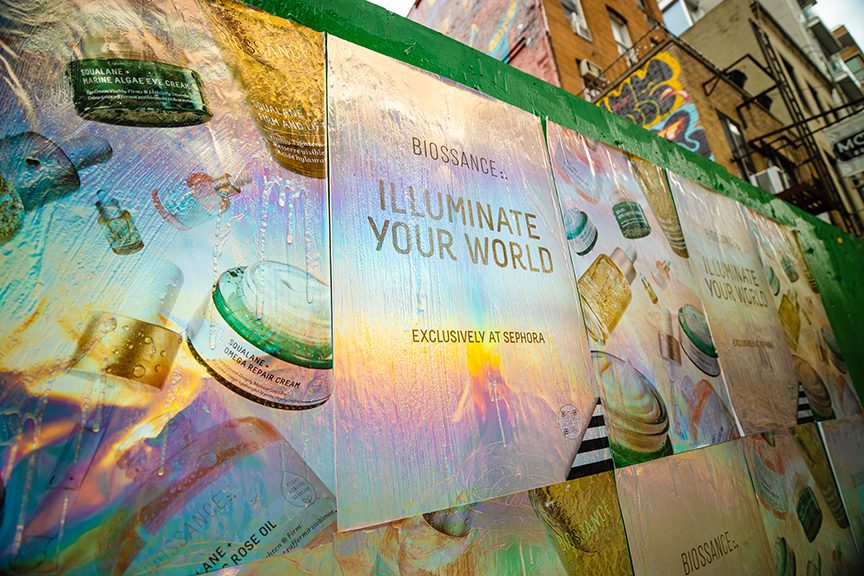
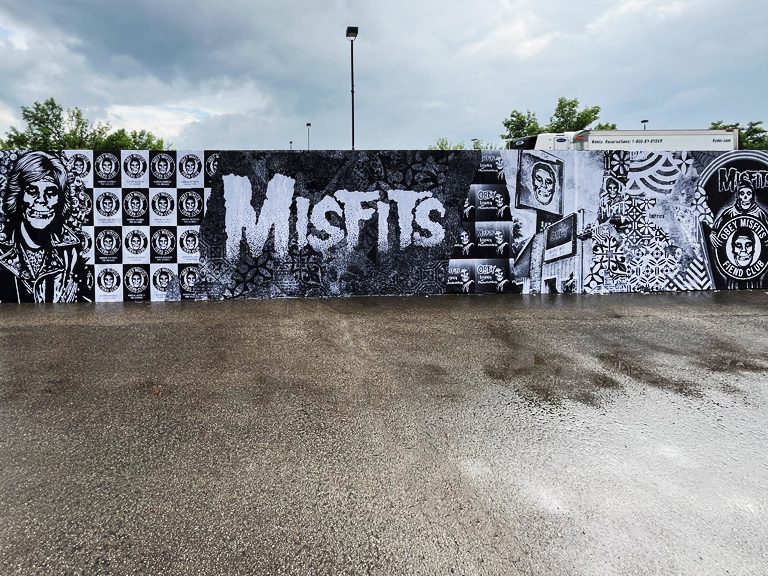
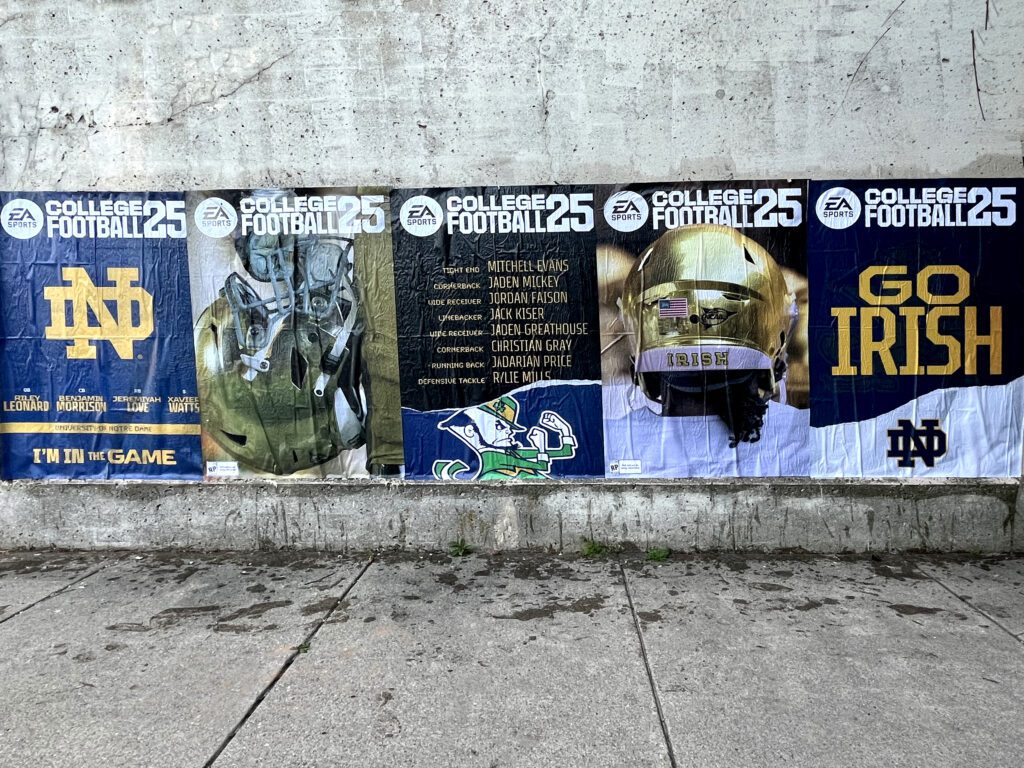
    AGM’s client roster — Netflix, EA Sports, Biossance, The Onion, Shepard Fairey — spans the range of premium brands and cultural institutions that have found fly posting indispensable as a component of comprehensive campaign strategy. In Honolulu, where the intersection of tourism, military community, creative professionals, and deep local culture creates one of America’s most layered urban audiences, the physical investment of a well-executed street campaign communicates the brand values that matter most to that audience.

    Honolulu Fly Posting Formats and Pricing

    24×36 Inch — Neighborhood Saturation

    • 72-hour rush available up to 500 qty
    • Ideal for: Kakaako arts district, Chinatown bar and gallery corridor, Waikiki pedestrian zones, multi-neighborhood saturation

    48×72 Inch — High-Impact Placement

    • Ideal for: Kakaako warehouse walls, Waikiki entertainment venue corridors, major brand launch announcements

    Campaigns typically run one to two weeks. Hawaii’s tropical climate is factored into material selection for every Honolulu installation. AGM delivers GPS-documented photo proof of every placement. All printing handled in-house — no subcontractors at any stage. Contact AGM for a quote based on your target neighborhoods, format, and campaign timeline.

    Honolulu Fly Posting FAQ

    The strongest Honolulu fly posting neighborhoods are Kakaako for creative-professional and arts-tourism audiences, Chinatown’s Nu’uanu and Hotel Street corridor for the local arts and nightlife community, Waikiki for tourism-oriented and entertainment-adjacent consumer reach, and Downtown Honolulu for professional and government-workforce audiences. AGM recommends targeting based on which audience matters most for a specific campaign’s goals.

    In Kakaako, fly posting means placing posters on the warehouse walls, construction barriers, utility structures, and building facades of a neighborhood that is already oriented toward large-scale visual work. The POW! WOW! Hawaii mural culture has primed Kakaako’s audiences to engage with street-level visual advertising in a way that other neighborhoods cannot replicate. A poster campaign in Kakaako participates in that visual culture rather than interrupting it, which means the audience relationship to the advertising is fundamentally different — and more receptive — than in conventional commercial corridors.

    Every poster AGM places in Honolulu is photographed at installation and GPS-tagged with the precise coordinates of the placement location. After the campaign, these photos and coordinate data are compiled into a post-campaign report delivered to the client. The report provides visual confirmation of every poster placed and geographic verification of the coverage achieved across Honolulu’s neighborhoods. There is no ambiguity about whether and where your campaign ran.

    Yes. Waikiki’s entertainment corridor — particularly Kalakaua Avenue and the blocks connecting the major hotels to the beach and entertainment venues — is a primary tourism pedestrian environment with consistent foot traffic from millions of annual visitors. AGM can target Waikiki corridor placements specifically for campaigns whose primary audience is the visiting tourist population, and can combine those placements with resident-oriented targeting in Kakaako and Chinatown for campaigns that need to reach both audiences simultaneously.

    The annual POW! WOW! Hawaii street art festival, held each February, creates one of the highest-value fly posting windows in Honolulu. During the festival, Kakaako’s foot traffic surges as street art tourists, media, artists, and local residents converge on the neighborhood to watch murals being created and to engage with the visual culture that defines the area. Brands that want to align with Hawaii’s street art identity, reach the global arts tourism audience, or simply be present during a week of exceptional pedestrian density in Kakaako should consider timing their Honolulu fly posting campaign to the POW! WOW! window.

    Contact AGM for a quote tailored to your target neighborhoods, format selection, and campaign timeline. Campaign costs vary based on poster format, quantity, geographic scope across Honolulu’s neighborhoods, and any rush production requirements. AGM provides transparent pricing based on the specific parameters of each campaign.

    Chinatown’s Hotel Street and Nu’uanu Avenue corridor concentrates Honolulu’s creative-class entertainment audience into a dense walkable geography on Friday and Saturday evenings. Fly posting in Chinatown means placing posters on the brick facades, gallery walls, and available surfaces along these corridors to intercept that audience during peak hours. AGM targets the specific blocks and surfaces that generate the most impressions from the bar and gallery-going crowd, maximizing the campaign’s reach within a community that is both highly receptive and notoriously hard to reach through conventional advertising.

    Honolulu’s military community — drawn from the various installations across Oahu who spend leisure time in the city’s entertainment districts — is reachable through Waikiki, Chinatown, and the corridors connecting them. Active-duty personnel and military families frequent Waikiki’s entertainment venues, Chinatown’s bar and restaurant scene, and Kakaako’s retail and dining options. Fly posting in these corridors reaches the military audience as part of the broader Honolulu pedestrian population moving through the same spaces during leisure hours.

    Honolulu fly posting campaigns typically run one to two weeks. Hawaii’s tropical climate — including trade-wind rainfall and year-round humidity — affects poster longevity on fully exposed outdoor surfaces. AGM selects materials appropriate for Honolulu’s conditions and accounts for surface exposure in targeting decisions. Installations on protected surfaces, covered walls, and sheltered alleys in Chinatown’s dense block structure tend to maintain visual integrity longer than fully exposed warehouse walls in Kakaako or open Waikiki corridors.

    High-value Honolulu campaign windows include the POW! WOW! Hawaii street art festival in February, the Honolulu Marathon in December, the Hawaii International Film Festival in October, summer concert season at the Neal Blaisdell Center, and major Aloha Stadium events including University of Hawaii football games. Each creates a window where pedestrian density in the relevant corridors spikes significantly, maximizing the impressions generated by a well-timed campaign installation.

    Yes. For time-sensitive Honolulu campaigns — a concert announcement, a last-minute brand activation, a surprise content drop — AGM offers 72-hour rush production and installation for 24×36 format campaigns up to 500 units. Rush availability is subject to scheduling and production capacity. Contact AGM as early as possible when a rush deployment is needed to ensure the timeline can be accommodated.

    Digital advertising in Honolulu competes for attention in a screen environment that includes every other brand targeting the same demographic, plus organic content, news, social feeds, and the full range of competing digital stimuli. Fly posting occupies physical space in the actual environment where the target audience lives their leisure life — Kakaako’s streets, Chinatown’s bar blocks, Waikiki’s entertainment corridors — without any competing visual content at the specific surface where the poster appears. A consumer who sees a brand’s poster in Chinatown on Saturday night is meaningfully more likely to engage with that brand’s digital content during the week. The physical impression creates an anchor that digital ads alone cannot build.

    Browse All States

    Explore Fly Posting Advertising opportunities across the United States.

    No locations found

    American Guerrilla Marketing Blog Posts