
September 12, 2026
Mobile Marketing Roadshows: Planning, Execution & Costs (2026)
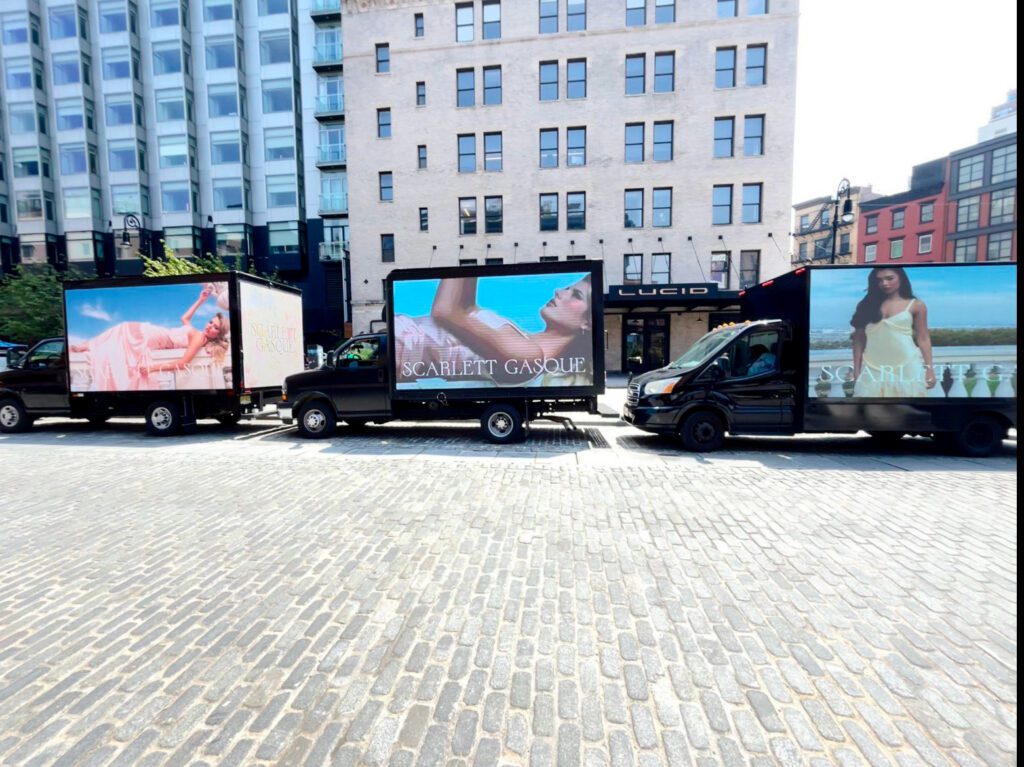
A mobile marketing roadshow moves your brand from city to city over days or weeks, generating street-level presence, consumer contact, and content at every stop. Here is what goes into planning one that actually works.
A mobile marketing roadshow is a coordinated, multi-stop campaign that deploys a branded vehicle or team across several cities, neighborhoods, or markets within a defined time window. The vehicle is the hub. Everything else, the sampling, the activations, the content creation, the street presence, radiates out from it.
We have planned and executed roadshows for beverage brands, consumer tech companies, apparel launches, and media properties. We have run four-city tours and twenty-city tours. We have built routes that hit college campuses in the Southeast one week and major urban markets in the Northeast the next. The format is flexible. The planning is not.
A roadshow that looks simple from the outside, a branded truck, a team, a route, involves a dense logistics infrastructure underneath. Vehicle maintenance windows, drive time between markets, local crew coordination, sampling and activation supply chains, local media and social amplification, and documentation at every stop all have to work together. When they do, a roadshow is one of the highest-impact formats we offer. When they do not, it falls apart publicly, in front of consumers, in multiple cities at once.
This guide covers how we build mobile marketing roadshows from the ground up.
What a Mobile Marketing Roadshow Actually Includes
The term roadshow gets used loosely. Sometimes it means a single truck hitting different neighborhoods in one city over a weekend. Sometimes it means a forty-day national campaign with ten vehicles moving at the same time across different regions. Both can be described as roadshows, but the planning requirements are completely different.
At its core, a mobile marketing roadshow has three components: a vehicle or fleet, a deployment team, and a route. Everything else is built on top of those three elements.
The vehicle is usually a wrapped box truck, a branded trailer, an event-configured sprinter van, or a purpose-built mobile activation unit. The wrapping makes the vehicle a moving billboard that generates exposures between stops. The configuration of the interior and exterior determines what kind of activation happens at each stop.
The deployment team handles everything at the stops. Product sampling, consumer engagement, social content creation, brand ambassador interactions, and physical setup and breakdown. Depending on the campaign, this team might be two people or twelve.
The route is the strategic heart of the whole program. Where you go, in what order, on which days, during which hours, at which specific locations within each city, determines how many consumers the campaign actually reaches and how relevant those consumers are to the brand.
Route Planning: How We Choose Cities and Stops
Route planning for a mobile marketing roadshow starts with the target audience, not a map. We do not pick cities because they are geographically convenient to connect. We pick cities because the target consumer exists there in density, and within those cities we identify specific stops where that consumer concentrates during the hours we plan to be there.
For a craft beverage brand targeting adults 25 to 40 in urban markets, our first-tier stops might include the South End of Boston, Wicker Park in Chicago, Capitol Hill in Seattle, and the Arts District in Los Angeles. All high walkability, all strong concentration of the target demographic during weekend afternoon windows. We plan the route to move between these markets efficiently, minimizing drive time between cities while maximizing active hours at each stop.
Within each city, we scout specific locations before the roadshow launches. We look for high foot traffic with natural dwell time, proximity to compatible retail or entertainment, access for a large vehicle, and photogenic backgrounds that make the content we capture at that stop shareable. The corner of Damen and Milwaukee in Wicker Park handles heavy weekend pedestrian traffic and has the kind of neighborhood character that reads well in photo and video. The Rose Kennedy Greenway in Boston during a summer weekend afternoon draws exactly the demographic we want for a lifestyle brand activation.
Field note: We always build buffer days into roadshow routes. If a market stop runs long, if a vehicle has a mechanical issue, or if a local event displaces our planned location, we need flexibility. A roadshow with every day fully committed from city to city with no buffer will encounter a problem it cannot recover from.
Vehicle Configuration for Mobile Marketing Roadshows
The vehicle is both the billboard and the activation platform. Getting the configuration right matters more than most clients expect at the planning stage.
Wrapped Box Truck with Activation Area
The most common roadshow vehicle is a wrapped box truck with an activation area built into the rear cargo space. The exterior wrap generates exposures as the truck drives to and between stops. At each stop, the rear doors open to reveal a branded activation space, a sampling station, a demo environment, or a photo and content creation setup. This configuration works for consumer packaged goods, food and beverage brands, and any campaign where product experience is the core activation.
Custom Trailer with Brand Environment
A trailer gives you more interior space than a box truck and can be configured as a fully branded consumer environment. Trailers used for roadshows often include flooring, lighting, display fixtures, and interactive elements that turn the interior into a brand experience rather than just a sampling booth. The trade-off is that a trailer requires a tow vehicle and takes more setup and breakdown time at each stop. For campaigns with 2 to 3 hour stop windows, a trailer setup works well. For quick 45-minute stops, a box truck configuration is more efficient.
Sprinter Van Fleet
Some roadshows use a fleet of wrapped sprinter vans rather than a single large vehicle. Multiple vans can hit different stops within the same city at the same time, which dramatically increases the total exposures and consumer contacts per day. Managing a fleet requires more coordination, but it solves the geographic coverage problem within large cities where getting a box truck to multiple neighborhoods in a single day is impractical.
Staffing a Mobile Marketing Roadshow
The team is where most roadshow budgets underinvest and most roadshows underperform as a result. A beautifully wrapped truck parked at a great location does nothing without the right people around it.
For a standard roadshow stop, we staff a minimum of three people: one driver/operator, one team lead who manages the activation and consumer interactions, and one content creator who captures photo and video throughout the stop. For higher-volume activations with product sampling, street team work, or interactive elements, we scale to five to eight people at a stop.
We hire local crew in each market where possible. Local staff know the neighborhood, navigate the social dynamics of the street, and bring existing community credibility to the activation. They are also more reliable than traveling team members who have been driving between cities for a week and are running on 6 hours of sleep. We brief local crew remotely ahead of each stop and have a traveling team lead who manages consistency across the entire roadshow.
Content Strategy for Multi-City Roadshows
The most valuable output of a well-run mobile marketing roadshow is often the content. Every stop is a content production opportunity. The truck in front of a recognizable cityscape. Consumer reactions to the product. The team working the street. The crowd that gathers.
We build a content brief before each roadshow that defines what types of shots we want at each stop, which locations within each city are priority photo backdrops, and what kind of consumer interaction content works for the campaign’s social channels. This brief goes to the content creator on the team and gets executed at every stop, consistently, so the brand ends the roadshow with a full library of assets rather than a random collection of phone photos from ten different cities.
Content note: The best roadshow content is not the polished shots. It is the candid reaction videos, the consumer testimonials captured in the moment, and the street-level photography that shows your brand in the real environment. Plan for a 70/30 split: 70 percent planned content, 30 percent opportunistic capture. The 30 percent is often what goes viral.
Mobile Marketing Roadshow Costs
| Component | Estimated Cost Range | Notes |
|---|---|---|
| Vehicle wrap (box truck) | $2,500 – $5,000 | One-time production for campaign duration |
| Vehicle rental (per day) | $200 – $500 | Higher for specialty activation builds |
| Driver/operator (per day) | $300 – $500 | CDL driver in many markets |
| Brand ambassador team (per stop) | $800 – $2,500 | 3 to 8 people per stop |
| Content creator (per day) | $500 – $1,200 | Photo and video capture throughout |
| Product and sampling supply (per city) | $1,000 – $5,000 | Varies widely by product category |
| Travel and logistics (per city) | $500 – $1,500 | Fuel, accommodations, local transport |
A realistic five-city roadshow with a wrapped box truck, a team of four traveling crew plus local staff at each stop, content creation, and product sampling budgets typically runs $40,000 to $85,000 depending on market selection and campaign duration. Ten-city programs scale toward $80,000 to $180,000. Premium vehicle builds and larger crews push costs higher.
What Makes a Roadshow Succeed or Fail
We have been part of campaigns that succeeded and campaigns that did not. The pattern is consistent. Roadshows succeed when the stops are planned around where the target audience actually is, when the team is energized and properly briefed, and when there is enough flexibility in the schedule to respond to what is happening on the ground. They fail when the route is driven by convenience rather than strategy, when the team is stretched thin across too many stops in too short a window, and when the activation at each stop is generic rather than tuned to the local audience.
The other failure pattern is documentation. A roadshow that generates impressive street presence but no content, no data, no consumer captures, and no photo record is a campaign that produced no lasting asset. Every stop should produce something durable: content, consumer data, exposures documented, or media coverage. If it did not, the stop was not planned well enough.
Local Market Intelligence: What to Know Before You Arrive
Every city on a roadshow route has its own character, and ignoring that character produces flat, forgettable stops. Before we pull a truck into a new market, we do homework. We look at which neighborhoods are seeing the highest foot traffic during the days we plan to be there. We check local event calendars to avoid conflicts and to spot opportunities. If there is a major street festival in Logan Square the same weekend we are planning a stop in Chicago, we either adjust the location to capture that crowd or build the stop around it intentionally.
We also look at what other brands are doing in each market. A market that sees a lot of consumer-facing brand activations has audiences who are comfortable interacting with branded experiences. A market where this format is rare can produce outsized response because the novelty factor works in your favor. Both conditions are valuable. They just require different approaches from the team.
Local knowledge also applies to timing. Lunch hours in the Financial District in San Francisco draw a very different crowd than weekend afternoons in the Mission. We match the stop window to the audience window, more than the city. A team that shows up to the right city at the wrong time of day leaves exposures and consumer contacts on the table.
Roadshow Timing and Seasonality
The calendar shapes a roadshow as much as the route does. Spring and early fall are the strongest windows for multi-city roadshow programs. Foot traffic is high, weather cooperates in most markets, and outdoor activations run without weather contingency headaches. Summer roadshows work in northern markets but require heat management for sampling and team energy in southern cities. January and February in northern markets are difficult. Cold reduces pedestrian traffic and shortens the productive window at outdoor stops dramatically.
Holidays and cultural moments matter too. A roadshow timed to move through college markets during back-to-school week in August has a built-in audience surge. A beverage brand roadshow timed around summer festivals and outdoor event calendars captures concentrated foot traffic without having to create it. A music release roadshow timed to the week before an album drop builds anticipation in multiple markets at once.
We plan roadshow timing around the target audience’s calendar, more than the brand’s launch schedule. Those two things do not always align on their own. Part of our job is identifying the window where they overlap best across the full set of markets on the route.
Measuring Roadshow Performance
Roadshow measurement is more reliable than most clients expect coming from traditional advertising backgrounds. Because the team is physically present at every stop, we can count real things: consumer contacts, samples distributed, content pieces captured, social posts generated by consumers, and exposures from the vehicle in motion and at the stop location.
We track consumer contacts by stop, which gives us a market-by-market comparison of which cities performed above and below expectations. That data informs future route planning. If our stop in Austin consistently produces twice the consumer contacts of our stop in Houston at comparable locations and time windows, that tells us something about audience density and campaign fit by market that informs the next program.
Impression tracking for the vehicle itself uses drive-time traffic data for routes between cities combined with pedestrian traffic estimates at each stop location. These are estimates, not exact counts, and we are transparent about that with clients. The most durable numbers are the ones we can count directly: samples out, contacts made, content produced, social organic reach from consumer posts tagged to the activation.
The post-campaign report we deliver covers every stop, documents what was accomplished, and identifies what to do differently on the next program. A roadshow that does not generate a real report is a roadshow that does not improve.
Frequently Asked Questions
How many cities should a mobile marketing roadshow cover?
For most campaigns, three to six cities is the sweet spot. More than eight to ten cities usually produces diminishing returns unless you have a large team and fleet.
How far in advance do I need to plan a roadshow?
Eight to twelve weeks for a standard roadshow. Vehicle sourcing, wrap production, crew hiring, location scouting, and supply logistics all have lead times.

Ready to Run Your Campaign?
Call us or email us. We’ll tell you exactly what we can do in your market and what it costs.
Related Services
Explore similar advertising solutions offered by American Guerrilla Marketing.
American Guerrilla Marketing — Los Angeles
Street-level campaigns in Los Angeles and nationwide. Wheatpasting, LED trucks, street teams, and more.
(646) 776-2770
Related Articles
-
Street Poster Advertising Ottawa: A Complete Campaign Guide
September 17, 2026
-
Activation Marketing: How Brands Win at Street Level
September 13, 2026
-
Experiential Marketing Firms Chicago | American Guerrilla Marketing
September 12, 2026
-
Pop Up Experiential
September 12, 2026
-
Mobile Pop Up
September 12, 2026