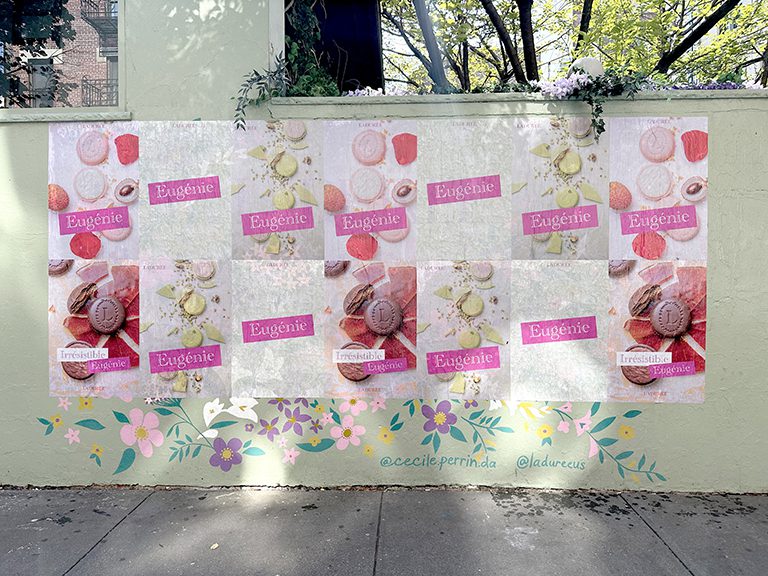
The word “poster” covers a lot of ground. A movie poster hanging in a theater lobby is not the same size as a concert flyer stapled to a telephone pole. A research poster at a university conference is bigger than both. And a street-level advertising poster is bigger than all three.
So what is the size of an average poster? The honest answer depends on what kind of poster you mean. But there are common sizes that appear over and over across different contexts. We work with all of them. Here is what you need to know.
The Most Common Average Poster Size
The single most common poster size across consumer, retail, and general use contexts is 24 x 36 inches. In metric, that is approximately 61 x 91 cm. This is what most people picture when they think of a standard poster.
The 24 x 36 inch format became dominant for a few practical reasons. It fits standard frames sold at retail stores like IKEA, Target, and Walmart. It rolls into a standard mailing tube without folding. It prints efficiently on wide-format inkjet printers. And it gives designers enough space to include photos, headlines, and supporting text at a legible scale.
Walk into any college dorm in America and you will see 24 x 36 posters on almost every wall. Walk into a concert venue, a local bar, or a record shop and you see the same size promoting shows and new releases. It is the workhorse of the poster world.
That said, 24 x 36 is the consumer average. Professional advertising, academic research, and large-format printing all use bigger sizes. And smaller formats like 18 x 24 and 11 x 17 are common in contexts where space or budget is limited.
Standard Poster Sizes: A Full Reference
Here is a breakdown of every common poster size, with context for where each one is typically used.
Poster Size (in)
Poster Size (cm)
Common Uses
8.5 x 11
21.6 x 27.9
Flyers, handbills, small announcements
11 x 17
27.9 x 43.2
Event flyers, retail notices, small posters
18 x 24
45.7 x 61
Retail displays, point-of-sale, small events
22 x 28
55.9 x 71.1
Theater lobbies, store windows, school events
24 x 36
61 x 91.4
General purpose, dorm decor, concerts, retail
27 x 40
68.6 x 101.6
Movie one-sheets, theater lobbies
36 x 48
91.4 x 121.9
Trade shows, academic conferences, events
48 x 72
121.9 x 182.9
Outdoor advertising, large venues
Poster Sizes in Different Industries
The “average” shifts depending on who is buying the poster and why. Here is how poster size breaks down by industry.
Entertainment and Music
Concert posters and music posters almost always run 24 x 36 inches. This is the size you find at Amoeba Music in Hollywood, pinned to bulletin boards outside clubs, or rolled up at record fairs. Some venues use 18 x 24 for smaller shows. Major national tours sometimes use 27 x 40 or 36 x 48 for lobby and venue displays.
Movie studios use a specific format called the one-sheet, which is 27 x 40 inches. You see this size in every multiplex in the country. It fits the lightbox frames installed in theater corridors. That 27 x 40 dimension is so associated with movies that it is sometimes called the “movie poster size.”
Retail and Point-of-Sale
Retailers use a wider range of sizes depending on where the poster hangs. Window displays often use 22 x 28 or 24 x 36. In-store signage might run 18 x 24 or smaller. End-cap displays and promotional banners can go much larger.
Grocery stores and pharmacies typically use 22 x 28 for their in-store promotional posters. That format fits the standard clip frames and poster holders sold to retailers.
Academic and Scientific Research
Conference posters in academic settings are significantly larger than consumer posters. The standard is 36 x 48 inches, with some events using 48 x 36 in environment or 44 x 44 for square boards. The larger size accommodates the volume of text, data tables, and figures that research presentations require.
Outdoor and Street Advertising
Street-level advertising posters are much larger than anything hanging in a dorm room. The standard outdoor advertising formats include the 24-sheet billboard (roughly 102 x 228 inches) and the 8-sheet junior poster (roughly 60 x 120 inches). Wheat-paste and window poster campaigns often use custom sizes based on the display location. Common street poster sizes run from 24 x 36 up to 24 x 72 and beyond.
Size Affects Impact
A poster that is too small for its display location gets ignored. A 24 x 36 poster in a window that holds 36 x 48 looks like an afterthought. Match your poster size to the space it will occupy. Bigger is almost always better when the space supports it.
Small Poster Sizes
Not every poster is meant to fill a wall. Small poster formats serve important purposes in retail, event promotion, and community organizing.
8.5 x 11
Standard letter size. This is technically a flyer more than a poster, but it serves the same function at small scale. Used for lost pet notices, local event announcements, community bulletin boards, and band shows at small venues. Printable on a home or office laser printer.
11 x 17
Tabloid size. The step up from letter and the standard for small-run event posters. Most print shops offer this on a walk-in basis. It fits a standard file folder for transport and storage. Common for restaurant specials, school plays, and local fundraisers.
18 x 24
Half the size of a 36 x 48. This format is common in retail point-of-sale displays, real estate offices, and smaller event venues. It also works well as a companion piece to a larger campaign, giving you the same artwork at multiple scales.
Large Poster Sizes
Large posters are used where visibility is the top priority. These formats are designed to be seen from distance, whether that is across a conference hall, down a street, or through a window.
36 x 48
The large-format standard. This is three times the area of an 18 x 24 and significantly more impactful in any setting. At 36 x 48, your poster title is readable from 15 feet away if the type is sized correctly. Used at conferences, trade shows, and events worldwide.
48 x 72
Double the height of a 24 x 36. This format is used in large venue lobbies, arenas, and building exterior advertising. At this size, a printed poster functions almost like a banner. It requires a specific printer and mounting hardware.
Custom Sizes
Large-format printing is not limited to standard dimensions. If you need a 30 x 50 or a 44 x 80, most professional print shops can accommodate that. Custom sizes cost more because they require manual setup and may waste material. But they are often the right choice for specific display environments.
How to Choose the Right Poster Size
The right size is not the biggest size or the most common size. It is the size that fits your specific display environment and communicates your message at the right scale.
Ask yourself these questions before you order:
Where exactly will this poster be displayed?
What is the available surface area at that location?
How far away will viewers be when they first see it?
Does the venue or event have a size requirement?
How much content needs to fit on the poster?
If you are decorating a wall in your home, 24 x 36 is a safe default. If you are presenting at a conference, check the organizer’s guidelines. If you are running a street advertising campaign, the size depends on the display locations you have secured.
Poster Size and Print Quality
Size and resolution go together. As posters get larger, the required resolution decreases because viewers stand farther away. Here is how that works in practice.
Poster Size
Typical Viewing Distance
Recommended Resolution
11 x 17
2-3 feet
300 DPI
18 x 24
3-5 feet
200-300 DPI
24 x 36
4-8 feet
150-200 DPI
36 x 48
6-15 feet
100-150 DPI
48 x 72+
15+ feet
72-100 DPI
This is why a photo that looks sharp on an 11 x 17 print can look pixelated on a 36 x 48. The resolution was fine for close viewing but not for the larger size. When designing for larger formats, use vector graphics wherever possible and source photos at the highest available resolution.
Paper Stock and Finish for Average Posters
The size of a poster is only part of the decision. Paper stock and finish affect how the poster looks and how long it lasts.
Coated Gloss
Bright colors and sharp image contrast. Gloss paper is common for consumer decorative posters and music event posters. It catches light, which can create glare indoors. It is not the best choice for reading-heavy content.
Coated Matte
Softer color output and no glare. Matte is preferred for academic conference posters, text-heavy content, and professional presentations. It also photographs better if you plan to document your poster with a phone camera.
Satin or Semi-Gloss
The middle ground between gloss and matte. Good for posters that have both photographic elements and text. Satin is a popular choice for retail and event posters because it handles both well.
Uncoated / Bond
Basic paper without a coating. This is what comes out of a standard office printer. Not recommended for professional poster prints. The ink absorbs unevenly and colors appear duller than on coated stock.
Standard Poster Frame Sizes
If your poster is going on a wall and you want to frame it, you need to match the poster size to available frame sizes. Frames are available in these standard sizes at most retailers.
11 x 14 inches
11 x 17 inches
18 x 24 inches
20 x 28 inches
22 x 28 inches
24 x 36 inches
27 x 40 inches
The 24 x 36 and 27 x 40 frames are the most common at mass-market retailers. If you have a custom-sized poster, you will need a custom frame or a mat board to fill the gap.
What is the most average poster size?
24 x 36 inches. This is the most common size for consumer, retail, music, and general-use posters in the United States.
What size is a standard wall poster?
Most wall posters sold in stores are 24 x 36 inches. Some are 18 x 24 or 27 x 40 (movie one-sheet format).
How big is a standard poster in cm?
A 24 x 36 inch poster measures approximately 61 x 91.4 centimeters.
Is 18 x 24 a standard poster size?
Yes. 18 x 24 is a widely used format for retail, events, and smaller venues. It is available at most print shops.
What size is a movie poster?
Movie one-sheets are 27 x 40 inches. This is the standard size used in theater display frames across the U.S.
What is the difference between a small poster and a large poster?
Small posters are typically 11 x 17 or 18 x 24 inches. Large posters are 24 x 36 and up. There is no strict industry cutoff.
Can I print a poster at home?
On letter or tabloid paper, yes. For 24 x 36 and larger, you need a wide-format printer. Most print shops and office supply stores offer large-format printing services.
What resolution should a 24 x 36 poster be?
150 to 200 DPI at full print size. Higher resolution is not necessary since the poster will be viewed from several feet away.
Are poster sizes different in Europe?
Yes. Europe uses ISO paper sizes. The closest equivalent to a U.S. 24 x 36 poster is A1 (23.4 x 33.1 inches). The closest to 36 x 48 is A0 (33.1 x 46.8 inches).
What is the biggest standard poster size?
In consumer retail, 27 x 40 is typically the largest standard framed size. In professional printing, 36 x 48 and 48 x 72 are common large-format sizes. Custom sizes go much larger for outdoor applications.
How Poster Size Affects Your Advertising Budget
Poster size has a direct relationship with cost. Larger posters cost more to print because they use more material and more ink. They also require different distribution infrastructure: larger display surfaces, longer mounting times, and in some cases specialized hardware that smaller formats do not need.
For a brand running a street advertising campaign, the choice between 18 x 24 and 24 x 36 is more than a visual decision. It is a budget decision. A 24 x 36 print typically costs 50 to 80 percent more per piece than an 18 x 24 in the same quantity. Across a run of 1,000 posters, that difference is significant.
The flip side is impact per impression. A 24 x 36 poster is visible from farther away, captures attention more strongly, and occupies more of the viewer’s visual field than an 18 x 24. In a high-foot-traffic environment, the additional visibility may justify the additional cost. In a smaller venue or lower-traffic location, the 18 x 24 is often sufficient and more cost-effective.
The calculation changes again for academic and professional contexts. Conference posters at 36 x 48 are a significant investment compared to consumer formats. But the audience is smaller, the impression lasts longer (a full poster session rather than a passing glance on a sidewalk), and the professional context makes the larger format essential for credibility.
How to Design for Different Poster Sizes Without Starting Over
If you are running a campaign with posters in multiple sizes, you do not need to design each size from scratch. The most efficient approach is to design at the largest size first, then adapt for smaller formats.
Start at 36 x 48. Place all your content, establish the visual hierarchy, and finalize the design. When you scale down to 24 x 36, reduce font sizes proportionally, remove secondary content that does not fit, and adjust the layout if necessary. When you scale down further to 18 x 24, remove more content and simplify the design to the essentials.
Designs that share the same aspect ratio scale perfectly. A 36 x 48 and an 18 x 24 both have a 3:4 ratio. Scaling from 36 x 48 to 18 x 24 is exactly 50 percent in each dimension. No cropping, no stretching. A 24 x 36 and a 12 x 18 share the same 2:3 ratio and scale the same way.
Formats with different aspect ratios require adjustments. A 24 x 36 (2:3) scaled to a 22 x 28 (approximately 1:1.27) will crop content at the top or bottom unless the layout is reconfigured. Build your initial design with this in mind if you know you will need both formats.
Poster Size and the Psychology of Display
The size of a poster affects how people perceive it psychologically, more than visually. A full-sized poster in a display space signals investment and commitment. A small poster in a large space signals the opposite.
In guerrilla marketing campaigns, size is part of the message. A massive poster on a building wall commands a different kind of attention than a small flyer on a telephone pole. Both communicate, but one communicates scale and ambition, and the other communicates local and scrappy. Neither is wrong, but the choice is intentional.
When brands are launching something significant, they print large. The physical scale of the advertising mirrors the claimed significance of the event. Concert promoters for stadium shows use enormous posters. The size tells you before you read a word that this is a big deal.
The average 24 x 36 poster sits between these extremes. It is large enough to be taken seriously, affordable enough to print in quantity, and transportable enough to get into the hands of distributors without logistical problems. That balance is why it became the standard.
Choosing Between the Average Size and a Custom Dimension
Most print projects belong in one of the standard sizes. Standard sizes have advantages: stock frames, known display hardware compatibility, efficient printing, and running viewer expectations. When someone sees a 24 x 36 poster, they know what it is.
Custom dimensions make sense when the display environment demands them. A stairwell wall that is 30 x 60 inches demands a 30 x 60 poster. A display board that is 40 x 50 needs a 40 x 50 poster. Trying to fit a standard 24 x 36 into a display built for 40 x 50 produces an undersized, underwhelming result.
Custom sizes cost more. The printer has to set up a non-standard job, potentially wasting material at the edges of a roll. But the cost difference is often smaller than people expect, and the improvement in fit and presentation quality is frequently worth it.
Poster Size and the Viewer Experience
The size of a poster directly shapes how a viewer experiences it. A small 11 x 17 poster is an intimate, close-range object. You read it like you read a newspaper: standing close, with focused attention. A 24 x 36 poster on a wall is experienced more like a painting: from across the room, with a first impression that happens at a glance and a deeper reading that happens when you step closer. A 48 x 72 poster in a venue lobby is experienced architecturally: you walk into its presence before you read it.
Designing for each of these experience modes requires different choices. The 11 x 17 can include more detail because viewers read it at 18 inches. The 24 x 36 needs a strong visual that reads at 10 feet. The 48 x 72 needs an image and headline that communicates at 30 feet. The viewing distance is not a technical constraint. It is the defining parameter of the communication.
When brands move between sizes without adapting the design, they miss this. Shrinking a 24 x 36 design to fit an 11 x 17 without adjusting content produces text so small it is unreadable at arm’s length. Blowing up an 11 x 17 design to 36 x 48 produces content too dense and detailed to communicate quickly at conference-hall distances. The size and the design must be developed together, not separately.
Average Poster Size and Shipping
Shipping affects which poster sizes are practical for campaigns that need to move printed materials across the country or internationally. The 24 x 36 average size ships easily in a standard poster tube that fits within parcel shipping constraints. A 36 x 48 poster requires a larger tube or special handling. An 11 x 17 can ship flat in a standard envelope or padded mailer.
USPS, FedEx, and UPS all have size limitations for standard parcel shipping. A rolled poster in a tube with an overall length plus girth under 108 inches (USPS) ships within standard rates. Most standard poster tubes carrying 24 x 36 or 36 x 48 prints fall well within this limit. Very large posters or unusual formats may require freight shipping.
For campaigns that ship posters to multiple cities or to partner venues across the country, the 24 x 36 format is the most practical. It ships at standard parcel rates, fits in standard tubes, and survives a few days in transit without degrading. The 18 x 24 is even more practical for shipping in quantity, fitting in smaller tubes at lower shipping cost per unit.
Why American Guerrilla Marketing
We’ve run street-level campaigns in New York, Los Angeles, Chicago, Miami, and dozens of other markets. Our crews work nights, weekends, and event windows. We scout locations in advance, document every placement with GPS pins and photos, and send reports the same day.
We don’t subcontract. Every campaign runs through our own field staff. That means consistent quality, real accountability, and results you can actually verify.
Call us or email us to talk through your campaign. We’ll tell you exactly what works in your market, what it costs, and how fast we can move.
Frequently Asked Questions
What is the most average poster size?
24 x 36 inches. This is the most common size for consumer, retail, music, and general-use posters in the United States.
What size is a standard wall poster?
Most wall posters sold in stores are 24 x 36 inches. Some are 18 x 24 or 27 x 40 (movie one-sheet format).
How big is a standard poster in cm?
A 24 x 36 inch poster measures approximately 61 x 91.4 centimeters.
Is 18 x 24 a standard poster size?
Yes. 18 x 24 is a widely used format for retail, events, and smaller venues. It is available at most print shops.
What size is a movie poster?
Movie one-sheets are 27 x 40 inches. This is the standard size used in theater display frames across the U.S.
What is the difference between a small poster and a large poster?
Small posters are typically 11 x 17 or 18 x 24 inches. Large posters are 24 x 36 and up. There is no strict industry cutoff.
Can I print a poster at home?
On letter or tabloid paper, yes. For 24 x 36 and larger, you need a wide-format printer. Most print shops and office supply stores offer large-format printing services.