Poster Normal Size: What Normal Actually Means and Which Format to Choose
The word “normal” in poster sizing means different things in different contexts. A normal size for a school project looks completely different from a normal size for a street marketing campaign. A normal size for a movie theater is different from a normal size for a retail window display. Context defines normal.
That said, the industry does converge on a small handful of sizes that qualify as truly standard across most applications. These are the dimensions you encounter repeatedly, regardless of industry. Knowing them means you can order confidently, design efficiently, and avoid the costly mistake of choosing a format that does not fit your intended environment.
At American Guerrilla Marketing, we work with clients who range from first-time campaign buyers to experienced brand marketers. The question about normal poster size comes up constantly. This guide gives a straight answer for every context where the question matters.
What Is the Normal Poster Size in Street Marketing
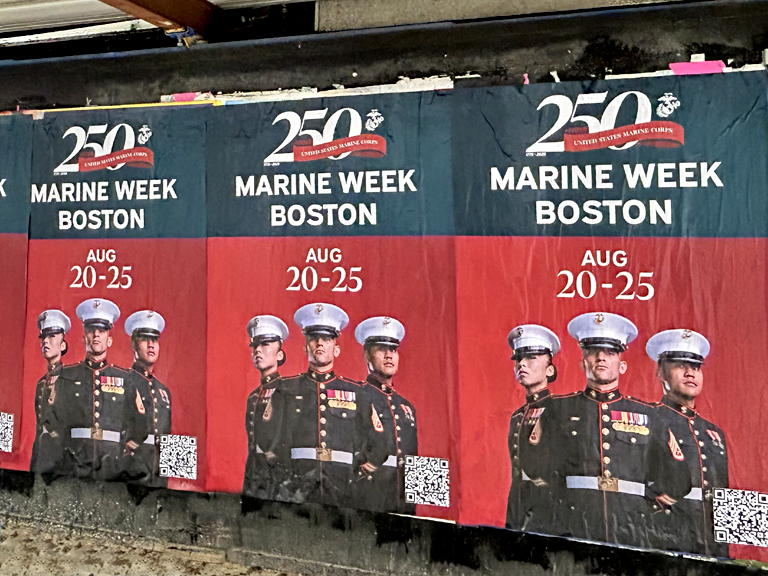
In street-level marketing, the normal poster size is 24 x 36 inches. This format is so common that many print vendors list it as their default poster option. It is the size most brands default to when they say “street poster” without further specification.
Why 24 x 36? It hits a practical sweet spot. It is large enough to be visible from 30 feet away. It is small enough to fit on most urban surfaces without requiring unusual installation techniques. It is affordable to print in quantity. It is easy for two-person crews to handle and apply.
The 18 x 24 format is also considered normal in street marketing, especially for lower-budget campaigns where volume matters more than individual size. It is the smaller cousin of the 24 x 36 and serves similar purposes at a lower cost per unit.
Normal Poster Sizes Across Different Industries
Normal changes by industry. Here is how different sectors define their standard poster dimensions:
Entertainment and Music
The entertainment industry defaults to 24 x 36 for general promotion and 27 x 40 for the theatrical one-sheet. Concert posters typically run 18 x 24 or 24 x 36. These are the sizes you see on club walls, venue entrances, and record store windows.
Retail and Commercial
Retail environments use a wider range. Point-of-sale displays often use 11 x 17 or 18 x 24. Large window displays can go up to 24 x 36. In-store promotional signage varies widely by brand guidelines and available display hardware.
Academic and Community
Campus bulletin board culture runs on 11 x 17. This size fits the metal frames on standard cork boards and prints on equipment that most schools and libraries operate. For community events, 18 x 24 is often considered the minimum size worth printing.
Real Estate and Professional Services
Yard signs and property listings often use 18 x 24 format. This size is large enough to read from a passing car without being so large it requires special mounting hardware. Many standard A-frame and stake sign holders are built for 18 x 24 inserts.
Home and Personal Use
For wall art and personal use, 18 x 24 and 24 x 36 are both normal. Standard photo prints run smaller. Decorative posters for bedrooms and dorms are commonly 24 x 36. Frame manufacturers build products around these sizes because demand drives supply.
Most Common “Normal” Poster Size: 24 x 36 inches for outdoor and street campaigns. 11 x 17 inches for indoor, campus, and low-budget saturation campaigns. These two sizes cover the majority of what the industry calls normal.
Normal Poster Size Reference Table
Context
Normal Size
Inches
Why It Is Normal
Street Campaign
Standard
24 x 36
Visibility, surface fit, print economics
Small Street Campaign
Small Standard
18 x 24
Lower cost, higher volume, tight spaces
Campus / Community
Tabloid
11 x 17
Fits bulletin boards, cheap to print
Movie / Entertainment
One-Sheet
27 x 40
Industry standard for theatrical release
Retail Display
Varies
11 x 17 to 24 x 36
Depends on display hardware and window size
Home Decor
Decorative
18 x 24 or 24 x 36
Standard frame sizes match these dimensions
Outdoor Large Format
Large
36 x 48 or 48 x 72
Maximum visibility, construction sites and large walls
Why Normal Poster Sizes Are Standardized
Standard poster sizes did not appear by accident. They evolved from the constraints of the printing industry. Paper mills produce rolls in standard widths. Printing presses are built to handle standard sheet dimensions. Cutting equipment is configured for common sizes. The whole supply chain aligns around a set of agreed dimensions.
When you order a non-standard size, you add cost and complexity. The paper needs to be cut specially. The press may need different setup. The cut-off waste increases. These inefficiencies add up quickly, especially for large print runs.
Normal sizes also make downstream logistics easier. Standard picture frames fit standard sizes. Standard display hardware fits standard formats. Standard shipping tubes fit standard rolled dimensions. Every link in the chain is optimized for the normal sizes, which is exactly why they became normal in the first place.
How to Know If You Need a Normal or a Custom Size
The default answer is always: use a normal size. The burden of proof should be on the custom size, not on the standard. Here are the cases where custom sizing might be justified:
Specific display hardware: If your retail location has display frames that require a specific non-standard dimension, print to fit. Compromising the display just to use a standard size defeats the purpose.
Specific wall proportions: If you have a wall that is 10 feet wide and 6 feet tall, you might want posters that tile to cover that exact space. Custom sizing the tiles to perfectly cover the surface can justify the extra cost.
Brand guidelines: Some brands have rigid guidelines that specify non-standard formats. If the guideline exists and has a reason, follow it. If it exists by default and nobody knows why, question it.
In all other cases, default to normal sizes. Your budget will thank you.
Budget Note: Switching from a custom size to the nearest normal size typically saves 20 to 40 percent on print cost. Over a run of 500 posters, this difference can represent hundreds of dollars. Always ask if a normal size can solve the problem before quoting custom.
Normal Poster Size vs. Oversized Poster: When to Upgrade
There is a point where a normal size stops being enough. If the campaign goal is pure visual dominance rather than detailed messaging, an oversized format often performs better than a standard one.
The threshold varies by location. In a dense market like Lower Manhattan, where pedestrian traffic is heavy and walls are cluttered with competing visuals, an oversized format cuts through. A 36 x 48 or 48 x 72 poster on a prominent wall grabs attention in a way that a normal 24 x 36 cannot match in the same environment.
In a lower-competition environment, a normal 24 x 36 often achieves the same result at lower cost. If there are no other posters on the block and foot traffic is still heavy, the normal size is sufficient. The oversized format is solving a competitive environment problem. If the environment is not competitive, you do not need the solution.
Normal Poster Sizes and Frame Compatibility
For anyone planning to frame or display posters in a fixed location, normal poster sizes align directly with standard frame products available at major retailers. This makes the normal sizes even more practical.
The 24 x 36 frame is one of the most common sizes in commercial framing. You can find it at any home goods store. The 18 x 24 is also widely available. The 11 x 17 frame is common in office supply stores. Custom frames are expensive. Normal sizes save money twice: on the printing and on the framing.
For temporary campaign installations without framing, normal sizes also align with standard mounting hardware. Spring clips, corner mounts, and poster rails are all manufactured to accommodate the common sizes. This means installation is faster and simpler when you stay within normal dimensions.
Printing Normal Poster Sizes: What to Specify
When you place a print order, the following specifications define a normal poster for most print vendors in the US:
Size: 24 x 36 inches (or your chosen normal size)
Color mode: CMYK for all color printing
Resolution: 300 DPI for sizes under 24 inches; 150 DPI acceptable for 24-36 inch range
Bleed: 0.125 inch on all sides
Safe zone: 0.25 inch inside trim on all sides for critical content
Paper stock: 80 lb cover or heavier for outdoor applications
Finish: Gloss for vivid color; matte to reduce glare in bright light
File format: PDF preferred; high-resolution JPEG or TIFF also accepted by most vendors
These specifications produce a normal, professional-quality poster that meets industry standards for street installation and display use.
Normal Poster Size: How It Changes Across Campaign Contexts
The word “normal” is doing a lot of work with poster size. Normal shifts depending on who is using posters and what they are trying to accomplish. Here is how normal plays out across the most common campaign contexts we work in.
Concert and music promotion
In music promotion, 11×17 is the deeply ingrained normal. Music cities like Austin, Nashville, and New Orleans have a culture of telephone pole and community board posting that has been built on the 11×17 for decades. In Manhattan’s East Village and the Lower East Side, 11×17 concert posters on poles and doorways are so embedded in the neighborhood’s visual culture that larger formats often feel inauthentic. A venue like Mercury Lounge or Bowery Electric promotes shows with 11×17. A venue like Terminal 5 uses 18×24. A major touring act uses 24×36 or 27×40 for their street campaign in each city.
Retail product campaigns
For retail point-of-purchase displays, 22×28 is the most normal size in the United States. Most major retail chains stock display frames built to 22×28. Store managers accept 22×28 posters for window and floor display because they fit the available hardware. For outdoor campaigns near retail locations, 24×36 is the normal upgrade that extends the campaign’s reach from inside the store to the street outside it.
Brand launch campaigns
New brands launching in a market typically use 24×36 as their primary normal format. The reason is simple: a new brand needs to communicate visually that it exists and belongs in the market. A smaller format does not command enough visual presence to make that statement effectively. The 24×36 at high-quality print, in well-chosen locations, communicates brand investment and intent. We have seen many brand launches where the 24×36 poster campaign was the first time target consumers in the market actually noticed the brand existed.
Political and nonprofit campaigns
Political campaigns at the local level use yard signs (typically 18×24 and 24×18 environment) as their primary format. At the neighborhood visibility scale, 18×24 and 24×36 go up on community boards and fences. Nonprofit event promotion typically uses 11×17 and 18×24. The normal size in political and nonprofit contexts skews slightly smaller than commercial advertising because the production budgets are typically lower and the distribution is more grassroots.
Poster Normal Size and Color: What Works at Scale
The color choices you make at normal poster size determine how well the poster performs in its actual environment. A few principles from years of production and field deployment.
High contrast is not optional. At viewing distances of 10 to 30 feet in a visually competitive environment, low-contrast designs disappear. Black on white, white on black, yellow on black, white on deep color. These combinations read at distance. Pastels on white, dark colors on dark backgrounds, gray on gray. These do not.
Brand color at full saturation. Brand colors that look good in digital contexts often look washed out in print, especially on outdoor-facing surfaces in direct sunlight. Print your chosen color at full CMYK saturation and request a physical proof before approving the full run. What you see on screen and what comes off the press in outdoor conditions are not the same.
Fewer colors means stronger impact. At normal poster sizes, designs with two or three dominant colors consistently outperform designs with six or more colors in field visibility. The simpler the color palette, the more the poster reads as a unified visual unit rather than a collection of competing elements.
Frequently Asked Questions
What is the normal size of a poster in inches?
The most widely recognized normal poster size is 24 x 36 inches. For smaller formats, 18 x 24 inches is also considered normal. For street-level saturation campaigns, 11 x 17 inches is the practical normal size.
Is 18×24 a normal poster size?
Yes. The 18 x 24 is one of the most common poster sizes in street marketing and retail display. It is slightly smaller than the 24 x 36 but still highly visible at street level. Many print vendors list it as a standard product.
What is considered a normal sized poster for home use?
For home and dorm room use, 24 x 36 inches is the most common normal size. Standard frames in this dimension are widely available. The 18 x 24 is also popular for smaller wall spaces and medium-sized rooms.
Is 11×17 a normal poster size?
In the context of campus campaigns, community posting, and budget street marketing, yes. The 11 x 17 is the normal size for bulletin board campaigns and high-volume low-cost installations. It is not normal for large outdoor campaigns where visibility at distance is required.
What is the normal size for a movie poster?
The theatrical one-sheet is the normal movie poster size at 27 x 40 inches. For general entertainment marketing and concert promotion, 24 x 36 is the most common normal format.
Can I frame a normal sized poster with store-bought frames?
Yes. Standard 24 x 36 and 18 x 24 frames are sold at most home goods, office supply, and art supply stores. Sticking to these normal sizes means you never need to buy custom framing.
What normal poster size works best for outdoor street campaigns?
For outdoor street campaigns, 24 x 36 inches is the most effective normal size. It is visible from 30 feet away, fits most wall surfaces, and prints at a cost that allows meaningful quantities. For very tight budgets, 18 x 24 is the practical outdoor normal size.