Creative Marketing Chicago | American Guerrilla Marketing
Chicago has a strong tradition of creative work and a demanding audience for it. The brands that succeed here build campaigns that belong in the neighborhoods they run in.
Chicago has a history of creative work that extends beyond advertising. The city’s murals, its architectural tradition, its music and theater scene, and its neighborhood cultures have produced generations of people who expect creative work to be genuinely good. When a marketing campaign shows up in Chicago — on a wall in Pilsen, on a poster board in Wicker Park, on the sidewalks of the Loop — it is evaluated by an audience that knows the difference between work that is genuinely creative and work that is merely advertising dressed up as creativity.
That standard is demanding, and it is also an opportunity. Brands that bring genuinely creative marketing to Chicago are rewarded with attention, organic sharing, and cultural credibility that generically produced campaigns cannot generate. The city responds to work that respects it.
AGM’s creative marketing work in Chicago is built on that premise. We do not take national campaigns and adapt them to local outdoor formats. We start with Chicago — the specific neighborhood, the specific audience, the specific visual environment — and build campaigns that belong in the places they run.
Creative marketing is an overused phrase. In practice, it means different things at different scales and in different contexts. In Chicago, creative marketing at the street level means campaigns that engage the audience in a way that conventional advertising does not. They create a moment of discovery. They reward attention. They have a point of view that is specific enough to be interesting and clear enough to communicate the brand’s message.
This is a harder standard to meet than it sounds. The easiest path is to produce something visually impressive but content-empty — something that looks interesting in a mock-up but says nothing in the real environment. Chicago audiences see through this quickly. A massive wheat paste installation in Pilsen that has striking design but no meaningful connection to the neighborhood or the product is noticed and then dismissed. It does not generate the sharing, the curiosity, or the credibility that a well-conceived campaign generates.
The best creative marketing campaigns in Chicago are the ones that the neighborhood would have produced itself if it needed to say what the brand is saying. They understand the aesthetic, the cultural reference points, the humor, and the values of the specific place they are in. That depth of understanding is what produces campaigns that feel authentic rather than applied.
Chicago’s Creative Marketing Neighborhoods
Pilsen
Pilsen is Chicago’s most visually rich neighborhood and the most demanding creative environment in the city. The 18th Street corridor is lined with murals that range from deeply political to purely celebratory, and the residents of Pilsen bring the same critical eye they apply to those murals to any advertising campaign that appears in the neighborhood. Brands that run creative marketing in Pilsen need to understand that they are placing their work in a community that values artistic authenticity above commercial production value.
The campaigns that work in Pilsen are the ones that are genuinely designed for the neighborhood — that incorporate visual references the community recognizes, that demonstrate an understanding of the cultural context, and that treat the space with the same respect that the mural artists do. Done well, creative marketing in Pilsen generates more organic sharing and earned media than campaigns in any other Chicago neighborhood.
Wicker Park
Wicker Park’s creative culture is more commercial than Pilsen but no less discerning. The neighborhood’s residents are heavily concentrated in creative industries — design, music, writing, technology — and they have strong aesthetic opinions. They also have large social media audiences, which means a campaign that earns their attention earns amplification at scale.
Creative marketing in Wicker Park works best when it has a strong visual concept and a clear brand identity. The audience here recognizes and rewards well-designed work. Generic or poorly executed campaigns are noticed for the wrong reasons — they become examples of what not to do rather than what the brand intended.
Logan Square
Logan Square sits between Wicker Park’s commercial creative culture and Pilsen’s arts community culture. The neighborhood’s audience values craft and specificity. Creative marketing campaigns that show genuine investment in the details — quality materials, precise installation, thoughtful design choices — earn respect in Logan Square in a way that cut-corner campaigns do not.
The creative marketing campaigns that generate the strongest response in Chicago share one quality: they were designed for a specific place, not for a generic outdoor format. The artwork in Pilsen was made for that wall, in that neighborhood. The poster in Wicker Park was sized and designed for the specific board it occupies, in the specific visual context of that block. Specificity is the signature of creative work that lands.
Creative Marketing Formats AGM Executes in Chicago
Large-Format Wall Installations
Chicago’s built environment includes significant expanses of blank wall space on older industrial buildings, particularly in the West Loop, Pilsen, and parts of the North Side. These walls are canvases for large-format creative marketing installations that are visible from a full city block. A well-executed wall installation in Chicago becomes a landmark — something that people navigate by, that gets photographed, that earns media coverage.
Wall installations require the right surface, the right property-owner relationship, and the right creative to work. AGM identifies the surfaces, secures the authorization, and ensures that the installation process delivers a result that matches the quality of the creative concept.
Wheat Paste Campaigns
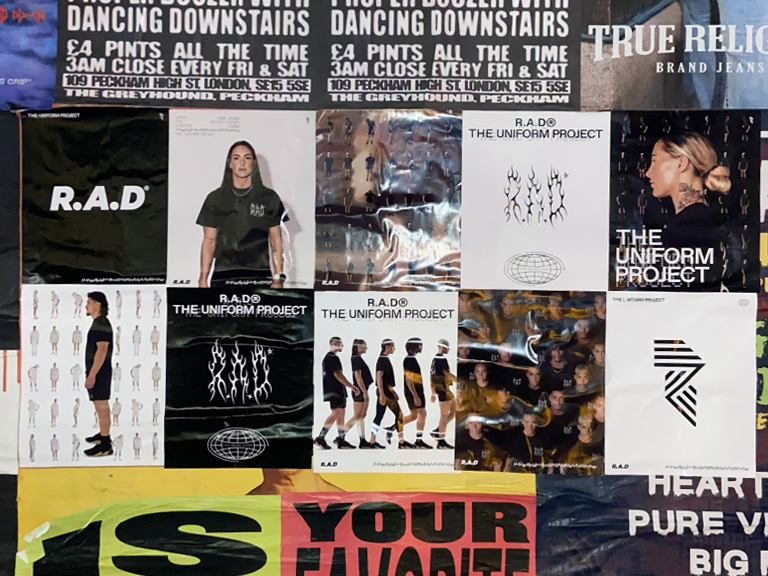
Wheat paste campaigns use high-quality paper and paste installation to create bold, large-format creative on authorized surfaces. The format has an inherent rawness that works particularly well in Chicago’s more creatively oriented neighborhoods. It is the format most associated with street-level creative marketing — music artists, fashion brands, and cultural organizations have used it effectively in Chicago for decades.
Poster campaigns are the workhorse of creative marketing in Chicago. Well-designed posters installed across 20 to 30 locations in a target neighborhood build frequency and saturation that generates genuine awareness among the daily population of that neighborhood. The creative quality of the poster determines how it is received. A strong poster becomes part of the neighborhood’s visual environment for the duration of the campaign. A weak one is background noise.
Environmental Interventions
Environmental interventions — sidewalk chalk art, branded object placements, stencil work, temporary installation art — create moments of discovery that conventional advertising does not. These formats work best when the creative concept is built specifically for the intervention format, not adapted from a digital or print campaign. The discovery moment is the point. Design for the moment, not the medium.
Format
Best Creative Type
Chicago Neighborhoods
Organic Social Potential
Large Wall Installation
Artistic, narrative, conceptual
Pilsen, West Loop, Bucktown
Very high
Wheat Paste
Bold graphic, cultural, typographic
Wicker Park, Logan Square, Pilsen
High
Poster Campaign
Photography, graphic design, copy-forward
Citywide, any neighborhood
Moderate
Environmental Intervention
Conceptual, surprise-based, interactive
River North, West Loop, Wicker Park
Very high when executed well
How AGM Plans Creative Marketing Campaigns in Chicago
The planning process for a creative marketing campaign in Chicago at AGM starts with the creative brief and the target audience, not with the format. We need to understand what the brand is trying to say, who it is trying to say it to, and what kind of reaction it wants to generate. From those answers, we develop the format and location strategy.
After the creative brief is established, we conduct site visits to identify the specific locations within the target neighborhoods that offer the best surface conditions, visibility, and contextual fit. This site visit process is essential — the best creative concepts placed on the wrong surface or in the wrong location will underperform, while strong creative placed in exactly the right context will overperform every expectation.
Production follows location confirmation. We work with print vendors who have experience with outdoor formats in Chicago’s climate. Material choices affect how installations hold up across the campaign duration, and getting those choices right requires experience with the specific environmental conditions in Chicago across different seasons.
Installation is executed by experienced crews who know Chicago’s neighborhoods, logistics, and access requirements. Every installation is photographed at the time of completion, and the photo documentation package is delivered to the client at the end of the campaign.
Working with AGM on Chicago Creative Marketing
If you are planning a creative marketing campaign in Chicago, contact AGM. We want to understand what you are trying to do before we talk about how we would execute it. The best campaigns start with a clear brief and an open conversation about what creative marketing in Chicago can realistically achieve for your brand and your audience.
Campaign Execution Standards and Documentation
Professional outdoor advertising campaigns are built on execution standards that protect the brand’s investment and provide a clear record of what was delivered. Here is what professional execution looks like across the key phases of a campaign.
Site Survey and Location Confirmation
Every location in a campaign should be site-surveyed before being confirmed. The site survey assesses the physical condition of the surface, the sightlines from the street, the ambient visual competition from surrounding signage, and any access or installation issues that might affect execution. Locations that pass the site survey get confirmed. Locations with issues get flagged and either resolved or replaced before production begins.
This step adds time to the planning process — typically three to five business days for a standard campaign location list. But it eliminates the expensive problems that arise when production is complete and installation reveals a location that was never suitable for the campaign. The cost of a site survey is far lower than the cost of reprinting materials for replacement locations, or the cost of a campaign that delivers fewer locations than planned because of last-minute issues.
Authorization Documentation
Authorization for outdoor advertising surfaces must be documented before production begins. For installations on privately owned surfaces, this means a signed agreement from the property owner that specifies the dates, the surface, and the format of the installation. For installations on permitted public spaces, this means the applicable city permit on file before the installation date.
Documented authorization protects the brand from having installations removed before the campaign is complete. It also provides the legal basis for the campaign’s documentation — unauthorized installations cannot be legally documented for press, social media, or client reporting purposes. The authorization documentation is part of the campaign file and is available to the client on request.
Installation Photo Standards
Professional installation documentation photographs are taken from a consistent distance and angle that shows the creative in context and confirms the installation is complete. They are taken in adequate light — daylight hours or with adequate artificial lighting. They show enough of the surrounding environment to confirm the location. And they are taken at the time of installation, not days later when conditions may have changed.
The documentation photographs are the evidentiary record of the campaign. They should be organized by location, labeled with the location information, and compiled into a deliverable package for the client. A campaign that does not produce organized, labeled installation documentation has not fully delivered its obligation to the client.
The Long-Term Value of Physical Advertising Campaigns
Physical outdoor advertising campaigns have both immediate and long-term value that brands who approach them as one-time spends consistently underestimate. The immediate value is the awareness and engagement generated during the campaign period. The long-term value is the documentation, the relationships, and the brand narrative that accumulate across multiple campaigns.
Documentation as a Brand Asset
Every physical advertising campaign generates documentation photography that can be used across a wide range of brand communications long after the campaign itself has concluded. Installation photographs from a Chicago poster campaign become social media content, website content, press materials, and internal brand presentations. A single campaign’s documentation can serve brand communications for 12 to 18 months after the campaign concludes.
Brands that treat campaign documentation as a pure compliance deliverable — something they need to have on file, not something they use — are leaving significant value on the table. The authentic, location-specific content that comes from outdoor campaign documentation is among the most useful brand content available. It demonstrates real-world presence. It has geographic and cultural specificity. And it costs nothing additional to create because it is produced as part of the campaign execution.
Building on Campaign History
Brands that run repeated campaigns in the same markets accumulate something more valuable than individual campaign documentation: a campaign history that demonstrates sustained commitment to specific communities and audiences. A brand that has run outdoor campaigns in Wicker Park every summer for three years has built something real — local recognition, neighborhood-level credibility, and a track record that differentiates it from brands that appear once and never return.
This kind of sustained presence is what separates brands that are genuinely part of a city’s cultural fabric from brands that are merely advertising in it. The investment required to build this kind of presence over multiple campaign cycles is larger than a single campaign investment. But the return — in audience loyalty, in earned media, in community credibility — compounds in ways that single-campaign investments cannot replicate.
Building a Physical Brand Presence: The Long Game
The brands that achieve the strongest results from outdoor advertising campaigns are not the ones that run a single burst campaign and evaluate it in isolation. They are the ones that approach outdoor advertising as a sustained presence strategy — building neighborhood familiarity over multiple campaign cycles, deepening audience recognition, and using each campaign to build on what came before.
This long game is possible because physical advertising in a city creates compounding effects that digital advertising does not. Each time a brand appears in a neighborhood, the residents of that neighborhood are more familiar with it. The third time a consumer sees a brand in Wicker Park, the reaction is different from the first time. By the fourth or fifth time, the brand feels like part of the neighborhood’s visual environment. That level of familiarity cannot be bought with a single campaign, however well-executed.
Building a Campaign Cadence
A sustainable campaign cadence for outdoor advertising in major U.S. markets is typically three to four campaigns per year in the target market, each running two to four weeks. This rhythm maintains brand visibility in the target neighborhoods without oversaturation, gives the audience time to absorb and process each campaign before the next one arrives, and allows the brand to adjust creative and location strategy based on what each campaign’s documentation reveals about performance.
Some brands prefer two campaigns per year in more locations, others prefer four campaigns per year in fewer, more concentrated locations. The right cadence depends on the brand’s category, its target audience’s sensitivity to advertising repetition, and the available budget. What matters less than the specific cadence is the consistency — showing up regularly in the same neighborhoods over time is what builds the brand familiarity that makes campaigns progressively more effective.
Creative Evolution Across Campaigns
The creative strategy for a sustained physical advertising presence needs to evolve across campaigns while maintaining the visual identity that builds recognition. Each new campaign should feel like a continuation of the brand’s presence in the neighborhood rather than an entirely new introduction. The audience that has seen the brand three times before should see the new campaign and recognize it immediately, while also feeling that the brand has something new to say.
This balance between recognition and freshness is one of the more challenging aspects of outdoor advertising creative strategy. The instinct is often to change the creative dramatically with each new campaign to avoid appearing repetitive. The better strategy is to evolve the creative within a consistent visual framework that preserves the brand recognition the previous campaigns have built.
Outdoor Advertising and Brand Equity in Major Markets
Brand equity — the intangible value that comes from a brand being recognized, trusted, and preferred over alternatives — is built through consistent, quality exposure over time. Physical outdoor advertising in major markets is one of the oldest and most reliable tools for building brand equity because it operates in the public space, at the scale of the city, in a context that signals genuine commitment.
A brand that appears on the walls and boards of a city’s most active neighborhoods is a brand that has invested in being there. That investment is visible and legible to the audience. It communicates something about the brand that digital advertising cannot: this brand is physically present in your community. That physical presence creates a kind of brand credibility that is disproportionate to the cost of the advertising itself.
The brands that underinvest in outdoor advertising in their key markets often find that their digital advertising performance suffers as a result. Without the brand equity that physical presence builds, digital ads land on a cold audience. The brand recognition that makes digital advertising efficient requires building somewhere. Physical advertising in major markets is where it gets built.
Partner Selection for Outdoor Advertising Campaigns
The outdoor advertising vendor you select for a campaign in a major U.S. city matters more than most brands appreciate before they have run a campaign that went wrong. The difference between a vendor with genuine operational expertise in a market and a vendor that is figuring it out is the difference between a campaign that delivers what it promised and a campaign that delivers excuses.
Here is what to look for when selecting an outdoor advertising partner for a major market campaign.
Market-Specific Track Record
Ask specifically about the vendor’s history in the market where your campaign will run. How many campaigns have they executed in that market? In which neighborhoods? With which clients? A vendor that has run dozens of campaigns in Chicago’s North Side neighborhoods over multiple years has accumulated knowledge that a vendor that has run a handful of campaigns anywhere in the Chicago metro area simply does not have. The specific market track record matters.
Authorization Process
Ask how the vendor handles property authorization for private-surface installations. A professional vendor has a clear, documented authorization process and can describe it in specific terms. A vendor that is vague about how authorization works, or that suggests authorization is handled “informally,” is a vendor that is installing on unauthorized surfaces. That is not a campaign. That is a liability.
Documentation Standards
Ask to see examples of documentation packages from previous campaigns. A professional documentation package includes labeled installation photographs, a location map, and a summary report. If the vendor cannot show you examples of professional documentation, their documentation standard is not professional.
Evaluation Criterion
What to Ask
Green Flag
Red Flag
Market experience
Specific campaigns in target neighborhoods
Names specific streets, clients, campaigns
Vague references to “major markets”
Authorization
How do you handle property authorization?
Specific documented process, examples available
Vague answers, “we handle it”
Documentation
Can I see a sample documentation package?
Labeled photos, maps, reports from real campaigns
Phone snapshots, no organization, no reports
Problem handling
What happens when a location is unavailable?
Pre-vetted backup locations, proactive communication
“We’ll figure it out” or silence
Frequently Asked Questions
What makes creative marketing in Chicago different from other cities?
Chicago’s strong neighborhood identities, its dense creative professional community, and its street-level pedestrian culture mean that creative marketing concepts have a more engaged and discerning audience here than in most U.S. markets. Generic campaign concepts get ignored. Specific, well-crafted ones get photographed and shared.
What creative marketing formats does AGM run in Chicago?
AGM executes poster campaigns, wheat paste campaigns, guerrilla street activations, brand experiences, and environmental installations across Chicago. We specialize in formats that require physical execution and creative ingenuity at street level.
How does AGM approach creative marketing campaign planning in Chicago?
We start with the brand’s audience and the neighborhoods where that audience lives. Creative concepts are developed for the street environment, not adapted from digital formats. Every concept is reviewed for visual impact at pedestrian scale before production.
Which Chicago neighborhoods are best for creative marketing campaigns?
Pilsen and Wicker Park offer the strongest creative culture for campaigns targeting arts and lifestyle audiences. Logan Square works well for brands targeting independent-minded young professionals. The West Loop suits brands targeting food, design, and business audiences.
How long does a creative marketing campaign in Chicago take to execute?
From initial brief to installation, a standard creative marketing campaign in Chicago takes four to six weeks. This covers concept development, location scouting, production, and installation. Rush timelines are possible in some cases but may limit location options.
Does AGM handle the creative development as well as the execution?
AGM can advise on creative concepts and provide feedback on designs developed by the client’s creative team. For full-service creative development through execution, we work with select creative partners. Contact us to discuss the scope of your project.