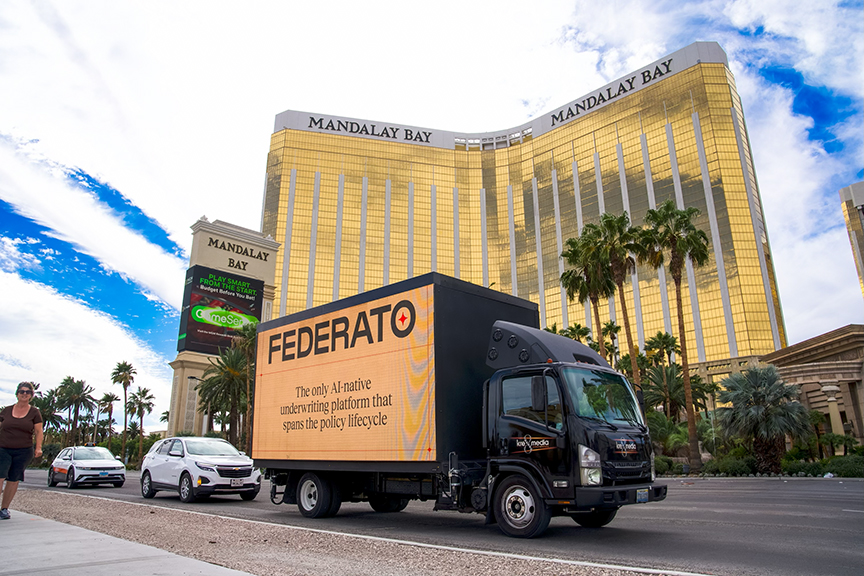
A mobile experiential truck is a brand activation platform on wheels. Here is how to build one, how to deploy it effectively, and what determines whether your program delivers real consumer impact.
A mobile experiential truck is not just a vehicle with your logo on it. It is a brand activation platform that goes to consumers rather than waiting for consumers to come to a fixed location. The vehicle carries the brand environment, the product inventory, the staffing, and the operational equipment needed to create a genuine consumer experience at every stop on the tour. When it works well, a well-built experiential truck can generate meaningful consumer contact volume across a city or across the country, building trial and brand relationships that advertising cannot create.
When it does not work well, a mobile experiential truck is an expensive vehicle that parks in the wrong places, staffed by people who do not know the brand, generating photos that look better on paper than the encounters were in practice. The difference between these two outcomes is planning, vehicle design, staff quality, and location strategy.
At American Guerrilla Marketing, we have built and operated experiential truck programs for brands across multiple categories. This guide covers what makes a mobile experiential truck program work: the vehicle platform decisions, the interior and exterior configuration considerations, the route and location strategy, and the staffing and documentation requirements.
The word “experiential” gets applied loosely to any vehicle with brand graphics. But a genuinely experiential truck delivers more than visual presence. It delivers a consumer encounter that changes how that consumer thinks about the brand, not just a moment where they noticed the truck driving by.
The distinction is operational. A branded vehicle that drives through neighborhoods and is seen by consumers creates awareness. A mobile experiential truck that parks, opens its serving window or sets up its exterior environment, and engages consumers in a product tasting, a demonstration, a curated brand interaction, creates trial. The first is a rolling billboard. The second is an activation.
For a truck to be genuinely experiential, it needs three things: the physical capability to create a consumer engagement space (not just drive-by visibility), staff who can deliver a brand encounter rather than just hand out samples, and a location strategy that puts the truck in front of the right consumers at the right moments. A truck with excellent branding and poor location strategy is aesthetically compelling and commercially ineffective.
Vehicle Platform Decisions
Choosing the right vehicle for a mobile experiential program is a decision with significant implications for what experiences are possible, what the operational costs look like, and how the brand presents in the field.
Step Vans and Box Trucks
Step vans and box trucks are the most commonly used platform for mobile experiential builds because their interior cargo space can be configured to support a wide range of activation designs. The walk-in interior provides a working space for staff, storage for product and equipment, and potentially a consumer-facing service area depending on the build configuration. Step vans in the 16- to 22-foot range can park in standard commercial loading zones and navigate city streets without the logistical complications of larger vehicles.
The primary limitation of step vans for experiential use is that the consumer experience typically happens outside the vehicle, at a serving window or at an exterior setup around the truck, rather than inside it. Unless the vehicle is large enough to accommodate consumer entry, the interior functions as a working kitchen or backstage area, not as a consumer environment. This is not a problem for sampling and demonstration programs, but it limits the possibilities for immersive interior brand experiences.
Custom Trailer Builds
Custom trailers offer the most design flexibility for experiential builds because they are essentially blank rectangular spaces that can be configured from the ground up. Consumers can enter the trailer to experience an interior brand environment. The exterior can include retractable elements, sliding panels, folding counters, and extended overhangs that create a large activation footprint around the trailer. Trailers can be detached from the tow vehicle during activation, keeping the logistically complex tow vehicle out of the activation environment.
The operational complications of trailers include the need for a separate tow vehicle, additional driver credentials for combination vehicles, and the limited ability to park in urban environments where space is constrained. Trailers work well in markets where the activation locations include open-space environments: parks, festival grounds, markets, and suburban locations with accessible parking. They are more challenging in dense urban environments.
Double-Decker Buses
Double-decker buses create very high visual impact in urban environments and provide substantial consumer space across two levels. The upper deck can be used as a brand environment, a tasting or demonstration space, or a social area that creates a distinct consumer experience elevated above street level. The lower deck can serve as the production and logistics area.
The operational challenges of double-decker buses include height restrictions that limit access in many urban environments, parking requirements that exceed most urban commercial loading zones, and significantly higher vehicle operating costs than standard trucks or trailers. They are most appropriate for stationary activations at specific high-profile locations or events rather than for multi-stop touring programs that require rapid repositioning.
Choose the vehicle for the program, not the program for the vehicle. We have seen brands fall in love with a particular vehicle type and then struggle to make their activation concept fit it. Start with what you need the consumer to experience, then find the vehicle that enables it.
Vehicle Wrap and Brand Presentation
The vehicle wrap is the most visible element of the truck’s brand presence. At every location and during every transit moment, the wrap is making a brand statement. A strong wrap communicates the brand identity clearly, stands out in the visual environment the vehicle operates in, and translates effectively across the full range of viewing distances and lighting conditions the vehicle will encounter.
Wrap design for mobile experiential trucks needs to account for the vehicle’s specific form factor and the viewing angles that will be most common in its operating environments. A step van seen primarily from the street level at close range needs different design treatment than a trailer seen from a parking lot at medium distance. Wrap design should be done by designers who understand vehicle graphics, not just by the brand’s existing creative team applying brand guidelines to a vehicle template.
The wrap budget is a meaningful investment: full wraps on step vans or trailers typically run $5,000 to $15,000 for production and installation. Partial wraps using branded panels and graphics on a base color vehicle are less expensive and can be effective for certain brand identities. Vinyl wraps on rented vehicles are a standard solution for programs using rented fleets, as they can typically be removed cleanly after the program.
Interior and Exterior Build Considerations
What happens at the truck, in the exterior environment around it and inside it when applicable, determines the quality of the consumer experience. Interior and exterior build decisions are where the activation concept is either realized or compromised.
Serving Windows and Counter Systems
For trucks that serve product through a window or over a counter, the design of that service interface matters significantly. The counter height, the width of the serving area, the visibility of the brand environment behind the staff, the speed of service: all of these affect the consumer experience and the operational efficiency of the activation. A well-designed serving interface allows staff to serve multiple consumers simultaneously without creating congestion or forcing awkward consumer interactions.
Exterior Extension Systems
Exterior awnings, canopy systems, and branded furniture can significantly expand the activation footprint beyond the vehicle itself. A step van with a retractable awning and a set of branded fold-out tables creates an activation environment two or three times the size of the vehicle alone. These extensions also provide weather protection for staff and product, which is critical for outdoor activations in variable weather.
Technology Integration
Many mobile experiential truck builds include technology components: screens for brand content, tablets for consumer opt-in capture, audio systems for music or brand messaging, digital display elements for product information. Technology integration needs to be designed for the field environment, where power availability may be limited to the vehicle’s generator, where connectivity may be unreliable, and where equipment needs to be durable enough to survive daily setup and breakdown over a multi-week program.
A mobile experiential truck is only as effective as the locations where it parks and activates. Location strategy for experiential trucks requires more careful planning than for simple sampling programs because the activation requires more time at each stop and the consumer experience is more dependent on the surrounding environment being appropriate for the type of engagement you are trying to create.
Stop Duration Planning
Experiential truck activations typically require longer stop durations than pure sampling programs. Sampling stops might be one to two hours. Experiential stops are often three to six hours or a full day, especially at events or markets. This means a daily program covers fewer locations than a sampling tour, and each location needs to justify the extended time investment with adequate consumer traffic and demographic relevance.
Advance Scouting
For programs covering multiple markets, advance scouting of planned stop locations is essential. A location that looks good on a map may have operational complications: overhead clearance restrictions for larger vehicles, competing events or construction, surface conditions that make activation setup difficult, or consumer traffic that does not match the assumed density. AGM scouts locations in all major markets before confirming them for client programs.
Event Integration
Events provide ready-made audience concentrations and, for brands that can access vendor positions, pre-qualified consumer traffic. Building the mobile experiential truck program around an event calendar that concentrates the target consumer allows for more efficient consumer contact per activation day than pure neighborhood deployments.
Operating a Mobile Experiential Truck Program
The operational realities of running a mobile experiential truck program over a multi-week tour require specific systems and disciplines.
Product supply chain management is critical. The truck needs adequate product inventory at each stop, replenished between stops on a schedule that accounts for drive times and storage conditions. For perishable or temperature-sensitive products, cold chain management adds complexity that needs to be built into the logistics plan.
Vehicle maintenance is non-negotiable. A breakdown during a multi-week program can shut down the entire tour for days while the vehicle is repaired. Pre-departure mechanical inspection, mid-tour service checkpoints, and relationships with vehicle service providers in each market on the route are standard practice for professional mobile experiential programs.
Documentation needs to happen consistently at every stop. Field teams need clear requirements: which photos are required, what data needs to be logged, how consumer contacts are counted, how field reports are submitted. Inconsistent documentation across a multi-week program makes performance measurement impossible and leaves the brand without the evidence base it needs to evaluate the investment.
Case for Custom Builds vs. Renting Vehicles
One of the most frequent questions brands ask when planning a mobile experiential truck program is whether to invest in a custom build or to rent a configured vehicle. The answer depends on program scope, frequency of use, and the brand’s long-term activation investment plans.
Renting a configured vehicle is the right choice for brands running a first experiential truck program, for programs that run for a short duration, or for brands that are not yet committed to ongoing mobile experiential investment. Rental vehicles are available quickly, do not require capital expenditure, and can be returned when the program ends without any residual asset management. The limitations are that the vehicle’s configuration is not purpose-built for the specific brand, and wrap production and removal costs are incurred at each program.
Custom building a vehicle is the right choice for brands committed to ongoing mobile experiential programming over multiple years. A custom build allows the brand to design the consumer experience environment from scratch, creating a vehicle that is purpose-built for the specific products and experiences the brand wants to deliver. Over multiple program cycles, the per-activation cost of a custom build typically becomes lower than repeated rental and reconfiguration costs, and the consistency of the brand environment across activations improves.
The decision point is typically at two to three program cycles. A brand that plans to run a mobile experiential truck program in two consecutive seasons, or that plans to tour in multiple phases over a twelve to eighteen month period, is likely better served by a custom build than by repeated rentals. A brand running a single campaign is almost always better served by renting.
Managing Seasonal and Year-Round Programs
For brands running mobile experiential truck programs across multiple seasons, program management requires planning that extends beyond the individual activation. Vehicles need storage between program cycles. Staff relationships need to be maintained to allow efficient reactivation. Documentation from past programs needs to be organized to inform future planning. Event relationships with organizers who have provided access in past seasons need to be nurtured between programs.
The cumulative value of a sustained mobile experiential truck program grows over time as the brand builds recognition in the markets and events where it consistently appears. Consumers who have encountered the brand’s truck at their local farmers market three seasons in a row have a depth of familiarity that first-time activations cannot create. That cumulative brand presence in specific markets and event contexts is one of the most durable competitive advantages that mobile experiential investment can build.
AGM manages several clients’ mobile experiential truck programs on an ongoing basis, maintaining the vehicle assets, staff relationships, and event access that allow efficient year-round activation. This retained management model produces better results per dollar than repeated from-scratch campaign launches because the fixed costs of program infrastructure are amortized across multiple program cycles.
The Consumer process Through a Mobile Experiential Truck Activation
Designing the consumer process through a mobile experiential truck activation requires thinking through the experience from the consumer’s perspective, from the moment they first notice the truck to the moment they walk away. This process has five distinct phases: awareness, approach, engagement, transaction, and departure. Each phase requires deliberate design and has specific success conditions.
The awareness phase happens at a distance. The consumer sees the truck and either notices it or ignores it. High-quality branding, an interesting activation setup, an attractive exterior environment, or social proof in the form of other consumers engaging with the truck all increase the probability of the consumer noticing and being curious enough to approach.
The approach phase is the moment of maximum anxiety for the consumer. They are deciding whether approaching the truck is worth their time and whether it will be awkward. Staff positioned outside the vehicle, maintaining an active and welcoming presence without being aggressive, dramatically increase approach rates. A consumer who is greeted naturally and non-pressingly as they approach is far more likely to engage than one who approaches a closed vehicle with no human presence.
The engagement phase is the core of the activation. The consumer interacts with the product or brand, tries the sample, watches the demonstration, or explores the brand environment. This phase is where staff quality makes the most difference: staff who can read consumer interest accurately, lead engaging conversations, and guide consumers toward the key product experience without feeling scripted or transactional drive significantly higher engagement quality than those who cannot.
The transaction phase, if the activation includes a purchase opportunity, requires speed, ease, and no pressure. The consumer who has just had a positive engagement experience should be able to convert that experience to a purchase decision quickly and easily. Any friction in the transaction process, a slow POS system, unclear pricing, pressure to add additional items, reduces conversion from engaged consumer to purchaser.
The departure phase is often neglected but matters for what the consumer carries away from the encounter. A branded item to keep, a coupon for future purchase, a QR code linking to brand content or e-commerce, or simply a genuine and warm farewell from the staff all extend the activation’s impact beyond the moment of direct contact. What the consumer leaves with determines how the activation occupies their memory in the hours and days that follow.
Insurance and Operational Requirements
Operating a mobile experiential truck program involves specific insurance and operational requirements that brands and agencies need to address before the program launches. Commercial vehicle insurance covering the activation vehicle and its contents is required in all states. General liability insurance covering the activation program is standard practice and typically required by event organizers for vendor participation. These insurance requirements should be clarified and documented before the program begins rather than discovered as a problem during execution.
Vehicle operators need appropriate commercial driver’s licenses for the vehicle type being operated. Different vehicle classes have different CDL requirements, and these requirements vary by state. A program that plans to operate a vehicle across multiple states needs to understand the CDL requirements in each state and ensure that operators are properly licensed.
Event access often requires specific insurance certificates naming the event organizer as an additional insured, and sometimes requires minimum coverage levels that exceed standard general liability policies. AGM’s experience managing these requirements across many events and markets means that insurance compliance is handled proactively as part of program planning rather than reactively when an event organizer raises it during setup.
Frequently Asked Questions
What is a mobile experiential truck?
A mobile experiential truck is a branded vehicle configured to deliver an immersive consumer experience on the road. It combines the logistical advantages of a mobile activation with the experiential depth of a pop-up brand environment, typically featuring product display, sampling or demonstration equipment, and brand graphics that make the vehicle itself a brand statement.
What types of trucks are used for mobile experiential activations?
Step vans and box trucks are the most common platform for experiential truck builds because their walk-in cargo areas allow for interior configuration. Custom trailers provide the most design flexibility. Sprinter vans work for simpler sampling programs. The right vehicle depends on how much consumer experience space you need and what operational environment you are working in.
How much does it cost to build a mobile experiential truck?
Vehicle wrapping alone can range from $3,000 to $12,000 depending on vehicle size and wrap complexity. A full interior build with display cases, serving equipment, and technology integration can range from $15,000 to $150,000 or more. Custom full-build experiential trucks for national tours may run $100,000 to $400,000 including vehicle purchase.
Can you rent a mobile experiential truck or do you have to build one?
Both options exist. Renting a pre-configured experiential vehicle is faster and has lower upfront cost, making it appropriate for shorter programs or first experiential tours. Owning a custom-built vehicle makes more sense for brands planning extended national programs or multi-year experiential investment.
How does AGM handle mobile experiential truck programs?
AGM manages the full program scope: vehicle selection or build, wrap design coordination, route planning, staff recruitment and training, event access and logistics, field management across all markets, documentation, and post-campaign reporting. We handle everything from the initial brief to the final report.