
September 12, 2026
Activations Marketing
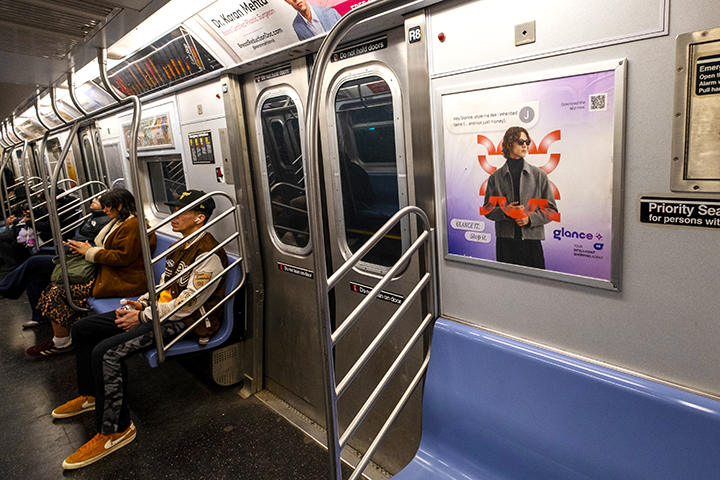
Marketing activations create the direct consumer encounters that broadcast advertising cannot produce. Here is how brands use them, what makes them work, and what running them at scale actually requires.
Marketing activations are the live, physical component of a brand’s marketing program — the part that takes the brand off the screen and puts it into direct contact with consumers in the real world. They are distinct from advertising, PR, and digital marketing not just in format but in the type of consumer engagement they create. An advertisement reaches a consumer’s awareness. An activation reaches the consumer’s experience.
The plural form matters here: “activations” in marketing refers to this category of consumer encounter as a recurring campaign practice, not just a one-off event. Brands that use activations effectively treat them as a sustained channel within their marketing mix — planning them with the same rigor they bring to media buying, measuring their performance with the same specificity they apply to digital campaigns, and building institutional knowledge about what works in their category across repeated programs.
This article covers how marketing activations work, why brands use them alongside advertising and digital channels, the specific formats they take, what running activations at scale requires operationally, and how to measure whether they are delivering against business objectives.
What Marketing Activations Are
A marketing activation is any live, direct consumer engagement program run by a brand — an event, a sampling program, a pop-up, a mobile tour, a brand ambassador deployment, or an experiential installation. The consumer participates in the brand experience rather than observing a media representation of it. They touch the product, taste it, use it, engage with the brand’s people, or inhabit a brand-created environment.
This participation is what creates the primary value of activations over advertising. Research on consumer decision-making consistently shows that direct personal experience is the most persuasive form of brand evidence. A consumer who has tried a product, used a service, or had a meaningful brand encounter has stronger brand beliefs, higher purchase intent, and stronger advocacy tendency than a consumer who has been exposed to the same brand’s advertising at equivalent frequency.
Activations create this direct experience. They do not replace advertising — they complement it by creating the depth of brand encounter that advertising cannot create efficiently. When both are working together in a coordinated campaign, the combined result exceeds what either channel produces independently.
Why Brands Use Activations in Their Marketing Programs
Brands invest in activations for specific business reasons. The most common ones:
Product Trial
For consumer products where quality can be directly experienced — food, beverage, beauty, personal care — direct trial is the most efficient conversion mechanism available. A consumer who has tasted your new product and liked it is dramatically more likely to purchase than a consumer who has seen your advertising at the same exposure frequency. Activations create the trial moment that advertising cannot produce directly. For products entering new markets or targeting new consumer segments, trial-focused activations are often the highest-ROI investment in the brand’s entire marketing program.
Market Entry
Entering a new city or region means building brand awareness and consideration among consumers who have no prior brand relationship. Digital advertising can create exposures in a new market, but at any reasonable spend level it competes with every other brand also buying digital media there. Physical activations create presence that stands out from the digital noise — a branded vehicle in Williamsburg or a pop-up in Wynwood creates direct consumer encounters that no digital campaign can replicate at equivalent cost. For emerging brands entering major metro markets, activations are typically more efficient at establishing initial consumer relationships than digital advertising programs.
Brand Differentiation
In categories with high advertising clutter and limited product differentiation, brands that show up physically — that activate at street level in neighborhoods where their target consumer lives — stand out from competitors who exist only as digital exposures. The physical presence itself is a brand statement. It signals commitment, confidence, and a willingness to be held accountable to direct consumer judgment in a way that advertising campaigns do not.
Content Generation
Well-documented activations generate authentic consumer content — photos, videos, reactions, recommendations — that travels through social networks and extends the brand’s reach beyond the consumers who were physically present. This consumer-generated content performs better in paid social amplification than studio-produced brand content in most categories. It also provides a content library of authentic brand moments that has ongoing value beyond the campaign window. An activation in SoHo in April is still generating social engagement in September if it created a genuinely compelling consumer experience.
Community Building
For brands targeting specific communities — young professionals in a specific city, the fitness community, the streetwear community, the college market — activations within those communities create brand associations that advertising into those communities cannot create. A brand that shows up at the right community events, runs ambassador programs within the community, and activates at the places where community members gather is building a different kind of brand relationship than one that targets the same community with digital ads. Community presence creates advocacy; advertising creates awareness.
The brands that get the most from marketing activations are the ones that treat activations as a channel, not an event. They have an activations strategy, an activations budget, and an activations measurement framework. They build institutional knowledge about what formats work in which markets for their consumer. And they run progressively better programs because each campaign teaches them something the last one did not.
The Primary Activation Formats in Marketing
Marketing activations take several specific forms, each suited to different objectives and consumer contexts.
Sampling and Demo Activations
The most direct form: trained ambassadors deploy at target-consumer-dense locations with product samples or demonstrations. Best for products where the direct experience is the most compelling brand argument. The critical variables are location quality, ambassador training, and presentation quality. Sampling activations are the most cost-efficient format for driving direct product trial in consumer packaged goods, food and beverage, and beauty categories.
Pop-Up Activations
Temporary brand environments in specific locations — leased retail spaces, outdoor structures, or gallery settings. Pop-ups give the brand complete control over the consumer’s experience environment. They work for product launches, market entry, repositioning campaigns, and retail testing. The location functions as a positioning statement; the design functions as a brand story; the staff functions as the brand’s face. All three elements need to be working in alignment for a pop-up to succeed.
Mobile Tour Activations
Branded vehicles that travel through multiple neighborhoods or cities. Mobile tours create geographic reach that fixed activations cannot and generate a progressive social narrative as the tour moves through markets. They are particularly effective for product launches requiring multi-market simultaneous presence and for brands building awareness across a national geographic footprint. The operational complexity of mobile tours — vehicle logistics, multi-city staffing, supply chain management — requires more sophisticated operational planning than fixed activations.
Brand Ambassador Programs
Sustained deployments of trained brand representatives within specific communities — college campuses, fitness communities, professional networks. Ambassador programs produce peer-to-peer advocacy that neither advertising nor event-based activations can replicate. They build slowly but create more durable community presence than transactional activations. The key success variable is ambassador quality — their genuine enthusiasm for the brand, their social credibility within the community, and their capacity to advocate authentically rather than according to a script.
Event-Based Activations
Brand presences at existing events where the target consumer is already concentrated — festivals, concerts, sporting events, trade shows. The brand enters the consumer’s chosen environment rather than creating its own, which typically produces higher engagement receptivity than cold outreach. Event activations work when the brand-to-event fit is genuine; forced brand association with an event that does not align with the brand’s identity creates the opposite of the intended effect.
What Running Activations at Scale Requires
| Operational Requirement | Single Market | 3-5 Markets | 10+ Markets |
|---|---|---|---|
| Staff networks | Local recruitment for one city | Pre-established networks in each city | National ambassador database with market managers |
| Supply chain | Single delivery to one location | Coordinated shipments to multiple cities | Regional hubs with daily replenishment capacity |
| Field management | Single field manager on-site | Regional managers with market-level oversight | National program director plus regional managers |
| Reporting | Daily single-market reports | Consolidated multi-market daily reporting | Real-time data aggregation across all markets |
| Contingency capacity | Backup staff list in one market | Backup plans in each market | Systematic contingency protocols across all markets |
Activations Marketing Across Key U.S. Markets
Marketing activations in the United States play out differently across different metro markets. Each city has its own consumer culture, neighborhood geography, and operational environment that shapes what kinds of activations work and where they should be deployed.
New York City is the highest-volume and most competitive activation market in the country. The concentration of target consumers across multiple distinct boroughs and neighborhoods makes precise location strategy essential. SoHo, Williamsburg, the West Village, and the Flatiron District are the primary activation zones for brands targeting urban professional and creative class consumers. The city’s walkability and density allow a single well-located activation to reach a large number of target consumers daily. The competitive environment means activations need to be distinctive to stand out from the baseline level of branded activity on New York streets.
Los Angeles is spread out in a way that makes neighborhood targeting more important than in denser markets. Melrose Avenue, Abbot Kinney, Silver Lake, and Culver City reach distinctly different consumer segments. The outdoor climate allows year-round activation in a way that northeast markets do not. The proximity to entertainment media creates amplification potential for visually compelling activations that would go unnoticed in less media-dense markets.
Chicago has strong neighborhood identity and a concentrated creative community in neighborhoods like Wicker Park, Bucktown, and Pilsen. The transit system creates high-density pedestrian corridors near major station areas, giving fixed-location activations access to large geographic draw areas. Winter weather limits outdoor activation windows, making timing and contingency planning more critical than in warmer markets.
Austin punches well above its population size in cultural influence and media amplification. Activations during SXSW reach the single most concentrated audience of media, technology, and culture professionals in the country. Outside of SXSW, the South Congress and East Austin corridors are the primary activation zones for the city’s creative and tech-adjacent consumer population.
Miami has strong international consumer presence and a cultural event calendar (Art Basel, Ultra, Miami Open, Miami Fashion Week) that creates specific high-value activation windows. Wynwood is the creative hub. Brickell attracts young professionals. The December Art Basel window creates the most amplified activation environment in the city — content created in Miami during Basel travels globally.
How AGM Runs Marketing Activations
American Guerrilla Marketing designs and executes marketing activations from strategy through reporting. We are a full-service activation agency with genuine operational infrastructure in major U.S. markets — trained staff networks, vendor relationships, and market-specific location knowledge built through years of active campaign work.
Our activations are built from the business objective backward. Every campaign starts with a clear behavioral target, a format selected to achieve that target, and a measurement framework that will tell us whether we got there. We run campaigns with experienced field managers on-site every day, document every activation thoroughly, and deliver post-campaign reports that give our clients actionable intelligence for future programs.
We work with brands in CPG, food and beverage, beauty, fashion, technology, financial services, and entertainment. Our clients range from emerging brands running their first major activation program to established brands running sustained national activation channels. In both cases, our focus is the same: build campaigns that create real consumer behavior change and prove it with data.
Building an Annual Activations Marketing Calendar
Brands that treat activations as ad hoc additions to their marketing plan underperform against those that build activations into an annual calendar from the beginning. An annual activations calendar maps the brand’s key moments — product launches, seasonal peaks, cultural events, retail promotional windows — to the activation formats best suited to each, and allocates budget and resources accordingly.
The annual calendar planning process starts with identifying the 3 to 6 moments in the year when consumer engagement is most valuable for the brand. For a beverage brand, these might be summer festival season, back-to-school in late August, and the holiday entertaining period in November and December. For a fitness brand, these might be January (New Year resolution season), March and April (pre-summer motivation), and September (post-summer reset). Each moment gets a defined activation objective and a budget allocation proportional to its strategic importance.
With moments and objectives defined, format selection follows from what each moment actually requires. A summer festival activation needs mobile infrastructure that can move between venues; a January fitness campaign needs community presence in gyms and training facilities; a holiday entertaining program needs in-home trial mechanics for food and beverage products. Format follows objective follows moment — the sequence matters.
Building the calendar 6 to 9 months before the first activation launches gives agencies adequate planning time, allows permit processes to be managed well in advance, and enables staff recruitment and training to happen without the rushed timelines that produce poor execution quality. Brands that plan activations with 4 to 6 weeks of lead time consistently execute worse than those with 3 to 6 months of advance planning.
Activations Marketing Technology and Measurement Infrastructure
Modern activations marketing programs generate data that can be captured, analyzed, and used to improve subsequent programs — if the technology infrastructure to do so is in place before the first activation runs. Building measurement capability into the activation program from the start produces more actionable intelligence than trying to reconstruct results from incomplete data after the campaign ends.
The primary data categories in activations marketing are: consumer interaction data (how many consumers engaged, for how long, through what format), geographic coverage data (which locations were activated, when, and for how many hours), product distribution data (samples distributed, product demonstrations completed), content documentation (photos, videos, field reports), and downstream conversion data (retail sales lift in activation markets, digital traffic from activation-market consumers post-campaign).
Technology tools that support activations measurement range from simple to sophisticated. At the simplest level, daily field reports submitted via mobile app or standardized form provide consistent consumer interaction data across large distributed teams. QR code-based consumer capture mechanisms on sample materials or at activation locations enable direct attribution to the campaign. More sophisticated tools include location data analysis, programmatic DOOH complementing physical activations, and CRM integration that tracks the consumer from initial activation encounter through eventual purchase.
The measurement infrastructure does not need to be complex to be useful. A consistent daily field report template, submitted by every activation team for every activation day, that captures the same data points in the same format provides the foundation for post-campaign analysis and year-over-year benchmarking. This baseline is more valuable than sophisticated analytics applied inconsistently.
| Planning Phase | Key Decisions | Timeline | decision-makers Involved |
|---|---|---|---|
| Annual calendar planning | Key moments, objectives, budget allocation | 6 to 9 months before first activation | Marketing leadership, finance |
| Campaign brief development | Specific objectives, consumer targets, markets, KPIs | 3 to 6 months before activation | Brand team, activation agency |
| Format and concept selection | Activation format, creative approach, location strategy | 2 to 4 months before activation | Brand team, agency creative |
| Execution planning | Staffing, logistics, permits, materials production | 4 to 8 weeks before activation | Agency operations, brand liaison |
| Post-campaign analysis | Results review, lessons, budget implications | 2 to 4 weeks post-campaign | Brand team, agency, finance |
International Activations Marketing: Managing Programs Beyond U.S. Borders
Brands with international distribution increasingly use activations marketing as a market entry and brand-building tool in foreign markets where their advertising infrastructure is less developed than in their domestic markets. International activations create direct consumer encounters that build brand awareness faster than media campaigns in markets where the brand has no existing presence — a particularly valuable capability when entering markets with fragmented media landscapes or high digital advertising competition.
The operational complexity of international activations marketing is substantially higher than domestic programs. Regulatory environments for sampling, promotional activities, and outdoor advertising vary significantly across countries and even across regions within countries. Staffing infrastructure requires local market knowledge that U.S.-based activation companies typically do not have without established local partnerships. Product import requirements, labeling requirements, and promotional material regulations add layers of compliance management that domestic programs do not face.
Brands entering international activations for the first time are best served by partnering with agencies that have established operational infrastructure in the target markets rather than attempting to replicate their domestic activation approach in an unfamiliar regulatory and operational environment. The efficiency loss from working through a local partner is more than compensated by the operational risk avoided when navigating regulations and logistics in markets where the brand has no prior experience.
For U.S. brands expanding into Canadian, UK, Australian, or Western European markets, the regulatory environment is more familiar than markets in Southeast Asia, Latin America, or the Middle East, but important differences in promotional regulations, sampling restrictions, and outdoor advertising rules still require market-specific compliance knowledge. What works in New York does not automatically translate to Toronto, London, or Sydney without local operational knowledge informing the program design.
Activations Marketing Governance: Who Owns the Decision and the Budget
In organizations that run substantial activation programs, clear governance over activation marketing decisions prevents the conflicts and inefficiencies that arise when multiple departments claim authority over field marketing investment without clear coordination. Common governance problems include brand teams and field sales teams both running activation programs in the same markets without coordination, creating consumer confusion and internal budget competition; corporate marketing and regional marketing teams disagreeing about activation priorities without a clear decision framework; and activation investments being approved separately from digital and media investments without integration planning that would multiply their combined value.
Organizations that run activation marketing well typically have a designated owner for activation strategy and investment decisions — either within brand management, field marketing, or a dedicated experiential marketing function — with clear accountability for both budget performance and cross-functional coordination. This ownership structure does not prevent collaboration across functions; it ensures someone is responsible for the quality of the total activation program rather than each functional team optimizing independently.
Frequently Asked Questions
What are activations in marketing?
Activations in marketing are the live, physical brand experiences that create direct consumer engagement — sampling events, pop-ups, mobile tours, ambassador programs. They complement advertising by creating actual brand encounters rather than just media exposure.
How do activations differ from advertising campaigns?
Advertising reaches consumers through media — they see, hear, or read something about the brand. Activations create a live encounter — the consumer physically engages with the brand in person. Both create brand exposures, but the encounter-based impression from an activation is more durable and more trust-generating than the exposure-based impression from advertising.
How many activations should a brand run per year?
There is no single right number. The frequency should be driven by the brand’s business objectives, the markets it operates in, and the consumer segments it needs to reach through direct engagement. Brands that use activations as a sustained channel rather than a one-time tactic get progressively better results as they build institutional knowledge about what works.
What does running a marketing activation in multiple cities require?
Multi-market activations require genuine operational infrastructure in each market: trained staff networks, vendor relationships, market-specific location knowledge, and logistics capacity. A campaign running in five cities simultaneously needs five-city-level operational capability, not the capacity to run one city five times.
How do you coordinate activations marketing with the rest of the marketing mix?
By planning activations as part of the overall campaign from the beginning, not adding them on afterward. Activations generate content that feeds paid social. Digital campaigns prime audiences in markets before activations arrive. PR amplifies what the activation creates. All channels reinforce each other when planned together.

Ready to Run Your Campaign?
Call us or email us. We’ll tell you exactly what we can do in your market and what it costs.
Related Services
Explore similar advertising solutions offered by American Guerrilla Marketing.
American Guerrilla Marketing — Los Angeles
Street-level campaigns in Los Angeles and nationwide. Wheatpasting, LED trucks, street teams, and more.
(646) 776-2770
Related Articles
-
Street Poster Advertising Ottawa: A Complete Campaign Guide
September 17, 2026
-
Activation Marketing: How Brands Win at Street Level
September 13, 2026
-
Experiential Marketing Firms Chicago | American Guerrilla Marketing
September 12, 2026
-
Pop Up Experiential
September 12, 2026
-
Mobile Pop Up
September 12, 2026