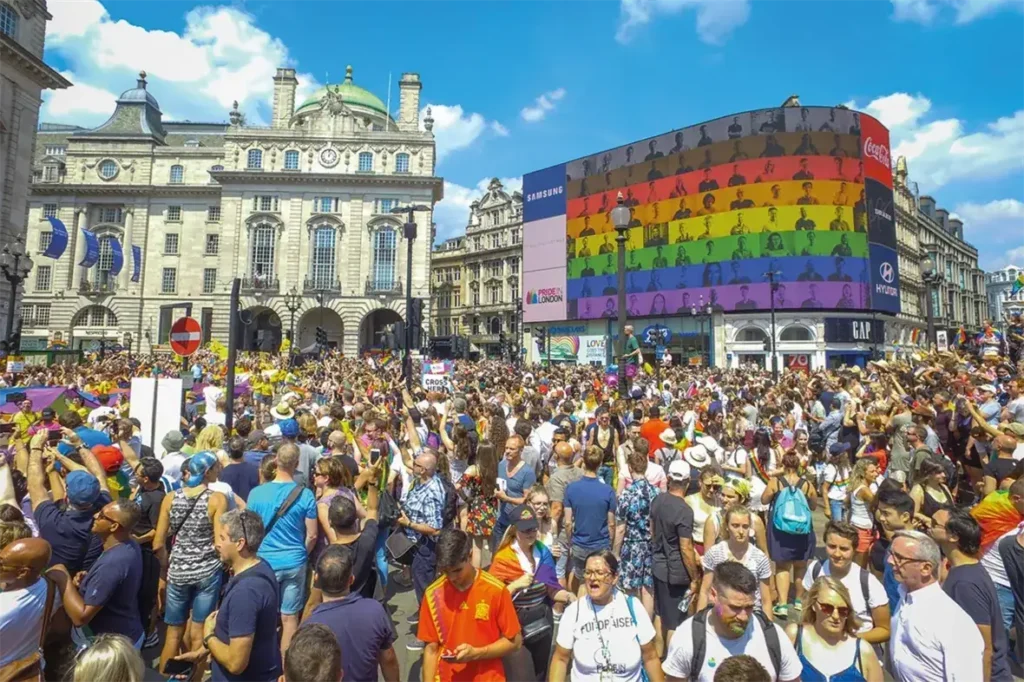
June is the month when brands across every industry make decisions about how , and whether , to show up for the LGBTQ+ community. The ones that do it well build genuine community relationships that drive brand loyalty for years. The ones that do it poorly with performative rainbow branding and no real investment often do more damage than if they had done nothing. At American Guerrilla Marketing, based in Industry City, Brooklyn, we build the street-level and experiential components of Pride Month marketing campaigns that put brands in the community for real , not just on their social feeds.
Pride Month marketing is not only about June. It is about how brands show up with physical presence at the moments that matter to the LGBTQ+ community. Our guerrilla marketing team builds that presence through street activations, event deployment, community-centered outreach, and the kind of boots-on-the-ground presence that tells LGBTQ+ audiences a brand actually invested rather than just updated its logo for thirty days.
The Current State of Pride Month Brand Marketing
The LGBTQ+ community has grown increasingly sophisticated in evaluating corporate Pride campaigns. Years of observing which brands show up only in June and disappear in July have created a community that actively distinguishes between companies doing meaningful work and companies running seasonal optics. This matters for marketing strategy: a Pride campaign that feels hollow not only fails to build loyalty , it can actively damage brand perception among an audience that values authenticity highly.
The brands consistently praised by LGBTQ+ audiences for their Pride engagement share certain characteristics. They have been supporting the community publicly and financially for years before a specific Pride campaign. They partner with actual LGBTQ+ organizations and community members. They have visible LGBTQ+ representation in their staff and leadership. And crucially, they show up in the physical world , at events, in neighborhoods, at community spaces , not just online.
Our Pride Month marketing programs build the physical presence component of that equation. We bring brands into LGBTQ+ neighborhoods and Pride events in ways that reflect genuine investment and create direct community engagement.
Street Teams and Brand Ambassadors at Pride Events
The centerpiece of most Pride Month marketing campaigns we run is the deployment of brand ambassadors at Pride parades and festivals in targeted markets. Our pride street teams cover parade routes, festival grounds, and neighborhood corridors with branded materials, samples, and direct engagement that creates real-world touchpoints with LGBTQ+ audiences at peak community gathering moments.
Pride ambassadors are selected for cultural fluency and genuine enthusiasm for the community they are engaging. Many of our pride campaign staff are LGBTQ+ community members themselves. Every team member is briefed on the brand’s Pride initiative, its history with the community, and the specific messages they should carry into conversations with event attendees.
We coordinate pride festival marketing in all major markets , New York City Pride, San Francisco Pride, Los Angeles Pride, Chicago Pride, Miami Pride, Washington DC Capital Pride, Seattle Pride, Atlanta Pride, and dozens of additional markets where significant Pride events draw the community together.
Wheatpasting in LGBTQ+ Neighborhoods
Before Pride events begin, the neighborhoods where LGBTQ+ communities live and gather are the right place to establish brand presence. Wheatpasted poster campaigns in these neighborhoods , placed on approved walls in the weeks leading up to Pride Month , create awareness and brand recognition that gives Pride event ambassadors a foundation to build on.
When a Pride festival attendee has seen a brand’s poster in their neighborhood for two weeks and then encounters a brand ambassador at the parade handing out samples, the interaction is not an introduction , it is a reinforcement. That multi-touchpoint sequence builds brand impression depth that single-channel campaigns cannot achieve.
We identify the right neighborhood placements in each market based on the demographics of LGBTQ+ communities in that city. The Castro in San Francisco, the West Village and Hell’s Kitchen in New York, Boystown in Chicago, Midtown in Atlanta, WeHo in Los Angeles , these neighborhoods have specific visual cultures and community histories that inform how we approach placement and creative coordination.
Community Awareness Campaigns and Outreach
Pride Month community marketing extends beyond events to include outreach at the spaces where LGBTQ+ audiences spend their daily lives. Community centers, LGBTQ+ affirming health clinics, queer-owned businesses, and cultural institutions are all nodes in the community network where brand presence creates genuine goodwill.
We coordinate outreach campaigns that bring brand representatives and materials into these everyday community spaces , not just the high-visibility Pride parade , to create impressions in contexts that feel less transactional and more genuine. A brand that shows up at an LGBTQ+ community center with support and materials in May, before the June festival rush, is making a different kind of statement than a brand that only appears during peak Pride season.
These community outreach elements coordinate naturally with our ambassador and event programs to create a complete June presence that covers multiple touchpoints across the LGBTQ+ community landscape in each market.
LED Trucks and OOH Media at Pride Events
For brands that want maximum visual presence at Pride parades and festivals, LED billboard trucks deliver impact that is impossible to miss. A fully branded LED truck moving through a Pride parade route displays the brand’s Pride creative to tens of thousands of spectators along the march. During festivals, trucks circling the perimeter create high-visibility brand exposure throughout the event day.
We program Pride LED trucks with creative that reflects the specific campaign , brand Pride messaging, product features, community partnership announcements, or LGBTQ+ celebration content that feels authentic to the brand’s values. Multiple creative rotations allow the truck to carry different messages to different segments of the parade or festival crowd.
LED trucks at Pride events also generate significant organic social sharing. Spectators photograph and video impressive mobile displays, and those shares extend the brand’s Pride presence into social networks without additional media spend.
Pride Sidewalk Stencils and Street Art Elements
In markets where approved, water-based sidewalk stenciling in Pride corridors creates ground-level brand presence that participates in the visual language of Pride celebrations. Rainbow-toned stencils with brand elements or community messages along parade routes and in festival zones create additional impression points at ground level.
This tactic works particularly well as a supplementary element alongside ambassador deployment and poster campaigns. The stencils are low-cost, high-visibility, and create an impression that reaches everyone walking through the Pride corridor regardless of whether they stop to talk with an ambassador or pick up a sample.
Multi-City Pride Month Campaign Management
The Pride season calendar is compressed, with major events across the country concentrated in a four-to-six-week window. Brands running multi-city Pride campaigns need coordinated execution across markets that often overlap in timing.
Our national event marketing infrastructure manages Pride campaigns in multiple cities simultaneously. One project manager coordinates all market activations, ensures consistent brand standards, manages logistics and creative asset distribution, and delivers a complete Pride season campaign report covering every market in the program.
This consolidated management approach allows brand marketing teams to focus on strategy and creative while we handle the operational complexity of executing across dozens of markets during the busy Pride calendar window.
Planning a Pride Month Marketing Campaign
Effective Pride Month marketing requires earlier planning than most brands expect. site approval applications for certain parade and festival positions have deadlines months in advance. Popular event activation spots fill up quickly. Ambassador staffing for a national campaign requires advance recruitment and training. Material production needs time for design, review, and printing.
We recommend beginning Pride Month campaign planning in January or February for brands running multi-city programs. For single-market campaigns or simpler activations, we can work with timelines as short as six to eight weeks before the Pride event. But the brands that get the best placements, the most prepared teams, and the most refined creative are the ones that start early.
Our team handles the full production process from campaign concept to post-event reporting. Brands bring their creative direction and values. We bring the operational infrastructure to execute at street level across every market on their Pride calendar.
Why AGM for Pride Month Marketing
We bring street-level expertise and cultural awareness together for every Pride campaign we run. Our team knows how to work Pride environments , high crowds, dynamic geography, community-specific expectations , and we execute with the discipline that brands need when their Pride presence is under community scrutiny.
The brands that have worked with us for Pride Month consistently tell us that our combination of operational consistency and community sensitivity is what they need from a ground-campaign partner. They can count on the deployment running correctly, and they can trust that the team representing them in the community will do so with authenticity and respect.
Pride matters. We take that seriously in how we build and execute every campaign that carries a brand into these events and neighborhoods. That is the foundation of every Pride Month program we run.
Frequently Asked Questions
What is Pride Month marketing?
Pride Month marketing refers to the brand campaigns, activations, and community outreach that companies run in June to engage LGBTQ+ audiences and show their support for the community. Effective Pride Month marketing goes beyond digital rainbow branding to include physical presence at events, community partnerships, and sustained engagement.
What distinguishes authentic Pride marketing from performative rainbow-washing?
Authentic Pride marketing involves real community presence at events, partnerships with LGBTQ+ organizations, year-round community engagement, and campaigns that reflect genuine brand values. Rainbow-washing involves adding rainbow colors to existing marketing with no deeper community investment or presence.
How does street-level marketing support Pride Month campaigns?
Street-level marketing creates physical brand presence in LGBTQ+ neighborhoods, at Pride parades and festivals, and in the community spaces where LGBTQ+ audiences gather. It translates digital awareness into real-world community engagement that builds lasting brand relationships.
What Pride Month marketing tactics does AGM specialize in?
AGM specializes in brand ambassador deployment at Pride events, wheatpasting in LGBTQ+ neighborhoods, LED truck activations at Pride parades and festivals, sidewalk stenciling in Pride corridors, and product sampling campaigns at community gatherings.
How early should brands start planning Pride Month marketing?
Pride Month campaign planning should begin at minimum eight to twelve weeks before June 1 to allow time for creative development, site approval acquisition, material production, and coordination with event organizers. January or February planning is ideal for brands with large multi-city programs.
Can AGM run Pride Month marketing campaigns across multiple cities?
Yes. Our national vendor and field team network covers all major Pride markets simultaneously. We manage multi-city Pride Month campaigns through a single coordination point so brands have consistent execution quality across every market. For more on this, explore our experiential marketing.