Brand activation and brand advertising are not the same thing. Advertising creates exposures. Activation creates experiences. At a trade show expo, the distinction matters more than almost anywhere else, because the environment is already saturated with advertising and what attendees remember are the experiences that broke through the noise.
At American Guerrilla Marketing, our team builds expo brand activations that create genuine brand encounters at every significant touchpoint across the convention footprint. We move beyond the booth , into the hotel lobbies, the pedestrian corridors, the coffee queues, the evening networking events , to put your brand in direct contact with your audience in the moments and places they are most receptive.
This guide covers what expo brand activation looks like in practice, how it extends beyond what any booth budget can achieve, and how we design campaigns that create real brand relationships rather than just exposures.
The Anatomy of a Full-Footprint Expo Brand Activation
A full-footprint expo brand activation operates in every zone where your target audience moves throughout the show day. Each zone requires a different activation approach because the attendee’s mindset, pace, and receptivity are different in each.
Hotel zone (pre-show, 6:30 to 8:30 AM): Attendees are preparing for the day. They are in a transitional, organized-but-not-yet-pressured mindset. Brand ambassadors in hotel lobbies with a product sample and a brief, confident brand introduction reach this audience at peak receptivity. A premium branded item given to someone heading to an important industry show creates positive association with the gift and with your brand.
Convention approach corridor (morning arrival, 7:30 to 9:30 AM): The pedestrian approach to the convention entrance carries the highest concentration of attendees per linear foot. Sidewalk stencils at decision points, ambassador teams at the high-traffic corner, and a LED billboard truck on the primary approach route all layer into a multi-sensory brand encounter for every attendee walking to the entrance.
Convention entrance zone: The thirty seconds before an attendee steps inside is a high-attention moment. They have arrived. They are oriented. A positioned ambassador team with a short, compelling offer creates a final outside-the-hall touchpoint before the show floor claims their attention.
Midday break zones (12:00 to 1:30 PM): Lunch breaks are high-quality engagement windows. Attendees have exhaled from morning sessions and are social, relaxed, and open to interaction. Sampling in the food district, ambassador presence at restaurant queues, and branded collateral at outdoor seating areas all catch this audience in a favorable state of mind.
Evening networking zone (5:00 to 9:00 PM): Post-show events are where the best conversations happen. Evening activation is subtler than daytime activation , lighter touch, more social, less pitchy. Ambassador presence at event entrances, projection media on adjacent building faces, and branded items distributed at evening venues extend the activation into the social hours.
What Makes Expo Brand Activation Memorable
Convention attendees process hundreds of brand messages per day. The ones that stick are the ones that created a genuine experience , something felt, tasted, handled, or genuinely surprising. Three categories of brand activation moments tend to earn lasting recall.
Unexpected location. A brand showing up in a place where the attendee was not expecting any brand presence , the hotel breakfast area, the parking garage exit, the block between two conference hotels , creates surprise that makes the impression memorable. Expected advertising in expected places (show guide ads, venue digital screens) is processed and forgotten. Unexpected encounters create a story.
Genuine utility. An activation that actually helps the attendee creates positive emotional association that pure advertising cannot buy. A sample of a product they were looking for, a useful branded item that solves a problem they have at the conference, a direction or piece of navigation that saves them time , these helpful moments embed your brand in a positive memory.
Social shareability. An activation element that is visually interesting enough to photograph creates a secondary audience: every person in the professional network of everyone who shares the photo. At industry expos, professional networks and your target audience overlap significantly. Social sharing from an expo brand activation can reach more of your actual buyers than the physical activation directly touches.
Outdoor Creative as Brand Activation
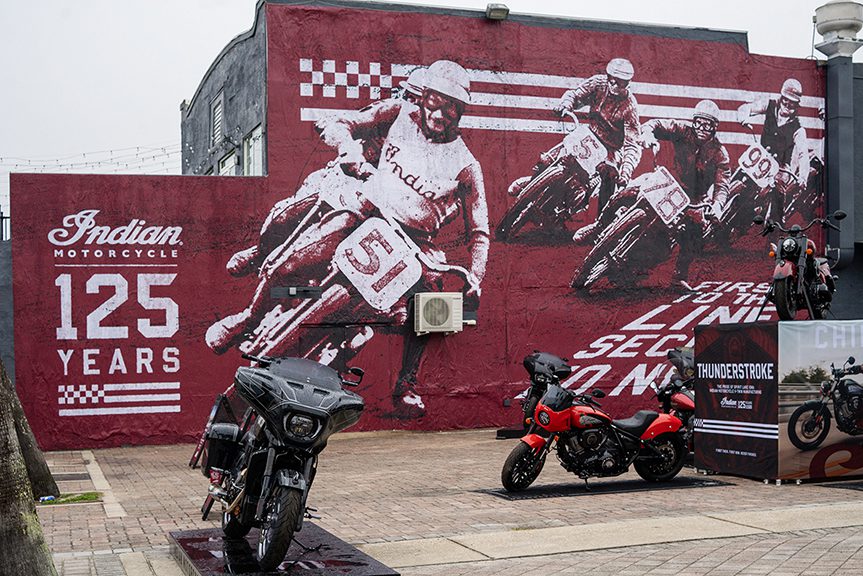
Some of the strongest expo brand activation moments are created through bold outdoor creative in the pedestrian zones around the convention. Wheatpasted large-format posters with distinctive illustration, unexpected scale, or strong visual language create a gallery effect in the corridors between hotels and the convention center.
Attendees who see strong creative work in an unexpected location stop, look, photograph, and share. The creative itself becomes a brand touchpoint that communicates who you are as a company before any conversation or product encounter has happened. For brand-positioning campaigns, outdoor creative in high-traffic convention corridors can be more effective per dollar than any inside-the-hall advertising option.
Connecting Street Activation to Booth Performance
Every element of an expo brand activation in the public zones should point toward a defined next step. For exhibitors, that next step is a booth visit. For non-exhibitors, it might be a QR code destination, an off-site activation space, or a post-show follow-up mechanism.
The connection between the street experience and the next step needs to be clear and effortless. An attendee who got your sample, enjoyed it, and wants to learn more should be able to scan a QR code right there on the street and either book a booth appointment or land on a well-designed page with the booth number and a reason to come by. Friction at this transition step is where activation campaigns lose the conversions they create.
We design this transition explicitly as part of every campaign brief, working with your team to ensure the street experience flows smoothly into the next action you want attendees to take.
Brand Activation for Non-Exhibiting Brands at Expos
One of the strongest use cases for expo brand activation is the brand that wants full convention presence without the cost and complexity of official exhibitor status. This is a strategic choice, not a budget limitation. Some brands find that a well-executed activation campaign in the public zones outside a convention delivers better results per dollar than an equivalent booth investment.
For these campaigns, the activation program replaces the booth entirely: street teams create the direct contact, outdoor advertising creates the visual presence, sampling creates the product trial, and an off-site activation space (hotel suite, nearby venue, branded vehicle) provides the in-depth engagement experience that the booth would otherwise offer.
We have designed and executed campaigns along these lines for brands across consumer goods, B2B technology, wellness, and media categories at conventions from CES to SXSW to major healthcare and financial services expos.
How We Execute Expo Campaigns From Industry City Brooklyn
American Guerrilla Marketing plans and executes expo campaigns from our base at Industry City in Brooklyn. Our field operations team has direct experience at expos and convention centers across the United States, giving us the venue-specific knowledge that makes the difference between a campaign plan that looks good on paper and one that executes effectively in the field.
For every expo campaign, we conduct advance route planning: mapping the pedestrian corridors between hotel clusters and the expo venue, identifying the outdoor surfaces with the highest sight lines and foot traffic, confirming access and site approval parameters for each placement location. This advance work happens weeks before the expo opens, ensuring that every element of the campaign is ready to deploy the moment the show begins.
Our field teams submit documentation throughout every deployment day: timestamped logs from each position, photo confirmation of every placement, and conversation or distribution counts for ambassador and sampling programs. Post-expo reporting aggregates this documentation into a full campaign record that clients use for performance evaluation and future planning.
Planning Your Convention Campaign Timeline
Convention marketing campaigns work best when they are planned against the full timeline: 8 to 12 weeks before the show for the most complex programs, 4 to 6 weeks for ambassador-only or outdoor-only programs. The earlier the planning begins, the more options are available for every element of the campaign.
The pre-show window (6 to 8 weeks out) is when pre-show meeting outreach campaigns should launch. Personalized outreach to registered attendees using the specific conference or show context achieves significantly higher response rates than generic outreach because the timing is immediately relevant to the recipient’s known upcoming plans. We build pre-show outreach sequences for clients as part of convention marketing engagements, segmenting by target buyer persona and show registration data where available.
Production of printed materials for wheatpaste campaigns and stencil programs requires 3 to 4 weeks from design approval to installation. LED truck route planning and driver coordination requires 1 to 2 weeks. Ambassador team recruitment and briefing requires 3 to 4 weeks for shows with specific professional audience requirements. Running all of these in parallel against the show date requires a planning timeline that starts at least 6 weeks before the first deployment day.
We provide campaign timeline planning as part of the proposal process: every proposal includes a production and deployment timeline that shows exactly what happens when, what deliverables are required from the client, and what our team is responsible for executing at each stage. This timeline planning prevents the last-minute scrambles that degrade campaign quality and limit creative options.
Working With American Guerrilla Marketing
Our team at American Guerrilla Marketing is based at Industry City in Brooklyn. We have been running street-level marketing campaigns for brands across every major consumer category for years. Our field operations experience spans New York, Los Angeles, Chicago, Miami, Austin, San Francisco, and dozens of other markets. That operational depth is what we bring to every client engagement, alongside the creative and strategic work that makes campaigns worth executing.
Our engagement process is straightforward. We start with a discovery call where we learn your brand, your audience, your market, and your campaign objectives. We turn that understanding into a campaign proposal with specific tactics, deployment plans, a timeline, and investment. Once approved, we handle every aspect of production and field management from start to finish. You receive documentation from every deployment day and a post-campaign report at close.
We work with brands at a wide range of budgets and campaign scales. A focused street team program in one neighborhood is as important to us as a multi-city multi-format program. Every campaign we run reflects the same standard of planning, execution, and documentation regardless of scale.
What is expo brand activation?
Expo brand activation is the creation of live, direct-contact brand experiences at a trade show or expo. Rather than advertising to attendees from a distance, brand activation puts your brand in direct physical or experiential contact with your audience through sampling, ambassador interactions, immersive environments, or unexpected brand moments.
What is the difference between expo brand activation and expo advertising?
Expo advertising creates exposures. Brand activation creates experiences. Advertising tells people about your brand. Activation puts them in direct contact with it. The two work together , advertising creates awareness, activation converts it into a meaningful brand relationship.
What does a full-footprint expo brand activation look like?
It covers every significant attendee touchpoint across the event: hotel zones, convention entrance approach, midday break zones, the show floor, and evening networking events. Each touchpoint carries a brand experience element, creating a continuous brand encounter from arrival to departure.
How does expo brand activation drive business outcomes compared to brand awareness alone?
An attendee who received your sample, had a real conversation with your ambassador, and visited your demo is not just aware of your brand , they have a relationship with it. Relationships convert into sales at far higher rates than awareness alone.
Can a brand activation be the entire convention marketing strategy for a non-exhibitor?
Yes. Street teams, sampling, LED trucks, and outdoor advertising in public space require no official affiliation and can reach the full attendee population.
What role does brand ambassador quality play in expo brand activation?
Brand ambassador quality is one of the most critical variables in activation success. We treat ambassador selection, training, and management as a primary input, not an afterthought.
How do you ensure brand consistency across all activation touchpoints?
We build a unified creative and messaging brief governing every element , ambassador scripts, handout materials, outdoor creative, LED truck displays, and in-venue components. All elements use the same visual language, core message, and call to action.
Campaign Architect – American Guerrilla Marketing
Frequently Asked Questions
What is expo brand activation?
Expo brand activation is the creation of live, direct-contact brand experiences at a trade show or expo. Rather than advertising to attendees from a distance, brand activation puts your brand in direct physical or experiential contact with your audience through sampling, ambassador interactions, immersive environments, or unexpected brand moments.
What is the difference between expo brand activation and expo advertising?
Expo advertising creates exposures. Brand activation creates experiences. Advertising tells people about your brand. Activation puts them in direct contact with it. The two work together , advertising creates awareness, activation converts it into a meaningful brand relationship.
What does a full-footprint expo brand activation look like?
It covers every significant attendee touchpoint across the event: hotel zones, convention entrance approach, midday break zones, the show floor, and evening networking events. Each touchpoint carries a brand experience element, creating a continuous brand encounter from arrival to departure.
How does expo brand activation drive business outcomes compared to brand awareness alone?
An attendee who received your sample, had a real conversation with your ambassador, and visited your demo is not just aware of your brand , they have a relationship with it. Relationships convert into sales at far higher rates than awareness alone.
Can a brand activation be the entire convention marketing strategy for a non-exhibitor?
Yes. Street teams, sampling, LED trucks, and outdoor advertising in public space require no official affiliation and can reach the full attendee population.
What role does brand ambassador quality play in expo brand activation?
Brand ambassador quality is one of the most critical variables in activation success. We treat ambassador selection, training, and management as a primary input, not an afterthought.
How do you ensure brand consistency across all activation touchpoints?
We build a unified creative and messaging brief governing every element , ambassador scripts, handout materials, outdoor creative, LED truck displays, and in-venue components. All elements use the same visual language, core message, and call to action.
How early should a brand start planning?
For most campaigns, the smart move is to start planning at least two to four weeks before the launch window so production, routing, staffing, and reporting are all lined up.
What makes one market perform better than another?
Market fit depends on audience density, neighborhood behavior, route efficiency, and whether the creative belongs in that setting. The busiest city is not always the best city.
Can AGM bundle this with other services?
Yes. AGM often combines this work with supporting formats so the campaign has stronger repetition and cleaner reporting across the whole run.
How does AGM quote pages like this?
We quote from official rate cards where they apply, then scope the remaining production, staffing, and routing details to the actual job.