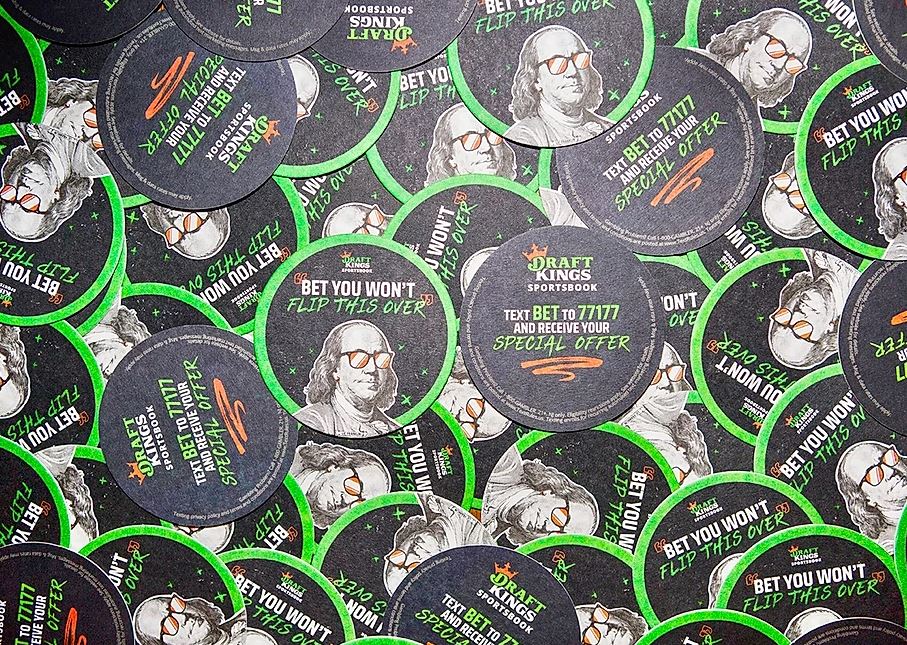
Field marketing at sports venues is one of the most dependable, repeatable forms of direct consumer engagement available to brands. Every home game day, a specific number of people converge on a specific location, following predictable patterns, in a highly social, emotionally open state that makes them genuinely receptive to brand interactions done well. The sports fan in the tailgate, in the approach corridor, or in the post-game bar is not the same person who ignores your banner ad while scrolling through their phone on a Tuesday morning commute. They are present, social, and ready to engage.
At American Guerrilla Marketing, we deploy sports brand ambassador programs around stadiums and arenas across the country. Our street teams work the tailgate zones, the approach corridors, and the surrounding neighborhood bars and gathering spots to put brand experiences directly in the hands of sports fans at the moments when those experiences land hardest. This guide covers how sports brand ambassador programs are built, what sports product sampling looks like in practice, and how to build a sports brand activation strategy that works across a season or for a single high-impact game.
What Sports Brand Ambassadors Actually Do
The title “brand ambassador” covers a lot of ground in marketing. In the sports venue context, the role is specifically about direct fan engagement in high-energy, high-density environments. Our sports brand ambassadors are not standing behind a table handing out flyers. They are active, mobile, trained to read crowd dynamics, and briefed to deliver specific messages and interactions in short windows with moving targets.
In the tailgate zone, ambassadors move through the parking areas, approaching groups of fans who are stationary and social, offering samples, distributing collateral, and having the brief, genuine brand conversations that create the exposures that matter. In the approach corridors, they work with the moving crowd: quick handoffs, precise delivery of the one or two things the brand needs to say in the time it takes to walk past. In post-game bars, they operate in a sit-down social context where conversations can run longer and the emotional aftermath of the game creates its own conversational opening.
Each context requires a different interpersonal approach. Our briefing process prepares ambassadors for all three, with specific guidance on how to read each situation and adapt. A tailgate interaction with a group of fans who have been grilling since 10 AM is different from a brief encounter with someone walking fast toward a stadium gate. Sports brand ambassadors who can navigate both extremes effectively are the people we staff for these programs.
Sports Street Teams: Composition and Deployment
Sports street teams for stadium and arena campaigns are typically built around two or three primary roles. The lead ambassador is the most experienced person on the team, responsible for reading the crowd environment, adjusting deployment positions based on real-time traffic patterns, and managing team dynamics in high-energy settings. The sampling or distribution ambassadors are the frontline crew: mobile, high-energy, trained on the product and the brief, responsible for the direct fan interactions that generate the majority of campaign exposures. For branded vehicle or equipment-based activations, a logistics role manages the physical elements of the deployment.
Team size scales with the venue and the campaign objectives. For a focused perimeter campaign around a major NFL stadium, four to eight ambassadors covers the primary tailgate and approach corridor zones effectively during peak windows. For a multi-zone campaign that covers the approach, the transit exits, and the nearby bar district simultaneously, eight to fifteen people is a more appropriate team size. We size every deployment based on the specific venue geography and the realistic foot traffic patterns at that location.
Scheduling follows the game day traffic pattern. Ambassadors arrive well before the peak ingress window to set up positions, brief on any last-minute adjustments, and be in place when the crowd builds. They remain deployed through the departure window and, where post-game bar coverage is part of the campaign, shift to those locations after the game ends. A full game day deployment for a major NFL game typically runs six to eight hours from initial deployment to post-game bar coverage wrap.
Sports Product Sampling: The Direct-to-Fan Channel
For consumer product brands with a tangible product to put in someone’s hands, sports product sampling is one of the highest-conversion marketing activities available. The sports fan at a tailgate or in an approach corridor is often hungry, thirsty, and in exactly the product-receptive mindset that makes sampling effective. A food or beverage sample that lands in the right hands at the right moment converts at rates that paid digital cannot replicate.
Effective sports product sampling at stadiums and arenas follows principles we have developed through execution across dozens of venues:
Match the product to the moment. A cold energy drink sample works in a hot parking lot in August. A protein bar sample works in the post-workout moment at an early morning kickoff. A snack sample works in the tailgate zone where people are already eating. Timing and context are not secondary considerations in sampling; they are the primary factors that determine conversion.
Position where fans stop, not just where they move. The approach corridor sample is an efficiency play: you can reach many people in a short time. The tailgate sample is a quality play: you can have a real interaction with a stationary group. Both have value, and the right mix depends on the campaign objective. Pure awareness campaigns concentrate on corridor volume. Trial and conversion campaigns concentrate on the tailgate quality interaction.
Give people a reason to seek the product again. The sample is the first impression. The card, QR code, or discount code in their hand after the sample is the bridge to the next impression and the eventual purchase. Every sampling program we run includes a takeaway element designed to extend the marketing window beyond the immediate interaction.
Sports Brand Activation: Beyond the Sample
Sports brand activation is broader than sampling. It encompasses any direct, physical brand experience created for sports fans in the event environment. The best activations at sports venues go beyond putting a product in someone’s hand and create a brand moment that fans talk about, photograph, and share.
Interactive games in the tailgate zone. Photo moments that produce shareable content with a brand element naturally in frame. Skill challenges that let fans compete against each other with the brand providing the prize structure. Branded giveaways that fans genuinely want, items that become part of the game day ritual rather than things that end up in a trash can on the way out.
The most effective sports brand activations are designed around how fans actually behave in the sports venue environment, not how a brand wishes they would behave. Sports fans move in groups. They are competitive. They are territorial about their tailgate space but social with people who respect the culture. They respond to brands that understand what game day means and show up as participants in that experience rather than as outsiders who paid to be there.
Our team works with brand clients to design activation concepts that fit the specific sport, venue, and fan culture they are targeting. An NFL tailgate activation in a stadium parking lot in the South requires a different approach than an NBA halftime activation in the streets of lower Manhattan. The underlying principles of effective activation are consistent; the execution is always local.
Interior vs. Exterior Sports Ambassador Programs
Inside the venue, official team or league partnerships typically govern what brands can do and where they can do it. The cost of interior ambassador programs is correspondingly higher, and the reach is more constrained by the physical layout of the venue and the rules around commercial activity inside the gates.
Outside the venue, in the public spaces of the tailgate, the approach corridors, and the surrounding neighborhood, no official relationship is required. Our sports brand ambassador programs are primarily built around this exterior zone because it offers higher flexibility, lower cost, and often better conversion rates than interior programs that operate under significant restrictions.
The exterior approach also allows brands to reach fans at multiple touchpoints across the game day experience rather than just at one interior moment. A fan who encounters a brand ambassador in the tailgate, then sees the same brand’s LED truck on the approach street, then finds a brand representative in the bar after the game has had three distinct interactions that reinforce each other in ways no single interior placement can match.
Season-Long Ambassador Programs
A single-game ambassador deployment generates exposures for one game. A season-long sports ambassador program builds something categorically different: genuine familiarity with a sports market’s fan base that accumulates over months of consistent presence.
We build season-long ambassador programs for brands that want to become a known name among a specific team’s fan base across a full season. The program identifies the highest-value home dates, the best deployment zones for the specific venue, and the ambassador team that will maintain consistency across the full program. Creative and messaging evolve across the season to stay fresh. The team and locations remain consistent to build recognition among regular attendees who see the same brand presence every home game.
The compounding effect of a season-long program is measurable. Fans who see the same brand six to ten times across a season’s home schedule develop a familiarity and positive association that a single-game impact cannot create. Combined with the other brand marketing the same fans see in the market, the season-long sports ambassador program builds the kind of ambient brand awareness that typically requires much higher media spending to achieve through paid channels.
Ambassador Briefing: What It Takes to Work in a Sports Venue Environment
Sports venue ambassador work is not entry-level event staffing. The environments are high-energy and often loud. The crowds are dense and fast-moving. The audiences are emotionally engaged with something other than the brand, which means the brand encounter needs to be earned rather than assumed. And the ambassador is representing your brand to tens of thousands of people who will form their opinion of that brand based in large part on the quality of that interaction.
Our briefing process for sports venue ambassador teams covers product knowledge, brand messaging, interaction protocols for each deployment zone, and specific guidance on the sports and fan culture they will be working within. An ambassador at an NFL game needs to understand football fan culture. An ambassador at an NBA game needs to understand the specific culture of that team’s fan base. These are not generic briefings. They are specific to the event, the venue, and the audience.
We also brief extensively on what not to do. Behaviors that feel aggressive to sports fans in the approach corridor. Approaches that feel disrespectful of tailgate territory. Interactions that signal to fans that the brand does not understand what game day is about. The negative briefing is as important as the positive, because a single bad interaction in a sports environment can generate word-of-mouth in the opposite direction from what the campaign intends.
Measuring Sports Brand Ambassador Results
Every sports brand ambassador program we run includes built-in measurement. Ambassador teams log interactions: samples distributed, cards or collateral handed out, QR codes scanned, and any direct conversion actions captured in the field. Post-deployment reports include interaction counts by zone and window, notes on attendee reactions and frequently asked questions, and photo documentation of team placement and activity.
For brands that want to measure broader awareness impact, we coordinate pre- and post-campaign brand awareness surveys with fans in the target market. These surveys measure brand recognition and purchase intent changes attributable to the ambassador program, allowing comparison against baseline awareness in markets where the program did not run.
For sampling-focused programs, redemption rates on discount codes or QR codes provided to sampled fans provide direct conversion data that can be tied to the campaign without relying on survey estimates. We recommend including a trackable redemption mechanism in every sampling program for this reason.
How Early Should a Brand Start Planning?
For most campaigns, the smart move is to start planning at least two to four weeks before the launch window so production, routing, staffing, and reporting are all lined up. Larger multi-zone campaigns or season-long programs may require additional planning time based on the number of venues, markets, and deployment dates involved.
What Makes One Sports Market Perform Better Than Another?
Market fit depends on audience density, neighborhood behavior, route efficiency, and whether the creative belongs in that setting. The busiest city is not always the best city. Venue geography, fan movement, nearby gathering areas, and the campaign objective all influence where a sports ambassador program should be deployed.
Can AGM Bundle Sports Brand Ambassadors With Other Services?
Yes. AGM often combines sports brand ambassador programs with supporting formats such as outdoor placements, mobile media, sampling, and other field marketing tactics so the campaign has stronger repetition and cleaner reporting across the whole run.
How Does AGM Quote Sports Brand Ambassador Campaigns?
We quote from official rate cards where they apply, then scope the remaining production, staffing, and routing details to the actual job. The final scope depends on the market, venue, campaign objectives, deployment schedule, team size, production requirements, and reporting needs.
Ready to Launch Your Campaign?
Whether you are planning a single-game activation or a season-long sports ambassador program, AGM can help with campaign planning, venue-area deployment, ambassador staffing, product sampling, brand activation, and field reporting. Contact AGM to discuss the market, venue, audience, and campaign objectives.
Frequently Asked Questions About Sports Brand Ambassadors
What are sports brand ambassadors?
Sports brand ambassadors are trained field marketing professionals deployed at or around sports venues to represent a brand through direct fan interactions, product sampling, collateral distribution, and brand storytelling. They operate in tailgate zones, approach corridors, and the surrounding neighborhoods of stadiums and arenas, creating the kind of direct brand encounters that media exposures cannot replicate.
How do sports street teams differ from general brand ambassador programs?
Sports street teams are specifically trained for the sports venue environment: high energy, dense crowd conditions, fast interactions, and an audience in an emotionally heightened state. They understand how to read sports fan dynamics, approach groups rather than just individuals, and adapt their engagement style to the specific sport and fan culture they are working within.
Where do sports brand ambassadors work around stadiums?
Primary deployment zones include tailgate areas, parking lot corridors, transit exits, approach streets, and the bars and restaurants within walking distance of the venue. Inside venues, ambassador programs require official team or venue partnership; outside, they operate in public spaces with no official relationship required. Most of our sports ambassador programs are exterior-focused for this reason.
What is sports product sampling?
Sports product sampling is the distribution of product samples to sports fans in the physical environment of a game day or sports event. It is most effective in tailgate zones, approach corridors, and post-game gathering areas where fans are stationary or slow-moving and in an open, social state of mind. The conversion rates for well-executed sports product sampling consistently exceed those of equivalent digital sampling campaigns.
What is sports brand activation?
Sports brand activation is any marketing activity that creates a direct, physical brand experience for sports fans in or around a sports event. This includes sampling programs, ambassador interactions, pop-up experiences, interactive brand elements, and any other tactic that turns a passive brand impression into an active fan encounter. The best sports brand activations are designed around how fans actually behave in the venue environment, not how a brand wishes they would.
How many ambassadors do we need for a stadium campaign?
For a focused perimeter campaign around a major stadium, four to eight ambassadors is a typical starting range for coverage of the primary approach corridors and tailgate zones. Larger campaigns with multiple deployment zones or extended geographic coverage require proportionally larger teams. We size the team based on the specific venue, event scale, and campaign objectives after reviewing the venue’s foot traffic patterns.
Can we run sports brand ambassador programs without a team partnership?
Yes. Ambassador programs in public spaces surrounding the venue, the streets, transit zones, tailgate areas, and nearby bars, require no official team or venue relationship. We have executed extensive sports venue ambassador programs entirely in public-space perimeter zones, often achieving comparable or better results to interior programs at lower cost.