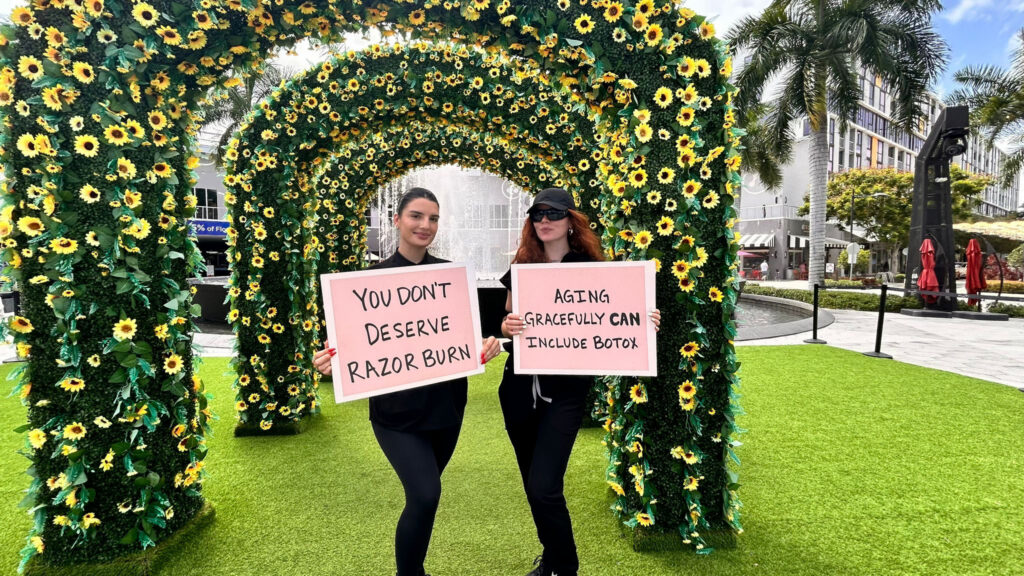
Street teaming is the practice of deploying trained people into public spaces to create direct, personal brand contact with potential consumers. It is the human-powered engine behind product sampling campaigns, brand awareness programs, event promotions, and competitive market entries. The street teaming approach rests on a simple and proven premise: direct human interaction generates brand memories and consumer trust at a rate and quality that remote advertising channels cannot match.
We run street teaming programs for consumer brands across North America. We have deployed street teaming teams in major and secondary markets for food and beverage companies, personal care brands, technology startups, entertainment companies, and service businesses. We know what makes street teaming work, what makes it fail, and how to build the programs that consistently produce results worth investing in.
Street teaming is not new. It is not a trend or a novelty. It is one of the oldest and most effective forms of consumer marketing, practiced in some form in every commercial society that has ever existed. What has changed is the professionalism, the management discipline, and the measurement rigor that modern field marketing agencies apply to it. The core activity, a real person creating a real moment with a real consumer in the real world, is as relevant today as it has ever been.
AGM Field Note: Street teaming is not about scale alone. A street teaming program that distributes ten thousand samples without quality conversations around each one is a logistics program, not a marketing program. The conversation is what creates the brand memory. The sample is what gives the conversation its reason to happen.
Effective street teaming begins with strategy, not logistics. Before a single ambassador is recruited or a single location is scouted, the campaign needs a clear objective, a specific target consumer, and a defined measure of success. These three elements determine every subsequent decision: who to recruit, where to deploy, what to say, what to measure. A street teaming program built without this strategic foundation will be busy but not productive.
Ambassador Recruitment
We recruit street teaming ambassadors who are matched to the brand’s consumer profile and who can represent the brand authentically. For a health food brand, we recruit people who genuinely care about and live a health-conscious lifestyle. For a fashion brand, we recruit people whose personal aesthetic is consistent with the brand’s visual identity. For a technology brand, we recruit people who are genuinely tech-forward. Authenticity is not something that can be trained into a mismatched ambassador. It has to be there from the start.
Training
Every ambassador goes through brand-specific training that covers product knowledge, brand voice, key messages, how to approach consumers in the specific environments they will be working in, how to handle common questions and objections, what the conversion prompt is, and how to document their activity. Training is the single biggest investment in program quality that a brand can make, and it is one of the most consistently underinvested components of street teaming programs that underperform.
Deployment
Deployment is the field execution phase: getting ambassadors to the right locations at the right times with the right materials, managing them actively throughout their shifts, and capturing the data that the program is designed to generate. Clean deployment logistics are the foundation of good field performance. Deployment problems including late starts, missing materials, wrong locations, or absent supervisors are the most common causes of first-shift underperformance in street teaming programs.
Measurement and Reporting
Every street teaming shift generates data. The data is only valuable if it is collected systematically, analyzed honestly, and used to make decisions about the program’s continuation or adjustment. We build measurement frameworks before the program starts and deliver reporting that gives brands the information they need to make those decisions throughout the campaign, not just at its close.
Street teaming happens in a wide range of environments, each with its own dynamics and requirements. Understanding which environments work for which campaign objectives is one of the most important strategic inputs into any street teaming program.
Urban Pedestrian Corridors
High-foot-traffic pedestrian corridors in major cities are the classic street teaming environment. Commuter corridors near transit stops, shopping streets, market districts, and university areas all concentrate large numbers of potential consumers in a relatively small geographic area. The challenge is the brevity of the interaction window: a commuter moving toward a train has 30 seconds of attention to spare, not five minutes. Street teaming in pedestrian corridors requires high-speed, high-volume interaction formats that communicate brand value in a very short window.
Event Perimeters
The areas surrounding major events concentrate engaged, social, and brand-receptive consumers in a short window of time. Event perimeter street teaming captures consumers at a peak of positive social energy and time-of-day receptivity. The interaction format is typically longer and more substantive than in a commuter corridor because event-going consumers are not rushing.
Campus Environments
College campuses concentrate the 18-24 demographic in a dense, socially connected environment where peer-to-peer influence is the dominant brand discovery mechanism. Street teaming on campuses requires ambassadors who fit the campus social context and who can navigate the peer dynamic effectively without creating the awkward feeling of outsiders invading a community’s space.
Retail Environments
Street teaming within or immediately adjacent to retail locations ties the brand moment directly to the purchase opportunity. Consumers who encounter a brand through street teaming within a store or its immediate perimeter are at their closest possible proximity to a purchase decision. This is one of the highest-conversion street teaming environments available to consumer brands with existing retail distribution.
AGM Field Note: The most important thing about street teaming is that it requires active management. Ambassadors who are not supervised perform at the minimum level they need to. Ambassadors who are supervised and supported perform at the maximum level they are capable of. The management investment is where the performance investment pays off.
Street Teaming Pricing
We price street teaming programs at two standard tiers. Standard Street Team is $389.99 per 6-hour shift per team member. This tier includes mapped movement and territory coverage, GPS pins and photo documentation, hand-to-hand outreach, and standard brand briefing. Minimum five deployment days. Mileage at the current federal rate. Premium Street Team is $589.99 per 6-hour shift per team member. This tier includes enhanced communication and multi-location coverage, hourly check-ins, enhanced field reporting, appearance-matched selection, and an on-site field manager. Minimum three deployment days.
Add-ons include overtime at $65 per hour, additional team members at the applicable tier rate, travel days at $275 per day, hotel per diem at $65 per day, and custom materials at quoted rates. We build complete program proposals for all campaigns based on specific geography, duration, and team size requirements. Contact us for a proposal tailored to your campaign.
Frequently Asked Questions About Street Teaming
How is street teaming different from handing out flyers?
Street teaming is the complete program around the physical distribution activity. It includes strategic planning, ambassador recruitment matched to the brand and consumer, thorough training, active field management, and structured reporting. Handing out flyers is a single component of a street teaming program. Street teaming without the surrounding program elements produces the same result as handing out flyers without strategy: activity without evidence of commercial impact.
How many days does a street teaming campaign need to run?
A minimum of three to five days is needed to generate meaningful data and a substantial accumulation of consumer contacts. Programs shorter than three days produce anecdotal evidence but not the data volume needed for optimization or confident business decisions. Most effective street teaming campaigns run one to three weeks. For sustained market presence objectives, we recommend rolling monthly programs rather than discrete campaign blocks.
Can street teaming be done at night or on weekends?
Yes. Weekend deployments are among the most productive shifts for many consumer categories because pedestrian traffic in retail and entertainment zones peaks on Saturdays. Evening deployments work well for entertainment and hospitality brands targeting consumers in night-out mode in bar districts, restaurant corridors, and entertainment zones. We build deployment schedules around the specific time windows when the target consumer is most concentrated and most receptive, which often includes evenings and weekends.
How do you keep street teaming ambassadors motivated throughout a long campaign?
Through a combination of ongoing training, consistent field management support, recognition of strong performance, and program design that rotates ambassadors through varied locations and formats rather than committing them to the same location for weeks at a time. Boredom is a performance killer in street teaming. Variety, active supervision, and genuine recognition of good work are the management tools that maintain motivation throughout extended campaigns.
How quickly can American Guerrilla Marketing deploy a field team?
Standard programs can be deployed within two to three weeks of a confirmed brief and product delivery. Programs requiring specialized training, multiple markets, or custom materials may need three to five weeks. For urgent campaign windows, contact us directly and we will tell you honestly what is feasible within your timeline. We move quickly when the situation requires it, but we do not sacrifice training quality for speed.
What markets does AGM cover?
We have active field teams and established infrastructure in New York, Los Angeles, Chicago, Miami, Austin, Atlanta, Boston, Seattle, Denver, Philadelphia, Dallas, Houston, San Francisco, Washington DC, and more than a dozen secondary markets. For campaigns in markets where we do not maintain a permanent team, we activate partner networks that operate under our briefing and reporting standards. Contact us to confirm coverage in your specific target markets.
Do you provide proof of field activity?
Yes. Every deployment includes GPS route tracking and photo documentation that confirms ambassador presence at the planned locations during the planned times. This documentation is included in daily shift reports and is available for client review throughout the program. We do not rely on self-reported ambassador activity. The documentation is objective and independently verifiable.
Can we observe a live deployment?
Yes. We encourage client observers during active campaigns, particularly during the first week when the brand’s direct observation of ambassador performance is most valuable. Observers can attend any scheduled shift by coordinating with the account management team. We have nothing to hide from client observation and we find that brands who observe at least one shift have a much better understanding of the program’s performance and potential.
What reporting do we receive?
Daily reports delivered within 24 hours of each shift, covering samples distributed or interactions logged, locations covered with GPS confirmation, consumer feedback themes, and field management observations. A final campaign report at program close covers all shift data, location performance analysis, consumer feedback summary, and recommendations for the next program. For multi-week programs, weekly summary reports are also provided.
The AGM Approach
American Guerrilla Marketing has spent years building field marketing programs that produce results brands can measure, report internally, and build on. Our approach is built on three principles: recruit the right people, train them thoroughly, and manage them actively in the field. When those three things are done well, field marketing programs consistently outperform expectations. When any of them is missing, the program produces activity without evidence of value.
We work with emerging brands launching their first product, established brands entering new markets, and mature brands defending their consumer relationships against competitive pressure. The tactics adapt to the brand’s situation. The standards do not. We bring the same recruitment discipline, training rigor, and field management quality to every campaign regardless of its size or the client’s stage of growth.
Call us at (646) 776-2770 or email [email protected] to start the conversation. We will ask the right questions, give you honest answers about what is achievable in your market and timeline, and build you a program that is worth running and worth measuring. American Guerrilla Marketing. Field marketing that puts your brand exactly where it needs to be.
Field Marketing as a Business Growth Strategy
Field marketing programs, including street teams, brand ambassador programs, and product sampling campaigns, are among the most direct contributors to measurable business growth available to consumer brands. They generate the trial that drives first purchase. They build the community presence that drives repeat purchase. They collect the consumer intelligence that drives smarter product and marketing decisions. And they create the brand momentum that makes every other marketing investment more effective.
The brands that allocate a consistent portion of their marketing budget to field marketing over multiple years build consumer relationships that brands relying solely on media advertising cannot match. The consumer who has tried your product in person, who has had a genuine conversation with someone who represents your brand and knows it well, and who has made a positive association between your brand and a real moment in their daily life is a fundamentally different customer than the consumer who has only seen your advertising. The first consumer has a relationship. The second has an awareness. Relationships drive the repeat purchase, the recommendation, and the loyalty that build business value over time.
We have watched brands build from zero market recognition to category leaders in their distribution footprint through consistent investment in field marketing alongside their digital and retail strategies. The trajectory is not accidental. It is the predictable result of building genuine consumer relationships through direct contact over time. Field marketing is the channel that does that work. Digital advertising can create awareness at scale. Field marketing creates the relationships that convert awareness into loyalty.
Building a Year-Round Field Marketing Calendar
The most strategically effective field marketing programs are built around a year-round calendar that aligns deployment timing to the consumer moments, seasonal patterns, and event windows that maximize program effectiveness. Here is how we think about annual field marketing calendar planning for our clients.
January and February are strong months for health, wellness, and fitness brands targeting New Year resolution consumers who are actively seeking new products in these categories. The post-holiday period also creates strong trial opportunity for food and beverage brands as consumers who received product as gifts look for the retail outlet to repurchase.
March through May is one of the highest-impact windows of the year for most consumer categories. Spring brings renewed outdoor activity, increased consumer foot traffic in urban neighborhoods, and the beginning of the outdoor event season that creates the concentrated consumer environments that make field marketing particularly productive. Welcome Week and spring semester campus programs generate some of the highest per-shift contact volumes of any period in the year.
June through August is summer, which concentrates consumer activity around outdoor events, beach and park environments, and festival seasons. Food and beverage, fitness, and lifestyle brands see some of their highest sampling program performance during summer deployments. The outdoor venue density in summer is the highest of the year and the consumer mindset during this period, relaxed, social, and open to new experiences, is one of the most favorable of any season for building new consumer relationships.
September and October bring back-to-school, market re-entry after summer, and the beginning of the holiday season ramp-up. Fall is one of the strongest consumer engagement periods for most categories and one of the best investment windows for brands that want to build consumer relationships before the holiday purchase season peaks in November and December.
November and December are high-purchase-intent periods that create strong retail sampling and street team opportunities for brands positioned in categories that benefit from holiday gifting, seasonal flavors, and year-end purchase motivation. Event-based field marketing at holiday markets and community celebrations is particularly productive for the right brand categories during this period.
The Consumer process and Field Marketing
Understanding where field marketing fits in the consumer’s process from non-awareness to loyal customer is essential for designing programs that produce the right kind of value at each stage.
At the non-awareness stage, the consumer has no existing knowledge of the brand. Street team programs and product sampling at high-traffic locations generate the first exposure. This first exposure is the most valuable if it is a live product trial because the consumer leaves the interaction with a genuine product experience rather than just an advertising exposure that they may or may not remember.
At the consideration stage, the consumer is aware of the brand but has not yet committed to purchase. Sampling programs near retail locations, event-adjacent sampling programs, and ambassador interactions that answer the consumer’s specific questions and address their specific objections are the field marketing tools most effective at this stage. The goal is to remove the remaining uncertainty that is preventing the first purchase decision.
At the first purchase stage, the consumer is ready to buy. A street team ambassador who can direct this consumer to the nearest retail location, provide a coupon or QR code that adds value to the purchase decision, or facilitate a direct purchase on the spot converts this stage at the highest rate. The proximity between the positive field marketing interaction and the purchase opportunity is the most critical variable at this stage.
At the loyalty stage, the consumer has purchased and is deciding whether to purchase again. Field marketing supports loyalty through ongoing brand presence in the consumer’s environment, through ambassador interactions that reinforce positive brand associations, and through sampling of new products or new flavors that expand the consumer’s engagement with the brand. Loyalty-stage field marketing is often neglected in favor of acquisition programs, but the investment in retaining and deepening the relationship with existing consumers is consistently one of the highest-return uses of field marketing budget.
How We Measure Field Marketing Return
Measuring the return on field marketing investment is more nuanced than measuring digital advertising return, but it is thoroughly doable when the measurement framework is built before the program starts rather than reverse-engineered after it ends. Here is how we approach field marketing measurement for our clients.
For retail-focused programs, the primary commercial measurement is sales velocity lift on deployment days versus non-deployment days at each sampled store location. This requires access to point-of-sale data from the retail partner, which most brands can negotiate as part of their retail relationship. The lift calculation is straightforward: total units sold on sampling days divided by total units sold on non-sampling days over the same period gives you the sampling lift multiplier. When that multiplier is greater than 1, the sampling program is driving incremental purchase. When it is substantially greater than 1, the program is delivering strong commercial return.
For street-level and event programs without a direct retail measurement point, we measure commercial return through a combination of consumer self-reported purchase intent captured through ambassador interactions, coupon and QR code redemption rates, and correlation analysis comparing digital and retail engagement metrics in deployment zones during and after the program versus comparable control periods. These measures are not as precisely attributable as point-of-sale data but they provide directional evidence of commercial impact that is sufficient for informed program evaluation and investment decision-making.
We build the measurement framework specific to each program before the first shift and deliver the analysis in a final report format that is useful for internal justification conversations as well as for planning the next program. Our goal is to give brands the data they need to make confident decisions about their field marketing investment, not just to report on activity that the program produced.
Integrating Field Marketing With Your Existing Programs
Field marketing works best as an integrated channel within a broader marketing program rather than as a standalone investment. Here is how integration with the most common complementary channels works.
Digital advertising integration. Geo-targeted digital advertising in the same geographic zones as active field marketing deployments creates a layered consumer encounter that drives stronger brand recall than either channel alone. The consumer who has seen your brand’s ad on social media and then encounters your ambassador in person in the same neighborhood is receiving reinforced brand messaging from two qualitatively different channels simultaneously. We help brands plan the geographic and timing alignment of their field and digital programs.
Retail promotion integration. Field marketing programs that run alongside in-store promotions, price reductions, or display features create a combined pull-and-push dynamic that drives purchase velocity more effectively than either element alone. The field marketing creates awareness and trial. The in-store promotion creates urgency and purchase incentive. We coordinate timing of field programs to align with retail promotion windows whenever the two can be synchronized.
PR and earned media integration. Field marketing activations that are designed with earned media potential built in can generate press coverage and social media sharing that extends the campaign’s reach far beyond the consumers directly engaged by the field team. We help brands design activations that have genuine newsworthiness or social shareability, and we coordinate timing of activations with PR outreach to maximize the earned media opportunity from field activities.
Email and owned channel integration. Consumer data collected during field marketing programs feeds the brand’s owned marketing channels when it is structured correctly. Email addresses, phone numbers, and social follows collected during ambassador interactions with existing consumers or qualified prospects are direct additions to the brand’s owned audience. We design data collection into programs for brands that want to build their owned channels through their field marketing investment.
The American Guerrilla Marketing Difference
American Guerrilla Marketing was built on the conviction that field marketing, done with genuine discipline and genuine care, is the most powerful consumer marketing investment available to brands that are serious about building real consumer relationships rather than just media metrics. We bring that conviction to every program we build and every client relationship we maintain.
Our recruitment process is more disciplined than the industry standard because we know that the person standing in front of the consumer is the entire program in that moment. Our training investment is higher than the industry standard because we know that an undertrained ambassador is a brand liability, not a brand asset. Our management infrastructure is more strong than the industry standard because we know that unmanaged field teams perform at the minimum rather than the maximum. And our reporting is more specific than the industry standard because we know that the brand cannot make good decisions from bad data.
These investments cost more than the industry minimum. They are worth every dollar when measured against the performance difference between a program built with this level of care and one built to a budget without it. We are not the cheapest field marketing option. We are the option that produces results worth the investment.
Call us at (646) 776-2770 or email [email protected] to start building your program. We are ready for the hard questions and confident in the honest answers we will give you. American Guerrilla Marketing. Field marketing that builds brands in the real world.