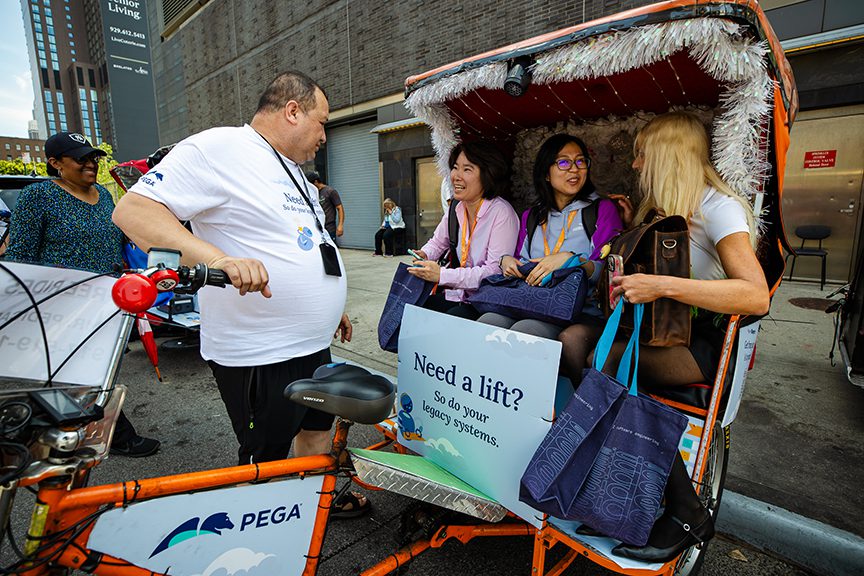
Bicycle Advertising | American Guerrilla Marketing
Bicycle advertising is a mature, tested format with a clear and defensible business case. It reaches specific urban consumer demographics in environments that vehicle advertising cannot access, at a cost structure that is competitive with other out-of-home formats for the quality and specificity of access it delivers. The format has been used by consumer brands, entertainment companies, food and beverage labels, tech platforms, and local businesses across every major American city.
We are American Guerrilla Marketing. We have planned and executed bicycle advertising campaigns for a wide range of clients over many years. We know the format’s genuine strengths, its real limitations, and the specific conditions under which it delivers its highest value. This guide makes the business case for bicycle advertising and explains in practical terms when and how to deploy it effectively.
Every advertising format needs to justify itself in terms of what it delivers relative to what it costs. Bicycle advertising makes its case in three ways: access, context, and memorability.
Access
Bicycle advertising provides access to environments that are worth reaching and that no other mobile advertising format can claim. Major urban parks, cycling and pedestrian greenways, outdoor markets, university campuses, and waterfront promenades are some of the highest-value consumer environments in any American city. These are the places where active, health-conscious, higher-income urban professionals spend their leisure time. And with very few exceptions, vehicle-based advertising cannot operate in these environments.
A bicycle ad in Central Park on a Saturday morning is, in certain respects, the only mobile brand present in that environment for the day. The competitive advertising environment in Central Park is effectively zero. The consumer audience is in the hundreds of thousands on a warm weekend day. That combination of audience concentration, zero competitive advertising pressure, and premium consumer demographic is extremely rare in any advertising format.
Context
Context is one of the most undervalued variables in advertising effectiveness. Where a message is received shapes how it is processed and whether it is remembered. A brand message received on a phone screen competes with dozens of other messages in the same scroll session. A brand message received in a park, at a market, or on a greenway competes with very little. The consumer receiving it is relaxed, alert, and engaged with their physical environment in a way that commute-time or work-time contexts do not allow.
Research on context and advertising effectiveness consistently shows that messages received in high-engagement, low-distraction physical environments are better remembered than messages received in high-distraction, low-engagement digital environments. Bicycle advertising specifically targets the highest-engagement physical environments available in urban markets. That context premium is real and it shows up in brand recall data.
Memorability
A bicycle ad is unusual. In most environments where bicycle advertising operates, it is the only advertising format of its kind present. That novelty drives memorability in ways that repetition of standard advertising formats does not. When someone sees a distinctive billboard bike in Central Park, they tend to remember it. When they see a transit ad for the fifth time in a week, they tend not to. Novelty drives attention and attention drives memory. Bicycle advertising has novelty built into the format in most deployment environments.
AGM Field Note: We have run post-campaign consumer research in markets where we deployed bicycle advertising programs. Unprompted brand recall rates among people who had been in the target areas during the deployment windows are consistently higher than typical out-of-home formats. The premium access environments and the novelty of the format contribute to recall metrics that most outdoor advertising formats do not approach.
When Bicycle Advertising Makes Sense as a Media Buy
Bicycle advertising is not right for every brand or every campaign objective. Here is a clear framework for evaluating whether it belongs in a given media plan.
It Makes Sense When:
The target audience spends meaningful time in urban outdoor environments that vehicle advertising cannot access
The campaign objective is brand awareness or brand recognition in a specific geographic area or demographic community
The brand can communicate effectively with a bold visual and minimal copy
The campaign is in a market where bicycle advertising is genuinely novel (most markets still qualify)
The brand wants to be present in premium environments that most competitors are not yet using
The campaign includes an event, launch, or moment that benefits from physical presence in specific locations
It Is a Less Strong Fit When:
The campaign objective requires maximum raw coverage across a large geography without demographic specificity
The product requires complex, detailed explanation to generate consumer interest
The target audience is concentrated in environments that bicycle advertising cannot access, such as highways, suburban areas, or indoor commercial zones
The campaign timeline is too compressed for adequate route planning, creative production, and rider preparation
Bicycle Advertising Campaign Types
Bicycle advertising campaigns take different forms depending on the brand’s objective, the target market, and the deployment environment. Here is a breakdown of the main campaign types we build.
Neighborhood Awareness Campaigns
A bicycle advertising program designed to saturate a specific neighborhood with brand recognition over a defined period. Typically involves two to five bikes operating coordinated routes in the target neighborhood daily or multiple times per week over two to four weeks. Best for local businesses, new market entries, and brands building recognition in a specific community. The goal is frequency: repeated encounters with the brand in the consumer’s regular environment.
Event-Adjacent Campaigns
A bicycle advertising program timed around a specific event that draws the target demographic to a specific location. A major outdoor festival, a sporting event, a cultural program: the bicycle program deploys in the days before, during, and sometimes after the event to reach the audience at maximum density. Event-adjacent campaigns require precise timing and close coordination with the event calendar.
Product Launch Programs
A bicycle advertising program designed to introduce a new brand or product to a target market. Launch programs typically use higher production values, including LED display bikes or custom creative formats, to generate the novelty attention that a new product entry needs. The goal is to make the brand feel like it has appeared everywhere at once in the target market, creating the impression of significant market presence from day one.
Multi-Market Awareness Programs
A coordinated bicycle advertising program running in two or more cities simultaneously or sequentially. Multi-market programs are managed centrally with consistent creative standards and route quality across all markets. We have fielded multi-market bicycle advertising programs in three to ten cities simultaneously for national consumer brands running coordinated launch or awareness campaigns.
Integrated Guerrilla Campaigns
A bicycle advertising program functioning as one component of a broader guerrilla marketing activation that includes street teams, product sampling, brand ambassadors, or other tactics. The bicycle component handles broad corridor awareness while other elements handle direct consumer engagement. This is our most frequently recommended structure because the coordination between formats consistently outperforms any individual format alone.
Campaign Type
Primary Objective
Typical Duration
Key Success Metric
Neighborhood awareness
Brand recognition in target area
2-4 weeks
Brand recall in target area
Event-adjacent
Event-period brand presence
1-5 days
Coverage of event audience
Product launch
New market awareness
1-3 weeks
Brand recognition, social content
Multi-market
National/regional awareness
Variable
Consistent results across markets
Integrated guerrilla
Awareness and direct engagement
Variable
Combined awareness and conversion metrics
Bicycle Advertising Production: From Brief to Deployment
The production process for a bicycle advertising campaign covers creative development, panel production, rider recruitment and training, route planning, field management setup, and reporting infrastructure. Here is how the timeline typically looks.
Week 1: Strategy and Brief. Campaign objective, target audience, target market, key locations, deployment windows, and creative direction are established. The route plan framework is developed based on audience geography mapping.
Week 2: Creative Development and Review. Creative concepts are developed against the specific constraints of the bicycle advertising format. We review all creative at full scale before approving production. Revisions are made as needed. Production artwork is finalized.
Week 3: Production and Recruitment. Panel production is initiated. Riders are recruited and scheduled. Field management team is assigned. Logistics are finalized including equipment, transportation, and deployment staging locations.
Deployment Week(s): Execution and Monitoring. Campaign deploys according to the approved plan. Field supervisors monitor execution, capture documentation, and report daily. Route adjustments are made as conditions warrant.
Post-Campaign: Reporting. GPS data, field photography, supervisor logs, and any digital performance data are compiled into a comprehensive campaign report delivered within five business days of the final deployment.
AGM Field Note: Two to three weeks of production lead time is the minimum for a bicycle advertising campaign that we are comfortable executing at the quality standard we maintain. Shorter timelines are sometimes possible for markets where we have standing equipment inventory and recurring rider relationships, but we do not compromise rider training or creative review to meet an aggressive timeline. A rushed bicycle campaign is worse than a delayed one.
Bicycle Advertising and Brand Safety
One question we get regularly from brands new to the format is whether bicycle advertising creates brand safety considerations. The short answer is that it creates fewer brand safety concerns than most digital advertising formats because we control both the creative and the deployment environment directly.
We approve all creative before production. We select all routes based on audience appropriateness and brand alignment. We train all riders on brand guidelines and acceptable deployment behaviors. We have complete visibility into where every bike is deployed and when. There is no algorithmic risk of your brand appearing in an inappropriate context the way there is in programmatic digital advertising.
The only brand safety consideration specific to bicycle advertising is rider conduct in the field. We manage this through thorough pre-deployment briefing, field supervisor oversight, and a clear code of conduct for all riders on campaign. We have not had a significant brand safety incident in a bicycle advertising campaign because our field management process prevents the conditions that cause them.
Bicycle Advertising ROI: How to Think About It
Return on investment for bicycle advertising is best understood through the lens of what you would have to spend to get equivalent access to the same audiences in the same environments through other formats, if that access were even available.
A Saturday morning deployment in Central Park reaches hundreds of thousands of people in a premium, zero-competitive-advertising-pressure environment. What is the dollar value of that access? If there were a static billboard inside Central Park, which there is not, the rate would be extraordinarily high for the demographic quality of the audience. Bicycle advertising reaches that same audience in that same environment at a cost that reflects the operational rather than the media-monopoly premium.
For brands that have done this comparison honestly, bicycle advertising consistently offers compelling value relative to equivalent-quality access through other formats. The access genuinely is scarce. The audience genuinely is premium. The cost is lower than most alternative paths to equivalent reach in those environments would be, if equivalent paths existed at all.
Talk to Us About Your Bicycle Advertising Program
We have built bicycle advertising campaigns for brands at every scale, from single-market single-day activations through year-long multi-market programs. We know what the format can do and we are honest about what it cannot. Call us and let’s figure out whether bicycle advertising belongs in your next campaign.
Bicycle Advertising Creative Production: Standards and Process
The creative production process for bicycle advertising requires attention to format-specific constraints that many creative teams encounter for the first time. Here is the complete production process we use and the standards we apply at each stage.
Creative brief and spec delivery: We provide clients and their creative teams with technical specifications for bicycle advertising panel production including exact panel dimensions, bleed requirements, maximum file size, color mode specifications (RGB for LED display, CMYK for print), and legibility standards that all creative must meet before approval. These specs are delivered at the start of the creative development process, not after creative has been completed.
Creative review at scale: All bicycle advertising creative is reviewed at the actual production scale before approval. We either produce a test print at full scale for review or use specialized large-format visualization tools that accurately simulate the appearance of the panel at deployment distance and in the deployment environment lighting conditions. This review step catches legibility issues, color shifts from screen to print, and design elements that appear fine at screen size but fail at panel scale. We have caught and corrected enough critical issues at this review stage to consider it an absolute requirement in every program we execute.
Production quality control: Panels are inspected upon delivery from the print vendor before any deployment. We check for print quality issues including color accuracy, banding, or printing defects. We verify that panels are mounted correctly on bike frames and that mounting hardware is secure and weather-resistant. Panels that fail inspection are reprinted before deployment, regardless of the impact on the program timeline.
How Bicycle Advertising Supports Brand Building Over Time
Brand building is fundamentally a process of creating and reinforcing memory structures in the minds of the target consumer. Bicycle advertising contributes to this process in a specific way that is worth understanding clearly before making decisions about how much of a brand’s marketing budget to allocate to the format.
The type of brand memory that bicycle advertising creates is primarily episodic rather than semantic. Episodic memory is the memory of specific experiences: “I remember seeing that brand’s bike in the park last summer.” Semantic memory is the memory of facts: “I know that brand makes functional beverages.” Episodic memory tends to be more emotionally charged and more durable than semantic memory because it is attached to the rich sensory and contextual details of the experience in which it was formed.
A consumer who encounters a bicycle ad in Central Park on a beautiful Saturday morning forms a brand memory that is associated with the positive emotional context of that experience: the park, the sunshine, the relaxation of a weekend morning outdoors. That emotional association attaches to the brand and influences future brand encounters. When the consumer sees the brand on a store shelf weeks later, the positive emotional memory of the park encounter is accessible and influences their purchase decision, even if they cannot explicitly recall where they first registered the brand.
This is the long-term brand building value of bicycle advertising that is difficult to capture in immediate conversion metrics but is real and accumulates over time with consistent market presence. Brands that run sustained bicycle advertising programs in the same markets over multiple seasons develop stronger emotional brand associations in those markets than brands that run a single activation and measure the result only against immediate conversion outcomes.
Building a Bicycle Advertising Program Into Your Annual Marketing Calendar
Bicycle advertising works best when it is planned as a consistent seasonal program rather than a one-time activation. Here is how to build bicycle advertising into an annual marketing calendar in a northern market like New York, Chicago, or Boston.
First quarter (January through March): planning and production season. Route planning, creative development, and panel production for the spring program are completed during this period. This is also the time to evaluate prior year program data and incorporate learnings into the new program design.
Second quarter (April through June): spring launch season. The first outdoor deployments of the year coincide with the return of warm weather and the reactivation of the park, greenway, and outdoor market environments. Spring deployments reach audiences that are particularly energized by the season change and particularly active in the premium outdoor environments where bicycle advertising delivers its strongest results.
Third quarter (July through September): peak season. Summer is the most productive period for bicycle advertising in northern markets, with the highest audience concentrations in premium outdoor environments and the most active event calendar driving additional deployment opportunities. We recommend intensive deployment schedules during this period, including increased bike counts and longer deployment days, to take maximum advantage of the peak audience access environment.
Fourth quarter (October and November): close of season. Continued deployment through October in most northern markets before audience concentration in premium outdoor environments declines with cooling temperatures. A strong fall program captures the end-of-season audience and maintains brand presence through the beginning of the winter media shift to indoor-focused channels.
Extending the Program: Multi-City and Multi-Season Execution
The field marketing programs that deliver the strongest long-term brand results are the ones that run consistently across multiple markets and multiple seasons rather than concentrating all of the investment in a single activation window. Here is why sustained programs outperform single-burst activations and how we structure multi-city and multi-season programs.
Brand recognition builds through repeated exposure. A consumer who encounters a brand in the field once may or may not retain the brand. A consumer who encounters the brand in the field three times over the course of a month in the same neighborhood or the same set of environments is significantly more likely to retain the brand and to recognize it in a retail context where the purchase decision is made. The compound awareness effect of repeated field contacts is one of the most consistent findings in our program performance data.
Multi-city programs amplify this effect across markets simultaneously. A national consumer brand that maintains field presence in its top five markets simultaneously creates a brand momentum that single-market programs cannot generate. The social sharing from each market reinforces the brand’s presence in the others. The retail velocity lift from sampling programs in multiple markets generates stronger national distribution data than single-market programs can produce. And the brand’s sense of presence, the feeling that it is everywhere at the same time, builds the kind of market credibility that concentrated single-market programs cannot create.
We manage multi-city programs with centralized coordination and local execution expertise. Creative standards, team training protocols, and reporting frameworks are consistent across all markets. Local market knowledge, route planning, and audience geography expertise are market-specific. The combination produces programs that are nationally consistent in quality and locally optimal in execution, which is the standard that delivers results across a national or regional program portfolio.
For brands considering their first field marketing program, we recommend starting with one market executed at the highest possible quality level rather than spreading a limited budget across multiple markets at reduced quality. A program that delivers genuine results in one market builds the internal case for expanding to additional markets. A program that spreads a limited budget across too many markets at too thin a quality level delivers mediocre results everywhere and makes it harder to build the case for continued investment in the format.
Next Steps: Building Your Program with AGM
Field marketing programs start with a conversation. Call us at (646) 776-2770 or email [email protected] and we will schedule a direct discussion about your brand, your target market, your campaign objectives, and your timeline. We will ask specific questions about the program you need and give you honest answers about what the right approach looks like for your situation.
From that initial conversation, we build a program recommendation that reflects genuine strategic thinking about how to achieve your specific objective in your specific market with your specific target consumer. We do not deliver a one-size-fits-all proposal and invite you to pick the package that is closest to what you need. We design programs from the ground up based on what each client’s situation actually requires.
Our production timelines are realistic. We tell you what we need from you at each stage of production and when we need it. We tell you what the program will cost before we begin. We execute to the plan we have agreed to and we communicate transparently when real-world conditions require any adjustment to that plan. We deliver the program report within five business days of the final deployment day.
We are a team of people who care about field marketing done right. Not because it is a job, but because we have seen what well-executed guerrilla and field marketing programs accomplish for the brands we represent and we take pride in being the team that delivers those results. We invite you to experience that difference directly. Call us today.
Frequently Asked Questions
What types of brands benefit most from bicycle advertising?
Consumer brands targeting active, health-conscious, higher-income urban professionals benefit most from bicycle advertising. Food and beverage brands, fitness and wellness brands, consumer tech companies, entertainment brands, and local businesses in cycling-dense urban neighborhoods all have strong use cases for the format. The key qualifying condition is that the target audience spends meaningful time in the premium access environments where bicycle advertising operates best.
How does bicycle advertising fit into a media plan alongside digital advertising?
Bicycle advertising and digital advertising serve complementary functions. Digital advertising reaches urban consumers on their screens with targeting precision and measurable click-through behavior. Bicycle advertising reaches them in their physical environment with a brand presence that cannot be ad-blocked, scrolled past, or turned off. Running both during the same campaign period in the same market compounds the brand recognition effect of each channel.
Can bicycle advertising be used for B2B brands?
B2B bicycle advertising is a niche use case but it exists. If a B2B brand’s target decision-makers are concentrated in specific urban professional environments, a bicycle advertising program targeting those environments can contribute to brand recognition at the executive level. We have done this for professional services brands, fintech companies, and technology platforms targeting the urban business professional demographic.
How does bicycle advertising compare to transit advertising in terms of budget and performance?
Transit advertising typically involves purchasing space on existing transit infrastructure, buses, subway cars, and transit stations, at rates set by the transit authority. Bicycle advertising involves deploying a custom campaign with our riders and equipment at rates determined by the campaign specifics. The two formats are not direct substitutes. Transit advertising is broad reach on fixed routes. Bicycle advertising is precision access to specific premium environments. Budget comparisons are market and campaign-specific.
What is the minimum budget for a meaningful bicycle advertising campaign?
We do not publish a fixed minimum because the right campaign for each situation is different. A single-bike, single-day event deployment has a very different budget requirement than a five-bike, three-week neighborhood program. We build cost estimates based on specific campaign parameters. Call us and we will give you an honest number for what a meaningful campaign looks like for your specific situation.
Do you work with creative agencies or do you develop creative in-house?
We work both ways. If the client has a creative agency producing the bicycle ad design, we provide the technical specifications and review the creative at full scale before approving production. If the client needs creative development support, we can connect them with resources who specialize in out-of-home and guerrilla marketing creative. We do not design in-house but we are very specific about what we will and will not approve for production.
How much of a bicycle advertising campaign’s value is the format versus the execution?
Both matter significantly. The format provides the access advantage: the ability to operate in premium environments where other formats cannot go. The execution determines whether that access advantage is realized or wasted. A well-planned bicycle advertising campaign in the right environment with strong creative and well-briefed riders performs dramatically better than the same format with poor route planning, weak creative, and untrained riders. The format creates the opportunity. The execution determines the outcome.
Can bicycle advertising work for seasonal campaigns?
Yes. Seasonal campaigns are a natural fit for bicycle advertising in many markets. Summer park and greenway programs, spring launch campaigns, autumn neighborhood awareness programs, and holiday-adjacent event activations are all strong seasonal applications. We plan seasonal programs that maximize the format’s natural alignment with outdoor, warm-weather, and event-adjacent deployment windows.