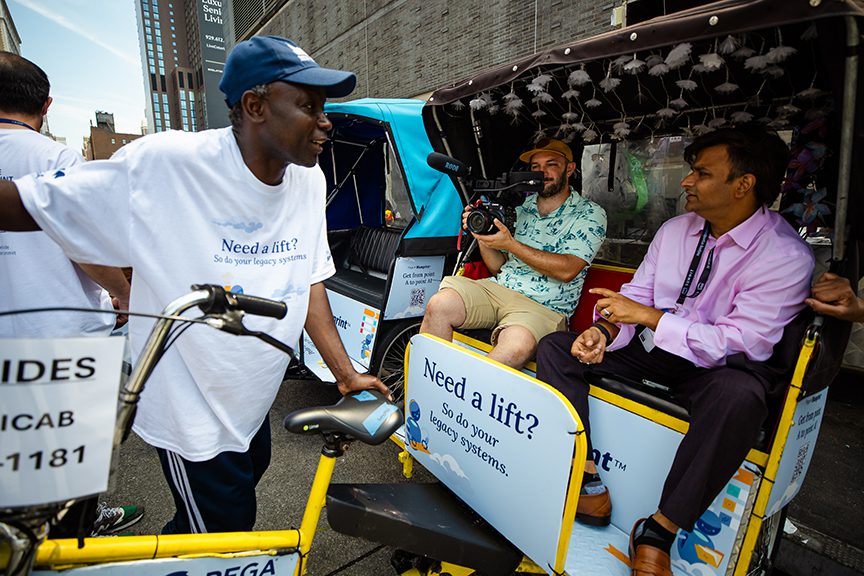
An ad on a bike puts your brand in motion through parks, pedestrian corridors, farmers markets, campus paths, and waterfront greenways that no vehicle-mounted format can reach. It is one of the most versatile formats in the guerrilla marketing toolkit, and we have used it to build brand presence in some of the most crowded, most desirable urban environments in North America.
We are American Guerrilla Marketing. We plan, staff, and execute bike ad campaigns in New York, Chicago, Los Angeles, Miami, Washington DC, and dozens of additional markets. We have put brands on bikes for product launches, event support, neighborhood saturation campaigns, and long-term awareness programs. This guide covers how the format works, what variations exist, where it performs best, and what a well-planned campaign looks like from brief to debrief.
Bike advertising is not complicated. But getting it right requires strategic thinking about route selection, creative design, format choice, and execution quality. We do this work every day. Here is what we know.
What an Ad on a Bike Actually Is
At its simplest, an ad on a bike is a printed or digital advertising panel mounted to a bicycle, operated by a trained rider on planned routes through target areas. The bike moves through high-traffic zones and every person within visual range who looks up sees the brand message.
The format works because it solves a problem that other mobile advertising formats cannot: access. Advertising trucks cannot enter Central Park. They cannot ride down the Chicago Lakefront Trail. They cannot move through a crowded farmers market or a college campus quad. A bicycle can go almost anywhere a person can walk, which means brands can reach audiences in their most open, most relaxed, most socially engaged moments.
That access is the core value of bike advertising. Not scale. Not massive coverage zones. Access to specific people in specific environments at specific times. That precision is worth a lot to brands who know their audience and know where that audience spends its time.
Bike Ad Formats We Deploy
Not every bike ad is the same. We work with several formats depending on the campaign objective, the deployment environment, and the creative strategy.
board_Bike”>Flat Panel Billboard Bike
A large printed panel mounted vertically to the bicycle frame, typically rising above the rider’s head so the ad is visible at distance. Double-sided panels cover both directions of travel. This is the most common format and the most cost-effective for straightforward brand awareness objectives. The panels are high-resolution printed graphics and should use bold colors, minimal copy, and a dominant logo.
LED Display Bike
An electronic LED panel mounted to the bicycle that displays video, animation, or rotating messages throughout the deployment shift. LED bikes generate significantly more attention than static panels because human vision is wired to respond to movement and light. We deploy LED bikes for launch campaigns, evening activations, and any campaign where generating organic photo and video sharing from bystanders is part of the strategy.
Cargo Bike with Sample Distribution
A cargo bicycle outfitted with branded panels on the exterior and a product storage compartment operated by a brand ambassador who both displays the ad and distributes samples along the route. This format merges the mobility of bike advertising with the direct conversion power of product sampling. It is particularly strong for CPG food and beverage brands that need people to experience the product, not just see the name.
Branded Rider Bike
A standard bicycle with subtle brand elements: branded jersey on the rider, branded accessories, small decals on the frame. This reads more like a brand enthusiast than an advertisement and works well for lifestyle and premium brands where community integration matters more than maximum visibility.
AGM Field Note: In environments where vehicle advertising is restricted or physically impossible, a bike is the only mobile format available. Parks, pedestrian zones, campus paths, and waterfront greenways are premium access environments for bike ad campaigns. The exclusivity of access in these locations is itself a strategic advantage.
Where Bike Ad Campaigns Work Best
Route selection is everything in bike advertising. A bike on the wrong route is a wasted day. A bike on the right route on the right day is some of the most efficient brand building available at any budget level.
Parks and Greenways
Major urban parks are the premier environment for bike advertising. Central Park in New York, Lincoln Park in Chicago, Griffith Park in Los Angeles, Rock Creek Park in Washington DC: these are places where hundreds of thousands of people gather in a relaxed, open, observant state. They are walking. They are sitting. They are looking at their surroundings rather than their phones. A bike ad moving through these environments reaches people when they are most receptive.
Weekend mornings in major parks are among the highest-value windows we know of in urban marketing. The audience is dense, the environment is calm, and the demographic skews strongly toward the active, health-conscious, higher-income urban professional that most consumer brands are trying to reach.
Waterfront Corridors
Urban waterfronts attract both residents and visitors. The Hudson River Greenway in New York, the Chicago Riverwalk, the Miami Beach boardwalk, the San Francisco Embarcadero: these are corridors that carry heavy foot and cycling traffic through some of the most desirable real estate in each city. A bike ad on these routes reaches a mixed but high-quality audience in motion.
University Campuses
Campus environments are dense, vehicle-restricted, and populated by the exact demographic that most consumer brands target aggressively. A bike ad moving through a campus during morning class change or afternoon peak reaches thousands of students in a compact area. The format feels appropriate in a campus context in a way that a commercial truck would not.
Outdoor Markets and Festivals
Farmers markets, street festivals, outdoor food events, and craft markets concentrate a specific consumer demographic in a pedestrian-first environment where vehicle advertising is generally not possible. A bike ad at a major farmers market on a Saturday morning is one of the highest-quality awareness opportunities available at any scale.
Dense Commercial Corridors
High-foot-traffic commercial streets in target neighborhoods offer bike ad routes that reach thousands of pedestrians on a daily basis. We map these routes precisely, accounting for foot traffic patterns by time of day and day of week, to maximize the hours when the bike operates in the densest parts of the corridor.
Designing an Effective Bike Ad
Bike ad creative has different requirements than any other advertising format. The viewer is moving. The bike is moving. The viewing time is short. The design has to work in seconds. Here is how we approach creative for bike ad campaigns.
Maximum Five Words of Copy
We tell every client who asks us to put more copy on a bike panel that we cannot do that and get a good result. The viewer has two to three seconds with a bike ad on a busy route. In that time, they can register a logo, a color, and maybe five words. Everything beyond that is invisible. Brief, bold, memorable copy is the only strategy that works in this format.
High Contrast Colors
Bold, high-contrast color choices are not optional in bike advertising. A tasteful, muted palette that looks elegant in a brand style guide disappears against the visual complexity of an urban park or market environment. We want the bike to pop from a distance. That means contrast: dark on light or light on dark, never two medium-toned hues that blend together at distance.
Logo as the Hero
The logo should be the dominant element on the panel. Brand recognition is the primary goal of most bike ad campaigns. A viewer who remembers the brand but not the copy is a success. A viewer who remembers the copy but not the brand is a failure. We size and position the logo to make it the thing the eye finds first and last.
One Response Mechanism
If you include a URL or a QR code, include only one. Not both. A short, memorable URL that the viewer can retain or a QR code large enough to scan from a few feet away when the bike is stationary. Attempting to include multiple response mechanisms divides attention and reduces effectiveness of all of them.
AGM Field Note: The most common mistake we see in bike ad creative is copy overload. Brands want to communicate everything at once. In this format, communicating one thing well is the entire strategy. We push back on creative that tries to do too much and we have never had a client regret the simplification.
Planning a Bike Ad Campaign Step by Step
A well-planned bike ad campaign follows a disciplined process from objective setting through post-campaign reporting. Here is the full process we use.
Step 1: Define the Objective
What is this campaign supposed to accomplish? Brand awareness in a new neighborhood? Launch support for a product? Event promotion with a specific date? The objective shapes every decision that follows. We will not move to route planning, format selection, or creative briefing until the objective is clear and specific.
Step 2: Identify Target Consumer Geography
Where does your target consumer spend time in the target city? Which parks, corridors, markets, and neighborhoods? We need to know where the audience is, not just who they are, before we can build routes that reach them efficiently. We use a combination of demographic data, local knowledge, and campaign history to build this geographic picture.
Step 3: Select and Map Routes
We plan routes that maximize time in the highest-concentration zones for the target consumer. We account for time of day, day of week, seasonal patterns, and event calendars. A route that performs well on a Tuesday morning is not necessarily the right route for a Saturday afternoon. We build the route plan around the specific deployment windows in the campaign schedule.
Step 4: Choose the Right Format
Based on the objective, the environment, and the budget: which format serves this campaign best? A flat panel for straightforward awareness. An LED display for a launch with a social amplification goal. A cargo bike for a campaign that combines visibility with direct product distribution. We do not default to one format. We recommend based on the specifics.
Step 5: Develop and Test Creative
Brief the creative team against the specific constraints of bike advertising. Evaluate concepts at actual scale before approving production. A design that looks great at desk size may lose readability at the scale of a bike panel in a park setting. We test at deployment scale.
Step 6: Recruit and Train Riders
We recruit experienced urban cyclists who are comfortable with the equipment and knowledgeable enough about the brand to handle public interactions. We train riders on the campaign brief, the routes, safety protocols, and what to do when someone approaches with a question or a camera. Rider quality matters as much as route quality.
Step 7: Execute with Real-Time Monitoring
We deploy on schedule and monitor through field supervisor check-ins and rider reporting throughout the day. When conditions change, whether weather, event cancellations, or unexpected crowd patterns, we adjust in real time rather than waiting for end-of-day debrief.
Step 8: Report and Debrief
We compile field reports, photo documentation, GPS route data, QR code performance if applicable, and any observable interactions. We deliver a full campaign report and use the learnings to refine future activations.
Pairing Bike Ads with Street Teams
We consistently recommend pairing bike ads with a ground-level street team when the budget and geography allow. The two formats work together in a way that compounds the effectiveness of each.
The bike covers approach corridors, generating brand awareness as people move toward a target zone. The street team operates inside that zone, creating direct interactions with consumers who have already been primed by the bike ad. The second brand contact feels familiar rather than cold because the first one already registered. The conversion rate at the direct interaction is meaningfully higher when it is the second brand contact rather than the first.
We call this the layered contact approach. It is not complicated. It is just coordinated. Two tactics working the same geography at the same time, each making the other more effective. The incremental cost of adding a street team to a bike ad campaign is modest. The incremental quality of that dual-format approach is significant.
A standard street team through American Guerrilla Marketing runs from $389.99 per six-hour shift for a standard member up to $589.99 per shift for a premium member with enhanced capabilities and field management. Adding one or two team members to a bike ad day creates a full-zone activation at a budget that most campaigns can accommodate.
Bike Ad Campaigns in New York City
New York is the strongest market for bike advertising in the United States. The density, the cycling infrastructure, the park system, and the pedestrian culture all combine to create an environment where bike ads can reach a massive number of the right people in concentrated windows of time.
Central Park
The weekend loop through Central Park, which closes to vehicles on Saturdays and Sundays, is one of the highest-quality bike ad corridors in North America. The park draws hundreds of thousands of visitors on a warm weekend day. The six-mile loop passes through every demographic zone in the park. We stage bikes at the 72nd Street entrance, the Bethesda Fountain area, and the Harlem Meer depending on the target audience for each campaign.
Hudson River Greenway
The Hudson River Greenway from Battery Park to the northern tip of Manhattan is the busiest urban cycling path in the country. It carries heavy daily commuter traffic plus substantial recreational use on weekends. A bike ad on the Greenway reaches cyclists, joggers, and pedestrians across a 13-mile corridor. We plan Greenway routes around the sections with the highest pedestrian density, typically the segments adjacent to Riverside Park and Hudson River Park between 23rd and 72nd Streets.
Williamsburg and Greenpoint Waterfront
The East River waterfront in Williamsburg and Greenpoint carries heavy weekend traffic from the 25-to-38 Brooklyn creative professional demographic. The proximity to Domino Park, the Wythe Avenue corridor, and the new developments along Kent Avenue creates natural gathering zones. A bike ad operating in this zone on a weekend afternoon reaches a specific, high-value demographic that is extremely hard to reach efficiently through other formats.
Brooklyn Bridge Park and DUMBO
Brooklyn Bridge Park draws enormous weekend crowds from across the city. The park runs along the East River from the Manhattan Bridge to Atlantic Avenue and is one of the most photographed outdoor environments in New York. Anything that happens in this park gets photographed and shared. A well-designed bike ad here is ambient content production for the brand.
Bike Ad Campaigns in Other Major Markets
New York gets the most attention, but bike ad campaigns work across every major American city with developed cycling culture and park infrastructure.
Chicago
The Chicago Lakefront Trail running 18 miles along Lake Michigan from Evanston through Hyde Park is one of the premier bike ad corridors in the country. The trail carries millions of users annually. Millennium Park at the trail’s midpoint and Grant Park around it serve as anchor zones for campaigns targeting the downtown Chicago demographic. The Riverwalk along the Chicago River offers a complementary urban canyon corridor for campaigns targeting the office and tourism population downtown.
Los Angeles
Los Angeles is a diffuse market, but the Venice Beach boardwalk and Ocean Front Walk provide a concentrated, high-pedestrian corridor that works exceptionally well for bike ad campaigns. On a weekend afternoon, the stretch from Santa Monica down through Venice carries enormous crowd density. For brands targeting the LA wellness, outdoor lifestyle, and entertainment demographics, this corridor is one of the best access points available at any format or budget level.
Miami
Miami’s South Beach environment on Ocean Drive and the beach path between 5th Street and 21st Street carries some of the highest pedestrian density in any outdoor environment in the country during peak tourist season, January through April. The flat terrain, warm climate, and tourism-driven crowd make Miami one of the most consistently productive bike ad markets year-round. Early morning deployment works best in summer to avoid peak heat.
Washington DC
The National Mall and the Rock Creek Park trail system provide strong bike ad corridors in Washington DC. The Mall draws both tourist and local traffic in enormous volumes on weekends. The memorials, the museums, and the open green spaces create natural high-dwell zones where a bike moving through the area gets extended viewing time from people who are standing or sitting rather than in transit.
Getting Started with a Bike Ad Campaign
We work with brands at every stage of planning, from early concept through production, staffing, deployment, and reporting. If you know what you want, we will execute it. If you are still figuring out whether a bike ad is the right format for your campaign, we will help you work through that evaluation honestly.
We operate in cities across the United States and can accommodate regional, national, and multi-market programs. Our riders are professionals. Our routes are planned with strategic intent. Our reporting is complete and useful. We do not mail in activations.
Bike advertising is one of the most creative, most mobile, and most access-driven formats in the guerrilla toolkit. If your audience lives in cities, spends time in parks, shops at markets, or studies on campuses, we can put your brand in front of them in a context and a format that no other medium can replicate.
The Cost Structure of an Ad on Bike Campaign
Ad on bike campaigns are accessible at a range of budget levels. The primary cost drivers are: the number of bikes, the format (printed panel versus LED display), the number of deployment days, the market, and whether field management and reporting are included. A single printed panel billboard bike with a trained rider, a field supervisor, and a full campaign report is the entry point. LED display bikes and cargo bikes with integrated sampling capability are higher cost options that deliver different capabilities.
We do not publish fixed package pricing because every program is different. A one-bike, one-day event deployment has very different cost inputs than a five-bike, ten-day neighborhood program. When you call us, we will ask about your objective, your target market, your timeline, and your budget range. We will build a recommendation that fits all four parameters honestly.
When comparing the cost of ad on bike campaigns to other out-of-home formats, the relevant comparison is not volume of contacts but quality of contacts in high-value environments. A bike ad in Central Park on a Saturday morning reaches a premium, ad-receptive audience in a zero-competitive-advertising environment. A transit ad in the same city reaches a much larger but far more fragmented audience in a high-competitive-advertising context. The cost comparison depends on which of those values matters more for the specific campaign objective.
Seasonal Considerations for Ad on Bike Campaigns
Ad on bike campaigns have natural seasonal peaks and valleys driven by weather, pedestrian behavior, and the event calendar. Here is how we plan for seasonality.
Spring through fall is the core season for outdoor bike advertising in most markets. In New York, Chicago, Boston, and other northern markets, the primary campaign season runs from April through October, with May through September being the highest-value deployment windows when park, greenway, and outdoor market environments are at peak usage. Winter deployments in these markets are possible in mild weather windows but the audience concentration in outdoor premium environments is significantly reduced.
In Miami, Los Angeles, and other warm-climate markets, the campaign season is year-round with adjustments for summer heat (morning-focused deployments) and winter peak tourist season (November through April) when pedestrian density in coastal environments is at its highest.
For campaigns tied to specific events, the seasonality is driven by the event calendar rather than weather. A summer festival, a spring market series, or a fall neighborhood fair all define the deployment window regardless of the ambient seasonal conditions.
We build seasonal timing into every campaign recommendation and adjust deployment windows and route selections to the specific seasonal conditions in each market. A summer deployment in Central Park and a late-October deployment in the same park reach meaningfully different audience profiles at different density levels, and both require different approaches to route planning, timing, and format selection.
Ad on Bike Creative Production: From Approved Artwork to Deployed Panel
The production timeline for ad on bike creative typically runs five to seven business days from approved artwork to a finished, mounted panel ready for deployment. Here is how the production process works.
Artwork is provided by the client or their creative agency in a format that meets the technical specifications for bike panel production. We provide a technical spec sheet with panel dimensions, bleed requirements, color specifications, and file format requirements. We review all artwork for legibility at scale before approving for production. Any artwork that fails the legibility review at full scale goes back to the creative team for revision before production is initiated.
Production is handled through professional large-format print vendors with experience in outdoor marketing applications. Panels are printed on durable outdoor vinyl with UV-resistant inks and laminated for weather protection. LED display content is produced and uploaded to the display units before deployment. Cargo bike graphics are produced to specification for the specific cargo bike platform in use
We coordinate all production logistics and confirm panel quality before any deployment begins. A panel that is not mounted securely, is printed at the wrong scale, or is damaged in transit does not go into the field. We inspect every panel before every deployment.
Frequently Asked Questions
Is it legal to put an advertisement on a bicycle?
Yes. Advertising mounted on a bicycle is treated like any other bicycle accessory in most jurisdictions. The bike operates under standard bicycle traffic rules on public streets and paths. We plan routes to comply with all local bicycle operating guidelines, including areas where bikes are restricted from certain pedestrian zones or indoor spaces.
How is the ad panel attached to the bike?
We use professional mounting systems designed for bike advertising equipment. The mounts are secure, weather-resistant, and designed so the panel does not impair the rider’s ability to operate the bike safely. LED display systems use more complex mounts that are also specifically engineered for mobile deployment on bicycles.
How long should an ad-on-bike campaign run?
For event-specific campaigns, a single day at the right location can be highly effective. For neighborhood awareness campaigns, we recommend a minimum of five to seven consecutive days to generate enough repeated brand contact for recognition to build in the target area. For ongoing programs, weekly or monthly deployment cycles work well.
Can you deploy multiple bikes simultaneously?
Yes, and this is often the recommended approach for larger campaigns. Multiple bikes operating coordinated routes in the same area create a brand presence that feels pervasive. A consumer who sees the brand bike twice during an afternoon in the same neighborhood registers it more strongly than a single passing encounter. We coordinate multi-bike deployments with field supervisor oversight.
What happens during bad weather?
We monitor forecasts and communicate proactively. Light rain typically does not stop a deployment when riders have proper gear. Severe weather, dangerous heat, or unsafe conditions result in postponement and rescheduling. Rider safety is the first priority on every deployment, always.
Can bike ads run at night?
Yes. LED display bikes are outstanding at night because the illuminated display is dramatically more visible in dark conditions. Printed panel bikes can also run in well-lit urban environments at night. We add lighting accessories to printed panel bikes that are scheduled for evening deployment to ensure visibility and rider safety.
Who rides the bikes in your campaigns?
We recruit experienced urban cyclists who are comfortable navigating complex environments with mounted equipment. Every rider is briefed on the brand, the campaign objectives, the designated routes, and how to handle public interactions. Rider professionalism and brand knowledge are as important as cycling skill.
How do you measure the results of a bike ad campaign?
We use GPS route data, field photo documentation, field supervisor reporting, and any digital tracking from QR codes or short URLs included on the creative. We compile a full campaign report covering routes covered, time in target zones, notable interactions, and QR or URL performance data where applicable.
Can bike ads be combined with other guerrilla formats?
Absolutely. Bike ads pair especially well with street teams, product sampling activations, and brand ambassador programs. The bike covers broad corridor awareness while ground-level tactics create direct consumer contact. We plan multi-format campaigns regularly and the results from coordinated formats consistently outperform single-tactic approaches.
How far in advance should I book a bike ad campaign?
We recommend booking at least two to three weeks in advance for standard deployments to allow adequate time for creative production, rider recruitment, and route planning. For major events or campaigns during peak periods like summer weekends in major parks, four to six weeks of lead time is better. We can sometimes accommodate faster timelines depending on market and format availability.