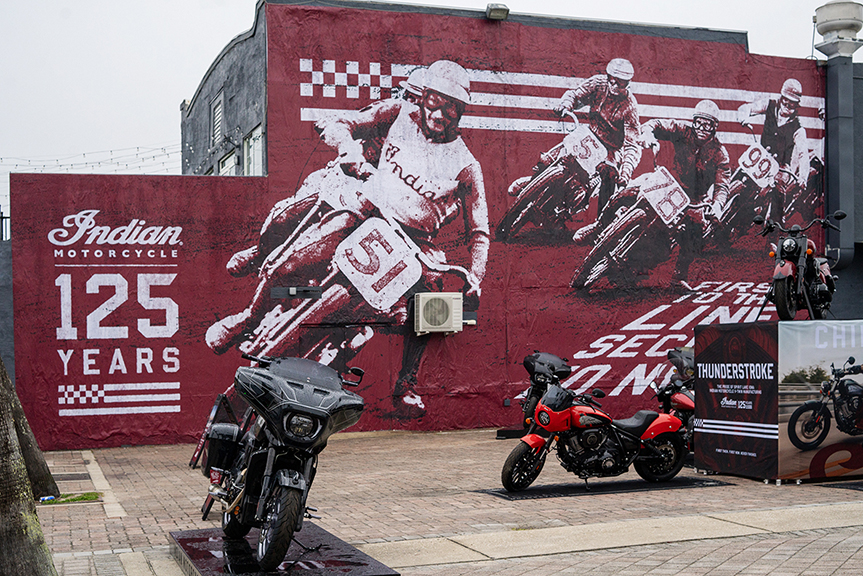
Wall Mural Advertising | American Guerrilla Marketing
Wall mural advertising is what happens when a brand stops renting a time slot on someone else’s panel and starts owning the physical face of a building in the neighborhood where its customers live. The difference in what that produces is not incremental. It is categorical.
Wall mural advertising is one of the oldest commercial communication formats in existence and, in the current media environment, one of the most strategically underutilized by brands that have the budgets to execute it well. The combination of multi-year physical permanence, neighborhood-level audience specificity, and organic social media content generation that wall mural advertising delivers is not available from any other format in the outdoor advertising category at any price.
We have been executing wall mural advertising campaigns for brands since 2010 across New York City, Los Angeles, Chicago, Miami, Nashville, Austin, and every major US market. We have run campaigns for global brands and emerging ones, in premium locations and strategic secondary markets, with production scales ranging from a single targeted wall to multi-city campaigns covering six markets simultaneously. This guide covers how wall mural advertising works, how to plan an effective campaign, and what to expect from the production process.
The Structural Advantages of Wall Mural Advertising
Wall mural advertising has structural advantages over other outdoor formats that are not a matter of taste or preference. They are functional properties of the format that determine how it performs.
Multi-Year Physical Presence
Every standard outdoor advertising format in the United States operates on time-limited contract windows. Billboard panels rotate. Transit posters are replaced. Digital screen content cycles on programmatic schedules. A wall mural, properly negotiated with a building owner, remains on the wall for one to several years without rotation. The cumulative pedestrian contact this creates over its lifespan is substantial, particularly on high-foot-traffic streets where the same residents and workers pass the wall daily throughout the mural’s life. Repeated exposure to the same wall in the neighborhood where people actually live creates a quality of brand familiarity that time-limited advertising cannot match.
Non-Skippable, Non-Blockable Physical Reality
You can block a digital ad. You can skip a pre-roll video. You can ignore a push notification. You cannot block or skip a mural painted on the side of a building on your daily commute route. Its physical existence in the environment is not a media placement that can be programmatically avoided or algorithmically filtered. It is paint on a wall that you walk past whether or not you choose to engage with it. The passive exposure this creates is a distinct property of the physical format with no equivalent in digital advertising.
Neighborhood-Level Demographic Precision
Outdoor advertising networks sell placements in geographic corridors: a highway corridor, a transit route, a downtown district. Wall mural advertising places the brand on a specific block in a specific neighborhood, which allows demographic precision at a level corridor-based formats cannot match. A mural on the right block in Williamsburg, Brooklyn reaches the exact demographic audience that lives in that specific six-block radius. A mural on a highway billboard near Williamsburg reaches commuters passing through the area from multiple origins, with a far less precise demographic profile.
Organic Social Media Content Generation
A wall mural that is visually compelling and well-located in a neighborhood with active social media documentation generates organic content every day of its lifespan. People photograph it, use it as a portrait backdrop, post it to Instagram and TikTok, and tag the location. This organic content generation does not require ongoing paid media investment. It happens because the mural is a physical presence in the environment that people document as part of how they share their daily experience. In cities with high concentrations of content creators and social media-active residents, this organic amplification is a substantial marketing asset.
Wall Mural Advertising in Context: How It Compares to Other Formats
Understanding how wall mural advertising compares to the other outdoor and media formats brands use helps clarify when it is the right tool and what it adds that other formats cannot provide.
Format
Duration
Audience Targeting
Social Potential
Community Credibility
Hand-Painted Wall Mural
3–8 years
Block-level neighborhood
Very High
High
Vinyl Wall Mural
2–4 years
Block-level neighborhood
Moderate
Moderate
Rotating Billboard
4 weeks
Traffic corridor
Low
None
Transit Shelter Poster
4 weeks
Transit route
Low
None
Digital OOH Screen
Campaign window
Traffic corridor
Low
None
Paid Social Campaign
Campaign window
Algorithmically targeted
Campaign-dependent
None
The table illustrates the key point: wall mural advertising is in a different category from other outdoor formats on duration, audience targeting, and community credibility. The social media potential is not a secondary benefit. In the current content-sharing culture of major American cities, it is a primary driver of the format’s total reach relative to direct pedestrian contact.
Planning a Wall Mural Advertising Campaign
A well-planned wall mural advertising campaign is not just a procurement process for paint on a wall. It is a strategic media decision that needs to be thought through with the same rigor as any other significant marketing investment.
Defining Campaign Objectives
The objectives determine everything else. A campaign designed to build brand awareness in a specific neighborhood calls for a different wall, in a different location, with a different creative approach, than a campaign designed to generate social media content for a product launch. Both objectives are legitimate. They require different execution. We begin every campaign engagement with objective clarification because vague objectives produce unfocused results.
Audience Mapping to Neighborhoods
The target audience description needs to map to specific neighborhoods where that audience actually lives, works, and spends leisure time. This mapping is the bridge between audience data and geographic placement decision. We use demographic data, consumer behavior research, and our own direct knowledge of neighborhood character in each of our markets to identify the specific neighborhoods and streets with the highest concentration of the relevant target audience.
Wall Evaluation Criteria
Once target neighborhoods are identified, wall evaluation applies a consistent set of criteria to candidate locations:
Pedestrian foot traffic volume on the block: daily counts at representative times
Traffic character: leisure, commute, tourist, or mixed
Sightline quality: distance from which the wall becomes visible, approach angle, obstructions
Surface condition: material type, existing paint condition, structural integrity
Available dimensions: width and height of paintable surface
Neighborhood visual context: what surrounds the wall and how a mural would read in that context
Building owner attitude and experience with mural projects
Walls that score well across all criteria go to the shortlist for client presentation. Walls that have strong traffic but poor surface condition, or excellent surface but weak sightline, get flagged with the specific limitation so clients can make informed choices.
Creative Direction That Serves Both Brand and Location
Wall mural advertising creative direction is not the same as standard print or digital creative. The design must work at the scale of a building wall, read correctly from the distances at which it will be viewed, be calibrated to the lighting conditions and visual context of the specific wall location, and connect to the visual culture of the neighborhood in a way that earns community acceptance rather than community rejection. We develop creative direction with all of these factors in mind before briefing the artist.
AGM Field Note: One of the consistent findings from our fifteen years of wall mural advertising production is that the campaigns with the strongest organic social media outcomes almost always share one characteristic: the mural was designed with the social photo in mind. The team asked early in the design process where people would stand to photograph this mural, what they would include in the frame, and how the brand would appear in that photograph. Murals designed for the social photo produce fundamentally different organic content outcomes than murals designed purely for street visibility. Designing for both is not complicated. It requires asking the question explicitly in the design brief, and then making the answer shape the design.
Wall Mural Advertising Production: What Actually Happens
The wall mural advertising production process has several distinct phases. Here is what each one involves in practice.
Brief to Wall Confirmation
We develop the campaign brief, identify target neighborhoods, source and evaluate candidate walls, and negotiate access agreements with building owners. This phase typically takes one to three weeks depending on market and building owner responsiveness. We present wall options to clients before locking in any specific location.
Design Development
With a confirmed wall, the design process becomes specific. The artist develops a concept calibrated to the wall’s actual dimensions, orientation, and neighborhood context. Client review and approval typically takes one to two rounds. The approved design is what gets installed.
Surface Preparation
The production team prepares the wall surface before painting begins. Preparation scope ranges from a simple pressure wash on a well-maintained wall to crack patching, surface repair, and multi-coat priming on a wall in poor condition. We assess and account for preparation scope at the wall evaluation stage.
Painting
Installation proceeds from design transfer to wall scale through sequential paint application from large background areas to progressively finer detail work. The team manages all equipment (lift, scaffolding as needed), materials, and crew logistics. A mid-size mural at 20 to 30 feet typically takes two to four on-site days with a two to three person team. Larger murals scale accordingly.
Protective Finish
UV-protective clear coat is applied after painting is complete. This is a non-negotiable production step for exterior murals. It extends color life substantially and protects the surface from UV degradation and unauthorized tagging.
Documentation and Reporting
Professional photography and video of the completed mural is produced immediately after installation. Social media monitoring is set up to track organic content featuring the mural. A post-campaign report is delivered four to six weeks after installation, covering social monitoring data, pedestrian traffic information, and earned media coverage.
Wall Mural Advertising Costs
Wall mural advertising costs reflect the full scope of a custom physical production: wall sourcing and negotiation, design development, artist fees, production crew, equipment, materials, project management, and documentation. The following ranges reflect our current rate card and are for planning guidance. All projects are quoted individually after brief review and wall scouting.
Small mural project, approximately 10 feet: $24,300 to $36,100
Mid-size mural project, 20 to 30 feet: $37,300 to $75,100
Large premium mural project, 40 feet or larger: $102,000 to $176,000 or more
Wall location fees are included in these estimates. City-permitted premium walls run $18,000 to $38,000 per four-week cycle. Private walls run $1,800 to $3,600 per month. Design tier affects cost: simple designs run $18,000 to $24,000; mid-level designs run $28,000 to $55,000; premium 3D or photorealistic designs run $72,000 to $110,000 or more.
Optional add-ons available on wall mural advertising projects: drone footage documentation ($1,500 to $4,500), influencer or press event support ($2,000 to $6,500), AR layer integration ($5,000 and up), 3D lettering ($3,000 to $9,500), lighting package ($1,000 to $3,500), monthly maintenance ($1,200 to $3,000), restoration and refresh (starting at $5,000). All pricing subject to confirmation after full project scoping.
AGM Field Note: The multi-year lifespan of a well-produced wall mural changes the economics dramatically when you run the annualized cost calculation. A wall mural campaign that costs $50,000 and remains visible for five years on a 3,000 pedestrian-per-day wall costs approximately $10,000 per year for continuous daily physical presence in that neighborhood. No outdoor advertising format available in major US markets delivers multi-year sustained physical presence at comparable annual cost. Brands that evaluate the investment over its actual lifespan find the economics compelling. Brands that compare the upfront cost against a four-week billboard period miss the calculation entirely.
Markets Where We Execute Wall Mural Advertising
We execute wall mural advertising campaigns in all major United States markets. Our primary production markets include New York City (all five boroughs, with particular depth in Brooklyn, Manhattan, and Queens), Los Angeles (city-wide, with particular depth in Venice, Silver Lake, Culver City, West Hollywood, and the Arts District), Chicago (Wicker Park, Logan Square, River North, and surrounding neighborhoods), Miami (Wynwood, Downtown, Brickell, and South Beach areas), Nashville, Austin, Atlanta, Seattle, Boston, and Washington DC.
Multi-city wall mural advertising campaigns are a core capability. We have coordinated concurrent mural productions in five cities within a single two-week window, managing artist teams, production crews, equipment, and materials across multiple markets simultaneously. National brand campaigns that need geographic reach across multiple major markets can execute across all of those markets through our production infrastructure without requiring the client to manage multiple separate vendor relationships.
Wall Mural Advertising and the Earned Media Multiplier
One of the most valuable and most underestimated properties of wall mural advertising is its earned media potential. A well-executed mural in a high-profile location is not just an advertising installation. It is a potential editorial subject for the publications and platforms your target audience reads and follows.
Marketing and advertising trade publications actively cover notable brand mural campaigns as case studies in effective non-digital marketing. When a brand executes a genuinely excellent mural in a visible urban location, the creative quality and the strategic logic of the placement make it a legitimate story for publications like Adweek, Ad Age, and Campaign. That editorial coverage reaches an audience of marketing professionals and brand decision-makers at no incremental media cost beyond the mural production itself.
Lifestyle and culture publications cover visually distinctive murals as urban design and street art content. Publications and platforms covering city life, neighborhood culture, and visual arts treat notable new murals as content for their audiences. When the mural is in a neighborhood those publications cover, and the work is genuinely excellent, editorial coverage follows from the quality of the work rather than from a paid placement relationship.
Local news media cover significant new neighborhood visual additions as community interest stories. A large, visually striking new mural in an active neighborhood generates the kind of visual interest that local publications, neighborhood blogs, and community media cover readily. Each local coverage instance reaches an audience concentrated exactly in the geographic area where the mural lives.
We position wall mural advertising campaigns for earned media from the planning stage. Wall selection that prioritizes neighborhoods with active cultural media coverage, creative development that produces work genuinely worth editorial attention, and proactive outreach to relevant publications after installation all contribute to earned media outcomes. We also help clients develop the post-installation press approach as part of the campaign, identifying the media targets most likely to cover the work and preparing the materials that make it easy for journalists to write the story.
Multi-City Wall Mural Advertising Campaigns
Some brands need national or multi-city mural presence rather than a single-market installation. Multi-city wall mural advertising campaigns create a different kind of brand presence: the sense that the brand is embedded in the physical fabric of multiple cities simultaneously, with a consistent creative campaign across all markets that demonstrates both national reach and local specificity.
Executing multi-city campaigns well requires production infrastructure that most single-city mural producers cannot provide. Real multi-city capability means established wall relationships in each target market, vetted local production crews who can be trusted to execute at the same quality standard as the primary market, artist selection across multiple cities whose work fits the campaign creative while connecting authentically to their local neighborhoods, and a project management structure that coordinates all of these moving parts simultaneously without client burden.
We have executed mural campaigns in four and five cities simultaneously within a single campaign window. The brands we execute these campaigns for do not manage multiple vendor relationships across cities. They manage one relationship with us, and we manage the execution across all markets. That single-point accountability for multi-city production is part of what our clients pay for when they work with us on national mural campaigns.
Frequently Asked Questions
What is wall mural advertising?
Wall mural advertising is the practice of using large-scale murals painted or applied to exterior building walls as a form of brand advertising. A brand negotiates access to a building wall, commissions a custom mural design, and has the mural installed on the exterior where it will be visible to pedestrians for an extended period, typically one to several years.
How is wall mural advertising different from billboard advertising?
Billboard advertising is purchased through media networks on standardized panels with four-week contract periods. Wall mural advertising is negotiated directly with building owners, is custom-designed for the specific wall, and typically lasts one to several years. A mural is a custom physical production. A billboard is a media time slot on a standardized format.
What does wall mural advertising cost?
All-in project estimates range from $24,300 to $36,100 for small murals around 10 feet, $37,300 to $75,100 for mid-size murals at 20 to 30 feet, and $102,000 to $176,000 or more for large premium installations at 40 feet or larger. These estimates include wall location fees, design, production, and project management.
How long does wall mural advertising last?
Properly produced hand-painted wall murals last three to eight years depending on climate, wall orientation, and production quality. Printed vinyl murals typically last two to four years. The access agreement with the building owner sets the formal duration, but quality murals often remain on walls longer when building owners value the visual addition to their property.
What types of brands benefit most from wall mural advertising?
Consumer brands, fashion and apparel, food and beverage, entertainment companies, and technology brands targeting urban creative professional demographics consistently get strong results. The format is particularly effective for brands that want community presence in specific neighborhoods rather than broad reach across a metropolitan area.
Can wall mural advertising generate social media content?
Yes. Well-executed wall murals in high-foot-traffic neighborhoods are photographed and shared on social media continuously throughout their lifespan. In cities like New York and Los Angeles, organic social documentation from a quality wall mural generates significant reach beyond the direct pedestrian audience of the wall location.
How do you find walls for wall mural advertising?
We source walls through ongoing relationships with building owners in key neighborhoods, direct outreach to target buildings, and our local production partner networks in each market. We evaluate walls for foot traffic volume, sightline quality, surface condition, and demographic fit before presenting options to clients.
What cities does AGM execute wall mural advertising in?
We execute wall mural advertising campaigns in New York City, Los Angeles, Chicago, Miami, Nashville, Austin, Atlanta, Seattle, Washington DC, Boston, and other major North American markets. Multi-city campaigns are a standard part of our production capability.
What is the production process for wall mural advertising?
The process moves through: strategic brief development, wall sourcing and evaluation, building owner negotiation, artist selection, design development and approval, surface preparation, mural painting, protective finishing, and professional documentation. The full process from brief to completed installation typically takes four to eight weeks.
How do we start a wall mural advertising campaign with AGM?
Call (646) 776-2770 or email [email protected] with your campaign brief. We will follow up with wall options, a production approach, and a project proposal.