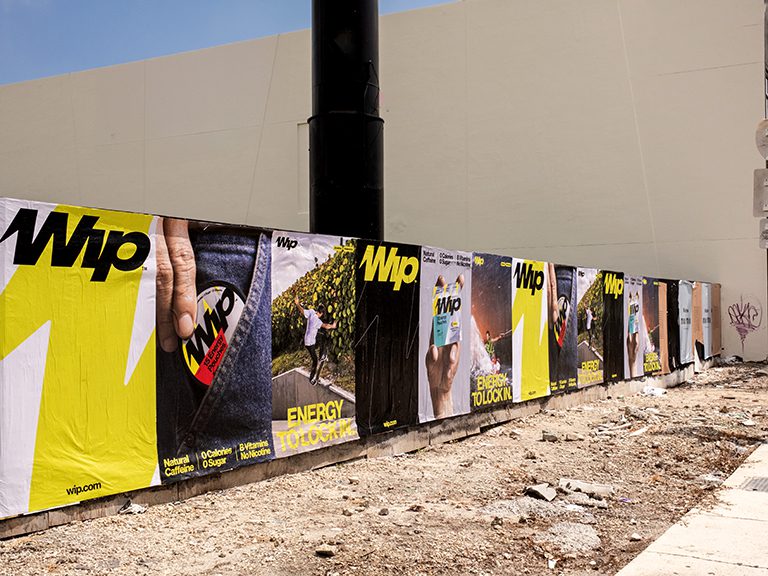
New York City is the most active wheat pasting market in the United States, and running a campaign here requires specific neighborhood knowledge, surface intelligence, and installation discipline that only comes from years of working these streets.
New York City is unlike any other wheat pasting market. The density, the borough geography, the subway-driven pedestrian concentrations, the layered history of street art and poster campaigns that covers construction barriers and brick walls across all five boroughs: all of it creates an environment where wheat pasting campaigns can achieve results that are simply not possible in other cities. It is also an environment where inexperience shows immediately. You cannot paste a campaign in Bushwick or the Lower East Side without knowing those neighborhoods and their surfaces, and the results of doing it wrong are visible to the exact audience you are trying to reach.
American Guerrilla Marketing is based in New York City. This is our home market. We have run campaigns across every borough, on every type of surface, in every season. We know specific streets, specific blocks, specific walls. We know which neighborhoods carry which audiences, which surfaces take paste well, and where campaigns need to be concentrated to create the density that makes a street poster campaign feel like a genuine presence rather than scattered paper.
This piece covers everything you need to know about wheat pasting in New York City: the neighborhoods, the surfaces, the seasons, the logistics, and how we plan and execute campaigns in this market.
Why New York City Is the Best Wheat Pasting Market in the Country
New York City’s combination of characteristics creates outdoor poster campaign conditions that no other American city matches.
Density of Available Surface Inventory
No other city in the United States has a comparable concentration of available poster surfaces per square mile. Construction barriers run for blocks in every neighborhood under active development. Painted brick walls line the streets of Brooklyn, the Bronx, and Queens. Plywood hoarding surrounds commercial renovations throughout Manhattan. Utility boxes and roll-up doors add to the available inventory. The sheer volume of surfaces means that a well-executed campaign can achieve significant geographic density without running out of viable locations.
Subway-Driven Pedestrian Concentration
The subway system is the other defining characteristic of wheat pasting in New York. Unlike Los Angeles, where car culture limits pedestrian foot traffic to specific corridors, New York distributes enormous daily pedestrian volume through specific street corridors because of the subway’s surface exits. The blocks around subway exits in high-traffic neighborhoods receive consistent, predictable pedestrian density every weekday morning and evening. A poster on a wall near the Bedford Avenue station in Williamsburg or the Morgan Avenue station in Bushwick reaches the same audience walking the same route day after day. That frequency multiplier is built into the geography of New York in a way that no other city replicates.
Distinct Neighborhood Audiences
New York’s neighborhoods are densely differentiated by demographic profile, cultural identity, and consumer behavior in ways that most other cities are not. Williamsburg in 2026 carries a concentrated young professional and creative class audience. Crown Heights carries a predominantly Black millennial and Gen Z audience with strong purchasing power and cultural influence. Long Island City carries a working professional commuter audience. Astoria carries a diverse young family and young professional mix. Bushwick carries the densest concentration of artists, musicians, and creative industry workers in the five boroughs. This neighborhood-level audience specificity means that a wheat pasting campaign in New York can target a very specific audience by selecting the right blocks, rather than distributing across the city and hoping the message reaches the right people.
Neighborhood Guide: Where We Run Campaigns in NYC
The neighborhoods below are the primary campaign zones we work in across New York City. Each has distinct audience characteristics, surface types, and campaign considerations.
Bushwick, Brooklyn
Bushwick has one of the highest concentrations of working artists, musicians, and creative industry professionals in the five boroughs. The neighborhood’s street art culture is active and visible: murals, paste-up works, and poster campaigns cover walls along Wyckoff Avenue, Myrtle Avenue, and the streets between the Jefferson Street and Morgan Avenue L train stops.
Surfaces in Bushwick include a mix of painted concrete block walls, plywood construction barriers (the neighborhood has been under steady development pressure for years), and existing poster layers that have built up on key surfaces over many years. The layered surfaces are some of the best in the city for new campaigns: the accumulated paper creates a stable, adhesive-receptive surface.
Campaigns in Bushwick work best for brands targeting arts, music, nightlife, and creative culture audiences ages 18 to 35. The neighborhood is high-competition territory for street campaigns; creative needs to be strong to hold its own next to established street art work. Weak or generic campaign creative disappears quickly in this environment.
Williamsburg, Brooklyn
Williamsburg remains one of the most productive campaign neighborhoods in New York for fashion, lifestyle, and culture brands. Bedford Avenue is the primary pedestrian corridor, with consistent foot traffic from the young professional and creative class audiences that dominate the neighborhood’s population. North 7th Street, Berry Street, and Wythe Avenue round out the primary postering corridors.
Construction activity along the waterfront and throughout the neighborhood creates regularly refreshed plywood barrier inventory. Painted brick on the side streets between the main corridors offers additional placements for campaigns requiring broader geographic coverage within the zone.
Campaigns in Williamsburg perform well for fashion brands, lifestyle products, music and entertainment releases, and consumer tech products targeting young professionals. The audience skews slightly older than Bushwick’s core (late 20s to mid-30s rather than early 20s), more professionally established, and somewhat more commercially receptive to brand presence.
Lower East Side, Manhattan
The Lower East Side is one of the oldest active postering corridors in Manhattan. Orchard Street, Rivington Street, and the cross-streets between Essex and Ludlow carry dense foot traffic from music, food, fashion, and nightlife audiences who have defined the neighborhood’s culture for decades. Construction barriers along active development sites add to the surface inventory.
The LES is a high-turnover postering environment where new campaigns appear constantly. Campaign duration is typically shorter here than in lower-turnover neighborhoods, which is why high-density initial placement and planned refreshes are standard for serious campaigns targeting this zone. The reward is access to a genuinely diverse, culturally engaged audience that covers multiple demographic segments simultaneously.
Crown Heights, Brooklyn
Crown Heights has become one of the most strategically important campaign neighborhoods in New York City for brands trying to reach Black millennial and Gen Z consumers. Nostrand Avenue and Atlantic Avenue are the primary commercial corridors with consistent foot traffic and available surface inventory. The neighborhood’s demographic is predominantly Black, young (primarily 22 to 38), and characterized by strong cultural influence and above-average purchasing power in fashion, food, beauty, and entertainment categories.
A campaign in Crown Heights that reads authentically to that audience, in terms of creative and brand cultural fit, carries outsized influence. A campaign that reads as a brand imposing itself on the neighborhood without genuine cultural connection is visible and often generates negative social commentary from the exact audience it was trying to reach. Creative direction and brand-neighborhood alignment matter more in Crown Heights than in almost any other New York zone we work.
East Village, Manhattan
The East Village carries a mix of arts, music, food, and nightlife audiences across a compact walkable geography. Avenue A, St. Marks Place, and the cross-streets between them are active pedestrian corridors with good surface inventory. The neighborhood’s long history as a center of underground culture and music gives it cultural credibility that translates into strong organic social amplification for well-executed campaigns.
Long Island City and Astoria, Queens
Long Island City is New York’s most developed poster corridor outside of Brooklyn and Manhattan. The area around Queens Plaza and Court Square subway stations has major pedestrian foot traffic from a young professional commuter audience that is underserved by most street campaigns, which tend to concentrate in Brooklyn and Manhattan. The construction barriers around the ongoing development projects in LIC provide excellent surface inventory.
Astoria offers access to a diverse young professional and young family audience in a neighborhood where street campaigns are less common than in the Brooklyn and Manhattan zones, which means lower competition for attention and longer average campaign duration before new campaigns are placed over existing ones.
The Bronx: Melrose and the Grand Concourse Corridor
Campaigns targeting Black and Latino youth audiences in New York should include the Bronx in their zone planning. The Melrose neighborhood around the Melrose IRT station and the Grand Concourse corridor between 149th Street and Fordham Road carry dense foot traffic from audiences that most brands are not reaching through their Brooklyn and Manhattan-focused campaigns. Surface inventory in the Bronx is concentrated around commercial corridors and is less competitive than the primary Brooklyn zones.
Neighborhood
Borough
Primary Audience
Best Surface Type
Campaign Turnover
Bushwick
Brooklyn
Artists, musicians, 18-30 creative
Layered poster walls, plywood
High
Williamsburg
Brooklyn
Fashion, creative pro, 25-38
Construction barriers, painted brick
High
Lower East Side
Manhattan
Music, nightlife, food, fashion
Existing poster walls, plywood
Very High
Crown Heights
Brooklyn
Black millennial, Gen Z
Painted brick, storefront boarding
Medium
East Village
Manhattan
Arts, music, food, nightlife
Construction barriers, brick
High
Long Island City
Queens
Young professional commuter
Construction barriers, plywood
Low-Medium
Astoria
Queens
Diverse young professional, family
Painted brick, commercial boarding
Low
Melrose / Bronx
The Bronx
Black, Latino youth, 16-30
Commercial corridor surfaces
Low-Medium
Surface Types Across New York City
New York City’s surface inventory is more varied than most cities and understanding the properties of different surface types affects how we plan installations.
Construction Barriers (Plywood Hoarding)
The most common and reliable surface for wheat pasting campaigns in New York. Active construction projects throughout the five boroughs produce miles of plywood hoarding that accepts paste consistently and well. The sealed plywood surface is smooth enough to produce clean, bubble-free placements and porous enough to accept paste adhesion without requiring extensive pre-wet. Standard uncoated poster stock bonds to plywood construction barriers better than almost any other surface type.
Construction barriers rotate as projects complete and new projects begin. Surfaces that are available for a campaign today may not be available in six months. This makes neighborhood-level scouting before each campaign important even in neighborhoods we have worked before, since the surface inventory changes continuously.
Painted Brick
Painted brick walls throughout Brooklyn and Queens are the second most productive surface type for New York campaigns. Painted brick requires surface stability assessment before pasting: the paint layer needs to be well-adhered without flaking. Pre-wetting is essential on painted brick because the porous substrate beneath the paint layer can pull moisture from the paste quickly if the surface is dry.
Brick walls with existing poster layers from previous campaigns are often the best available surfaces. The accumulated paper creates a stable, uniform surface that accepts new paste uniformly and produces the flattest, most visually clean placements.
Painted Concrete and Stucco
Less common in New York than in Los Angeles but present throughout the outer boroughs. Painted concrete takes paste well when pre-wet thoroughly. Stucco surfaces with significant texture require heavier paste application and more aggressive pressing to prevent air pockets at surface irregularities.
Utility Boxes and Roll-Up Doors
Utility distribution boxes and commercial roll-up doors offer placement opportunities for 18×24 and smaller format campaigns in neighborhoods with limited wall inventory. These surfaces take paste adequately with pre-wetting but have limited lifespan for placements because the surfaces flex (roll-up doors) or are actively maintained by utility providers (boxes). We use these surface types for supplementary placements rather than primary campaign inventory.
Seasonal Campaign Planning in New York City
New York City campaigns run year-round, but seasonal conditions affect paste formula, installation timing, and campaign duration.
Spring (March through May): The best installation season in New York. Temperatures moderate, humidity manageable, rain predictable and plannable around. Surface conditions after winter are often excellent once the frost is fully out of the ground. Campaign duration tends to be the longest of the year for spring installations.
Summer (June through August): Active season with high pedestrian volumes and strong outdoor social activity that drives organic social sharing of campaigns. Heat and direct sun require early morning or evening installations to prevent paste failure from rapid drying. High humidity on some days can extend cure time. Campaign duration is good in summer when properly installed and with weather-adjusted paste formula.
Fall (September through November): Second-best installation season. Temperatures cool, humidity drops, and the shoulder weather between summer heat and winter cold provides ideal paste-working conditions. Culturally this is one of the strongest campaign windows: back-to-school/college energy in September, fashion and music release season through October, event season through November.
Winter (December through February): Coldest and most challenging. Temperatures below 28 degrees Fahrenheit require paste formula adjustments and careful scheduling around hard-freeze days. Snow and ice on surfaces prevent installation and require surface clearing before paste application. Campaign duration can be reduced in winter because cold slows paste cure and the bond may not fully develop before temperature cycling causes stress at edges. That said, winter campaigns are absolutely executable with proper formula and scheduling adjustments, and there is less competition for wall space in January than in any other month.
AGM Field Note: New York Surface Competition Is Real
In high-turnover neighborhoods like the Lower East Side and Bushwick, a campaign installed on Monday may have new work placed over it by Thursday. We plan campaigns in high-turnover zones with this reality in mind: we concentrate placements for maximum initial density rather than spreading them thin, and we plan refresh installations for campaigns where duration is critical. The frequency that comes from a densely concentrated initial launch compensates for shorter individual placement duration in these neighborhoods.
How We Execute Wheat Pasting Campaigns in NYC
Every campaign we run in New York follows the same process. Here is the full sequence from first call to final report.
Brief Review and Audience Mapping
We review the campaign brief and map the target audience to specific New York neighborhoods. For a brand we have not worked with before, this conversation covers who they are trying to reach, what they need the campaign to accomplish, the format and quantity they have in mind, and the timeline. We come out of that conversation with a neighborhood target list based on audience geography rather than convenience or assumption.
Scouting
We walk the target neighborhoods. In New York, we cover specific blocks: which surfaces are available, what condition they are in, what the foot traffic patterns are at different times of day, how much existing poster activity is present. The scout output is an installation map that tells the crew exactly where to go and in what order.
Print Coordination
We work with clients to confirm paper stock and format before the print order is placed. We have vendor relationships with printers who understand outdoor wheatpaste specifications. For clients managing their own printing, we provide a specific spec sheet and confirm before they place the order that the stock they are using will work for outdoor paste-up applications.
Installation
Our New York crews execute installations following our professional protocol at every placement: surface check, pre-wet, base coat, position, center press, top coat, edge seal, photograph. We calibrate paste for the day’s conditions before every installation. We monitor weather and reschedule if needed. A two-person crew in New York typically covers 60 to 90 placements in a full installation day on a well-planned route.
Documentation and Report
Campaign reports with photo documentation from every placement are delivered within a few days of installation completion. For larger New York campaigns, we provide geo-tagged placement maps showing the full campaign geography across neighborhoods and boroughs. Documentation includes close-up photos confirming installation quality alongside context photos showing neighborhood positioning.
AGM Field Note: In New York, Block Selection Beats Borough Talk
Saying you want a Manhattan or Brooklyn campaign is not enough. The difference between a strong route and a weak one usually comes down to exact streets, cross streets, and how the audience moves between them. New York rewards crews who know the block-level reality.
How We Build Wheat Pasting Routes in New York City
New York is not one wheat pasting market. It is a set of smaller street-media ecosystems packed into one city. A route for an indie film release in the Lower East Side should not look like a route for a sneaker drop in Williamsburg or a nightlife campaign in Bushwick. We start with borough-level thinking, then narrow quickly into specific corridors.
In Brooklyn, for example, we look closely at how foot traffic breaks between Bedford Avenue retail, Bushwick warehouse nightlife, and the daily rhythm around subway exits in Williamsburg, Greenpoint, and Ridgewood-adjacent corridors. In Manhattan, we separate downtown creative audiences from midtown commuter flow because those are different campaigns with different wall types and attention patterns.
Neighborhood Fit by Category
Campaign Category
NYC Neighborhood Fit
Why It Works
Streetwear and fashion
SoHo, Williamsburg, Bushwick
High style awareness and photo behavior
Music and nightlife
Lower East Side, Bushwick, East Village
Venue density and evening foot traffic
Film and culture
Lower Manhattan, Williamsburg, Fort Greene
Creative audiences and event overlap
Consumer launches
Williamsburg, Nolita, West Village edges
Strong mix of shoppers and social sharing
What Makes New York Installs Different
New York routes move fast, but they still reward patience in the details. Surfaces turn over quickly in active neighborhoods, so placement quality matters. The right wall near a subway approach or nightlife corridor can outperform three average placements elsewhere. Weather also shifts fast enough that crews need backup timing built into the plan, especially during humid summer weeks and late-fall rain cycles.
Operationally, the city also demands efficient carrying, staging, and sequencing. Crews are moving on foot between dense placement clusters, often with ladders, paste buckets, rollers, and rolled stock. Route design has to respect that physical reality. We do not just pick good walls. We build routes that crews can execute cleanly under real New York conditions.
Why NYC Campaigns Keep Generating Social Content
New York audiences are already conditioned to photograph street visuals. A strong wheat pasting route in the city benefits from that behavior. If the art is sharp and the placement is right, people shoot it on their walk, post it from the venue line, or include it in broader neighborhood content. That extra layer of social circulation is part of why New York remains one of the strongest wheat pasting markets in the country.
For brands, that means the street campaign can do double duty: real-world presence plus organic digital spread. We design and place with both outcomes in mind.
Frequently Asked Questions
Which neighborhoods are best for wheat pasting campaigns in New York City?
The right neighborhood depends on your target audience. Bushwick and Williamsburg in Brooklyn for arts and fashion audiences ages 18 to 35. The Lower East Side for music, nightlife, and food culture. Crown Heights for Black millennial and Gen Z consumers. Long Island City and Astoria in Queens for young professional commuters. The East Village for mixed arts and nightlife audiences in Manhattan. The Melrose and Grand Concourse areas in the Bronx for Black and Latino youth audiences.
How many placements does a NYC wheat pasting campaign need to be effective?
For a single-neighborhood focus, 30 to 50 placements creates meaningful density. For a multi-neighborhood citywide campaign targeting two to four zones, 100 to 250 placements is typically the range for awareness-level impact. Campaigns concentrated in fewer zones with more placements per zone outperform campaigns with the same total count spread thin across too broad a geography.
Can you run wheat pasting campaigns in all five boroughs?
Yes. We run campaigns in Brooklyn, Manhattan, Queens, the Bronx, and Staten Island. Brooklyn and Manhattan are the highest-activity markets with the most developed surface inventory. Queens is growing as a campaign market, particularly in Long Island City and Astoria. The Bronx offers access to audiences that brands rarely reach through Brooklyn-centric campaigns. Staten Island campaigns are typically for brands with specific audience concentrations there.
How long do wheat pasting campaigns last in New York City?
Duration varies by neighborhood and season. In high-turnover zones like the Lower East Side and Bushwick, campaigns may see significant coverage by new work within one to two weeks. In lower-competition neighborhoods like Astoria or Crown Heights, well-applied placements can last four to six weeks. Seasonal conditions also affect duration: summer heat accelerates edge drying and fall and spring conditions produce the most durable placements. We account for turnover rate in our campaign planning and advise on refresh scheduling for campaigns where sustained duration is critical.
What paper should brands use for wheat pasting in New York City?
70 to 80 pound uncoated text or cover stock is the standard recommendation for outdoor campaigns in New York. This weight handles well in all conditions including winter cold and summer heat, bonds properly to the range of surface types present across New York neighborhoods, and prints with accurate color without glare. Glossy coated stock is not appropriate for outdoor wheatpaste applications in any market.
What format sizes work best for New York City wheat pasting campaigns?
24×36 inches is the standard for commercial wheat pasting campaigns in New York. It works across all the surface types common in the city and installs efficiently enough for a two-person crew to cover significant territory in a single day. 18×24 is appropriate for campaigns prioritizing cost efficiency and higher placement counts from the same budget. Multi-panel murals are available for high-priority statement locations but require more installation time per location.
Do you run wheat pasting campaigns in the Bronx and Staten Island?
Yes. The Bronx is an active campaign market for brands targeting Black and Latino youth audiences in New York. The Melrose area around the Melrose IRT station and the Grand Concourse corridor are our primary campaign zones in the Bronx. Staten Island campaigns are less common but available for brands with audience concentrations in that market.
What is the lead time for a wheat pasting campaign in New York City?
Two to four weeks is the standard lead time for a well-planned campaign in New York. This covers brief review, neighborhood scouting, print coordination, paste preparation, crew scheduling, and weather monitoring. Smaller, focused campaigns can sometimes be executed in less time, though compressed timelines limit the depth of scouting. Rush campaigns in New York are possible with advance notice and may be accommodated during periods when our crew schedule has capacity.
How does American Guerrilla Marketing document NYC campaigns?
We photograph every placement on installation day: one context shot showing the neighborhood and wall, one closer shot confirming installation quality and poster readability. Campaign reports are organized by neighborhood and location. For larger campaigns, geo-tagged placement maps showing the full five-borough coverage are included alongside the placement photos. Reports are delivered within a few days of installation completion.