Guerrilla Marketing Agency: What We Do and Why It Works
A guerrilla marketing agency can be one of the most powerful partners a brand has. It can also be a waste of budget if the agency does not know what it is doing on the street.
A guerrilla marketing agency can be one of the most powerful partners a brand has. It can also be a waste of budget if the agency does not know what it is doing. After more than a decade running street campaigns across New York City, Los Angeles, Chicago, Austin, Miami, and beyond, we have learned what separates a campaign that builds real brand awareness from one that looks good on a recap deck and produces nothing measurable in the market. This guide shares that knowledge.
We are American Guerrilla Marketing, based in New York City. We have run campaigns for music labels, fashion brands, entertainment studios, consumer goods companies, tech startups, and agencies of every size. Our team knows what it takes to make a guerrilla marketing campaign work in the real world, in real cities, in front of real people. This guide tells you what that looks like, and what to ask when evaluating any guerrilla marketing agency.
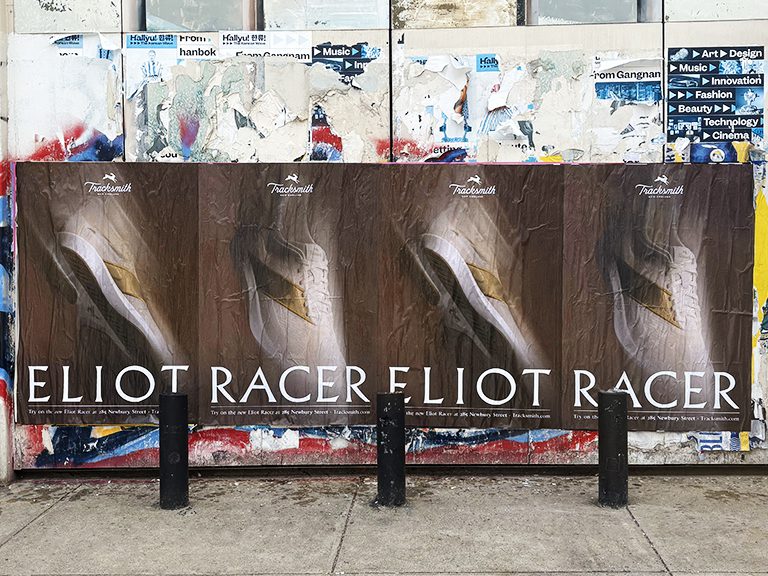
A guerrilla marketing agency plans and executes unconventional, street-level campaigns designed to create brand awareness and cultural presence through direct physical engagement with an audience in the real world. The term “guerrilla” signals the approach: instead of buying expensive media placements and waiting for an audience to see them, a guerrilla marketing campaign goes directly to where the audience already is, in the streets, at events, in the neighborhoods where they live and work.
The format is distinguished from traditional advertising in several important ways. Guerrilla campaigns are placed at street level, not above it. They interact with the physical environment rather than interrupting it. They often create moments that people photograph and share, extending the campaign’s reach beyond its physical footprint without additional paid media investment. And they rely on creativity and local knowledge rather than simply on budget scale.
A guerrilla marketing agency has three core capabilities. First, strategic knowledge to match the right campaign format to the right audience in the right geography. Second, operational infrastructure to execute that campaign in the real world, with crews, production vendors, location scouts, and proof-of-posting documentation. Third, measurement methodology to tell the client whether the campaign actually moved the needle on brand awareness or business outcomes. An agency that is strong on one or two of these and weak on the third will produce campaigns that feel incomplete.
The Full Range of Guerrilla Marketing Formats
Not all guerrilla marketing looks the same. The format that is right for a specific campaign depends on the audience, geography, campaign goal, and budget. Here is the full range of what a capable guerrilla marketing agency should be able to execute.
Format
Best For
Typical Duration
Social Sharing Potential
Wheatpasted Posters
Launch awareness, brand building, event promotion
2-8 weeks per wave
High
Street Teams
Sampling, direct interaction, event activations
1-5 days per market
Medium
Pop-Up Installations
Immersive brand experience, product launches
1-7 days
Very High
Building Projections
High-impact moments, social content generation
1-3 nights
Extremely High
Mobile Billboards
Broad city coverage, event surrounds
1-10 days
Low to Medium
Murals
Long-term brand presence, cultural integration
Months to years
Very High
Festival Activations
Concentrated young audiences, cultural moments
3-10 days per festival
High
Ambient Installations
Viral moments, creative brand statements
Variable
Extremely High
The Markets Where We Run Guerrilla Marketing Campaigns
A guerrilla marketing agency’s value comes from what it knows about specific cities. National coverage claimed on a website does not mean much. What matters is whether an agency has actual crews, location scouts, and operational history in the markets where the brand needs to run.
New York City
Our home market. We know every neighborhood, every corridor, every block of significance for street campaigns. Our go-to guerrilla marketing zones include the L Train corridor in Williamsburg from Bedford Avenue through Graham Avenue, the Lower East Side from Orchard Street through Essex Street, SoHo along Broadway from Prince to Spring, the Harlem corridor along 125th Street, and the construction barriers along the Hudson Yards development on 10th Avenue. New York is also our deepest proof-of-performance market. We have run campaigns in this city for over a decade across dozens of neighborhoods and hundreds of individual campaigns.
Los Angeles
LA requires different thinking than New York. The city is spread out. The audience does not concentrate in transit corridors the way it does in New York. Our LA campaigns concentrate on the specific neighborhoods where the creative class is dense: Melrose Avenue between Fairfax and Highland, the Fairfax District from 3rd Street north, Sunset Boulevard through Silver Lake from Silverlake Boulevard to Alvarado, and Abbot Kinney Boulevard in Venice from Main Street to Westminster Avenue. The Arts District in downtown LA has matured significantly as a guerrilla marketing environment and now ranks among our most active LA zones for consumer brand campaigns.
Chicago
Chicago’s guerrilla marketing geography centers on Milwaukee Avenue through Wicker Park and Bucktown, from North Avenue north through Damen to California Avenue. Division Street through Wicker Park is a secondary corridor. For broader campaigns, the Loop’s State Street corridor and Michigan Avenue offer high-volume placement opportunities. Winter campaigns in Chicago require specific material and adhesive specifications that agencies without Chicago-specific experience frequently get wrong.
Austin
Austin’s creative density runs along South Congress Avenue from Oltorf north to Annie Street and East 6th Street from I-35 east through the bar district. During SXSW, virtually every surface in the Sixth Street and Red River corridors becomes contested advertising space. We operate in Austin year-round and have specific operational knowledge of the SXSW window, including the timing and location dynamics that determine which brands get noticed and which get lost in the event noise.
Miami
Miami campaigns concentrate in Wynwood on NW 2nd Avenue between NW 20th and 26th Streets. During Art Basel in December, Wynwood becomes one of the most visually active marketing environments in the country. We have run campaigns in this neighborhood every Art Basel since our agency launched, and that experience shows in the quality of our execution in that specific window.
Additional Markets
We also operate actively in Boston, Philadelphia, Atlanta, Houston, Seattle, San Francisco, Portland, Denver, Nashville, and New Orleans through our network of city-specific posting crews and street team talent. Each of these markets has a designated location scout who maintains current knowledge of available surfaces and neighborhood dynamics, so campaigns in those markets have the same quality of geographic intelligence as our primary markets.
How to Evaluate a Guerrilla Marketing Agency Before You Hire Them
The guerrilla marketing agency space includes many companies claiming capabilities they do not have. Here is what to actually evaluate before committing a campaign budget.
Ask for Specific Location Knowledge
Ask the agency to tell you, without looking anything up, the most effective poster campaign corridors in your primary target market. A legitimate agency with real on-the-ground knowledge gives you specific streets, intersections, and neighborhood context immediately. An agency relying on general knowledge gives you neighborhood names and vague references to high-traffic areas. The quality and specificity of the answer tells you a great deal about the depth of the actual operational knowledge.
Ask What Proof-of-Posting Looks Like
Every legitimate guerrilla marketing agency provides documented proof that the campaign ran as planned. Ask to see a sample proof-of-posting package from a past campaign. It should include photographs of each placement, organized by location and date, with context that shows the placement as it appears to a pedestrian encountering it. If an agency cannot show you what this looks like, or deflects the question, that is a meaningful signal about how they operate.
Ask How They Measure Results
This is the question that separates agencies that understand marketing effectiveness from agencies that count vanity metrics. Ask specifically: how will you tell me whether this campaign changed brand awareness? The right answer involves brand recall surveys that measure actual human memory of the campaign in the target market. The wrong answer involves impression estimates, reach calculations, or social media monitoring as a substitute for measuring actual awareness lift. Organic social posts are evidence of resonance, not a substitute for recall measurement.
Ask About Crew Quality and Management
Agencies that manage their own posting crews have quality control that agencies relying entirely on third-party vendors do not. Ask directly whether the agency employs its own crews or subcontracts all field work. Ask how they handle execution problems, what happens if a placement does not go up as planned, and what their quality control process looks like during installation. The answer tells you whether you are dealing with an agency that owns its execution or one that is reselling someone else’s capacity without being accountable for the result.
Ask for References from Relevant Campaigns
Guerrilla marketing for a fashion brand uses different neighborhoods, formats, and timing than guerrilla marketing for a tech startup or a record label. Ask for references from campaigns in your category or from campaigns with comparable objectives. The context matters, and an agency with real breadth of experience will be able to provide relevant references rather than directing you to their most impressive campaign regardless of category fit.
Setting Goals for a Guerrilla Marketing Campaign
The single biggest mistake brands make when hiring a guerrilla marketing agency is not defining what success looks like before the campaign starts. A campaign without a clear goal produces a campaign without a clear result.
The goal types we see most often, and what they mean for campaign design:
Launch awareness. A new product, brand, or market entry needs to create rapid awareness in a specific geography and audience. The goal is recognition: as many people in the target audience as possible knowing the brand exists by the end of the campaign window. This goal prioritizes scale, saturation, and bold visual impact over nuanced messaging.
Sustained brand building. An established brand wants to deepen its presence in a specific cultural community or geography over time. The goal is cultural penetration: the brand becoming part of the fabric of a neighborhood or scene. This goal prioritizes consistency over time and authentic cultural integration over raw reach.
Event or launch support. A specific date-driven moment, a product drop, a show, a pop-up, needs concentrated impact in the days immediately before and during the event window. This goal prioritizes timing precision and geographic concentration over broad awareness.
Direct response and lead generation. For brands with a specific conversion goal tied to the campaign, the measure of success is not awareness but action. This goal requires formats that include clear calls to action and measurement of actual consumer response, not just exposures.
AGM Field Note: We have run street campaigns in blizzards, summer heat waves, and city-wide event shutdowns. We have navigated unexpected surface conditions, crew shortages, and last-minute creative changes. The ability to execute under real-world conditions without losing quality is what separates a guerrilla marketing agency with genuine operational depth from one with a polished pitch deck and an execution capacity that has never been truly tested.
How We Measure Guerrilla Marketing Campaign Results
Measurement is the most underinvested part of most guerrilla marketing programs. We treat it as a required component of every campaign, not an optional add-on.
Brand recall surveys conducted in the specific neighborhoods where a campaign ran, two weeks after execution, measure actual human memory of the campaign. We ask people in the target neighborhood whether they remember seeing the campaign, what they recall about the creative, and whether their perception of the brand changed. This is the measurement that actually tells you whether the investment in street presence created lasting exposures in the minds of the people you were trying to reach.
Social media monitoring during and after the campaign period tracks organic posts, shares, and tagged content related to the campaign. When people are photographing and sharing your street campaign without being asked to, that organic engagement is both a measure of impact and an amplification of reach. We compile and analyze this content as part of post-campaign reporting.
Geographic digital signals including brand search volume lift in the target market, direct traffic to the brand’s website from the target geography, and social follower growth from the target market during the campaign window all provide corroborating evidence that the street campaign created real-world awareness that translated to digital behavior. These signals do not prove causation, but they provide directional evidence that supports or challenges the recall survey findings.
Direct response metrics for campaigns with a specific call to action, such as QR code scans, short URL visits, or store visits tracked through geo-fencing, provide more direct campaign-to-action linkage than awareness metrics alone. We recommend these mechanisms for campaigns where direct response is the primary success measure.
The Brands That Get the Most from Guerrilla Marketing Agencies
Not all brands extract equal value from guerrilla marketing agency relationships. The brands that get the most from these partnerships share certain characteristics that separate them from brands that run campaigns and wonder why they did not see stronger results.
They have a clear geographic priority. The most effective guerrilla campaigns are focused, not scattered. A brand that identifies two or three cities where it needs to build real street presence and concentrates its investment there will consistently outperform a brand that spreads the same budget across seven markets at a coverage level that is too thin to create real impact anywhere. Geographic focus is a strategic discipline, not a budget limitation. We recommend it to every client regardless of budget size.
They have done audience homework before they come to the brief. Brands that can tell us exactly who they are trying to reach, where those people live and move in their target cities, and what a meaningful encounter with the brand would look like for those specific people are the brands that get the most precisely calibrated campaign designs. That precision translates directly into campaign efficiency. Every dollar of placement investment goes where it generates the most relevant exposures for the most relevant audience.
They are willing to let the campaign be bold. The brands that get mediocre results from street campaigns are usually the ones that committee-ized the creative until all the distinctive edges were smoothed off. Street advertising demands boldness. A poster on a construction wall in Williamsburg that could equally be a corporate email header is invisible. The creative needs to be confident, direct, and willing to risk not being liked by everyone. The people it is not talking to can ignore it. The people it is talking to will stop and look.
How AGM Approaches Campaign Creative Direction
Creative direction at AGM is not a separate service from campaign strategy. The two are integrated from the start of every brief because the best street campaigns are the ones where location strategy, creative execution, and campaign timing are designed to work together as a coherent whole rather than assembled from separately developed parts that are then expected to fit.
Our creative review process evaluates all campaign creative against five street-specific criteria: readability at distance (does it communicate its key message within two seconds from the relevant viewing distance?), contrast (does it stand out from the visual environment of the specific surfaces where it will be placed?), photographability (does it look compelling in a phone photograph from the most common shooting angles?), brand clarity (is the brand identity unmistakable without requiring the viewer to read any copy?), and tone-to-neighborhood fit (does the visual register of the creative match the cultural register of the neighborhoods where it will run?).
Creative that passes all five criteria gets approved for production. Creative that fails one or more criteria gets specific feedback and a revision request. We have sent creative back for revision dozens of times in the past year, and every brand whose creative we have revised has thanked us for it after seeing how the adjusted version performed compared to the original. Street-scale creative review is one of the most practical value-adds we provide, and it is one that most design agencies cannot offer because they are not in the streets watching how their work actually performs.
Long-Term Guerrilla Marketing Programs vs. One-Off Campaigns
The best guerrilla marketing results come from sustained programs, not one-off campaigns. This is a consistent finding across the brands we work with over multiple years, and it reflects a basic truth about how brand memory forms: repetition over time produces familiarity, and familiarity produces preference and purchase behavior.
A single campaign creates initial brand recognition. A second campaign in the same markets three months later reinforces it. A third campaign creates the sense of consistent brand presence that makes the brand feel like part of the city’s fabric rather than a visiting advertiser. By the fourth or fifth sustained campaign, the brand has built the kind of neighborhood familiarity that is genuinely difficult to acquire through any other means. The consumer who has seen the same brand on the streets of their neighborhood across multiple seasons has a relationship with that brand that a consumer who saw a single campaign, no matter how good, never develops.
Brands that commit to sustained guerrilla marketing programs negotiate program pricing with us that reflects the multi-campaign commitment, receive priority access to the best available locations as they open up, and benefit from the institutional knowledge we accumulate about which specific placements in their target neighborhoods drive the strongest organic social content and recall outcomes. The relationship gets more efficient over time, not less, because we are continuously learning more about what works for the specific brand in the specific markets.
Working With a Guerrilla Marketing Agency as a Larger Organization
Large brands and enterprise organizations sometimes approach guerrilla marketing agency relationships with approval structures, legal review processes, and brand governance systems that are built for conventional advertising channel management and do not always map cleanly onto the operational realities of street campaign execution. Managing this gap well is part of what makes the relationship productive.
The most important alignment to establish early is between campaign creative approval timelines and production lead times. Street campaigns require production approvals at specific points in the production calendar. Creative that is still in legal review when the production window closes means the campaign either misses its target date or runs with materials that were not properly approved. We work with larger clients to map their approval processes against the campaign timeline at the start of the brief so that these conflicts are identified and resolved before they create problems, not discovered on the day production was supposed to start.
Brand governance for street campaigns also requires specific guidance on what constitutes an approved placement. Some brands have strict standards about the surfaces, adjacencies, and neighborhood contexts where their creative can and cannot appear. Others are more flexible and want location decisions made primarily on audience and impact criteria. We establish this guidance in writing at the start of every campaign relationship with a larger organization so that location scouts, crew leads, and campaign managers are all working within the same parameters and there are no surprises at the proof-of-posting stage.
Reporting and attribution for large organizations typically requires more structured documentation than smaller brands need. We adapt our reporting package to the format and content requirements of the specific organization, including the data fields needed for internal attribution models, the visual documentation format required by the brand’s asset management system, and the measurement framework that the marketing team uses to evaluate campaign performance against internal benchmarks. We have delivered campaign reports in formats ranging from a simple PDF proof-of-posting deck to a fully structured data export that feeds directly into a brand’s marketing analytics platform. The format of the reporting does not change the quality of the campaign execution. It changes how that execution gets communicated and evaluated within the client organization, and we take that communication seriously because a campaign that performed well but was reported poorly is a campaign whose value was not fully captured.
Frequently Asked Questions
What does a guerrilla marketing agency do?
A guerrilla marketing agency plans and executes unconventional, street-level advertising campaigns including poster and wheatpaste campaigns, street team activations, pop-up installations, building projections, mobile billboards, murals, ambient installations, and festival activations. The agency manages the complete execution from strategy and creative review through production, crew deployment, documentation, and post-campaign measurement.
How do you know if a guerrilla marketing agency is legitimate?
Ask for specific location knowledge in your target markets, ask to see actual proof-of-posting documentation from past campaigns, ask how they measure recall and brand awareness, and ask about their crew management structure. Legitimate agencies answer these questions with specificity. Agencies that are primarily sales operations and outsource all execution give vague or evasive answers to all four questions.
What budget is typically needed for a guerrilla marketing campaign?
Poster campaigns start at $4,500 for 100 standard posters (24×36). Multi-format campaigns depend on the combination of services selected. Multi-city campaigns scale based on the number of markets and the depth of execution in each. We build campaigns to maximize impact within the available budget.
What makes American Guerrilla Marketing different from other agencies?
A decade of real execution. Not strategy decks. Not concepts that never leave the conference room. We have been on the street with paste buckets, projectors, and trained crews in every major market. Strategic planning, creative review, production management, and boots-on-the-ground execution all handled in-house. That integration produces campaigns where every element is designed to work together because the same team that designed the strategy is accountable for what goes up on the street.
Can a guerrilla marketing agency work for B2B brands?
Yes, with smart location targeting. If your audience concentrates in specific physical areas, a guerrilla marketing campaign can reach them there. Financial district placements for fintech brands. Convention center perimeter campaigns timed to industry events. Office corridor activations near concentrations of your target industry. The principle is the same: put your brand in front of the right person in a context they do not expect it. The target audience differs; the mechanics are identical.
How long does it take to execute a guerrilla marketing campaign?
Standard poster campaigns require three to four weeks from brief to installation. More complex campaigns with fabrication, custom installations, or projection elements require six to eight weeks. Multi-city campaigns with simultaneous execution across multiple markets require eight to twelve weeks for the complete scope. We assess realistic timelines at the brief stage and flag any constraints before production spending is committed.
What cities does AGM operate in?
New York City is our primary market. We operate with active crew networks in Los Angeles, Chicago, Miami, Austin, Houston, Atlanta, Boston, Philadelphia, Seattle, San Francisco, Denver, Nashville, Portland, and New Orleans, plus additional markets through our vetted partner network. Contact us to confirm active crew availability in any specific market.
Does a guerrilla marketing agency provide creative development?
We provide creative strategy and review all client-submitted creative against street-scale performance requirements before any production spending is approved. We also offer full creative development for clients who want our input on the campaign concept as well as the execution. Many of our most effective campaigns have involved creative adjustments at the street-scale review stage that the original design team had not anticipated because they had not evaluated the work against real outdoor conditions and distances.
How does AGM handle campaigns that span multiple cities?
Multi-city campaigns are managed through a central campaign coordinator who maintains oversight of all markets simultaneously. Each market has a dedicated location scout and crew lead responsible for on-the-ground execution. Documentation from all markets is compiled into a unified proof-of-posting package. For simultaneous flash campaigns across multiple cities, coordination is handled through a real-time communication protocol that tracks installation progress in each market throughout the execution window.