Guerrilla Ads: What They Are and How Brands Run Them
Guerrilla ads find your audience where they are not expecting to be found. That is the entire point. Here is how we plan and execute them.
Most advertising asks for attention. A guerrilla ad earns it by doing something the audience did not see coming in a place they did not expect. That asymmetry is the whole game. When a commuter rounds a corner on 14th Street and Union Square and finds a brand message stenciled across the full width of the sidewalk in chalk white on dark pavement, they did not consent to see it. They found it. That discovery changes the experience of the message.
We run guerrilla ad campaigns for brands across the United States. Our team plans locations, produces formats, manages field installation, and documents every deployment. We have run campaigns in SoHo, in the Meatpacking District, on the Hollywood Walk of Fame, under the L train on Broadway in Williamsburg, and in the corridors of convention centers from Las Vegas to Chicago. Every one of those campaigns started the same way: a brand that wanted to reach a specific audience in a specific place, and a format decision that made that encounter feel inevitable rather than purchased.
This guide explains how guerrilla ads actually work, what formats we use, how we plan location strategy, and what brands can expect in terms of impact and return.
Guerrilla ads are brand messages placed in physical spaces using formats that are unexpected in that context. The category is defined not by a single format but by the relationship between the ad and its environment. A stenciled brand message on a sidewalk is a guerrilla ad. A projected image on a building facade at night is a guerrilla ad. A street team handing out product samples at the entrance to a concert venue is a guerrilla ad. The common thread is that none of them are in a designated advertising space.
This matters because the designated advertising space is exactly where people have learned to ignore advertising. Billboard blindness is real. Banner blindness online is documented. The human brain is extremely efficient at filtering out recurring stimuli from predictable locations. Guerrilla ads work by appearing in a location where that filter has not been trained. The brain registers them as part of the environment before it registers them as advertising, and by then, the message has already landed.
The format is older than the name. Street advertising in non-standard placements has been part of city culture for over a century. What the term guerrilla advertising captures is the intentional quality of the placement strategy: knowing exactly where the target audience moves, intercepting that movement at the right point, and delivering a message that is worth encountering.
The Core Guerrilla Ad Formats We Run
We do not use every format for every campaign. The right format depends on the target audience, the geography, the campaign goal, and the budget. Here are the formats we run most frequently and where they work best.
Sidewalk Stencil Campaigns
Sidewalk stencils are the most cost-efficient guerrilla ad format for dense urban markets. We cut custom stencils from Mylar, deploy a crew overnight, and install the same design across 15 to 50 locations in a concentrated geographic zone. By morning, the brand is on the pavement of the approach routes, transit corridors, and pedestrian intersections where the target audience moves every day.
In New York, we run stencil campaigns most frequently in the blocks around Union Square on 14th Street and Broadway, along the Bedford Avenue corridor in Williamsburg between North 7th Street and Metropolitan Avenue, and on the approach sidewalks to Madison Square Garden from Penn Station. Each of these zones has a specific demographic character and a specific foot traffic pattern that matches particular campaign goals.
Projection Advertising
Projection advertising is the high-impact, high-visibility guerrilla ad format for campaigns with a short, intense window. We position a commercial projector in a vehicle or on a portable mount, aimed at a building facade, bridge abutment, or other large vertical surface. The projected image can be static or animated and scales to whatever surface the projector is aimed at.
In New York, building facades in the Meatpacking District on Gansevoort Street and Washington Street carry projection well because of the brick and concrete surfaces that retain image detail. The Domino Sugar refinery wall on the Williamsburg waterfront is another location we have used for campaigns targeting the Brooklyn music and creative community. The wall faces Kent Avenue directly and is visible to pedestrians on the waterfront park path.
Mural Installations
Murals are the permanent end of the guerrilla ad spectrum. A painted or professionally installed mural on a high-visibility wall is a brand presence that persists for months to years. We source mural walls in neighborhoods with the right demographic match for the client, coordinate with muralists who have experience in brand work, and manage the full installation from surface prep to final seal coat.
The most effective mural locations combine high foot traffic with a wall surface that is visible from distance and at eye level at the same time. The walls along the Bowery in lower Manhattan, the Abbot Kinney corridor in Venice, and the Cermak Road area in Chicago’s Pilsen neighborhood are consistently strong choices for mural campaigns targeting creative and young professional audiences.
Street Team Activations
Street teams are humans deployed as brand touchpoints. A trained team stationed at a concert entrance, a festival perimeter, or a transit hub creates direct one-to-one engagement that no other format can match. The team distributes samples, literature, or branded items and represents the brand in conversation with actual members of the target audience.
We staff and manage street teams in every major market we operate in. Each team member is briefed on the brand, the campaign goal, and the deployment protocol before going into the field. Post-deployment, we collect distribution numbers and any qualitative feedback from field interactions.
Field note: The difference between a good street team and a bad one is almost entirely in the briefing. A team that genuinely understands the brand and the product creates real conversations. A team that was handed a flyer and told to stand on a corner creates paper litter. We spend as much time on the pre-field briefing as on the deployment logistics.
Location Strategy: Where Guerrilla Ads Work and Where They Do Not
Location is the variable that most brands underinvest in. The creative is often strong. The format is often appropriate. But if the location does not match the target audience’s actual movement patterns, the campaign is invisible to the people it was designed to reach.
We start every location strategy with a movement map. We identify where the target audience is concentrated in the target city, what routes they take, what times they are most present in those locations, and what surfaces or environments are most visible at those points. From that map, we select locations that maximize exposures of the specific audience, more than total foot traffic.
High-Value Location Categories
Concert and venue approach routes are among the highest-value guerrilla ad locations in any major city. The audience walking from the subway to Madison Square Garden for a show is pre-qualified: they are entertainment consumers, they are in a good mood, they are paying attention to their environment rather than a screen. A brand message on that approach route encounters the right people at exactly the right moment.
Transit station exits and subway headhouses are similarly high-value because they concentrate movement at predictable times. The exits at the 14th Street and Eighth Avenue station feed several thousand people per hour during peak commute. A brand on that surface in the correct format is seen by an enormous number of people in a very short window.
Festival perimeters are special cases. When a music or food festival concentrates 20,000 people in a specific geographic zone, the approach routes to that zone become the most valuable advertising real estate in the city for the duration of the event. We time guerrilla ad campaigns to align with major event dates specifically to capture that concentration of pre-qualified audience.
Guerrilla Ads by Industry: Which Sectors Use Them Most
Guerrilla advertising is not sector-specific, but some industries lean on it harder than others because of the nature of their audience relationships and the cultural register their brands want to occupy.
Industry
Most Common Format
Primary Goal
Key Markets
Music and Entertainment
Stencil, Mural, Projection
Release and tour awareness
NYC, LA, Chicago, Nashville
Streetwear and Sneakers
Mural, Stencil, Street Team
Cultural credibility, drop launches
NYC (SoHo), LA (Fairfax), Chicago
Food and Beverage
Street Team, Sampling, Stencil
Trial and awareness
Citywide, festival-targeted
Tech and Apps
Stencil, Poster, Street Team
User acquisition in target demos
NYC, SF, Austin, Seattle
Film and Streaming
Projection, Mural, Stencil
Opening weekend awareness
NYC, LA, major markets
Health and Wellness
Street Team, Sampling
Product trial and category education
NYC, LA, Miami, Austin
What Strong Guerrilla Ad Creative Looks Like
The creative requirements for guerrilla advertising are different from digital or broadcast creative. The format is physical, the encounter is brief, and the audience is in motion. Those three constraints narrow the creative window significantly.
The best guerrilla ad creative works in one second. That is the attention window on a sidewalk stencil or a building mural for a pedestrian moving at normal pace. One second means one clear image and one clear message. Six words maximum. One graphic element. A strong brand signal that does not require reading to register.
The worst guerrilla ad creative is busy. Multiple colors, detailed illustration, a body of explanatory text. We have seen brands spend significant money on stencil campaigns using creative that a moving pedestrian cannot process in under five seconds. That creative does not work in this format regardless of how well it works in print or digital.
Creative rule: Before finalizing any guerrilla ad creative, we ask every client to print the design at actual scale, lay it on the floor, and walk past it at normal walking speed. What you can read in a single glance is the entire message you have to work with. Anything that requires stopping to read does not belong in this format.
Measuring Guerrilla Ad Performance
Measuring guerrilla advertising performance requires a different framework than digital media measurement. There is no click-through rate, no pixel tracking, no conversion attribution from a stenciled sidewalk. The measurement framework has to match the format’s actual output: exposures, social amplification, and downstream brand awareness.
Impression Counting
We estimate impression counts using foot traffic data for each installation location. For high-traffic surfaces like Madison Square Garden approach routes or Union Square sidewalks, we use standard pedestrian count data to estimate daily exposures. For the campaign duration, we multiply the daily figure by the number of days the installation remains visible. This is not exact science, but it produces a defensible impression estimate that clients can compare to equivalent paid media costs.
Social Amplification
Guerrilla ads that generate photography get amplified by the audience without any paid distribution. We track organic social mentions, hashtags, and tagged posts from the installation locations during the campaign window. The best guerrilla ads generate a measurable social conversation that starts with people finding the installation and posting about it. That conversation is the signal that the format worked.
PR and Earned Media
High-impact guerrilla campaigns in major cities attract editorial attention. We monitor press mentions from advertising trade publications, local media, and entertainment and culture outlets during campaigns. A single pickup in a major publication can generate readership equivalent to tens of thousands of paid exposures.
Working with AGM on Guerrilla Ads
We work with brands from initial brief through final documentation. Our process starts with a format recommendation based on the campaign goal, target audience, budget, and timeline. We then handle location scouting, artwork review and production, installation management, and photo documentation of every placement.
Every campaign gets a photo report with GPS timestamps showing every location, every installation, and every surface documented within 24 hours of installation. Clients know exactly what they got and where it is. That documentation also feeds into impression reporting.
We do not take campaigns where the format is wrong for the goal. If a client needs sustained awareness across a large geography over several months, we will tell them that a mural campaign serves that goal better than a stencil campaign. Matching format to goal is the first job of every brief we receive.
The Psychology Behind Guerrilla Ad Effectiveness
Guerrilla ads work at a psychological level that conventional advertising placements cannot reach. Standard advertising in designated placements trains the audience to filter it out. Commuters develop automatic attention suppression for billboard clusters because they have learned from experience that nothing in that visual zone is worth stopping to look at. Digital users develop banner blindness through the same habituation process. The brain is conserving processing resources by ignoring stimulus sources it has learned to predict.
Guerrilla ads break that pattern by appearing in environments where the brain has not been trained to filter. A chalk stencil on a sidewalk is processed as environmental data, not as advertising, in the first moment of perception. The brand message arrives before the audience’s filtering response can activate. By the time the brain recognizes it as advertising, the message has already been processed. This is the fundamental mechanism that makes guerrilla advertising psychologically distinct from conventional placements.
The element of surprise compounds this effect. When something unexpected appears in a familiar environment, the brain assigns it heightened importance in memory encoding. Neuroscience research on memory formation consistently shows that emotional and novel stimuli are encoded more strongly than predicted stimuli. A guerrilla ad that generates genuine surprise is more likely to be recalled hours and days after the encounter than a conventional placement seen the same day.
Social documentation creates a third amplification layer. The act of photographing and sharing a guerrilla ad reinforces the memory trace in the person doing the sharing and creates the first impression for everyone in their social network. The original encounter multiplies through social sharing with zero additional media spend. This is why social documentation potential is a design criterion for every guerrilla ad we produce: the ad has to be worth sharing, not just worth seeing.
Guerrilla Ads by Brand Category: What Works Where
Different brand categories use guerrilla advertising in different ways. The format mix, the location strategy, and the creative approach that works for a streetwear drop is not the same approach that works for a food and beverage product launch. Understanding how the category shapes the execution is part of how we build campaigns that work for specific clients rather than campaigns that apply a generic guerrilla template to every brief.
Music and Entertainment
Music releases, tour announcements, and streaming launches are among the strongest use cases for guerrilla advertising. The music audience’s relationship to the physical environment of cities, particularly neighborhoods with strong music culture like Williamsburg in Brooklyn, Wicker Park in Chicago, and the Arts District in LA, makes street-level brand placement highly relevant to how that audience discovers and processes new releases. A stencil campaign that covers the approach routes to major venues in the week of a show launch reaches fans exactly where their attention is already directed.
Projection campaigns are particularly powerful for music. A building-scale visual of an album cover or artist image, projected on an iconic surface in a music neighborhood, creates an immediate press-worthy moment and generates organic documentation from fans who are already active on social media about the artist. We have run music projection campaigns in New York and Los Angeles that generated more organic social exposures in 48 hours than months of paid social spending for the same release.
Streetwear and Sneakers
Streetwear brands need to be in the streets. That is not a marketing decision. It is a category authenticity requirement. A streetwear brand that lives exclusively in digital placements loses the street credibility that gives the category its cultural weight. Stencil campaigns, murals, and presence on the physical surfaces of the neighborhoods where streetwear culture is created and consumed are not optional brand extensions. They are the proof that the brand belongs in the category it claims.
The most effective streetwear guerrilla ads are the ones that look like they belong on the walls where they appear. They share a visual language with the art and tags that surround them. They do not look like corporate advertising dropped into a street context. They look like they grew there. That visual integration requires designers who understand street aesthetics, not just commercial graphic design. We work with designers and muralists who have genuine cultural fluency in the environments where the campaigns run.
Consumer Technology and Apps
Tech brands and app companies use guerrilla advertising for user acquisition in specific urban demographics. A fintech app targeting the 22 to 35 Brooklyn professional can reach that exact audience through a stencil campaign on the Bedford Avenue L train corridor more efficiently than through digital targeting, because the physical location guarantees that the audience is real, local, and in exactly the environment where the targeting is being claimed.
Tech guerrilla campaigns work best when the ad’s message matches the physical context. An ad for a food delivery app that appears on the approach to the restaurant district in a specific neighborhood is contextually relevant in a way that a randomly placed digital banner can never be. Location is the context that makes tech guerrilla ads work harder than their digital equivalents.
Guerrilla Ad Documentation: What You Get and Why It Matters
Documentation is one of the most important deliverables in any guerrilla advertising campaign, and it is where low-quality operators most often cut corners. Proper guerrilla ad documentation serves three functions: it proves the campaign was executed as planned, it provides the visual assets for internal reporting and presentations, and it captures the organic audience response that measures the campaign’s real-world impact.
Our documentation standard for every campaign is GPS-tagged photographs of each installation within 24 hours of deployment. Photos are taken from multiple angles: the close-up detail of the installation itself, the context view showing the installation in its environment, and the distance view showing the installation as a pedestrian would approach it. Those three angles give a complete picture of what was placed and how it reads in the actual environment.
For campaigns in high-profile locations, we also run post-installation monitoring visits to document the campaign’s lifespan. When a stencil campaign is expected to run for three weeks, we visit locations at day seven and day fourteen to document the condition of remaining installations and identify any that need refreshing to maintain campaign presence.
Social documentation tracking is a separate but equally important component. We monitor Instagram, TikTok, Twitter/X, and Reddit for organic posts from campaign locations. When a guerrilla ad generates user-created content, we capture that data and include it in the campaign report with estimated reach figures. That organic reach number is often the most compelling performance metric in the campaign report, and it is only available if systematic monitoring begins on the day of installation.
AGM Field Note: We have seen campaigns where the organic social reach generated by user photography exceeded the direct impression count from foot traffic by a factor of three to one. That amplification only happens when the ad is genuinely worth photographing and sharing. Creative quality, location quality, and the novelty of the encounter are all factors in whether that documentation happens. We design for documentation from the start, not as an afterthought.
Planning Timeline: From Brief to Field
Guerrilla advertising campaigns have variable planning timelines depending on format complexity. Brands that wait until they need the campaign on the street to engage an agency typically end up with compressed timelines that sacrifice location quality, creative review, or production quality. Understanding the realistic planning timeline for each format prevents that compression.
Stencil campaign (20-40 locations): 7 to 14 days from approved brief to field installation
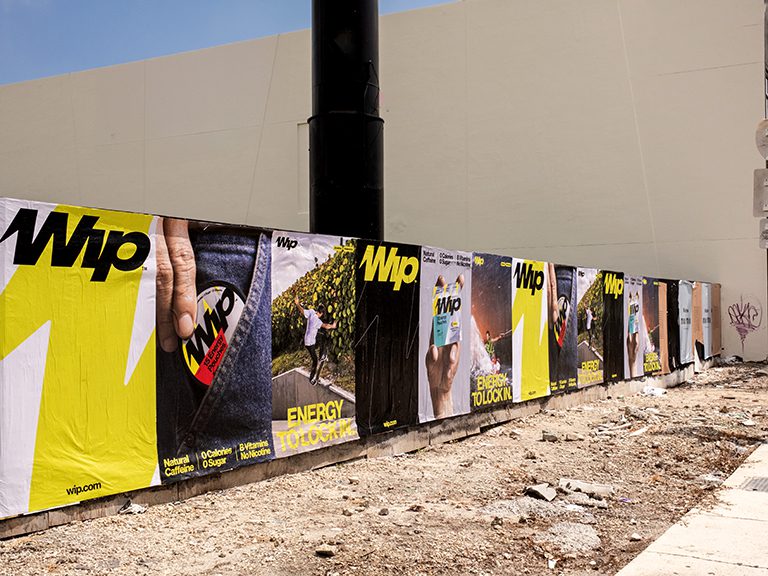
Poster distribution campaign: 5 to 10 days from approved creative to field placement
Projection campaign: 5 to 10 days for location confirmation and equipment sourcing, weather-dependent window
Mural installation: 3 to 6 weeks for wall sourcing, design approval, surface prep, and installation
Street team activation: 1 to 3 weeks for team recruiting, briefing, material production, and deployment
Multi-format campaign: 4 to 8 weeks for full coordination across formats with overlapping timelines
We build timeline recommendations into every initial brief response. If the client’s requested launch date requires a compressed timeline for a specific format, we flag it immediately rather than committing to a timeline we cannot deliver at full quality. Honest timeline communication at the start prevents quality compromises in the field.
Frequently Asked Questions
What are guerrilla ads?
Guerrilla ads are brand messages placed in unexpected physical environments using unconventional formats. They work by catching audiences off guard in spaces where they do not expect advertising, creating a stronger memory impression than conventional placements.
What makes a guerrilla ad effective?
Effectiveness in guerrilla advertising comes from three things: the right format for the physical environment, placement in a location the target audience actually moves through, and creative that rewards attention rather than just demanding it. The best guerrilla ads feel like discoveries, not interruptions.
How much do guerrilla ads cost to produce?
Costs depend heavily on format and scale. A focused stencil campaign in a single neighborhood typically runs $3,000 to $7,500. A multi-format guerrilla campaign covering three neighborhoods with multiple formats runs $10,000 to $30,000. Projection advertising, murals, and experiential builds add to the upper range.
Do guerrilla ads work for product launches?
Yes. Product launches are one of the strongest use cases for guerrilla advertising because the format creates the kind of street-level buzz that generates organic word-of-mouth and social sharing in the days before and after a launch date. The physical presence of a guerrilla ad signals to pedestrians that something real is happening.
What cities does AGM run guerrilla ads in?
We run guerrilla ad campaigns in New York City, Los Angeles, Chicago, Miami, Austin, Boston, Atlanta, Seattle, Denver, San Francisco, and Washington DC. We also coordinate national multi-market campaigns from a single brief.
How long does a guerrilla ad campaign run?
Duration depends on format. Stencils last 1 to 3 weeks. Posters last 2 to 6 weeks depending on surface and weather. Murals last months to years. Projection runs 1 to 5 nights. Street team activations run 1 to 3 days per deployment. Many campaigns layer multiple formats with different durations to maintain street presence across a longer window.
How are guerrilla ads different from traditional outdoor ads?
Traditional outdoor ads use standard placements in predictable locations: billboards, bus shelters, subway cards. Guerrilla ads use non-standard formats and unexpected locations. The goal is to intercept attention rather than compete for it in a cluttered conventional placement environment.
Can AGM handle the creative and production for guerrilla ads?
Yes. We work with clients from concept through field execution. Our team reviews creative for format suitability, handles all production, scouts locations, manages installation, and delivers documentation reports after every campaign.