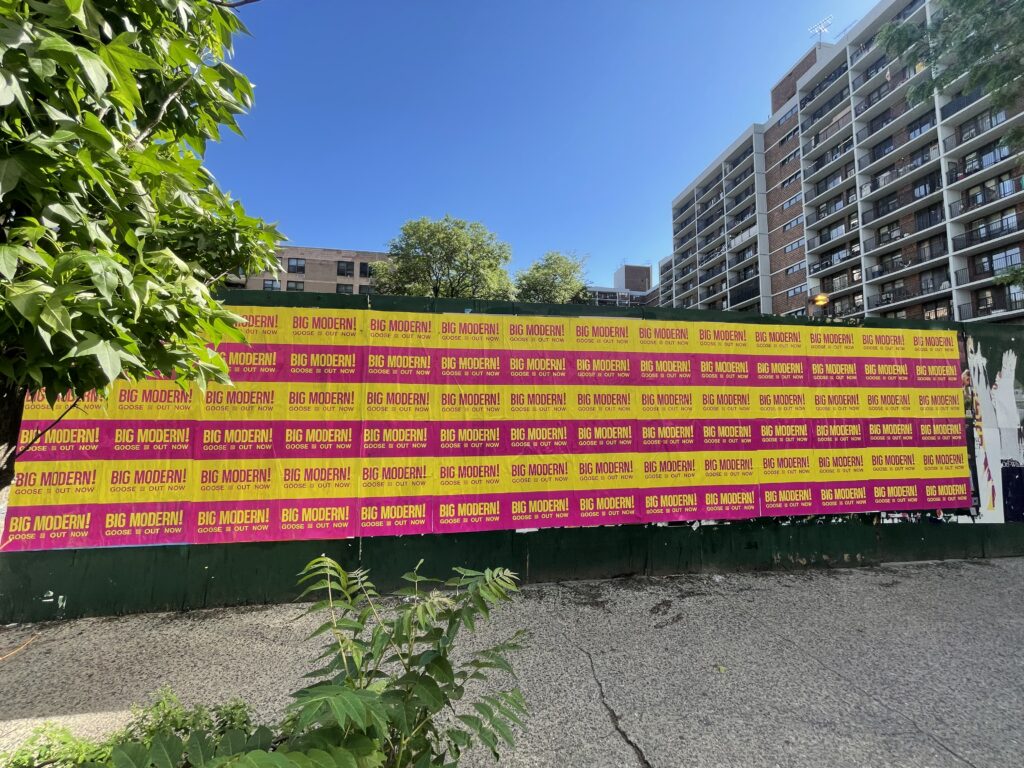
A billposter puts advertising on walls for a living, and after 150 years the core of the job has not changed, even though everything around it has.
The word sounds like it came out of a Victorian-era newspaper. Billposter. And in a sense it did. The profession of affixing printed advertising to walls, fences, and urban surfaces is one of the oldest commercial trades in modern cities. But the job is not a relic. It is alive and running in New York, Los Angeles, Chicago, Miami, and every other major American market where brands need to reach people at street level without going through a screen.
At American Guerrilla Marketing, we are a professional billposting company. We have run street poster campaigns for fashion labels, record labels, consumer goods brands, tech startups, streaming platforms, and event promoters. We have pasted posters on construction barriers in Williamsburg and on painted brick in the Arts District of Los Angeles. We have sent crews out in January at six in the morning in Chicago and in September heat in Miami. The work is the same everywhere. The preparation, the paste, the documentation, and the results.
This piece covers everything you need to know about billposting as a profession and as a marketing channel. What billposters actually do. Where the trade came from. What separates a professional operation from a hobbyist with a bucket of glue. And what brands should know before they hire anyone to put their name on a wall.
A billposter is a person or company that affixes printed advertising posters to outdoor surfaces. The “bill” in billposter refers to a printed notice or advertisement, not a currency bill. Handbills, broadsides, and posters were all called bills. The people who put them up were billposters.
Today the term is less common in everyday use than it once was. Street poster campaigns, wheatpaste advertising, outdoor postering, and guerrilla marketing all describe the same basic activity. But billposting as a concept captures the core of the job clearly: someone who posts bills for a living.
A professional billposter manages the full process of outdoor poster installation. That includes location scouting, paste preparation, installation logistics, crew management, and post-campaign documentation. The work starts before a single poster goes up and ends with a report that shows exactly where everything was placed.
Modern billposters use wheatpaste as the primary adhesive. The paste is made from wheat flour or wheat starch cooked down with water into a thick, sticky mixture that bonds paper to brick, plywood, concrete, and painted metal. When applied correctly, a wheatpasted poster bonds to a surface so firmly that it becomes part of it. The edges lie flat. The face holds its image through rain and wind. Done by someone who knows what they are doing, a pasted poster looks like it was always part of that wall.
Professional billposters do not guess at locations. They know specific streets and surfaces, understand the pedestrian patterns in target neighborhoods, and build campaigns around audience geography rather than convenience. A billposter operating without that knowledge is just someone with a bucket and some paper.
The History of Billposting in America
Billposting became a formal commercial industry in the United States in the mid-1800s. Before broadcast advertising existed, print on walls was how brands reached the public. Theater companies, patent medicine sellers, political candidates, and retail stores all competed for wall space in growing American cities.
By the 1870s and 1880s, billposting had organized into a real profession. Companies negotiated exclusive posting rights on specific fences, building walls, and surfaces in major cities. The practice of claiming exclusive outdoor ad space is the direct ancestor of modern billboard advertising. The large standardized panels lining American highways are direct descendants of those early billposter operations.
In 1891, the Associated Bill Posters Association of the United States and Canada was established. The organization worked to professionalize the industry, standardize panel sizes, and give outdoor advertisers reliable access to surfaces across multiple markets. This was the first formal outdoor advertising trade organization in North America.
By the early 1900s, billposting was a substantial industry. Major cities had organized billposting operations with set prices, documented inventory, and professional installation standards. The transition from billposter to billboard company happened gradually as advertisers demanded more permanence and structures replaced improvised wall space.
Street-level poster campaigns never fully disappeared, however. Even as billboards became the dominant outdoor advertising format, underground and DIY street postering continued in urban communities. Punk shows. Political organizing. Independent music. Neighborhood businesses. The hand-pasted poster on a construction barrier remained the most direct, lowest-cost way to put a message in front of people at eye level in a specific neighborhood.
By the 1980s and 1990s, street postering had become explicitly tied to urban culture in ways that carried brand value beyond simple exposure. A poster in the right neighborhood communicated authenticity. It said the brand was part of that world. Major labels, fashion houses, and consumer brands began to invest in what was now called guerrilla marketing or street marketing, paying professional teams to run the same street-level campaigns that had always existed but now with strategic intent and documentation standards.
Why Billposting Survived the Digital Era
When digital advertising scaled into a multi-billion dollar industry, many observers assumed street-level paper advertising would follow print newspapers into decline. The opposite happened. As digital channels became more saturated, as users developed real resistance to banner ads, pre-rolls, and sponsored posts, physical advertising became more valuable, not less.
A wheatpasted poster on a wall in Bushwick does not compete for attention in the same way a digital ad does. It does not disappear after 30 seconds. It does not get blocked by software. It sits in the physical space where the target audience moves through their daily life. The person who walks past that poster on the way to the subway in the morning and again on the way home at night has received two separate exposures from a single placement. That frequency at street level is nearly impossible to replicate through digital channels at a comparable cost.
Billposting also carries cultural signal value. A brand that posts in Williamsburg or Melrose Ave is communicating something that a digital banner cannot. It is declaring physical presence in a specific cultural geography. That signal matters to audiences who care about authenticity.
What Professional Billposters Actually Do
The day-to-day work of a professional billposter is more involved than most clients initially expect. Running a 200-poster campaign across three neighborhoods in New York City is not as simple as driving around with a bucket. Here is what the job actually involves from start to finish.
Pre-Campaign Location Scouting
Before anything is ordered or purchased, a professional billposting operation walks the campaign territory. This means physically visiting each target neighborhood and identifying available surfaces that meet the campaign requirements. Not all surfaces accept paste well. Not all high-traffic areas have good wall inventory. The scout identifies walls with good adhesion, high pedestrian visibility, and audience alignment with the client’s target.
For a fashion campaign targeting 20-to-35 year olds, the scout looks for walls near independent retail, coffee shops with neighborhood regulars, music venues, and transit corridors. For a consumer tech product, the scouting focus shifts to co-working corridors, commuter transit nodes, and residential areas with the right demographic density.
In New York City, we scout specific blocks. Crown Heights along Nostrand Avenue for campaigns targeting Black millennial consumers. The stretch along Wythe Avenue in Williamsburg for fashion and lifestyle. The blocks around Morgan Avenue in Bushwick for art and culture audiences. Long Island City near the Queens Plaza subway for working professionals in transit. Scouting is not optional; it is where the campaign logic gets built.
Paste Production
Professional billpasters make their paste in quantity before a campaign. The base is wheat starch or all-purpose flour cooked down with water until it reaches a thick, consistent adhesive. The recipe gets adjusted based on the conditions expected during the install. Hot summer installations require thicker paste because heat causes the adhesive to thin and run. Cold fall and winter campaigns use slightly thinner paste because low temperatures cause it to set faster, and you need more working time between application and press.
Many professional operations add a portion of PVA glue, specifically polyvinyl acetate, to the paste mix for outdoor durability. A 3:1 or 4:1 ratio of paste to PVA significantly improves weather resistance. Posters applied with a straight wheat paste and no PVA additive may peel at the edges after heavy rain within the first 48 hours. With PVA in the mix, the bond strengthens as the adhesive cures rather than weakening under moisture.
Batch size depends on campaign volume. A 200-poster campaign in 24×36 format requires roughly 15 to 25 gallons of prepared paste depending on surface porosity. Porous brick and rough concrete absorb paste and require heavier coats. Smooth painted metal takes less paste because it does not absorb.
Route Planning
Efficiency in the field comes from route planning before the crew leaves the staging point. A professional billposter maps the campaign route so the crew moves logically through each neighborhood without backtracking. For a campaign covering Williamsburg, the Lower East Side, and the East Village in a single day, the route might start in Williamsburg near the Bedford Avenue subway, work south and east through the blocks around Morgan Avenue, then cross into Manhattan via the J or M train and work through the Lower East Side before finishing in the East Village.
Poor route planning wastes time, burns fuel, and reduces the number of placements the crew can complete before conditions change or daylight ends. A well-planned route for a two-person crew can cover 60 to 100 placements in a long installation day. Bad routing might yield 30 to 40 from the same crew on the same day.
Installation Technique
This is the core skill of the billposter and the one that most clearly separates professional work from amateur attempts. The installation sequence for a single poster placement looks like this:
First, assess the surface. Note any loose paint, cracks, or active moisture. A surface with loose or flaking paint will not hold a poster regardless of how much paste goes on. If the surface has existing layers of old posters, check that the top layer is adhered well rather than actively peeling. Old poster layers actually provide excellent adhesion for new work if they are stable.
Second, pre-wet the surface. On porous brick or rough concrete, wipe the wall with clean water before applying paste. This prevents the dry surface from pulling moisture out of the paste too quickly, which causes the adhesive to skin over before the poster can bond.
Third, apply a base coat of paste. Brush a generous coat of paste onto the wall in the target area. Cover a zone slightly larger than the poster dimensions on all sides. This base coat creates the primary bond layer.
Fourth, position the poster. For formats larger than 18×24 inches, two people make this step significantly cleaner. One person holds the top corners, the other positions the bottom. Align carefully before pressing because paste-covered paper tears when you try to reposition it.
Fifth, press from center outward. Once the poster is in position, use the flat of the hand or a foam roller to press from the center toward the edges, pushing out air pockets. Work systematically. Missing a pocket in the middle leaves a bubble that becomes a tear point as the paper dries and contracts.
Sixth, apply the top coat. Brush a generous coat of paste over the face of the posted paper. This top coat saturates the paper and creates a chemical bond between the front surface of the poster and the adhesive layers behind it. It also gives the piece its characteristic flat, matte appearance when dry. Do not skip the top coat. It is what holds everything together.
Seventh, seal edges and corners. Use a small detail brush to work paste under any lifting edges and into all four corners. Corners and edges are where posters begin to peel. They are the last thing to get attention and the first thing to fail if that attention is skipped.
Documentation
Every professional campaign includes post-installation documentation. Each placement gets photographed. The photos show the poster as installed, from a distance that captures context, and from close enough to confirm print quality and adhesion condition. These photos are organized into a campaign report that shows the client where each placement went and what it looked like on install day.
For larger campaigns, we provide geo-tagged placement maps alongside the photo documentation, so clients can see exactly where their campaign ran across the city. This level of documentation is standard in professional billposting operations and should be expected from any company you hire.
Element
Amateur Operation
Professional Billposter
Location Selection
Wherever they can park
Audience-mapped neighborhoods, scouted surfaces
Paste Formula
Basic flour and water
Wheat starch + PVA, weather-calibrated
Paper Spec
Whatever the print shop had available
70-80 lb uncoated stock for outdoor adhesion
Application Method
Paste on, move on
Pre-wet, base coat, center press, top coat, edge seal
Documentation
None or a handful of phone photos
Full placement photos, campaign report
Typical Coverage
5 to 30 locations
50 to 500+ locations across target zones
Campaign Planning
Day-of decisions
Pre-scouted route, weather-checked windows
Billposting in Major US Markets
Each city operates differently. Surface inventory, neighborhood geography, audience concentration, and seasonal conditions all vary. Here is how billposting works in the markets where we run campaigns regularly.
New York City
New York is the highest-density billposting market in the country. The concentration of construction barriers, painted brick walls, plywood hoardings, and utility surfaces across five boroughs creates more available inventory than any other American city. The subway system means enormous pedestrian foot traffic through specific corridor streets every day without interruption by weather or season.
Our primary neighborhoods for street campaigns in New York include Williamsburg, Bushwick, the Lower East Side, Crown Heights, Astoria, Long Island City, the Meatpacking District, SoHo, and the East Village. Each neighborhood carries different audience characteristics. Bushwick draws art and music audiences. Williamsburg draws fashion, design, and creative industry professionals. Long Island City draws working professionals and commuters. Crown Heights draws millennial and Gen Z Black consumers with strong purchasing power. The right neighborhood for your campaign depends on who you are trying to reach.
New York campaigns can run year-round, though winter installs require adjustments for temperature. Below-freezing conditions slow paste cure time significantly. We time winter installs for the warmest part of the day and use paste formulas adjusted for low-temperature conditions.
Los Angeles
Los Angeles has a strong street art and postering culture concentrated in a handful of key corridors. Fairfax Avenue between Melrose and Beverly is one of the most active postering zones in the country. The Arts District in downtown LA, Melrose Avenue near Sweetzer, and Silver Lake along Sunset Boulevard are all dense with street culture audiences and available wall inventory.
LA’s climate is favorable for outdoor installations nearly year-round, though summer heat requires early morning or evening installs to avoid paste drying too fast in direct sun. The city’s car-centric layout means many campaigns target specific pedestrian zones where foot traffic concentrates rather than distributing across a broad geographic area.
Chicago
Chicago’s street culture concentrates in Wicker Park, Logan Square, Ukrainian Village, and the neighborhoods along Milwaukee Avenue. River North and the West Loop draw professional and business audiences with strong event marketing potential. The Chicago cold season is real and limits winter campaign windows, but spring through fall installations work well.
Miami
Wynwood is the primary street art and poster corridor in Miami. Little Haiti, the Design District, and Brickell each carry different audience profiles. Miami’s year-round warm weather is favorable for outdoor campaigns. Humidity is a factor; paste formulas need to account for moisture absorption on surfaces that have been exposed to tropical humidity.
Austin
Austin’s poster culture concentrates around the 6th Street corridor, South Congress, and the East 6th Street entertainment district. The city’s strong music and tech cultures make it an effective market for campaigns targeting those audience segments. Installation conditions in Austin are favorable most of the year.
AGM Field Note: Know Your Surface Before You Buy Your Paper
In New York, most construction barriers are sealed plywood with a semi-porous surface. They take paste well with minimal prep. In Los Angeles, painted concrete and stucco walls require more surface moisture before pasting. In Chicago, textured brick in winter requires heavier base coats and longer cure windows. Surface conditions dictate paste formula as much as weather does. We scout surfaces and adjust before ordering supplies.
Billposting for Specific Brand Categories
The billposting approach shifts based on what the brand needs to communicate and who they are trying to reach. The format is not one-size-fits-all. Here is how we approach campaigns across different brand categories.
Fashion and Streetwear
Fashion was among the earliest commercial adopters of street postering as a deliberate channel. The connection between street culture and fashion runs deep in American cities. A streetwear brand that appears on the walls of Fairfax or Bedford Avenue communicates to its audience that it is genuinely part of that world rather than looking in from outside. The placement says something the ad itself does not have to say.
For fashion clients, location selection is brand strategy. We do not post a luxury streetwear campaign on random available surfaces. We post it specifically where the target customer already spends time: near independent boutiques, record stores, the spots where lines form for limited drops, the coffee shops where that community hangs out between work and evening plans. The wall selection is part of the creative brief, not an afterthought.
Music and Entertainment
Music has used street postering for over a century. Show bills, tour announcements, album release posters. The large-format paste-up is part of the visual language of music culture so completely that it reads as authentic regardless of the budget behind it. A well-designed street poster for an album release in Bushwick or Silver Lake generates social media pickup that amplifies the physical placement’s reach by multiples.
We run music campaigns in waves tied to release and tour cycles. A first wave two to three weeks before launch builds awareness and puts the artist in the physical conversation. A second wave on release week or just before reinforces the message when the target audience is already paying attention. Stacking waves increases frequency without requiring the full budget upfront.
Consumer Packaged Goods
CPG brands entering a new market use street postering to signal arrival. A beverage brand launching in New York City that covers key blocks in Williamsburg, the Lower East Side, and Crown Heights within the first two weeks of market entry creates ground-level presence that accelerates word of mouth and retail discovery. The physical placement precedes distribution awareness, which is unusual for most advertising channels and valuable for new market launches.
Tech and Startups
Tech and startup clients approach street campaigns differently from fashion or music brands. The creative is less art-forward and more message-focused. Bold statements, clear value propositions, QR codes linking to app downloads or landing pages. A startup launching in a new city can cluster 50 to 100 placements near co-working spaces, transit hubs, and residential corridors used by their target users to generate dense local awareness before any digital campaign begins.
Events and Live Experiences
Events use street postering to create a sense of cultural significance around a show, festival, or experience. When you see a run of posters for the same event covering three blocks in a neighborhood, the message is not just “this event exists.” The message is “this event matters enough to be everywhere in your world.” That perception drives ticket sales.
How Billposting Campaigns Are Measured
The most common concern brands raise before their first street campaign is measurement. How do you know it worked? The answer is: you measure the signals available to you from multiple directions rather than relying on a single metric.
QR Code Tracking
Embedding a unique QR code in the poster design creates a direct measurement path. Each scan represents a person who saw the poster, paused, and engaged enough to pull out their phone. Scan volume during and after the campaign shows concrete engagement data. Using a campaign-specific destination URL lets you track downstream behavior, including whether scanners converted to signups, purchases, or other target actions.
Branded Search Lift
Street campaigns consistently drive measurable spikes in branded search volume in the geographic areas where they run. If your brand name is not a common word and you run a 200-placement campaign in Williamsburg, you will see an increase in branded search queries from Williamsburg-area IP addresses in the days following installation. Google Search Console shows this clearly at the query level with geographic segmentation.
Direct Traffic Analysis
Campaigns that include a URL in the poster design drive direct navigation to that destination. People photograph the poster, then type the URL or search the brand later. The direct traffic spike during and for two to four weeks after a campaign is measurable in web analytics and attributable to the street campaign when correlated with geographic install timing.
Social Listening
People photograph good street campaigns. They post those photos to Instagram stories, TikTok, and Twitter with neighborhood tags, brand tags, or just organic organic posts. Setting up social listening for your campaign hashtag, your brand handle, and the install neighborhoods shows how much organic amplification the physical campaign generated. A single well-placed poster in a high-visibility spot can generate dozens of organic social posts if the creative is strong enough to make people want to share it.
Campaign Reports with Placement Photos
Every campaign we run includes photo documentation from every placement. Clients receive a visual record showing the full campaign as it actually ran in the field. This is not just an accountability document. It is also a content asset. Campaign photos are reusable across social media, press materials, and marketing decks. The documentation serves multiple purposes beyond simple confirmation of delivery.
AGM Field Note: Documentation Is Part of the Product
When we deliver campaign reports with placement photos, clients often use those photos across their own social channels and PR outreach. A strong photo of your brand’s poster on a Williamsburg wall is its own piece of content. We shoot every placement knowing the photos may end up in a brand’s Instagram feed or a press article about the campaign. The documentation is not bureaucratic overhead; it is part of the output.
What to Look for When Hiring a Billposting Company
Not every company calling itself a street marketing or guerrilla marketing operation actually runs professional billposting campaigns. Some are side projects run by individuals with no crew infrastructure, no location knowledge, and no real documentation standards. Before you write a check, ask the right questions.
Ask for Campaign Documentation from Past Work
The simplest test of a professional operation is asking to see documentation from past campaigns. Not stock photos. Not renders. Actual installation photos showing real placements at real locations on real walls. If a company hesitates or cannot produce this, move on.
Ask About Specific Neighborhoods, Not Vague Territory
A professional billposting company in New York City should be able to name specific streets and blocks they will target for your campaign based on your audience profile. If the answer to “where will you post?” is “high traffic areas across the city,” that is not a professional answer. Press for specifics. If they cannot give you specifics before the campaign starts, they will not give you specifics in the documentation after.
Ask About Crew Size and Daily Capacity
How many placements can their crew complete in a day? A two-person professional crew can install 60 to 90 standard-format posters per day with proper route planning in a dense urban market. A solo operator claiming 200 placements in one day is either cutting corners on quality or inflating their numbers. Match the crew capacity to the campaign scale before committing.
Ask Exactly How They Document Campaigns
What does the campaign report look like? Do they photograph every placement or only sample placements? Do they provide geo-tagged placement maps? Do they note the date and time of each installation? Professional documentation answers all of these questions. Ask before you start, not after.
Ask About Paper and Paste Standards
What paper weight and stock do they recommend for outdoor wheatpaste campaigns? What paste formula do they use? Do they adjust for weather conditions? A professional operation has specific, defensible answers to these questions. An amateur operation uses whatever is cheapest and available.
Billposting Costs: A Real Framework
Campaign pricing varies based on market, volume, format size, and services included. Here is a realistic framework for what professional billposting costs in major US markets as of 2026.
Small campaigns (single-market, focused geography): Print costs depend on size, quantity, and turnaround time. Contact AGM for a full quote including installation and print.
Mid-size campaigns (multi-neighborhood, one to two markets): Larger campaigns benefit from cost efficiencies at scale. Contact AGM for package pricing.
Large campaigns (500+ placements, multi-city): Project-specific pricing. Contact us directly for large-scale or national rollout campaigns. Multi-city campaigns involve coordination across local crew networks and require advance planning of four to six weeks minimum.
Print costs depend on paper stock, format, print process, and turnaround time. A design fee applies if camera-ready artwork is not provided. Factor all components into the total budget rather than just the installation cost.
Format size affects pricing. Standard 18×24 and 24×36 posters are the most efficient format for installation. Larger multi-panel pieces require more installation time per location and drive up per-placement cost. Smaller formats cover more locations from the same time budget but reduce visual impact per placement. Most campaigns find the sweet spot at 24×36.
Design Standards for Effective Billposting Campaigns
Billposting campaigns succeed or fail on creative. The installation can be perfect and the campaign can still underperform if the poster design does not stop people on the street. Here is what makes street poster design work at the distance and speed at which people encounter it.
Contrast is Non-Negotiable
A poster on a brick wall in direct sun competes with every other visual element on that block. The design needs to win that competition in under two seconds. High contrast combinations, black on white, white on black, yellow on black, red on white, command attention from across the street. Low-contrast designs, dark gray on medium gray, pale blue on white, disappear into the visual noise of the urban environment.
Minimal Text, Maximum Legibility
Street viewers move. They are walking at three to four miles per hour, often with earbuds in, thinking about where they are going. A poster with more than one headline and a short secondary line requires the viewer to slow down or stop to read it. Very few do. The most effective street campaigns use one headline of five words or fewer and one secondary line of no more than ten words. Every additional line of text reduces the percentage of passers-by who absorb the message.
Typography Must Read from 30 Feet
Test your headline at the final print scale at 30 feet away. If you cannot read it clearly, the typeface is too small or the weight is too light. On a 24×36 poster, the primary headline should be in a font size equivalent to at least 96 points at the print resolution. Bold or extra-bold weights outperform regular weight at street scale because thin strokes disappear at distance.
One Visual Hierarchy
The eye should know in under one second what to look at first. The visual hierarchy on a street poster needs to be immediately obvious: one dominant element, one supporting element, everything else subordinate. Multiple competing focal points create confusion. Confused viewers keep walking.
Include Action Information
A URL, phone number, social handle, or QR code at the bottom of the poster creates a path from the physical placement to a digital destination. It does not need to be large. A URL in the bottom third at 24-point font is readable by someone standing in front of the poster. The QR code, if included, should be at least 1.5 inches square at print scale to scan reliably.
Frequently Asked Questions
What does a billposter actually do on a typical campaign day?
On an installation day, a billposter team loads paste, posters, brushes, and water equipment and executes a pre-planned route through target neighborhoods. Each stop involves surface assessment, pre-wetting, base coat application, poster positioning, pressing, top coat, and edge sealing. Every placement gets photographed before the crew moves to the next location. A two-person crew running an efficient route can complete 60 to 90 standard-format placements in a full installation day.
How is a billposter different from a billboard company?
Billboard companies own or lease permanent outdoor advertising structures and sell time slots on those structures. Billposters apply temporary printed paper posters to walls, barriers, and other surfaces using adhesive. The scale, permanence, and audience targeting approach are fundamentally different. Billposting is more targeted, more flexible, and more culturally embedded than billboard advertising. It also costs significantly less per placement.
How long do billposted posters stay up?
With professional paste application, a well-applied wheatpaste poster on a good surface typically stays up for two to six weeks. Duration depends on weather exposure, surface type, and whether the location is in a high-turnover postering area where new campaigns get pasted over existing ones. Protected surfaces like covered alcoves or under awnings see longer poster life. Fully exposed surfaces in rainy seasons see shorter lifespan.
What size posters are most common for billposting campaigns?
The most common formats for street campaigns are 18×24 inches and 24×36 inches. Both sizes are large enough to command attention at street level and manageable enough for a two-person crew to install efficiently across many locations in a single day. Larger multi-panel pieces, sometimes called paste-up murals, cover more wall space but take significantly longer per installation and are typically used for high-priority statement placements rather than broad-coverage campaigns.
Do billposters need any special equipment?
Core equipment includes paste buckets, wide foam rollers and paintbrushes, a small detail brush for edges, a water bucket for surface pre-wetting, and a camera for documentation. For above-eye-level placements, a step ladder or fold-out step stool. For larger format pieces, a foam roller helps press out bubbles across wide surface areas more efficiently than a hand alone. The equipment is simple. The skill is in how it is used.
Can a small business use billposting effectively?
Yes. A focused campaign of 25 to 50 placements concentrated in a single neighborhood can generate significant local awareness for a small business. The key is selecting the right neighborhood, designing a poster that reads clearly at street scale, and choosing walls that reach the actual target customer. A neighborhood restaurant, gym, or retail store can achieve meaningful local visibility through a well-executed local campaign at a cost that most small businesses can manage.
What is the difference between billposting and wheatpasting?
Billposting refers to the profession and activity of affixing posters to outdoor surfaces commercially. Wheatpasting refers specifically to the adhesive method used to do so. A billposter uses wheatpaste as their primary adhesive. The terms describe different aspects of the same activity. You can think of wheatpasting as the technique and billposting as the profession that uses that technique.
How do professional billposters handle weather?
Weather planning is a standard part of campaign preparation. Rain in the 24 hours after installation weakens the paste bond before it fully cures. Direct sun causes paste to dry too fast during installation, which reduces bond strength. Cold temperatures below freezing slow cure time significantly. Professional teams monitor weather forecasts and schedule installations during dry windows with moderate temperatures. Summer campaigns are often installed in early morning or evening. Winter campaigns are timed for the warmest part of the day and use paste formulas adjusted for low-temperature conditions.
How does American Guerrilla Marketing document a billposting campaign?
We photograph every placement on the day of installation. Our campaign documentation includes photos showing each location with the poster as installed, organized into a complete campaign report. For larger campaigns, we provide geo-tagged placement maps alongside the photo documentation so clients can see exactly where their campaign ran across the target geography. Campaign reports are delivered within a few days of campaign completion.
What makes a billposting company worth hiring versus running a campaign in-house?
Professional billposting companies bring location knowledge, crew infrastructure, equipment, and documentation standards that a brand doing its first campaign in-house cannot replicate easily. Knowing which surfaces to target, how to calibrate paste for current weather conditions, how to plan an efficient route through a dense urban market, and how to document placements to a professional standard requires experience that takes years to develop. For a brand running its first or tenth campaign, hiring a professional operation produces better results per dollar than building that capability from scratch internally.