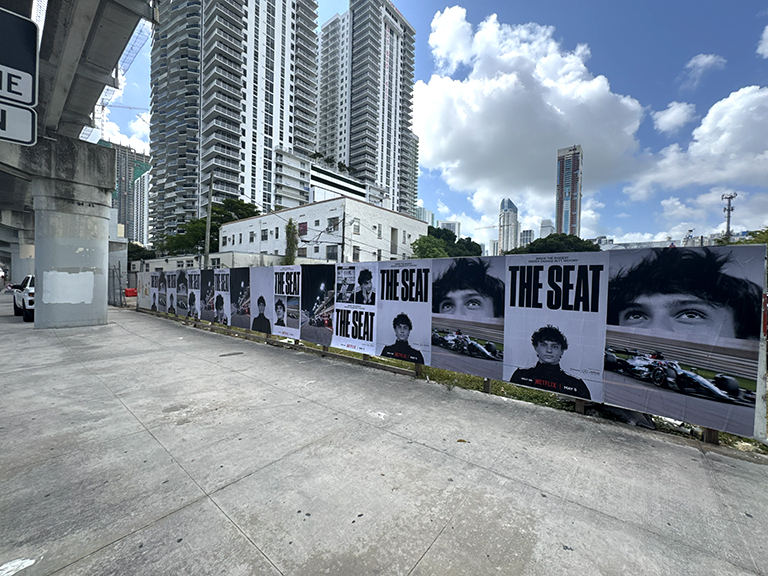
The best guerrilla marketing campaigns do not feel like advertising. They feel like something that happened to you — a surprise, a moment, an experience that makes you stop moving and pay attention. That is the goal: break the pattern of normal and make the brand the thing that broke it.
This list covers the 15 most instructive guerrilla marketing campaigns ever executed. Not just the famous ones — but the ones where the tactics were transferable, the results were measurable, and the lessons apply to brands running campaigns today. We have included our analysis of what made each one work, because understanding the mechanism is more valuable than knowing the story.
American Guerrilla Marketing operates from Industry City in Brooklyn, NY, executing street-level campaigns across 50+ U.S. markets. We deploy LED trucks, street teams, stencils, poster campaigns, and experiential activations for brands ranging from entertainment companies to CPG startups to national consumer brands. (646) 776-2770.
What Makes a Guerrilla Campaign Great
Before the list, a framework. The campaigns that appear here share at least three of the following four traits:
- Genuine surprise: The tactic appears in an unexpected context, breaking the visual or behavioral pattern the audience was running on autopilot.
- Audience match: The tactic, location, and creative are calibrated to the specific people the brand needed to reach.
- Flawless execution: The physical deployment looked professional, was photographed well, and held up under scrutiny. Poorly executed guerrilla campaigns backfire.
- Built-in amplification: The activation created something photogenic or shareable enough that the audience broadcast it organically.
1. Snapple’s Giant Popsicle, New York City
Snapple attempted to install a 17-foot frozen popsicle in Manhattan’s Union Square in June 2005. The popsicle melted faster than anticipated, flooding the area with kiwi-strawberry-flavored liquid and requiring the FDNY to hose down the street. The campaign was a logistical failure — and a PR triumph. News coverage of the melting popsicle generated national press that dwarfed anything a controlled activation would have produced.
The lesson: Ambition in public space, even when it fails, creates stories. The willingness to attempt something bold — and accept that the environment will have its own response — is more interesting than a perfectly controlled activation. Also: test in smaller conditions before going large.
2. The Blair Witch Project Viral Street Campaign
Before the 1999 film release, the Blair Witch Project team distributed photocopied missing-person flyers and hand-made documentary artifacts at film festivals and on street corners. The campaign treated fiction as reality, creating genuine confusion about whether the events in the film had occurred. Combined with an early web presence, the street-level materials amplified the mythology and drove one of the most effective pre-release campaigns in film history for a fraction of a studio marketing budget.
The lesson: The environment legitimizes the message. A flyer found on a telephone pole is read differently than an ad. Placing branded materials in authentic environments changes how audiences process them.
3. IKEA Living Room Installations in New York Subway
IKEA furnished a New York City subway car with actual IKEA furniture — sofas, lamps, rugs, framed art — as part of a brand awareness campaign. Commuters encountered what appeared to be a normal subway car that had been transformed into a living room. The cognitive dissonance of comfortable domestic furniture in a public transit car was inherently shareable.
The lesson: Contextual mismatch is one of the most reliable generators of attention. Place something that belongs in one context into a completely different one, and you have created a moment that people need to document and share.
4. Frontline’s Giant Floor Ad in a Shopping Mall
Frontline flea and tick spray covered the entire floor of a multi-story shopping mall atrium with a giant photo of a dog scratching itself. From ground level, shoppers walked across the image. From the upper floors, they appeared to be the fleas and ticks on the dog. The visual only resolved correctly from the elevated vantage point, rewarding viewers who noticed it with a complete brand message.
The lesson: Environmental integration amplifies impact. When the campaign uses the physical environment as part of the creative (the atrium’s height is essential to the joke), it becomes inseparable from the setting and impossible to ignore.
5. Cadbury’s 3.5-Minute Gorilla Drum Video
While not traditional guerrilla marketing, the Cadbury gorilla campaign in 2007 exemplifies the spirit: spend resources on something unexpected and emotionally engaging rather than on promotional messaging. The brand placed a man in a gorilla suit drumming to Phil Collins’ “In the Air Tonight” — no product, no tagline until the last second. The video generated enormous earned media before social media made that kind of organic spread routine.
The lesson: Emotional engagement beats promotional clarity at the top of the funnel. Sometimes the best brand message is the one that refuses to look like advertising.
6. HBO’s Game of Thrones Dragon Footprints
In the lead-up to a Game of Thrones season premiere, HBO placed giant dragon claw footprints on New York City beaches and in parks. The footprints appeared overnight with no explanation. Press coverage followed immediately, treating them as a mystery before the brand was revealed. The activation seeded social conversation and press pickup for the premiere at near-zero media cost.
The lesson: Mystery creates engagement. A campaign that does not immediately identify itself generates more curiosity than one that leads with the brand. The reveal is the payoff — and it rewards people who followed the story.
7. The Economist’s Lightbulb Billboard
The Economist ran a large-format outdoor billboard with an actual working lightbulb positioned inside a illustrated light bulb graphic. The physical bulb illuminated at night, making the board visually interesting in a way that two-dimensional advertising cannot achieve. Simple, product-consistent (ideas, intelligence), and remarkably memorable.
The lesson: Physical surprise beats visual complexity. One real-world element — a bulb that actually lights up — accomplishes more than elaborate creative. Look for the one physical element your campaign could add to make the format more real.
8. Volkswagen’s Piano Stairs
Volkswagen’s “Fun Theory” campaign converted a subway staircase in Stockholm into a giant working piano — each step triggering a musical note when stepped on. The nearby escalator was left unchanged. Over 60% more people chose the stairs than usual. The campaign generated enormous video views and press coverage while making the brand synonymous with the idea that better product design makes life more enjoyable.
The lesson: Behavior-changing activations generate the most compelling content. When the audience’s own choices become part of the creative, you have created something genuinely participatory — and worth filming.
9. Red Bull’s Felix Baumgartner Stratosphere Jump
Red Bull produced Felix Baumgartner’s record-breaking stratospheric skydive in 2012 as a branded event — not traditional guerrilla marketing, but a textbook example of brand-as-spectacle at the highest level. The event aligned perfectly with Red Bull’s positioning, was globally covered, and was watched live by over 8 million concurrent YouTube viewers.
The lesson: When the stunt is genuinely audacious and authentic to the brand, it earns global coverage. The requirement for authenticity is non-negotiable — Red Bull could do this because the brand had spent years establishing credibility in extreme sports. A brand without that history would have looked foolish attempting the same.
10. T-Mobile’s Liverpool Street Flash Mob
T-Mobile staged an apparently spontaneous mass dance in London’s Liverpool Street Station in 2009, with hundreds of dancers breaking into choreographed routines as commuters watched. The event was filmed and distributed as a commercial, but the in-person reaction was genuine. The campaign generated enormous earned media and positioned T-Mobile as a playful brand in a category that was becoming increasingly commoditized.
The lesson: Public space is the most authentic stage. The genuine reactions of bystanders — their surprise, delight, and participation — are not something you can manufacture in a studio. Activations that earn real responses in public environments create content that resonates.
11. Taxi Charity Stunt in New York
A well-executed small-budget guerrilla campaign for a financial services brand placed fake parking tickets on windshields in Manhattan — but instead of fines, the tickets revealed that the “fine” had been paid by the brand. The campaign created brand awareness moments tied to genuine relief and surprise, generating significant social sharing as recipients photographed and posted the unexpected experience.
The lesson: Positive surprise scales well on social media. Campaigns that give people something — an unexpected gift, a solved problem, a relief of a burden — generate sharing because sharing communicates something good about the person sharing it.
12. Folgers’ Manhole Coffee Campaign
Folgers placed manhole steam covers in New York City with coffee cup art on top, creating the illusion that the steam rising from them smelled like Folgers. The placement was perfect — commuters encounter steam from manholes as a routine but unremarkable part of city life. Transforming that moment into a coffee association was elegant, inexpensive, and highly photographed.
The lesson: Find the existing urban behavior or environment that maps onto your brand message, then make it visible. The campaign does not invent a new context — it reframes an existing one.
13. Terror in New York: Carrie Telekinesis Coffee Shop
To promote the Carrie remake, a New York coffee shop staged an elaborate telekinesis prank where a hidden actor appeared to lose control and use telekinetic power on a man who spilled her coffee. Actors, rigged furniture, and a hidden camera crew captured the reactions of real customers. The video generated over 60 million YouTube views in its first week.
The lesson: When the audience does not know they are in the campaign, their reactions are the most compelling content you can create. Authentic reaction video — people genuinely startled, laughing, or in disbelief — converts far better than produced content.
14. Mini Cooper’s Park Bench Installation
Mini Cooper placed a bench in a park that appeared to have been bent backward by the car’s acceleration — the bench legs swept back as if blown by airflow, and the bench occupant (a mannequin) was similarly wind-swept. A Mini Cooper sat in front of the bench. The installation was physically simple, photographically perfect, and communicated the brand’s performance positioning without a single word of copy.
The lesson: The best environmental activations communicate the brand idea physically and silently. If you need text to explain what the installation means, the creative is not working hard enough.
15. OldSpice’s Real-Time Social Guerrilla
Old Spice’s 2010 “The Man Your Man Could Smell Like” campaign was accompanied by a real-time response operation where the brand’s actor filmed personalized video responses to social media comments within hours of receiving them. The combination of broadcast creative and guerrilla-speed social response felt genuinely human in a corporate media landscape. It set the template for real-time brand social engagement.
The lesson: Speed is a guerrilla advantage. Responding faster than audiences expect from a brand is itself a form of disruption. The format of the response (video, personalized, seemingly spontaneous) matched the brand’s creative voice and amplified the original campaign’s reach.
What These Campaigns Have in Common
Looking across all 15, several patterns emerge that any brand can apply to a new campaign.
Location Is Not Optional
Every great guerrilla campaign was executed in exactly the right place. The piano stairs worked because the choice between stairs and escalator was central to the creative. The manhole covers worked because steam in Manhattan streets is a universal daily experience. Choosing your location is as important as choosing your creative.
The Audience Becomes the Media
In most of these campaigns, the target audience did not just receive the message — they amplified it. They photographed it, shared it, talked about it, and brought it to people who were not in the original activation zone. Design for sharing from the first brief.
Execution Determines Everything
A guerrilla campaign idea that fails in execution — because the physical installation looked cheap, the timing was wrong, or the crew was not prepared — is worse than no campaign at all. Brands that succeed in this space treat physical execution as their primary quality control challenge. That is what our team at American Guerrilla Marketing focuses on every time we deploy.
Frequently Asked Questions About Guerrilla Marketing Campaigns
What makes a guerrilla marketing campaign successful?
The best guerrilla marketing campaigns succeed by creating genuine surprise in an unexpected context, matching the tactic to the brand’s identity and audience, executing flawlessly in the physical environment, and generating media or social coverage that multiplies the initial reach.
How much do successful guerrilla marketing campaigns cost?
Budgets vary enormously. Some landmark campaigns were executed for under $10,000 with exceptional creative and distribution. Others required $100,000 or more in logistics and production. The defining trait of guerrilla marketing is not low cost — it is outsized impact relative to spend.
What types of guerrilla marketing work in 2026?
In 2026, the most effective guerrilla formats include LED mobile billboard activations, brand ambassador programs, sidewalk stencils, experiential pop-ups, and poster campaigns. The common thread is physical presence in public spaces that generates both direct impressions and social media sharing.
Can small brands execute guerrilla marketing campaigns?
Yes. Some of the most memorable guerrilla campaigns were created by small brands or independent operators. The format actually favors creativity over budget. A $5,000 guerrilla activation executed with strong creative and perfect placement can outperform a $50,000 traditional media buy.
What is the difference between guerrilla marketing and experiential marketing?
Guerrilla marketing is characterized by unconventional tactics that create surprise and earn attention through disruption. Experiential marketing focuses on creating immersive, interactive brand experiences. There is significant overlap — the best guerrilla campaigns often have an experiential component, and the best experiential activations use guerrilla tactics to amplify reach.
How does American Guerrilla Marketing approach campaign planning?
Our team starts with the target audience and geography, identifies where those people physically are on a daily basis, selects formats that create maximum impact at those locations, handles all permitting and logistics, then executes with GPS-tracked deployment and full documentation. We plan, scout, and execute — one team from concept to completion.
Frequently Asked Questions
What is best guerrilla marketing campaigns?
American Guerrilla Marketing provides best guerrilla marketing campaigns services across 50+ U.S. markets. Every campaign is planned, scouted, executed, and GPS-documented by our field teams. We work with regional brands and Fortune 500 companies on campaigns that require real street-level execution and documented proof of performance.
How does AGM approach marketing campaigns?
Our process starts with a market consultation to understand your goals, target audience, and budget. We then scout locations, handle any required permissions or permits, coordinate production and installation with our local crews, and provide a full GPS-tagged photo report after the campaign runs.
What markets does American Guerrilla Marketing cover for marketing campaigns?
We operate in 50+ U.S. markets including New York, Los Angeles, Chicago, Miami, Houston, Atlanta, Seattle, Denver, Boston, and dozens of secondary markets. Contact us to confirm availability and pricing for your specific market.
How much does a marketing campaigns campaign cost?
Campaign pricing depends on market, format, quantity, and duration. We work with budgets ranging from targeted single-market runs to national rollouts across multiple cities. Use our RFP Builder or contact us directly for a custom quote based on your specific campaign requirements.
How do I get started with marketing campaigns through AGM?
The fastest way to get started is to submit your campaign details through our RFP Builder at americanguerrillamarketing.com, or contact us directly at [email protected] or (646) 776-2770. Our team typically responds within one business day with availability and initial pricing.