The summer festival circuit is one of the most concentrated brand activation opportunities in the calendar year. Governors Ball, Lollapalooza, Coachella, Bonnaroo, Outside Lands, and dozens of regional events collectively bring tens of millions of highly engaged consumers into defined geographic zones across a 90-day window. The audience is present, energized, and creating social content at a higher rate than almost any other context. The question for brands is not whether festival marketing is worth doing. The question is how to do it well.
Doing it well requires more than showing up. The brands that win at festival marketing have a specific audience in mind, a clear format strategy that matches the event geography, a realistic production and logistics plan, and a documentation system that lets them measure what the campaign actually produced. Without those elements, festival marketing budgets get absorbed by the chaos of event week without generating the returns that justify the investment.
Our team at American Guerrilla Marketing has built festival campaigns from coast to coast across the full summer circuit. We operate across 50-plus U.S. markets and have the crew infrastructure, surface relationships, and operational playbooks to execute consistently whether the event is in New York, Chicago, Los Angeles, or a secondary market that does not have the same density of local vendors. This guide covers how we think about festival marketing and what actually produces results.
Why Festival Audiences Are Uniquely Valuable
Festival audiences are not just large. They are behaviorally different from audiences in everyday environments in ways that make brand marketing more effective during event periods.
First, dwell time is dramatically extended. Festival attendees travel to the event, often wait in long queues, spend multiple hours at the venue, and decompress in the surrounding hospitality district afterward. That extended presence creates far more exposure windows than a typical daily commute or routine shopping trip.
Second, social documentation is elevated. Festival attendees photograph and share their experiences at a higher rate than almost any other consumer context. A brand moment that is visually distinctive and geographically proximate to the event has a meaningful chance of appearing in organic social content created by attendees who have no financial relationship with the brand.
Third, the audience is receptive. The psychological state of festival attendance is one of openness, energy, and discovery. Consumers in that state are more likely to stop, engage, try something new, and remember what they experienced than consumers in a routine daily context.
The Audience Outside the Gate
A significant portion of the festival marketing opportunity exists outside the official event perimeter. Transit corridors, hotel clusters, bars and restaurants in the surrounding district, and neighborhoods where attendees gather before and after the event all concentrate the same audience in environments where they are more accessible, less visually saturated with brand messaging, and often more relaxed than inside the crowded venue itself.
We consistently find that perimeter and adjacent-neighborhood deployments produce cost-effective results for brands that do not have the budget for official event sponsorships. The audience is the same. The competition for attention is lower. The cost is substantially less than inside-the-gate activations.
Key Festival Markets and Event Calendar
Understanding the festival calendar as an integrated marketing opportunity rather than a series of isolated events allows brands to build a consistent summer presence that accumulates brand recognition across multiple audience encounters.
Spring Circuit: Coachella and Early Season Events
The Coachella Valley Music and Arts Festival anchors the spring festival calendar in the Indio, California desert with audiences that skew toward fashion-forward, culturally engaged young adults. Palm Springs and the surrounding area absorb overflow audiences who follow the festival energy without attending. Our brand ambassador deployments in the Palm Springs corridor during Coachella weekends reach this audience at the hotel clusters, restaurants, and retail areas where they concentrate during and after festival days.
Early Summer: Governors Ball and Urban Festivals
Governors Ball in New York concentrates a culturally engaged, urban audience on Randall’s Island with natural transit corridors through the East Side. We operate poster campaigns in the surrounding neighborhoods and deploy street teams at the primary transit entry points in the weeks leading up to and during the festival.
Mid-Summer: Lollapalooza and Regional Events
Lollapalooza in Chicago’s Grant Park is one of the highest-density activation windows in the domestic festival calendar. The surrounding neighborhood deployments, transit node activations, and hospitality district campaigns that we run in Chicago during Lollapalooza week are among our highest-performing festival programs by impression volume and documented engagement.
Late Summer: Outside Lands, Bonnaroo, and Secondary Markets
Outside Lands in San Francisco’s Golden Gate Park and Bonnaroo in Manchester, Tennessee both have distinct audience profiles and geographic activation opportunities. Secondary market festivals often present stronger activation ROI than major coastal events because the local competition for brand presence is lower and the audiences are tightly concentrated in manageable geographic zones.
Festival Marketing Formats That Work
Format selection for festival marketing should start with the specific event geography and audience movement patterns rather than a standard package. Here is how we evaluate each major format for festival contexts.
Street Teams at Transit Nodes and Arrival Corridors
Transit entry points to festival events are among the highest-value activation locations in any festival campaign. Attendees queuing for shuttles, waiting at subway stations, or arriving via rideshare at designated drop zones are a captive audience in a compressed geographic zone. A well-briefed street team at these locations can generate thousands of direct brand interactions per day.
We staff festival street teams with ambassadors who have the energy and interpersonal confidence to operate in high-density, high-noise environments and who can represent the brand professionally across long deployment days. Training before the first day of the event is non-negotiable.
Poster Campaigns in Event-Adjacent Neighborhoods
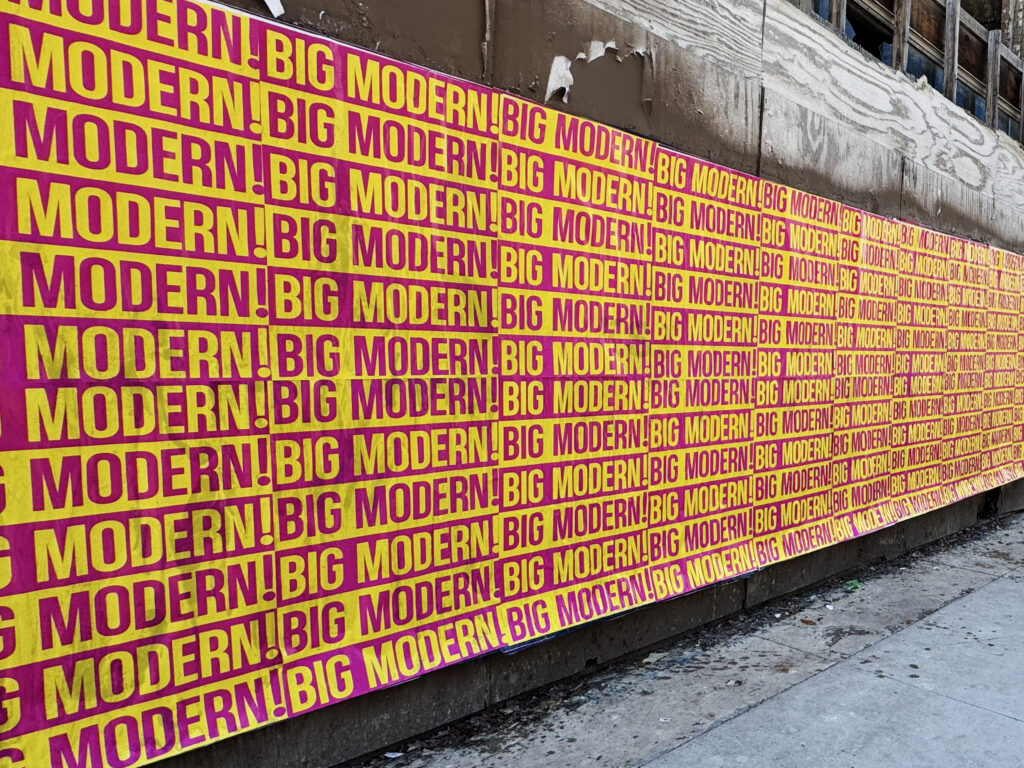
A poster campaign deployed in the neighborhoods surrounding a festival creates brand presence that extends beyond the event window. Placements installed before the festival creates brand awareness for arriving visitors. Placements that remain up after the festival continue to reach local audiences who will encounter the brand in their neighborhood long after the event concludes.
We select surfaces based on sightline quality, pedestrian traffic volume, and proximity to the routes that festival attendees actually walk rather than the routes that look most direct on a map. Those two things are often different.
LED Billboard Trucks for Mobile Coverage
LED billboard trucks offer the ability to move the brand message through the event’s entire geographic footprint rather than waiting for the audience to pass a fixed location. We route trucks through transit hubs, hospitality districts, hotel corridors, and the streets surrounding the event perimeter based on the specific audience movement patterns we map for each event.
During festival evenings, when audiences spread into the surrounding nightlife district, LED truck routing can maintain brand presence across multiple restaurant and bar clusters simultaneously. That geographic flexibility is not available through any static format.
Sidewalk Stencils on Approach Routes
Sidewalk stencils on the primary pedestrian routes to festival venues create directional brand moments that reach the audience during the journey to the event rather than competing for attention inside the saturated event environment. A stencil campaign on a 10-block approach corridor can accumulate tens of thousands of impressions across a multi-day festival without requiring crew presence during peak event hours.
Planning a Multi-Event Summer Campaign
The highest-ROI festival marketing strategies treat the summer circuit as an integrated campaign rather than a series of individual activations. A brand that appears at Governors Ball in New York, Lollapalooza in Chicago, and Outside Lands in San Francisco across a single summer creates a national presence in three major markets among overlapping audience segments that follow the festival circuit. That cumulative presence builds brand familiarity faster than any single activation can.
Centralizing Production for Multi-City Campaigns
We manage multi-city festival campaigns from our Industry City, Brooklyn headquarters, which allows us to centralize creative production, quality control, and documentation management while deploying crews in each market independently. That structure maintains creative consistency and operational standards across events that might be happening in three different cities within the same two-week window.
Tailoring Execution to Each Market
Within a consistent brand identity and creative framework, each market requires execution adaptations based on the specific event geography, local permit requirements, and neighborhood character. A format that is straightforward to execute in a smaller secondary market may require additional permitting and logistics coordination in a major urban event like Lollapalooza. We build those adaptations into the campaign plan from the start rather than discovering them at installation time.
Measuring Festival Marketing Campaign Performance
Every festival campaign we run includes GPS-tagged photo documentation, crew activity records, route logs, and a structured post-campaign recap. That documentation package serves two purposes: proving that the work was executed as planned, and creating the data foundation for improving the next campaign.
We supplement standard proof-of-execution documentation with campaign-specific measurement mechanisms where possible: branded QR codes that track digital conversion from street-level interactions, geo-targeted social listening to capture organic brand mentions in the event area, and client-supplied downstream data like website traffic spikes and offer redemption rates during and immediately after the event window.
What Recaps Need to Cover
A strong festival campaign recap answers the questions a marketing director will need to present to leadership: what formats ran, in what markets, on what dates, with what crew hours, with what documented reach, and what downstream signals are attributable to the campaign. We format recaps to that standard so our clients can use them internally without additional translation work.
What to Look for in a Festival Marketing Agency
The agency questions that matter for festival marketing are operational. Does the agency have established crew relationships in the specific festival markets you are targeting? Can they document execution to the standard your internal stakeholders require? Do they have the vendor relationships and surface access to execute the formats they are recommending? And do they have a compliance track record in the event cities where they are proposing to work?
Our team provides clear answers to all of those questions. We have been running festival campaigns across the domestic circuit for years, and we have built the infrastructure to execute well in markets ranging from New York City to secondary-market events that require more logistical problem-solving and less reliance on established vendor infrastructure. Contact us at (646) 776-2770 to discuss your summer festival plan.
Frequently Asked Questions
What is festival marketing and why does it matter for brands?
Festival marketing places brands in physical proximity to large, engaged audiences during high-energy events where discovery, sharing, and social documentation are at their peak. The audience is present, receptive, and actively creating content, which makes street-level brand moments more likely to generate both direct engagement and organic amplification than standard out-of-home placements in everyday environments.
What formats work best for festival marketing campaigns?
Street teams for direct engagement and sampling, poster campaigns for perimeter brand presence, LED billboard trucks for mobile visibility across the surrounding neighborhood, and sidewalk stencils for route-based impression building are all effective festival formats. The right mix depends on the brand’s objectives, the event geography, and the budget available for multi-format execution.
Is it better to activate inside or outside the event perimeter?
Both have value, but outside-the-perimeter work is often more cost-effective and reaches a larger audience. Event transit corridors, hospitality districts, and post-event zones concentrate audiences who are highly receptive and have more available attention than attendees inside a crowded venue. We typically recommend perimeter and adjacent-neighborhood strategies for brands without official event sponsorships.
How far in advance should brands plan festival campaigns?
Major festival campaigns should begin planning 8-12 weeks before the event. Permitting, production, crew scheduling, and surface scouting all require lead time, and the best event-adjacent placements are often claimed early in high-demand markets. Brands that wait until 4 weeks out typically make compromises on format quality or placement selection.
Can AGM run festival campaigns across multiple cities in the same season?
Yes. We operate across 50+ U.S. markets and regularly run coordinated multi-city festival campaigns for brands that want consistent presence across the full summer circuit. We manage creative production and campaign coordination centrally from our Industry City, Brooklyn headquarters while deploying crews locally in each market.
What documentation does AGM provide for festival campaigns?
Every campaign includes GPS-tagged photo documentation, route logs, crew activity records, and a post-campaign recap formatted for internal stakeholder review. We treat proof of execution as a core deliverable. Our clients should be able to present the campaign results to leadership with confidence in the documentation quality.