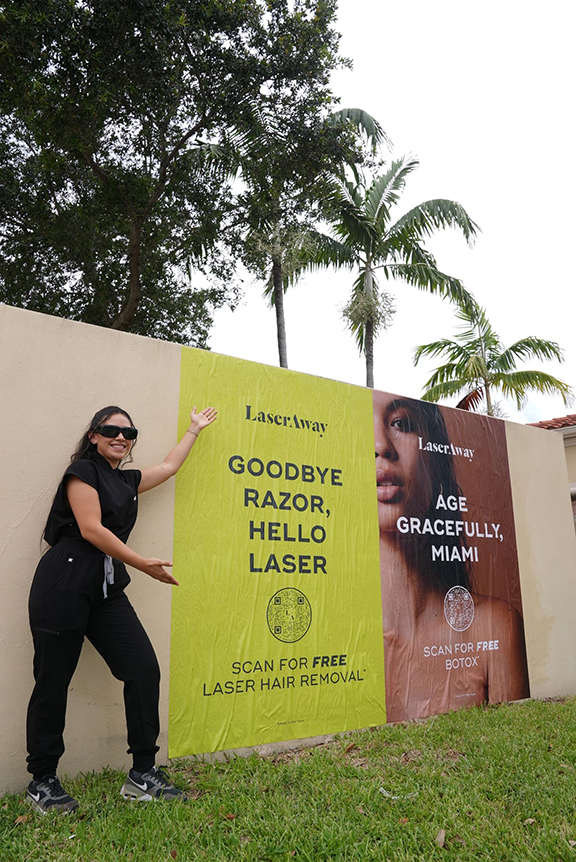
Paper selection for wheat paste poster campaigns is one of those decisions that looks minor until it goes wrong. The wrong paper stock – coated, too thin, too heavy – fails at the application stage. It tears, bubbles, peels at the edges within days, or slides off the paste instead of bonding to the surface. The right paper absorbs the paste, conforms to the surface texture, and creates a bond that survives outdoor conditions for the duration of your campaign.
At American Guerrilla Marketing, we execute wheatpasting campaigns across 50+ US markets. Our team in Industry City, Brooklyn has pasted thousands of posters across New York, Los Angeles, Chicago, Austin, Miami, and dozens of other cities. Paper selection is part of the pre-campaign production brief on every run, not an afterthought. We have tested a range of stock types and weights over the years, and this guide reflects what our team actually specifies – not a generic print vendor recommendation or a theoretical framework.
The answer is clear: 60-80 lb uncoated text-weight paper, printed with pigment-based inks in CMYK, at the campaign poster size (typically 24 x 36 inches). Everything else in this guide is context that explains why those specs work and how to apply them correctly.
Why Paper Stock Matters for Wheatpasting
Wheatpasting is a wet adhesive application process. The poster is applied to a wall or surface using a paste – traditionally flour and water, though modern campaigns often use commercial wallpaper paste or a similar adhesive – that saturates the back of the poster and adheres it to the surface. This wet process subjects the paper to forces that dry-mount or framed display never encounters.
What happens to the wrong paper
Coated paper (gloss, matte, satin) has a clay or polymer surface treatment that resists liquid absorption. When a coated poster is pasted, the adhesive stays on the surface rather than penetrating the paper. The result is adhesive that is working against a water-resistant barrier rather than bonding through it. Within a day or two, the poster edges lift, bubbles form where the adhesive pooled rather than penetrated, and the poster delaminate prematurely.
Paper that is too thin (under 50 lb) tears during application when the installer tries to smooth out bubbles. Wet paper at 20-30 lb copy weight has almost no tear resistance. A corner lift turns into a complete tear during the smoothing process, ruining the application.
Paper that is too heavy (110 lb and above) resists conforming to surface textures. Heavy stock does not flex sufficiently to follow the irregular surfaces of a brick wall or slightly rough plywood. The result is visible gaps at texture points where the paper bridges the surface instead of bonding to it.
The Right Paper: 60-80 lb Uncoated Text
The optimal paper for wheatpasting is 60-80 lb uncoated text-weight stock. This range delivers the right combination of absorption, flexibility, weight, and durability for the wet application process.
60 lb uncoated text
At 60 lb, the paper is lighter and more flexible than 80 lb. It absorbs paste readily and conforms well to rough or irregular surfaces. The lighter weight means it becomes pliable quickly once the paste is applied, making it easier to smooth against the wall without air pockets. The trade-off is that 60 lb is slightly more fragile during handling before application – in a stack of posters being transported and handled by an installation crew, 60 lb is more likely to develop creases that affect the final application than 80 lb.
80 lb uncoated text
The 80 lb uncoated text is our team’s standard specification for wheatpasting campaigns. It is heavier than 60 lb without losing the paste-absorption properties that make uncoated stock work. At 80 lb, the poster handles well during distribution and application, holds its shape during the paste application without premature tearing, and conforms to most urban wall surfaces without the flexibility limitations of heavier stocks. The 80 lb weight also produces better color density than 60 lb when printed with pigment inks – the slightly heavier fiber structure holds ink more consistently across the print surface.
Why not heavier stocks?
100 lb text and heavier stocks reduce paste absorption and increase stiffness. At 100 lb text, paste absorption is still adequate but the poster is noticeably less flexible than 80 lb. At 100 lb cover (a fundamentally different weight category than text), the poster is too stiff for most wheat paste applications. For flat walls with smooth surfaces, 100 lb text can work. For any surface with texture, use 80 lb or lighter.
Coated vs. Uncoated: Why Uncoated Wins Every Time
This is the most common paper selection error in amateur or first-time wheatpaste campaigns: specifying a coated stock because the print preview looks better. Coated papers (matte, gloss, satin, aqueous coated) produce more vibrant and sharp-looking prints on screen and in the hand. The clay or polymer surface layer catches ink differently than uncoated paper, often producing richer apparent color. But that same surface treatment is what makes coated paper fail in a wheat paste application.
How coating affects paste adhesion
The coating layer on a matte or gloss paper is hydrophobic relative to uncoated paper – it resists water-based liquids rather than absorbing them. When paste is applied to the back of a coated poster, the paste cannot penetrate through the coating into the paper fiber. The result is a surface adhesion bond rather than a through-paper bond. Surface adhesion bonds are weaker, more susceptible to edge lifting, and more vulnerable to moisture intrusion from weather or condensation.
An uncoated paper allows paste to penetrate through the paper fiber. The paper-paste bond is a fiber-level connection rather than a surface contact. This is why a well-pasted 80 lb uncoated text poster can survive weeks of outdoor exposure with minimal edge lifting, while a coated stock of the same weight may start peeling within days.
Ink Type Specifications
The ink type used for printing matters for outdoor durability. Most large-format print vendors offer either pigment-based or dye-based inks on their wide-format inkjet presses. Pigment inks are the right choice for wheat paste outdoor applications.
Pigment inks for outdoor applications
Pigment inks encapsulate the colorant in a polymer resin that bonds to the paper surface. This encapsulation provides UV resistance (colors fade more slowly in sunlight), water resistance (colors resist rain and condensation), and general durability that dye-based inks cannot match. For posters that will be outdoors for 2-4 weeks in variable weather, pigment inks maintain print quality significantly better than dye inks.
Dye-based inks
Dye-based inks are less expensive and typically produce vivid colors, but they are water-soluble. Rain or even heavy dew can cause dye ink to run or bleed on an outdoor poster. For short outdoor durations (under 1 week) in dry weather, dye inks may be acceptable. For any campaign expecting weather exposure, specify pigment inks. Confirm with your print vendor which ink type their wide-format press uses before placing a large outdoor order.
Size Specifications for Wheatpasting Campaigns
The most common size for wheatpasting campaigns in the US is 24 x 36 inches. This is the format that AGM uses as the primary specification for outdoor street campaigns and the size that most commercial large-format print vendors treat as their standard outdoor poster format.
24 x 36: The primary wheatpasting format
At 24 x 36 inches, a wheatpasted poster is visible and readable from 20-25 feet, which is the relevant viewing distance for most street-level placements. The format rolls efficiently for transport – a standard 3-inch poster tube holds 20-30 rolled 24 x 36 posters comfortably. It pastes in approximately 45-90 seconds per poster by an experienced installer working at production pace. And it is the format most print vendors quote and price as their standard, giving you competitive pricing and reliable turnaround.
18 x 24: Secondary campaign size
The 18 x 24 inch format is used for secondary placements, campaigns with tighter budgets, and locations where the 24 x 36 would be oversized for the available surface. It applies faster than 24 x 36 and costs approximately 30-40 percent less per unit, making it the right choice when coverage quantity is the priority over individual poster impact. Our guerrilla marketing campaigns often use 18 x 24 for secondary locations and 24 x 36 for primary high-traffic placements.
11 x 17: High-volume saturation
For campaigns prioritizing maximum location coverage at minimum cost, 11 x 17 on 60 lb uncoated text applies quickly at high volume. The format pastes in under 30 seconds per poster for an experienced crew. Use this format for secondary coverage areas, bulletin boards, and any location where the viewing distance is under 6 feet.
Print File Specifications for Wheat Paste Posters
Preparing a print-ready file for a wheat paste campaign requires the same attention to technical specs as any professional print project. Here is the complete spec our team provides to print vendors:
Document setup
- Document size: Final poster dimensions (e.g., 24 x 36 inches)
- Bleed: 0.125 inch on all sides for full-bleed designs
- Safe zone: All critical content at least 0.25 inch inside the trim edge
- Color mode: CMYK (not RGB – the printer will convert, but CMYK ensures color accuracy)
- Resolution: 300 DPI minimum for text and fine detail elements. Raster background images at 300 DPI at 100% of placed size.
File format
- Preferred: PDF/X-1a or PDF/X-4 with all fonts embedded and images at full resolution
- Acceptable: High-quality PDF (not PDF/A or screen-optimized PDF)
- Avoid: JPEG (lossy compression artifacts at poster scale), PNG (may cause color profile issues with some RIPs), Word or PowerPoint (layout shifts in conversion)
Specify to vendor
When placing the order, specify: “80 lb uncoated text paper, pigment ink preferred, no aqueous coating.” This prevents the vendor from substituting a coated stock or adding a finish that would compromise paste adhesion. Most commercial print vendors are familiar with the specification for wheatpasting applications – the spec has a clear practical reason that they will recognize.
The Paste Itself: How Paper and Adhesive Work Together
The paper and the paste must be compatible. The most common paste formulations for wheatpaste campaigns:
Commercial wallpaper paste
Pre-mixed commercial wallpaper paste (Metylan, Roman GH-55, or similar) is the most consistent option. It is formulated to bond paper to painted and plastered surfaces, holds well in outdoor conditions, and is available in bulk from hardware stores. Mix to the standard consistency specified on the product – too thick and the paste does not penetrate the paper; too thin and adhesion is poor. On 80 lb uncoated text, standard-consistency commercial paste produces a strong bond with minimal bubble formation.
Flour paste
Traditional wheat paste is made from flour and water cooked to a thick, smooth consistency. It is effective but less consistent than commercial paste because flour quality, water temperature during cooking, and cooling time all affect the final paste viscosity. For large campaign runs, commercial paste provides more reliable and repeatable results. For smaller runs or when commercial paste is not available, flour paste mixed to a standard consistency works well on uncoated text paper.
Methylcellulose paste
Methylcellulose (MC) paste is a synthetic alternative that is commonly used for archival applications and is available from art supply vendors. It is cleaner-handling than flour paste, has a long shelf life, and bonds well to uncoated paper. Some campaign crews prefer MC paste for its non-food-waste disposal properties and consistent viscosity.
Sourcing Wheat Paste Poster Paper
The 60-80 lb uncoated text paper for wheatpasting campaigns is a commercial printing specification, not a retail consumer product. Here is where to source it:
Through your print vendor
The most straightforward approach: specify the paper stock when placing your print order. Most commercial large-format print vendors carry 80 lb uncoated text as a standard stock option. Specify it explicitly rather than leaving the paper selection to the vendor’s default, which may be a coated matte stock that looks better in the portfolio sample but fails in the field.
Paper suppliers for print vendors
If you work with a print vendor who does not carry 80 lb uncoated text in their standard stock, they can order it from paper distributors. Common suppliers: Sappi North America, Mohawk Fine Papers, Glatfelter, and Clearwater Paper all carry uncoated text weight papers in the 60-80 lb range in large-format rolls and sheets. A print vendor that specializes in poster printing will have these in standard stock.
For DIY small-scale applications, 60-80 lb text paper is available at paper specialty stores and through online paper supply vendors like Paper Mart, Paper Direct, and similar suppliers.
Weather Considerations for Outdoor Paper Performance
Paper is affected by weather conditions both before and after application. Understanding how weather affects your paper selection improves campaign outcome.
Humidity and moisture
High humidity environments (Miami, Houston, New York summers) cause uncoated paper to absorb ambient moisture, which can make posters feel limp and slightly wavy before application. Store uncoated text paper in a dry environment before deployment. Once pasted and dried, the poster bonds to the surface and humidity effects are minimized.
Rain and outdoor exposure
A well-pasted 80 lb uncoated text poster with pigment inks will survive moderate rain without delaminating. The paste bond is water-resistant once dried. The inks remain stable because pigment inks do not bleed when wet. The paper surface may mottle slightly when wet but returns to normal appearance when dry. Posters applied immediately before heavy rain may not cure sufficiently before weather hits – allow at least 2-4 hours of dry conditions after application before the first rain if possible.
Cold temperatures
Paste viscosity changes in cold weather – commercial paste and flour paste both become thicker at temperatures below 40F. Thin the paste slightly with warm water for cold-weather applications. Uncoated paper becomes slightly stiffer in cold and dry conditions but remains functional for application. Apply on the coldest nights possible for campaigns in heated urban environments – cold surfaces and cold paste produce a slower but ultimately strong bond.
What paper is used for wheat paste posters?
The best paper for wheat paste posters is 60-80 lb uncoated text-weight paper. Uncoated paper absorbs the paste adhesive and water, allowing it to bond firmly to the surface and conform to irregular wall textures. Coated papers resist paste absorption and are more likely to delaminate or bubble after application.
What weight paper should I use for wheat paste posters?
60-80 lb uncoated text paper is the recommended weight range for wheat paste poster campaigns. 60 lb is lighter and more flexible for conforming to rough surfaces. 80 lb is slightly more durable and handles better during high-volume application runs. Avoid anything heavier than 100 lb text.
Should wheat paste poster paper be coated or uncoated?
Uncoated paper is strongly preferred for wheat paste applications. Coated paper (glossy, matte, or satin finish) has a clay coating that resists liquid absorption, causing paste to pool on the surface rather than soak in. Uncoated paper absorbs paste readily, creating a stronger bond that is more durable outdoors.
What size paper is used for wheatpasting campaigns?
The standard size for wheatpasting campaigns in the US is 24 x 36 inches. The 18 x 24 inch size is also commonly used for secondary placements and campaigns where cost per unit is a priority. Some large-format campaigns use 36 x 48 or larger at premium outdoor locations.
What ink type is best for wheat paste poster printing?
Pigment-based inks are better for outdoor wheat paste applications than dye-based inks. Pigment inks are more resistant to water and UV exposure, which matters for posters that will be outdoors for days or weeks. Most commercial large-format inkjet printers use pigment inks; confirm with your print vendor.
Can I use standard office paper for wheat paste posters?
Standard office paper (20 lb copy/multipurpose paper) is too thin and will tear during application. It absorbs water too quickly, causing it to disintegrate before it bonds to the wall. Use at least 60 lb text paper for any wheat paste application.
How do I prepare print files for wheat paste poster paper?
For wheat paste poster printing: set up the document at the final poster size (typically 24 x 36 inches), add 0.125 inch bleed on all sides, use CMYK color mode, set resolution to 300 DPI minimum, and save as PDF for production. Specify uncoated 60-80 lb text paper when placing the print order.
Campaign Architect — American Guerrilla Marketing
Frequently Asked Questions
What paper is used for wheat paste posters?
The best paper for wheat paste posters is 60-80 lb uncoated text-weight paper. Uncoated paper absorbs the paste adhesive and water, which allows it to bond firmly to the surface and conform to irregular wall textures. Coated papers (matte, gloss, satin) resist paste absorption and are more likely to delaminate or bubble after application.
What weight paper should I use for wheat paste posters?
60-80 lb uncoated text paper is the recommended weight range for wheat paste poster campaigns. 60 lb is lighter and more flexible for conforming to rough surfaces. 80 lb is slightly more durable and handles better during high-volume application runs. Avoid anything heavier than 100 lb text – heavier stocks are harder to apply cleanly.
Should wheat paste poster paper be coated or uncoated?
Uncoated paper is strongly preferred for wheat paste applications. Coated paper (glossy, matte, or satin finish) has a clay coating that resists liquid absorption, causing paste to pool on the surface rather than soak in. Uncoated paper absorbs paste readily, creating a stronger bond that is more durable outdoors.
What size paper is used for wheatpasting campaigns?
The standard size for wheatpasting campaigns in the US is 24 x 36 inches. The 18 x 24 inch size is also commonly used for secondary placements and campaigns where cost per unit is a priority. Some large-format campaigns use 36 x 48 or larger at premium outdoor locations.
What ink type is best for wheat paste poster printing?
Pigment-based inks are better for outdoor wheat paste applications than dye-based inks. Pigment inks are more resistant to water and UV exposure, which matters for posters that will be outdoors for days or weeks. Most commercial large-format inkjet printers use pigment inks; confirm with your print vendor.
Can I use standard office paper for wheat paste posters?
Standard office paper (20 lb copy/multipurpose paper) is too thin and will tear during application. It absorbs water too quickly, causing it to disintegrate before it bonds to the wall. Use at least 60 lb text paper for any wheat paste application. The extra weight provides the tensile strength needed to survive the wet application process.
How do I prepare print files for wheat paste poster paper?
For wheat paste poster printing: set up the document at the final poster size (typically 24 x 36 inches), add 0.125 inch bleed on all sides, use CMYK color mode, set resolution to 300 DPI minimum, and save as PDF for production. Specify uncoated 60-80 lb text paper when placing the print order. Avoid saving as JPEG at poster scale – use PDF or TIFF to preserve image quality.