Washington DC is one of the most active convention markets in the country. The Walter E. Washington Convention Center, together with smaller convention and conference venues across the District, hosts hundreds of significant professional, association, government, and industry events every year. The DC convention audience is distinct from any other major convention market: it includes federal agency professionals, policy advocates, trade association executives, non-profit leaders, and commercial industry buyers, often all attending the same event.
The Washington DC Convention Zone
The Walter E. Washington Convention Center sits in the Mount Vernon Triangle neighborhood of NW Washington DC, a dense urban district with a mix of convention hotels, office buildings, and residential properties within walking distance in every direction from the center. The primary convention hotel cluster includes properties in the Mount Vernon Triangle, Penn Quarter, and downtown DC areas, all within a few blocks of the convention center.
The DC convention zone differs from major convention markets like Las Vegas or Orlando in important ways. The pedestrian environment is denser and more mixed with non-convention commercial traffic. Public transit, including the Metro system, delivers a significant portion of convention attendees to the convention center rather than the hotel-to-venue walking pattern that dominates in hotel-centric markets. And the urban context of Washington DC creates different advertising surface opportunities and site-approval planning requirements than the more open commercial streetscapes of Las Vegas or the campus-like environments of convention centers in suburban markets.
We map the specific pedestrian flows and transit patterns for each major convention at the Walter E. Washington Convention Center before every DC campaign, identifying where the hotel-to-venue foot traffic is most concentrated and where the Metro connection routes create choke points for transit advertising.
Outdoor Advertising at DC Conventions
Wheatpasted Poster Campaigns in the Convention District
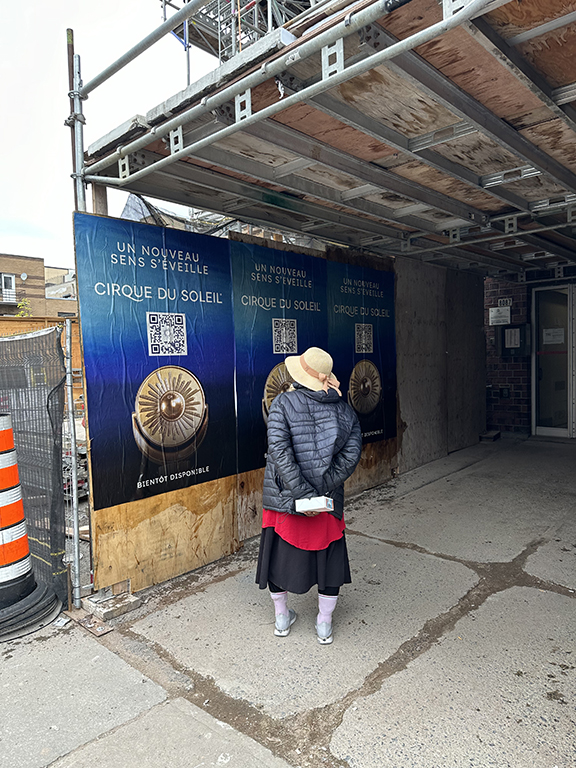
A wheatpasting campaign on approved surfaces in the Mount Vernon Triangle and Penn Quarter neighborhoods creates persistent brand presence in the pedestrian zone that convention attendees travel through between hotels, the Metro, and the convention center. We identify approved placement surfaces in the DC convention district in advance, working with the District site-approval planning requirements for outdoor advertising on private and public surfaces.
DC convention poster creative needs to operate in an urban environment with a sophisticated professional audience. Generic advertising creative does not earn attention in the DC convention context. Strong visual design, a specific and credible claim relevant to the convention audience’s professional world, and a clear call to action are the requirements for effective DC convention poster campaigns.
Sidewalk Stencils at Convention Center Entrances
Sidewalk stencils at the Walter E. Washington Convention Center entrance crosswalks create ground-level brand exposures at the transition point between the outdoor DC streetscape and the official event environment. Applied with water-soluble compounds on approved surfaces, stencils are documented with field photos and washed away cleanly after the event.
Washington DC’s sidewalk stencil site-approval planning requirements are managed by the District Department of Consumer and site-rule Affairs and may involve additional coordination with the convention center management. Our team handles all DC site-approval planning for sidewalk stencil installations and builds the DC-specific site-approval planning timeline into every campaign plan.
LED Billboard Trucks on Convention Approach Routes
An LED billboard truck on the primary pedestrian and vehicle approach routes to the Walter E. Washington Convention Center during morning arrival windows delivers high-impact visual exposures to the DC convention audience before they reach the official event. We plan DC truck routes based on the hotel cluster locations, the Metro station exit patterns, and the primary pedestrian approach directions for each specific convention.
Washington DC’s urban traffic environment requires specific routing strategy for LED trucks that differs from the more open commercial street environments in Las Vegas or Orlando. Our team knows the DC convention zone vehicle routing and plans truck deployments accordingly.
Brand Ambassador Teams at DC Convention Hotels
The primary DC convention hotels near the Walter E. Washington Convention Center, including the Marriott Marquis Washington DC (the convention center’s headquarters hotel), the Grand Hyatt Washington, and other properties in the immediate convention zone, are the highest-quality ambassador deployment environments for DC conventions.
Our brand ambassador teams for DC conventions are briefed on the specific audience profile of each show, which in Washington DC often includes the government and policy audience segments alongside commercial industry buyers. The briefing adapts the qualifying criteria and conversation approach to the DC professional context.
DC Convention Marketing for Government and Policy Audiences
Many Washington DC conventions draw significant government agency and policy professional attendance alongside commercial industry participants. Convention marketing that reaches this audience requires specific considerations that differ from purely commercial convention campaigns.
Government and policy professionals respond to specificity, credibility, and direct relevance to their agency mission or policy area. Generic commercial marketing messages that work for a technology industry audience do not translate to a government procurement or policy audience. We develop DC convention creative and briefing materials that speak directly to the specific policy or government context of the convention where relevant.
This audience-specific approach extends to the qualifying conversation that ambassador teams use to identify high-value prospects in the DC convention zone. A government procurement official at a healthcare technology convention has different qualifying criteria and a different conversation approach than a commercial health system IT buyer at the same event. Our DC convention ambassador briefings account for this complexity.
The Washington DC Metro as a Convention Marketing Environment
The Washington Metro system plays a significant role in convention attendee transit at DC conventions that it does not at conventions in Las Vegas, Orlando, or other car-dependent markets. A meaningful portion of DC convention attendees travel to and from the Walter E. Washington Convention Center via the Metro system, exiting at the Mt. Vernon Square/7th St-Convention Center station directly below the convention center building.
This Metro connection creates transit advertising opportunities at the station level that are specific to the DC convention market. The Mt. Vernon Square station exit areas and the pedestrian walkways from the station to the convention center entrances are among the highest-concentration transit zones in the DC convention geography. Ambassadors deployed at these positions during morning arrival and evening departure reach the full Metro-using attendee population in a controlled, concentrated environment.
The broader Metro network also creates opportunities at major downtown stations where convention attendees transfer. Metro Center, Gallery Place-Chinatown, and the L’Enfant Plaza station hub all see significant convention attendee traffic during major DC convention weeks, offering brand touchpoints at transit nodes throughout the downtown DC area that conventions in other markets do not provide.
DC Convention Marketing for Trade Associations and Professional Societies
Washington DC is home to hundreds of national trade associations and professional societies, many of which hold their annual conventions in DC or at venues closely connected to their DC office presence. These association conventions draw different audience profiles than commercial industry trade shows: the attendees are often members of the association itself, representing a narrower and more specific professional community than the broad industry buyer audience at a commercial trade show.
Convention marketing for association events in DC requires understanding this member audience. The messages that work for a commercial technology buyer at a software industry trade show do not necessarily work for a professional society member at an annual meeting. The call to action is often different: rather than a product demo at a booth, it might be a policy briefing, a member networking event, or a professional development session.
We adapt the outside-the-hall convention marketing approach to the specific character of each DC convention audience, whether that is a commercial technology show, a government agency professional conference, a trade association annual meeting, or a professional society gathering. The tactical toolkit is the same; the briefings, creative, and qualifying criteria adapt to each.
Evening Convention Marketing in Washington DC
Evening convention marketing in Washington DC operates in a different context than evening marketing in Las Vegas or other entertainment-centric convention markets. DC evenings during convention weeks are concentrated in the Penn Quarter and Mount Vernon Triangle restaurant and entertainment districts adjacent to the convention center, as well as the downtown DC hotel bar and lounge circuit.
Brand ambassador presence at evening gathering points in the DC convention zone, including the Convention Center’s neighboring Penn Quarter restaurants, the hotels in the Mount Vernon Triangle, and the outdoor spaces of the broader downtown DC corridor, reaches the full convention attendee population in the most relaxed and social state of the show day.
Projection advertising on the exterior of the Walter E. Washington Convention Center or on large surfaces in the Mount Vernon Triangle during evening hours creates a high-impact brand moment for the full population of convention attendees moving through the neighborhood between the official event and their evening destinations. The urban density of the DC convention zone makes evening projection a particularly high-impact format compared to the more spread-out evening geographies of suburban convention markets.
Washington DC Convention Marketing Case Studies
A cybersecurity company exhibiting at a major government technology conference at the Walter E. Washington Convention Center runs an outside-the-hall program with three elements. A wheatpaste campaign covers two approved walls in the Mount Vernon Triangle pedestrian zone, visible to attendees walking from the Marriott Marquis and the Grand Hyatt toward the convention center. Sidewalk stencils are applied at the convention center entrance crosswalk at Mount Vernon Place. An ambassador team of three works the Marriott Marquis lobby during morning departure for two show days.
The government technology audience at this show is a mix of federal agency IT professionals, defense contractors, and commercial technology vendors. The ambassador briefing is tailored to identify federal agency buyers, distinguishing them from commercial buyers based on their agency affiliation and procurement role. Post-show, the client’s team reports that a meaningful portion of their most qualified booth conversations came from visitors who mentioned the outdoor campaign or the hotel lobby interaction as their first awareness touchpoint.
A healthcare policy association holding its annual meeting at the Walter E. Washington Convention Center runs an ambassador program in the hotel zone and an LED truck deployment on the Mount Vernon Place and 9th Street approach routes. The association’s audience is primarily member executives and policy professionals, and the ambassador briefing emphasizes the association’s specific policy agenda and the annual meeting’s key sessions as the call to action for convention attendance and engagement with the association’s exhibits and programming.
These examples demonstrate how the DC convention outside-the-hall approach adapts to the specific professional character of each show’s audience while using consistent tactical frameworks. The convention zone geography, the site-approval planning process, and the field documentation standards are consistent; the briefing, creative, and qualification criteria adapt to each show’s unique audience.
Washington DC Convention Market Expertise
Washington DC is a market where the site-approval planning environment, the audience composition, and the urban geography all differ significantly from other major convention cities. Our team’s experience with DC convention campaigns includes direct knowledge of the Walter E. Washington Convention Center zone, the DC District site-approval planning requirements for outdoor advertising, the Metro system’s role in convention attendee transit patterns, and the specific professional character of the DC convention audience.
For clients attending DC conventions for the first time, we bring this institutional knowledge to every aspect of campaign planning, from surface selection and site approval applications to ambassador briefing content and creative tone. For clients with an established DC convention presence, we build on the performance data from previous DC campaigns to improve placement strategy, creative effectiveness, and ambassador performance at each subsequent show.
The combination of DC-specific market knowledge and our national convention marketing operational capabilities is what allows us to execute DC convention campaigns with the same rigor and performance documentation that we bring to shows in Las Vegas, Orlando, Chicago, and other major convention markets.
Planning Your Washington DC Convention Marketing Campaign
Washington DC convention marketing campaigns require more advance planning lead time than most other major convention markets due to the District’s site-approval planning environment for outdoor advertising. We recommend beginning campaign planning ten to twelve weeks before a DC convention for multi-format programs that include sidewalk stencils, outdoor signage, and ambassador programs.
The DC site-approval planning process involves multiple District agencies depending on the specific tactical elements of the campaign. The District Department of Transportation handles site approvals for temporary sidewalk signage and certain outdoor advertising formats. The District Department of Consumer and site-rule Affairs has jurisdiction over other promotional activities. We navigate this multi-agency site-approval planning environment as part of every DC campaign and keep clients informed of the site-approval planning status throughout the process.
DC also has specific restrictions around certain public spaces and government property adjacencies that affect where outdoor advertising can be placed. Our team knows these restrictions from direct experience and designs campaign placement plans that work within them from the start, rather than proposing placements that then require modification after the site-approval planning process identifies constraints.
For clients attending DC conventions for the first time, we offer a pre-campaign site assessment that maps the specific convention zone geography, identifies the highest-value placement opportunities that are approved, and confirms the tactical options available within the DC site-approval planning framework before any budget commitment is made. This assessment is the foundation of every DC convention campaign we plan.
What is Washington DC convention marketing?
Washington DC convention marketing refers to street-level campaigns designed to reach the professional and government-adjacent audiences that attend conventions at the Walter E. Washington Convention Center and other DC venues. It includes outdoor advertising in the convention district, brand ambassador programs in the DC convention hotel zone, and street-level tactics in the public spaces where DC convention attendees gather.
What makes Washington DC a unique convention marketing environment?
DC conventions often draw government agency professionals, policy audiences, trade association executives, and federal procurement decision-makers alongside commercial industry buyers. This audience composition influences the tone, messaging, and targeting approach for convention marketing campaigns in DC relative to purely commercial industry shows in other markets.
What outdoor advertising tactics work at DC conventions?
LED billboard trucks on the approach routes to the Walter E. Washington Convention Center, wheatpasted poster campaigns in the convention district, sidewalk stencils at convention center entrances, and brand ambassador teams at primary DC convention hotels all produce strong brand exposures with the DC convention audience.
What site approvals are required for outdoor advertising near DC convention venues?
Washington DC has specific site-approval planning requirements for outdoor advertising and temporary signage managed by multiple District agencies. DC site-approval planning can be more involved than in other major convention markets. Our team manages all DC site-approval planning and builds the DC-specific timeline into every campaign plan, recommending ten to twelve weeks of advance planning for multi-format campaigns.
How early should Washington DC convention marketing be planned?
Ten to twelve weeks before the convention for multi-format outdoor campaigns. DC site-approval planning processes warrant additional lead time relative to other markets. Contact us as early as possible to ensure full tactical availability for your DC show.
Can non-exhibiting brands run DC convention marketing campaigns?
Yes. Brands targeting the DC convention audience without a floor presence can run outside-the-hall campaigns in the public spaces of the DC convention zone. Government affairs firms, technology companies targeting federal buyers, consulting firms, and professional service providers are all categories where outside-the-hall DC convention marketing reaches the relevant decision-maker audience without exhibition costs.
How do I get started on Washington DC convention marketing with AGM?
Why Washington DC Convention Marketing Requires Specialized Expertise
Washington DC convention marketing is not a variation on standard convention zone marketing in another city. The District’s site-rule environment, its mixed government-commercial professional audience, its Metro-centered transit infrastructure, and its specific urban geography all create a convention marketing context that requires direct operational knowledge of the DC market rather than a generic convention marketing playbook applied to a new city.
Our team at American Guerrilla Marketing has built this DC-specific operational knowledge through direct field experience at the Walter E. Washington Convention Center and the broader DC convention zone. We know which placement positions produce the strongest exposures with the DC convention audience, how the Metro system affects the pedestrian flow patterns in the Mount Vernon Triangle convention zone, what the District’s site-approval planning requirements mean practically for each tactical element, and how the government and association professional audience at DC conventions responds to convention zone marketing relative to purely commercial professional audiences in other markets.
Bringing this specialized knowledge to every DC convention campaign we execute is part of what differentiates our DC programs from the results that general convention marketing operators without DC-specific experience produce. For brands attending DC conventions, working with a team that understands the DC market at the operational level is the difference between a convention zone campaign that works in DC and one that works somewhere else but underperforms in the nation’s capital’s specific environment.
Washington DC Convention Marketing: Starting the Conversation
The most productive first step for any brand considering outside-the-hall convention marketing in Washington DC is a direct conversation with our team about the specific show, the target audience, and the campaign objectives. The DC convention zone is specific enough that a general convention marketing proposal is much less useful than a DC-specific plan built on knowledge of the Walter E. Washington Convention Center geography, the DC site-approval planning environment, and the professional character of the specific show’s audience.
We bring that DC-specific knowledge to the first conversation, which means the initial proposal is grounded in what is actually possible and productive in the DC convention zone rather than what works in Las Vegas or Orlando adapted to a new city. For brands that have run outside-the-hall programs in other convention markets and are extending to DC for the first time, this market-specific framing is particularly valuable.
Washington DC convention marketing, executed with the right market knowledge and the right operational approach, is one of the most productive outside-the-hall investments available for brands targeting government, association, and professional audiences. The DC convention audience is sophisticated, attentive, and organized. A well-executed street-level campaign in the DC convention zone reaches that audience at the exact professional moment when they are most receptive to learning about a new product, service, or organization, and it does so in an environment where almost no other exhibitor is present to compete for their attention.
Campaign Architect – American Guerrilla Marketing
Frequently Asked Questions
What is Washington DC convention marketing?
Washington DC convention marketing refers to street-level campaigns designed to reach the professional and government-adjacent audiences that attend conventions at the Walter E. Washington Convention Center and other DC venues. It includes outdoor advertising in the convention district, brand ambassador programs in the DC convention hotel zone, and street-level tactics in the public spaces where DC convention attendees gather.
What makes Washington DC a unique convention marketing environment?
DC conventions often draw government agency professionals, policy audiences, trade association executives, and federal procurement decision-makers alongside commercial industry buyers. This audience composition influences the tone, messaging, and targeting approach for convention marketing campaigns in DC relative to purely commercial industry shows in other markets.
What outdoor advertising tactics work at DC conventions?
LED billboard trucks on the approach routes to the Walter E. Washington Convention Center, wheatpasted poster campaigns in the convention district, sidewalk stencils at convention center entrances, and brand ambassador teams at primary DC convention hotels all produce strong brand exposures with the DC convention audience.
What site approvals are required for outdoor advertising near DC convention venues?
Washington DC has specific site-approval planning requirements for outdoor advertising and temporary signage managed by multiple District agencies. DC site-approval planning can be more involved than in other major convention markets. Our team manages all DC site-approval planning and builds the DC-specific timeline into every campaign plan, recommending ten to twelve weeks of advance planning for multi-format campaigns.
How early should Washington DC convention marketing be planned?
Ten to twelve weeks before the convention for multi-format outdoor campaigns. DC site-approval planning processes warrant additional lead time relative to other markets. Contact us as early as possible to ensure full tactical availability for your DC show.
Can non-exhibiting brands run DC convention marketing campaigns?
Yes. Brands targeting the DC convention audience without a floor presence can run outside-the-hall campaigns in the public spaces of the DC convention zone. Government affairs firms, technology companies targeting federal buyers, consulting firms, and professional service providers are all categories where outside-the-hall DC convention marketing reaches the relevant decision-maker audience without exhibition costs.
How do I get started on Washington DC convention marketing with AGM?
Contact us at [email protected] or call (646) 776-2770. Share the convention name, venue, dates, and your campaign objectives and we will assess the DC convention geography and site-approval planning requirements and build a proposal within 48 hours.