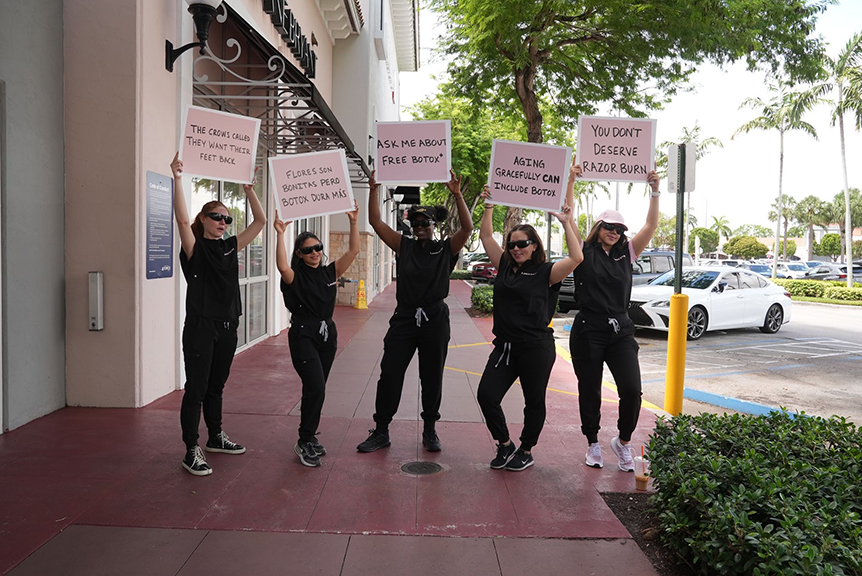
On the show floor, your booth competes with hundreds of others for the attention of attendees who already have a plan. In the hotel lobby at 7:45 AM on opening morning, your street team is the only person in the building talking directly to the qualified buyers who are about to form that plan. The difference between those two moments is the difference between passive and active trade show marketing.
The Convention Zone First Contact Advantage
A first contact made in the convention zone before the show floor opens is qualitatively different from a first contact made on the show floor. In the hotel lobby or on the pedestrian approach route, the attendee is relaxed, organized, and forming their plans. A brief, relevant, respectful interaction in this moment has a high probability of landing and being remembered. On the show floor, the attendee is in evaluation mode, processing hundreds of simultaneous brand messages, and operating against their own time constraints and floor plan.
The street team interaction in the convention zone creates a first contact that the show floor encounter then converts. An attendee who received a booth invitation in the hotel lobby arrives at the booth with a prior touchpoint, a name they may recognize, and a specific reason to stop rather than walk past. That pre-loaded intention is what makes the street team investment pay off in booth dwell time, conversation quality, and lead conversion.
Trade Show Street Team Deployment Zones
Conference Hotel Lobbies
Conference hotel lobbies during the 7:30 to 10:00 AM morning departure window are the highest-value trade show street team deployment zone. Every attendee housed in a conference hotel passes through the lobby on their way to the convention center. The lobby is a natural gathering and organizing space before the show day begins, with a relaxed social atmosphere that supports brief, genuine brand ambassador interactions.
Our teams identify the primary conference hotels for each show from the official event hotel block, prioritize by expected foot traffic volume, and deploy in the lobby zones with the highest visibility to the morning departure flow. Each ambassador interacts directly with the targeted attendee audience rather than general hotel guests, using the qualifying criteria from the pre-show briefing to identify relevant prospects quickly.
Pedestrian Approach Corridors
The main pedestrian corridors from conference hotels to the convention center entrance are the highest-volume street team deployment zones for shows with walkable hotel-to-venue routes. These corridors concentrate the full attendee population during the morning arrival window, and street teams positioned at key points on the route can reach a high percentage of the total show attendance across morning deployment windows.
We position street teams at the natural pause points on pedestrian approach routes, including crosswalk waits, corner transitions, and any outdoor gathering areas where the foot traffic slows and creates a brief window for a more complete interaction. Fast-moving pedestrian flow on straight sections of the route receives handouts with a quick verbal delivery. Pause points support fuller conversations.
Shuttle Stop Zones
At shows with dedicated shuttle service, shuttle stop queues offer the longest dwell time of any convention zone street team position. Attendees waiting two to five minutes for the next shuttle are stationary, social, and receptive to a genuine conversation. A well-briefed team member at a shuttle stop can have a fuller, more substantive interaction than almost any other convention zone position, resulting in higher booth visit commitment rates per conversation.
Convention Center Entrance Areas
The outdoor areas adjacent to convention center entrances, including entrance plazas, security queue areas, and outdoor badge check lines, are transition zones where attendees are briefly stationary before entering the event environment. A street team presence at the entrance creates a final outside-the-hall brand impression at the moment the attendee is about to enter the official event.
Street Team Briefing: The Foundation of Performance
The briefing that every trade show street team member receives before the first deployment day is the primary determinant of team performance. We conduct briefings covering six areas:
Product and market context at a genuine conversational level, not a marketing script. Every team member needs to understand what the client makes, who it serves, and what problem it solves.
Target buyer profile identifying which job titles, company types, and professional roles represent high-value prospects for this specific show and client.
Qualifying question sequence building the three data points, role, problem, and timeline, into a natural thirty-second conversation that feels genuine rather than scripted.
Call to action and booth details giving the prospect the specific reason to visit, the booth number, and the handout that carries both pieces of information.
Tone and approach calibrated to the specific show environment and professional audience, which differs significantly between a B2B technology conference, a consumer goods expo, and a healthcare professional show.
Documentation process covering the shift log format, the categories of information recorded for each interaction, and the submission process for end-of-shift reports.
Lead Qualification at First Contact
Qualification at first contact is the practice that separates a trade show street team that produces high-quality booth traffic from one that produces high volumes of undifferentiated contacts. A qualified lead is an attendee who has confirmed role relevance, expressed a specific problem or interest related to the client’s product, and received a specific booth visit invitation tied to that problem or interest.
We train every trade show street team member on the qualifying conversation technique before each deployment. The technique is not a formal script; it is a conversational pattern that surfaces the three qualification data points naturally and quickly, within the first thirty seconds of an interaction, without creating the feeling of a sales interrogation in a hotel lobby.
Qualified attendees receive the full booth visit treatment: a specific reason to visit, the booth number, a handout with QR code, and a conversational commitment to the visit. Non-qualified contacts receive a brief, respectful close with a handout and a simple brand impression. The distinction protects the client’s booth team from irrelevant traffic while ensuring every qualified prospect receives the full invitation.
Trade Show Street Team Creative Materials
The handout materials that street team members carry are the physical leave-behind that keeps the booth visit intention alive after the interaction ends. A well-designed handout carries the booth number prominently, the specific reason-to-visit message, and a QR code linking to a relevant digital destination such as a booth visit scheduler, a product demo video, or a show-specific landing page.
The physical quality of the handout matters. A flimsy, low-quality print piece signals a lack of investment and credibility in a professional convention environment. The handout material should match the professional standards of the industry and the audience. We produce handout materials at a quality level appropriate for the convention context, not the minimum production standard that fits the budget.
For technology and B2B shows, handout materials often include a specific product claim, a short case study reference, or a compelling statistic that creates a reason to engage further beyond the street team conversation. For consumer shows, the handout might carry a sampling offer, a discount code, or a product feature highlight. The content adapts to the audience and the booth experience being promoted.
Trade Show Street Teams at Multi-Day Shows
Multi-day trade shows create an additional street team opportunity that single-day events do not: the opportunity to build on first contacts from earlier show days. An attendee who received a booth invitation from an ambassador on day one and visited the booth that day has an established relationship with the brand by day two. An attendee who received the invitation on day one and did not visit yet can be re-engaged on day two with a more targeted follow-up message.
We design multi-day street team programs with this progression in mind. Day one focuses on first contacts and booth visit invitations. Day two shifts emphasis to follows up with attendees who interacted on day one and had not yet visited, as well as first contacts with attendees who were not reached on day one. Day three and beyond focus increasingly on qualified prospects who have not yet committed to a visit.
Shift logs from each day feed into the next day’s deployment strategy. If a specific hotel zone produced particularly strong qualified interactions on day one, we allocate more team time to that zone on day two. If a specific approach corridor had lower-than-expected foot traffic, we adjust positioning for subsequent days. The multi-day program improves continuously based on real field data.
Integrating Street Teams with the Full Outside-the-Hall Program
Trade show street teams produce the strongest results when integrated into a multi-format outside-the-hall campaign. The physical outdoor formats, including wheatpasted posters and sidewalk stencils, build ambient brand recognition across the full attendee population throughout each show day. The street team provides the direct first-contact layer on top of that ambient foundation.
An attendee who has seen the poster at the hotel entrance, walked past the stencil at the crosswalk, and then received a direct booth invitation from an ambassador has experienced three brand encounters before reaching the show floor. The ambassador encounter is the most personal and direct, but its impact is amplified by the earlier ambient exposures that created the brand recognition the ambassador can build on.
For guerrilla marketing at trade shows, this combination of ambient outdoor presence and direct street team contact is the standard we aim for in every multi-format outside-the-hall program.
What Good Trade Show Street Team Results Look Like
The benchmark for a well-executed trade show street team program is a daily qualified interaction count that is high enough relative to total contacts to confirm that the qualifying process is working, combined with a booth visit commitment rate high enough to confirm that the call to action is compelling. These two metrics together tell us whether the program is generating the quality of first contacts that produce show floor outcomes.
In our experience with trade show street team programs across multiple industries and show types, qualified interaction rates of 25 to 40% of total contacts are achievable with well-briefed ambassador teams in the right deployment zones during the right time windows. Booth visit commitment rates of 40 to 60% of qualified interactions are typical for campaigns with specific, compelling calls to action. These ratios vary significantly by show type, audience, and product category, but they provide a working benchmark for evaluating street team performance.
A morning hotel zone deployment at a major technology show with a team of four ambassadors working a two-hour shift should generate 80 to 120 total contacts, 25 to 45 qualified interactions, and 12 to 25 direct booth visit commitments in a well-executed program. These performance ranges are not guarantees; they are the typical range we see from briefed, supervised teams in the right deployment positions. Significantly below these ranges usually indicates a briefing issue, a positioning problem, or a creative material issue that can be identified and corrected.
We review shift performance against these benchmark ranges every day during multi-day shows and adjust team positioning, briefing emphasis, or creative materials if the data shows systematic underperformance. This real-time performance management is part of what makes multi-day street team programs more effective than their first-day performance alone would suggest.
Performance Measurement and Reporting
Trade show street team performance is measured through structured shift logs that capture total contacts, qualified interactions by type and zone, direct booth visit commitments, and handout distribution counts. Shift reports are submitted by each team member at the end of every deployment and compiled into a daily summary delivered to the client.
Post-campaign, we provide a full program performance report covering total program metrics, per-day analysis, zone-by-zone breakdown, and any qualitative observations from field supervisors about attendee response, effective messaging, and positioning recommendations for future shows. This report is the foundation for the next show’s street team program and for building the ongoing case for outside-the-hall trade show marketing investment.
For clients who track booth traffic source attribution, we coordinate with the booth team to log when visitors mention the convention zone street team as a first touchpoint, giving the client a direct connection between street team contacts and show floor outcomes.
Building a Trade Show Street Team Program for the First Time
Brands adding an outside-the-hall street team program to their trade show presence for the first time often have a practical question: what does a street team program cost at a specific show, and how do those costs compare to the expected outcomes? The answer depends on the show, the market, the deployment scale, and the performance goals, but we can provide specific projections for every campaign before execution begins.
For a first-time street team program at a three-day technology show in a major convention market, a typical starting configuration is two to three ambassadors deploying in the hotel zone for two hours each morning across all show days. This scale produces a manageable first campaign with documented performance data that informs the decision about expanding the program for subsequent shows at the same venue.
We structure first-time programs with enough scope to produce meaningful results and enough documentation rigor to give the client a clear data foundation for evaluating the investment. The post-campaign report from a first-time program answers the specific questions about qualified interaction rates, booth visit commitment rates, and booth visit follow-through rates that tell the client whether the program produced at a level that justifies expansion or optimization at the next show.
What are trade show street teams?
Trade show street teams are trained brand ambassador crews deployed in the convention zone surrounding a trade show. They create first-contact exposures with attendees in the hotel zone, on pedestrian approach routes, and at convention entrances, generating qualified leads and driving direct booth traffic outside the official show floor environment.
Where do trade show street teams operate?
Trade show street teams operate in the public pedestrian zones around the convention venue: hotel lobbies during morning departure, pedestrian approach corridors, coffee and breakfast queues, shuttle stops, and outdoor areas adjacent to convention center entrances.
How are trade show street team members briefed?
Each team member receives a detailed briefing covering the client’s product and market context, the target attendee profile, the qualifying question sequence, the specific booth visit call to action, the handout materials, and the shift documentation process.
What is the qualifying question sequence used by trade show street teams?
The qualifying sequence identifies three data points in the first 30 seconds: the attendee’s role, their relevant problem or interest, and their timeline. These three data points determine whether the attendee receives a full booth visit invitation or a brief, respectful close with a handout.
How do trade show street teams document their work?
Team members maintain structured shift logs tracking total contacts, qualified interactions, direct booth visit commitments, and handout distribution counts. Shift reports are compiled and delivered to the client after each deployment day.
How do trade show street teams differ from in-booth staff?
Trade show street teams operate outside the official event in the convention zone, reaching attendees before they form their floor visit plans. In-booth staff reach attendees who have already decided to visit or who walk by. Street teams create the first contact; in-booth staff convert it.
How early should trade show street teams be booked?
Trade Show Street Teams and the First Contact Quality Imperative
The quality of the first contact at a convention determines everything that follows. A high-quality first contact, one where the attendee received a specific, relevant, personally delivered booth visit invitation tied to their professional role and interests, produces a warm booth visit with a conversational head start. A low-quality first contact, a generic handout with no personal interaction, produces at best a cold visit from someone who picked up the brochure without engaging.
Trade show street teams are the format most capable of generating high-quality first contacts in the convention zone because they involve genuine human interaction at the point of first encounter. No outdoor advertising format can replicate the qualification, personalization, and commitment-building that a well-executed street team conversation delivers. The outdoor formats, the posters, the stencils, and the LED trucks, create ambient brand recognition. The street team converts that recognition into a specific, motivated, qualified first contact that walks into the booth with a reason to be there.
This is why we emphasize briefing quality, qualification discipline, and interaction documentation as the non-negotiable foundations of every trade show street team program we execute. The first contact is too important to leave to generic street team execution. Every interaction our teams make in the convention zone is designed, briefed, and documented as the beginning of a relationship that the booth team will continue on the show floor. That frame guides how we build and execute every trade show street team program, from the first briefing to the final shift log submission.
The Trade Show Street Team Advantage in Practice
The advantage of a trade show street team program is most visible in a comparison between two identical booths at the same show: one with an outside-the-hall street team program and one without. The booth with the street team program receives a stream of visitors who arrive with a specific booth visit intention, a reference to the hotel lobby or pedestrian approach interaction, and a conversational starting point that makes the booth staff’s job easier from the first sentence.
The booth without the street team relies entirely on walk-by traffic and passive brand recognition. Some of those walk-bys are excellent prospects who would have sought out the booth regardless. Many more are casual visitors without strong intent, attracted by booth aesthetics or curiosity rather than a pre-formed visit intention. The conversion rates from these two visitor types are measurably different, and the difference is what the street team program produces.
We have tracked this pattern across multiple trade shows and industries. The conclusion is consistent: pre-qualified first contacts from a convention zone street team program convert to qualified leads at rates that passive walk-by traffic cannot match. The investment in the outside-the-hall street team program is justified by the quality of the leads it generates, not just the volume of visitors it drives to the booth.
Campaign Architect – American Guerrilla Marketing
Frequently Asked Questions
What are trade show street teams?
Trade show street teams are trained brand ambassador crews deployed in the convention zone surrounding a trade show. They create first-contact exposures with attendees in the hotel zone, on pedestrian approach routes, and at convention entrances, generating qualified leads and driving direct booth traffic outside the official show floor environment.
Where do trade show street teams operate?
Trade show street teams operate in the public pedestrian zones around the convention venue: hotel lobbies during morning departure, pedestrian approach corridors, coffee and breakfast queues, shuttle stops, and outdoor areas adjacent to convention center entrances.
How are trade show street team members briefed?
Each team member receives a detailed briefing covering the client’s product and market context, the target attendee profile, the qualifying question sequence, the specific booth visit call to action, the handout materials, and the shift documentation process.
What is the qualifying question sequence used by trade show street teams?
The qualifying sequence identifies three data points in the first 30 seconds: the attendee’s role, their relevant problem or interest, and their timeline. These three data points determine whether the attendee receives a full booth visit invitation or a brief, respectful close with a handout.
How do trade show street teams document their work?
Team members maintain structured shift logs tracking total contacts, qualified interactions, direct booth visit commitments, and handout distribution counts. Shift reports are compiled and delivered to the client after each deployment day.
How do trade show street teams differ from in-booth staff?
Trade show street teams operate outside the official event in the convention zone, reaching attendees before they form their floor visit plans. In-booth staff reach attendees who have already decided to visit or who walk by. Street teams create the first contact; in-booth staff convert it.
How early should trade show street teams be booked?
Four to six weeks before the show. Contact us at [email protected] or call (646) 776-2770 to discuss availability and timeline for a specific show.