The most instructive viral advertising examples are not the ones you already know. They are the mid-budget campaigns with engineered structures that spread further than their production costs suggest they should have.
Lists of viral advertising examples usually include the same ten campaigns. The ALS Ice Bucket Challenge. Old Spice. Dollar Shave Club. They are famous precisely because they went viral, and so they get cited as examples of what virality looks like. But they are not particularly instructive for a brand manager trying to build a campaign with a realistic budget and a specific audience. What they share in common with successful smaller campaigns matters more than what makes them famous.
This piece breaks down the structural patterns that produced viral behavior across campaign types we have either executed ourselves, studied closely, or built variations of for clients. The examples range from nationally known brand campaigns to street-level executions in specific neighborhoods. In every case, we focus on why the campaign spread, not just that it did.
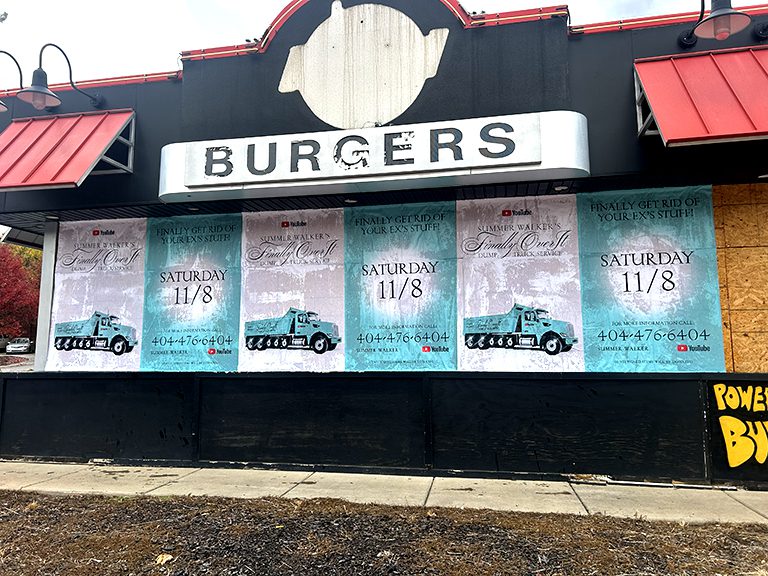
A brand funds the creation of a large-format mural in a specific neighborhood with strong visual culture and pedestrian traffic. The mural is visually striking and culturally specific to the community where it is placed. It is executed by an artist with genuine credibility in that community or in the broader visual arts world. Within days of completion, the mural generates hundreds or thousands of organic social posts from people who photographed it while passing by.
What Makes It Spread
Three things: the physical presence creates a genuine reason to photograph (something interesting exists in the world), the cultural specificity creates a sharing impulse among community members who feel represented or proud, and the location specificity creates a geographic identity signal (I was there, I live here, this is my neighborhood). None of these require the brand to be prominently featured. The brand association builds through the act of creation and the documentation that follows.
Where It Works Best
Bushwick and Williamsburg in Brooklyn are the most established mural markets in the US, with high concentrations of creative-culture consumers and strong existing social sharing behavior around street art. Wynwood in Miami has a similar infrastructure. The Arts District in Los Angeles, Pilsen in Chicago, and the Short North in Columbus are other markets where mural campaigns have generated strong organic amplification. The common thread is a walkable, visually-oriented neighborhood with a community that is already engaged in sharing street art.
AGM Field Note: The artist selection is as important as the wall location. A technically excellent mural by an artist with no community credibility will get photographed less than a slightly rougher mural by an artist who is genuinely part of the scene. Community credibility is a viral amplifier that production quality cannot substitute for.
Category 2: Product Stunts at High-Traffic Moments
The Pattern
A brand creates a physical stunt at a time and place where significant foot traffic guarantees an audience. The stunt is unexpected, visually dramatic, and brief enough to be captured in a short video. Eyewitnesses post the video from their personal accounts. The personal posting, combined with the physical authenticity of the moment, generates sharing that far exceeds what any produced video would achieve.
What Makes It Spread
The key variable is surprise. Something unexpected happening in a public space is one of the strongest sharing triggers available to a marketer. The personal video from an eyewitness carries a social proof weight that branded content cannot replicate because it is a genuine account of a genuine experience. The sharer is not sharing an advertisement; they are sharing something they witnessed.
Real Campaign Structure
We executed a product launch stunt in Midtown Manhattan during morning commuter hours. The stunt involved a physical transformation of a corner that commuters used daily. Within two hours of execution, eyewitness videos had been posted by dozens of organic observers. The brand’s own documentation was posted simultaneously. The combination of brand-produced and eyewitness content created a credibility stack that drove significant press coverage in both marketing trade publications and local news. Total production cost for the stunt was under $20,000. Estimated earned media value from coverage exceeded $400,000.
The Documentation Strategy
We place our documentation team in position before the stunt begins and instruct them to capture from multiple angles simultaneously. We want portrait orientation for TikTok and Instagram Stories, environment orientation for Twitter and YouTube, and high-resolution stills for press. Having all formats captured in real time means we can post to each platform within 30 minutes of execution, rather than spending hours in post-production before anything goes live. Speed of publication in the first hour after a stunt is a critical sharing window that many campaigns miss.
Category 3: Teaser Campaigns with Delayed Reveal
The Pattern
A brand places campaign creative in the world with no brand identification or an unclear brand identification. The creative is visually interesting or conceptually puzzling enough to generate discussion and speculation. The brand reveals itself after a defined period, using the earned discussion from the teaser phase to amplify the reveal.
What Makes It Spread
Mystery is a powerful sharing driver. When people encounter something they cannot explain, they share it with others both to show what they discovered and to crowdsource an explanation. “Does anyone know what this is?” is one of the most common framing phrases in viral social posting. The teaser campaign format engineers this sharing behavior by withholding the answer that people are naturally trying to find.
The Risk and How to Manage It
Teaser campaigns carry a specific risk: the teaser must be interesting enough to generate sharing without being so confusing that it generates frustration rather than intrigue. The line between “intriguing mystery” and “incomprehensible noise” is narrow and depends heavily on whether the creative has a clear visual coherence even without the context of the brand reveal. We test teasers with a fresh audience before deploying them to confirm they generate the curiosity response rather than the confusion response.
Category 4: Social Cause Alignment Campaigns
The Pattern
A brand takes a clear position on a specific social issue that is genuinely relevant to its product category or audience. The creative expresses that position with clarity and conviction, not hedging. The campaign spreads both through supporters who share as an act of values alignment and through detractors who share as an act of critique. Both pools of sharing contribute to total reach.
What Makes It Spread
Identity-driven sharing is among the highest-velocity sharing behavior. When a campaign expresses a value that someone genuinely holds, sharing it is an act of self-expression, not an act of promotion. The sharer is not doing the brand a favor; they are making a statement about themselves. This intrinsic motivation creates sharing rates that far exceed what any incentivized sharing program can achieve.
What Most Brands Get Wrong
The failure mode for cause-aligned campaigns is hedging. Brands that take a position and then qualify it to avoid offending anyone end up saying nothing clear enough to generate sharing. A campaign that 80% of people agree with strongly and 20% disagree with strongly spreads. A campaign that 95% of people find mildly acceptable does not spread. The clarity and conviction of the position is the sharing mechanism, not the broad palatability of the message.
AGM Field Note: We advise clients on cause alignment campaigns to choose positions that are authentic to their brand history and product category, not positions that feel opportunistic. Consumers are very good at detecting when a brand is adopting a cause for marketing purposes rather than out of genuine belief. Inauthentic cause campaigns frequently generate negative sharing that outweighs positive sharing and damages brand perception net of the campaign.
Category 5: Interactive Physical Experiences
The Pattern
A brand installs a physical experience in a public space that invites participation. The participation is documented by participants on their own devices and shared to their personal social accounts. The user-generated content from participation is more authentic and reaches more networks than any brand-produced content would.
Examples of the Mechanic
A photo wall installation where participants hold part of the visual and complete the image with their presence
A sound installation where approaching the work triggers an audio experience that participants film
A perspective installation where a flat ground painting becomes a three-dimensional image when photographed from a specific marked position
A mirror or reflective installation that shows participants an unexpected version of their own image
A physical game or challenge tied to a product benefit that participants film themselves attempting
The common thread is that participation creates content. The content features the participant, which gives them a personal stake in sharing it. The brand presence is part of the content, but the participant’s own image or experience is the primary subject.
Location and Duration Considerations
Interactive physical experiences work best in locations with sustained foot traffic over multiple days, not single-event settings. A pop-up that runs for 4 hours generates a fraction of the sharing volume that a permanent installation running for two weeks generates, even if the single-event foot traffic is higher. Duration gives the sharing behavior time to compound: each person who shares the experience reaches networks who then seek out the experience themselves, compounding the audience over the installation’s lifetime.
Campaign Type Comparison by Share Mechanics
Campaign Type
Primary Share Trigger
Share Duration
Seeding Difficulty
Typical Budget Range
Neighborhood Mural
Discovery / location pride
Weeks to months
Low
$8,000-25,000
Physical Stunt
Surprise / witness documentation
Hours to days
Medium
$15,000-50,000
Teaser / Reveal
Mystery / curiosity
Days (teaser to reveal)
High
$20,000-60,000
Cause Alignment
Identity / values expression
Days to weeks
Low
$10,000-40,000
Interactive Experience
Participation / UGC
Weeks (duration of install)
Low
$25,000-75,000
The Structural Elements All Viral Examples Share
Across every category of viral advertising example, five structural elements appear consistently in campaigns that achieved genuine organic amplification. Campaigns that are missing even one of these elements typically fall short of viral spread, regardless of how strong the other elements are.
1. A Reason to Share That Serves the Sharer
Every viral example we have analyzed gives the sharer something. Discovery credibility, identity expression, entertainment value, social status, or the satisfaction of being in on something. The campaign serves the sharer’s social needs, not just the brand’s communication needs. When these two things align, sharing becomes natural.
2. Cultural Specificity Over Broad Appeal
Every example that spread virally was deeply specific to a community, subculture, or geographic identity. Campaigns that tried to speak to everyone spread to no one. Campaigns that spoke directly to a specific group generated intense sharing within that group, which then spread outward.
3. A Physical or Sensory Experience
The overwhelming majority of viral campaigns that spread through social platforms had a physical component, either a real-world installation, a live stunt, or a product experience. The physical-to-digital transfer remains one of the most powerful sharing mechanics available. Pure digital campaigns that go viral almost always do so because they simulate the surprise and specificity of a real-world encounter.
4. Speed of Content Distribution After Execution
Viral campaigns that distribute campaign content within 1-2 hours of the launch or stunt consistently outperform campaigns that wait until the next day to post. The window of sharing momentum is short and front-loaded. Every hour of delay in the first 24 hours represents compounding lost momentum.
5. Seeding to the Right First Audience
Every viral example that we have been able to study closely had a defined first audience that was higher-influence than the general target audience. In some cases this was intentional seeding. In other cases it was fortunate alignment between the campaign placement and a community that happened to be heavy sharers. When intentional seeding produces the same outcome as fortunate alignment, the argument for intentional seeding is very strong.
What Brands Get Wrong When Trying to Replicate Viral Success
Studying viral advertising examples is valuable. Copying them without understanding why they worked is not. We have seen dozens of brands attempt to replicate the structure of a successful viral campaign and miss the essential element that made the original work. Here are the most common errors in viral campaign replication.
Copying the Format, Missing the Cultural Specificity
A brand sees that a mural campaign in Bushwick generated enormous organic sharing for a competitor and decides to commission a mural in Bushwick. They hire a production company, identify a wall, and execute a technically similar mural. It generates minimal sharing. The reason: the original mural referenced something specific to the neighborhood’s cultural history that resonated deeply with the community. The replication just placed a competent mural at a good location without the cultural specificity that made the original shareable. The format was copied. The insight was not.
Copying the Execution, Missing the Seeding
A brand replicates an interactive street installation that was photographed and shared by thousands of people for a competitor. They execute it at a comparable location with comparable production quality. It generates a fraction of the original’s social reach. The reason: the original was seeded to the right community accounts before public launch, which created an initial wave of high-credibility posting that triggered secondary sharing. The replication was launched without seeding and had to wait for the algorithm to find its audience, which it did slowly and incompletely. Same execution. Different seeding infrastructure. Dramatically different outcome.
Copying the Idea One Year Later
Timing is a structural element of viral success that is often overlooked. A format that was genuinely novel when first executed is less novel when the second brand executes it and actively unoriginal when the fifth brand executes it. The sharing impulse is partly driven by the discovery experience: I found something genuinely new and I am sharing it with my network. If the format has been used enough times that the audience has seen it before, the discovery experience does not happen and the sharing impulse is weaker or absent. Replicating viral examples works best when you take the structural lesson and apply it to a genuinely new format, not when you execute the same format in a market that has already seen it.
How to Apply Viral Campaign Lessons to Your Own Brand
The practical value of studying viral advertising examples is in extracting transferable principles rather than replicable executions. Here is a framework for extracting those principles from any viral campaign example you study.
Step 1: Identify the Sharing Trigger
Before anything else, identify precisely why people shared the campaign. Was it funny? Was it beautiful? Did it make people feel proud of a community they belong to? Did it express a value they wanted their network to see them express? Did it show them something genuinely unexpected? One of these motivations is almost always dominant. Name it specifically and honestly, not generically.
Step 2: Identify the Seeding Context
Who saw the campaign first and why? Was there a deliberate seeding strategy? Were there community accounts with specific credibility who covered it early? Did it align with a cultural moment that gave it a natural first audience? Understanding the seeding context tells you whether the campaign’s initial spread was engineered or fortuitous, and it tells you what seeding approach you would need to replicate the conditions in your own market.
Step 3: Identify the Transferable Structural Element
Having identified the sharing trigger and the seeding context, identify the one structural element that was most responsible for the campaign’s performance. Was it the format? The location? The cultural specificity? The participation mechanic? The timing relative to a cultural moment? This structural element is the transferable lesson. The specific execution that contained it is not the lesson; it is the container.
Step 4: Apply to Your Context
Apply the transferable structural element to your brand’s specific context: your community, your market, your product category, and your current cultural moment. A campaign built from a genuine structural understanding of what makes viral advertising work will outperform a campaign that copies a successful execution without that understanding, every time.
Category 6: User-Generated Content Campaigns
Some of the most effective viral advertising examples are not campaigns in the traditional sense. They are structured invitations for consumers to create content on behalf of the brand. When the invitation is designed well and distributed to the right first audience, the user-generated content that follows reaches networks and generates social proof that no brand-produced creative can match.
The Pattern
A brand creates a participation mechanic: a challenge, a template, a physical installation that invites personal documentation, or a product interaction that is visually compelling when filmed. The brand seeds the mechanic to a small number of high-credibility community members who are the first to participate and post. Their posts give social permission to their networks to participate, generating a wave of user-created content that expands geometrically through each round of participation.
What Makes It Spread
User-generated content campaigns spread because participation creates personal investment. When someone creates content featuring a brand’s product or campaign mechanic, they are sharing their own content, not the brand’s. The sharing motivation is entirely self-directed: they are sharing because they made something they are proud of, or because the participation positions them in a social context they value. The brand is present but not the subject. This inversion of the standard advertising dynamic is what generates the sharing volumes that traditional brand content cannot achieve.
The Design Constraints
Participation mechanics that spread effectively have three design constraints. The barrier to participation must be zero: anything requiring special equipment, skills, or access limits the potential participant pool dramatically. The participation must be visually compelling when documented: if the thing people are doing does not look interesting when filmed or photographed, the content quality will be low and it will not spread. The brand connection must be clear without being intrusive: the participation makes sense in the context of the brand’s values or product, without the brand logo dominating every piece of content.
How We Identify Campaign Concepts Worth Studying
Our team runs a quarterly review of campaigns that generated significant organic amplification in the markets we operate in. We track these campaigns from first appearance through their sharing arc, cataloging the seeding approach, format, community response, press coverage, and final organic reach estimates. This library of studied campaigns informs the recommendations we make to clients and the concepts we develop internally.
The criteria for including a campaign in our study library: it achieved at least 3x organic amplification versus estimated paid reach, it operated in a format or market relevant to our work, and we have sufficient data to assess the structural elements that drove its performance. Campaigns that went viral for reasons we cannot adequately explain are noted but not incorporated into structural recommendations, because what cannot be explained cannot be replicated.
Over several years of this review process, the structural patterns described in this article have become progressively clearer and more consistent across campaign types and markets. The specific executions vary enormously. The underlying structural decisions that drive sharing behavior appear with remarkable consistency. This is why we believe virality is an engineering problem with learnable, transferable solutions rather than a creative mystery that can only be repeated by luck.
Building Your Own Viral Campaign from These Lessons
The most direct application of the campaign examples and structural analysis in this guide is to use the patterns to evaluate your own campaign concept before you commit production budget to it. Here is the quick self-assessment: Does your concept have a specific, surprising visual hook? Does it give the target sharer a reason to share that serves their own social needs, not just the brand’s communication objective? Is it deeply specific enough to feel like it was made for a defined community rather than a broad audience? Is there a seeding strategy in place to give it a credible first audience? Is there a physical or sensory component that creates the physical-to-digital transfer? If you can answer yes to all five of these questions, you have the structural foundation for a campaign that is positioned to spread. If you cannot answer yes to two or more of them, you know exactly where to focus revision effort before spending on production.
Frequently Asked Questions
What is the best viral advertising example to learn from?
The most instructive examples are mid-budget campaigns in your own industry, not the famous mega-viral campaigns that had unique circumstances working in their favor. Look for campaigns in your category that spread beyond their paid reach, study the format and seeding approach, and extract the structural elements that you can replicate. Famous examples are inspiring but not prescriptive. Relevant examples are actionable.
Why do most campaigns fail to spread even when the creative is good?
Good creative is necessary but not sufficient. Most campaigns that fail to spread despite good creative are missing one of the structural elements: they were not seeded to the right first audience, they were distributed in the wrong format for the platform, the sharing motivation was not built into the concept, or the content was not available for easy redistribution. Creative quality is only one variable in viral spread.
Can small brands produce viral advertising?
Yes, and in some ways small brands have structural advantages. Small brands can be more specific, more authentic, and more culturally precise than large brands constrained by broad-audience mandates. A small brand can speak directly to a tight community without worrying about alienating adjacent communities that it is not actually targeting. That specificity is the engine of viral spread, and small brands can access it more easily than large ones.
What role does humor play in viral advertising?
Humor is one of the highest-velocity sharing triggers available, but it is also the most difficult to execute reliably. A campaign that is genuinely funny to its target audience spreads very fast. A campaign that tries to be funny and misses generates either indifference or backlash. We use humor in campaigns when the brand voice supports it authentically, and we test humor concepts with target audience members before production to confirm the joke lands before we spend on making it.
How important is timing for viral advertising?
Timing affects virality at two levels. Macro timing is the cultural moment: launching a campaign that is connected to a moment of high cultural attention generates amplification that a campaign launched in a quiet period will not receive. Micro timing is the hour and day of the week: content posted at 8-10am on Tuesday through Thursday consistently generates higher initial engagement than content posted on weekend evenings. Both levels of timing matter and both are plannable.
Should every campaign try to go viral?
No. Virality is the right objective for campaigns designed to generate rapid brand awareness, launch a new product, or enter a new market. It is not the right objective for campaigns designed for direct response, lead generation, or retention. Optimizing for virality when your real objective is something else produces a campaign that does neither well. Define your primary objective first, then choose the campaign structure that serves that objective best.
How do you replicate a viral campaign structure without copying the specific execution?
Study the structural elements, not the surface execution. If a competitor’s mural campaign spread virally because it was placed in a walkable neighborhood with high cultural engagement and featured a culturally specific visual reference, you can replicate the structural approach (pedestrian-heavy location, culturally specific creative, community-credible artist) with entirely different creative in a different market. The structure is what worked. The specific execution is not the replicable part.
What is the difference between earned media and viral spread?
Earned media is coverage or mention by third-party publications, journalists, or influencers. Viral spread is organic sharing by individual consumers within their personal networks. Both are forms of non-paid reach, but they behave differently. Earned media reaches a publication’s audience in one concentrated moment. Viral spread reaches many individual networks over time, compounding with each new share. The best campaigns generate both: press coverage amplifies the professional credibility, and consumer sharing amplifies the reach.