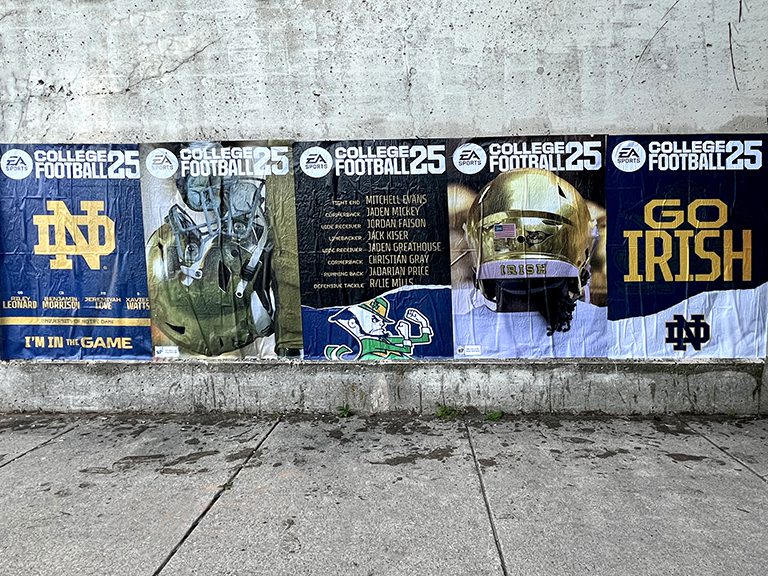
Viral ad campaigns are not accidents. The ones that spread are built on a specific set of structural decisions made before a single frame is shot or a single flyer hits the street.
Every marketer wants their campaign to go viral. Most of them approach it backwards. They build something they personally think is clever, launch it, and then wait to see if the internet agrees. When it does not spread, they chalk it up to bad luck or wrong timing. When something does spread, they attribute it entirely to the creative idea and miss the structural decisions that actually created the conditions for sharing.
We have run campaigns in New York City and across the country for a decade. We have seen things spread that we did not fully expect to spread, and we have seen high-budget productions land flat. The patterns are real and consistent enough to work from intentionally. This is our breakdown of what a viral ad campaign actually requires, how to structure one, and how to measure whether it is working.
Defining Viral: What the Term Actually Means Operationally
Before anything else, a word on definitions. “Viral” is used loosely to mean anything from “got a lot of views” to “was shared exponentially across platforms.” For planning purposes, we use a more specific definition: a campaign is viral when its organic amplification rate exceeds its paid reach. In other words, more people see it because other people shared it than because the brand paid to distribute it.
This is a measurable condition. If your campaign reached 500,000 people on a $5,000 paid media budget that should have delivered 80,000 exposures at standard rates, and the difference is attributable to organic sharing, you have something that behaved virally. The degree of virality scales from modest (2x organic lift) to explosive (100x+ organic lift). The goal is not necessarily the explosive case. Even 3-5x organic amplification on a well-targeted campaign delivers enormous value relative to a purely paid campaign.
AGM Field Note: We track what we call the Share Multiplier on every campaign that has a digital component. It is simply organic reach divided by paid reach. Anything above 1.5x is a win. Above 3x is strong. Above 10x is when you know you built something structurally right, not just got lucky.
The Six Structural Elements of Campaigns That Spread
After running and analyzing dozens of campaigns with measurable sharing behavior, we have identified six structural elements that consistently appear in campaigns that achieve genuine organic amplification. None of them alone guarantees virality. Together, they create conditions where sharing becomes likely.
1. A Specific, Surprising Visual Hook
The first structural element is visual. Something in the campaign must create a moment of cognitive disruption, a split second where the viewer’s brain registers something unexpected and triggers the “wait, did you see this?” response. This does not require a massive production budget. Some of the most shared street campaigns we have executed cost under $3,000 in materials and produced tens of thousands of organic shares.
The surprise must be specific, not generic. A mural is not a hook. A mural of a beloved neighborhood figure rendered at 40 feet tall with a specific cultural reference built into the image is a hook. The specificity is what makes someone who encounters it feel like they are in on something. Being in on something is a powerful sharing motivator.
2. Inherent Shareability of the Format
Some formats are structurally shareable and some are not. A static billboard in a location that requires a car to see it is hard to share. A large-format piece on a pedestrian street in a walkable neighborhood, designed to photograph well in portrait orientation on a phone screen, is structurally shareable. When we are planning campaigns with virality as an objective, format selection is a virality decision, not just a media planning decision.
Formats that index high for shareability: large-format murals in walkable neighborhoods, interactive installations, unexpected placements in unusual locations, 3D or perspective-bending executions, and anything that requires human presence to complete the visual (you stand in front of it, you become part of it). Formats that index low: standard transit shelter posters, roadside billboards, most standard digital display.
3. A Clear Social Currency Signal
People share things that make them look good to their networks. This is social currency, and it is the engine behind most organic sharing. A campaign needs to offer the sharer some form of social currency: I discovered this first, I have access to this, I understand this cultural reference, I support this brand’s values, this is funny and I have a great sense of humor.
When we brief campaigns, we explicitly ask: what social currency does sharing this give the person who shares it? If we cannot answer that question clearly, the creative brief is not finished. The answer shapes everything from the visual execution to the copy to the timing of the launch.
4. Cultural Specificity
Campaigns that try to appeal to everyone usually spread to no one. The campaigns that spread most reliably are deeply specific to a culture, subculture, neighborhood, or community. They feel like they were made for a specific group, not for a mass audience. When members of that specific group encounter the work, they feel seen, and they share it.
Cultural specificity requires real knowledge of the community you are speaking to. You cannot fake it with research alone. We bring in people who are actually part of the communities we are targeting, not as consultants to rubber-stamp a pre-built concept, but as co-creators who shape the work from the start.
5. A Clear Seeding Strategy
Even the best-built campaign needs initial distribution to hit critical mass. The seeding strategy determines who sees the campaign first and creates the initial sharing wave that gives organic amplification a runway. Good seeding means identifying the specific nodes in your target network who have high sharing authority and credibility, and getting the campaign in front of them before general launch.
Seeding nodes vary by community. In streetwear and sneaker culture, they are the accounts with deep community credibility rather than necessarily the biggest follower counts. In food culture, they are neighborhood-specific food accounts and local restaurant journalists. In music, they are the tastemaker accounts and playlist curators. Identifying the right seeding nodes is as important as building the creative itself.
6. Tension or Intrigue
Campaigns that explain everything they are do not spread. Campaigns that leave something unexplained, that create a question people want to answer, or that have a second layer that rewards closer inspection, spread much more reliably. Tension and intrigue drive people to share specifically because they want to share the puzzle, not just the answer.
Teaser campaigns that launch without brand identification, installations that appear to have no obvious source, and creative that has an obvious surface reading and a hidden deeper reading all use this structural element. The key is that the intrigue must eventually resolve. If it never resolves, the campaign just becomes confusing and forgettable.
Types of Viral Ad Campaigns and How Each Spreads
Campaign Type
Primary Share Mechanism
Typical Spread Timeline
Best Platform
Street Installation
Photo at location, organic share
Hours to days
Instagram, TikTok
Stunt / Ambient Activation
Eyewitness video, news coverage
Same day
TikTok, Twitter/X, news
Large-Format Mural
Location-tagged photo posts
Days to weeks
Instagram, Google Maps
Teaser Campaign
Mystery discussion, speculation
Days (until reveal)
Twitter/X, Reddit
Interactive Experience
Participation video, UGC
Hours to days
TikTok, Instagram
Reaction / Cause Campaign
Values alignment, political share
Hours to days
Twitter/X, Facebook
Measuring Viral Ad Campaign Performance
Measurement for campaigns with virality as an objective requires a slightly different framework than standard campaign measurement. You need to track not just reach and engagement but the sharing behavior that drives organic amplification.
Share Rate vs. Impression Rate
Standard campaign reporting focuses on exposures and reach. For viral campaign measurement, the most important metric is share rate: what percentage of people who see the content share it. A share rate of 0.5% is average for good creative on social. A share rate of 2% or above starts to indicate real sharing behavior. A share rate of 5%+ on seeded content is where you see explosive amplification.
Organic Reach Attribution
When a campaign includes digital components, we use UTM parameters and platform analytics to separate paid reach from organic reach. The ratio between these two numbers is the Share Multiplier metric we track. For physical street campaigns, we use location tagging data, hashtag volume, and news coverage reach to estimate organic amplification.
Sentiment and Conversation Quality
Reach without positive sentiment is just noise. We track sentiment on all campaign-related social conversation using a combination of platform tools and manual review of high-engagement posts. The goal is a sentiment ratio of at least 70% positive or neutral, with negative sentiment below 10%. When negative sentiment spikes above 10% on a campaign that was intended to be positive, we diagnose the issue and decide whether to adjust or let it run.
Coverage Volume and Quality
For campaigns aimed at generating press coverage as part of their viral spread, we track coverage volume (number of placements) and coverage quality (editorial relevance and domain authority of covering outlets). A local Brooklyn blog covering a Bushwick mural is meaningful for a campaign targeting that community. A national lifestyle publication covering the same mural is a multiplier. Both count; they count differently.
AGM Field Note: We build a measurement dashboard before every campaign launches, not after. The dashboard defines what success looks like in numbers and gives us a clear picture within 48 hours of launch whether we are tracking toward those numbers. Waiting until the campaign ends to ask how it performed is a waste of the ability to optimize mid-flight.
The Role of Paid Media in Viral Campaigns
There is a common misconception that viral campaigns are free. They are not. Even campaigns that achieve massive organic amplification typically required paid media investment to build the initial distribution that gave organic sharing a chance to take hold. The relationship between paid and earned is not either/or; it is sequential and strategic.
Seeding Budget
A seeding budget is the paid investment used to ensure the right initial audience sees the campaign before organic sharing begins. For most campaigns we run, this is 15-25% of total campaign budget. The seeding budget is not used for broad reach. It is used for precision targeting: getting the campaign in front of the 1,000-5,000 people most likely to share it with credibility, before you pay to reach the 1,000,000 people you want to ultimately see it.
Amplification Budget
Once organic sharing begins and you can confirm the campaign is performing, an amplification budget extends the reach of the content that is already showing strong organic engagement. This is paid media working with the grain of organic performance, not against it. Putting paid dollars behind content that is already spreading amplifies a wave that already exists; it does not create one artificially.
Timing the Paid Investment
The worst thing you can do with paid media in a campaign designed for virality is launch paid and organic simultaneously at full scale. You need the organic seeding phase to play out first, to establish social proof and generate initial sharing, before you amplify with paid. We typically hold the amplification budget for 48-72 hours after launch to let organic signals develop before we spend into them.
Common Mistakes in Viral Campaign Strategy
Designing for the Brand, Not the Sharer
The most common mistake is designing a campaign that serves the brand’s communication goals without considering what motivates the actual person who would share it. A message perfectly aligned with the brand’s values and voice can be completely unshared because it offers nothing to the person sharing it. Every creative decision in a viral campaign must be tested against the question: why would someone share this?
Broad Targeting
Viral campaigns do not spread to everyone at once. They spread through networks. Networks are defined by specific interests, geographies, and social relationships. A campaign seeded to a specific, well-connected community spreads further than the same campaign blasted to a mass audience, because community networks are dense and interconnected. Broad targeting diffuses the campaign before sharing behavior can take hold.
No Physical Component
The campaigns that spread fastest in the last several years consistently have a physical component. A mural, an installation, a street stunt. Something that exists in real space and requires someone to go to a location, photograph it, and bring it back to their digital network. The physical-to-digital transfer is one of the most powerful sharing mechanisms that exists, and purely digital campaigns cannot replicate it.
Launching Without a Seeding Plan
Launching a campaign and hoping the right people find it is not a seeding plan. A seeding plan identifies specific accounts, communities, and individuals who will see the work first and have the credibility to kick off sharing. It assigns responsibility for outreach to each of those nodes and defines the timing of those outreach efforts relative to the public launch date.
Building for One Platform
Campaigns built exclusively for one platform are limited to that platform’s sharing mechanics. The strongest viral campaigns are platform-agnostic in their core creative and then adapted for each platform’s specific format and sharing behavior. A mural that photographs beautifully for Instagram can also be filmed vertically for TikTok and described in a Reddit thread. Three different types of sharing behavior from one piece of creative.
Viral Campaign Budget Ranges
Campaign Scale
Production Budget
Seeding Budget
Expected Organic Reach
Local / Single Market
$5,000-15,000
$2,000-5,000
50K-500K exposures
Regional / Multi-Market
$20,000-60,000
$8,000-20,000
500K-5M exposures
National Launch
$75,000-200,000
$25,000-75,000
5M-50M exposures
These ranges assume a well-built campaign with strong seeding execution. Campaigns that hit all six structural elements and seed correctly can outperform the high end of these ranges significantly. Campaigns that miss structural elements will underperform even the low end.
Physical Campaigns That Drove Measurable Digital Virality
Some of the most successful viral ad campaigns we have built started on the street, not on a screen. Here is how the physical-to-digital transfer plays out in practice.
The Neighborhood-Specific Mural
We executed a large-format mural in Bushwick for a brand entering the New York market. The creative referenced a specific piece of local history known to longtime neighborhood residents. Within 24 hours of completion, the mural had been tagged in over 300 Instagram posts, picked up by two Brooklyn-specific Instagram accounts with combined followings of over 400,000, and covered by a Brooklyn-based arts publication. Total cost of the mural installation was under $12,000. Estimated organic reach within the first week was 800,000 exposures.
The Mystery Installation
We placed an unmarked installation in SoHo on a Thursday evening with no brand attribution visible. The installation was visually unusual enough to generate foot traffic and photography. By Friday morning, Reddit and Twitter were actively speculating about what it was and who built it. The reveal happened on Saturday at noon. The Thursday-to-Saturday mystery phase generated far more earned media discussion than the reveal itself. The intrigue phase is often where the most valuable sharing happens.
AGM Field Note: The reveal timing on teaser campaigns matters enormously. Reveal too early and the mystery builds no tension. Reveal too late and the conversation dies before the reveal has an audience. We have found 48-72 hours to be the optimal mystery window for most markets and communities. Long enough to build real speculation, short enough that the audience is still actively engaged when the reveal hits.
Building a Seeding Network: The Infrastructure Behind Viral Spread
Seeding networks do not appear on demand. The brands and agencies that consistently produce campaigns with strong organic amplification have been building relationships with high-credibility community accounts for years before any specific campaign requires them. This infrastructure is one of our core operational assets, and it is one of the primary reasons our campaigns seed more effectively than campaigns run by agencies without established field networks.
Identifying the Right Seeding Nodes
The right seeding node for a campaign is not necessarily the account with the most followers. It is the account whose audience is most precisely matched to the campaign’s target community and who shares with enough credibility to generate genuine downstream sharing rather than passive exposures. An account with 12,000 followers in a tight sneaker community often seeds more effectively than an account with 500,000 followers in a general lifestyle category.
We evaluate seeding nodes on four dimensions: audience alignment (does their following match our target community?), sharing credibility (when they post something, does their audience engage and reshare?), posting frequency and quality (are they active enough to be relevant?), and relationship (have we worked with them before and do they have positive associations with our campaigns?). Accounts that score well on all four are the priority seeding targets. Accounts that score well on reach but poorly on the other dimensions are not worth prioritizing despite their follower counts.
Relationship Maintenance Between Campaigns
We maintain active relationships with our seeding network between campaigns, not just during campaign windows. This means sharing relevant work with key accounts even when there is no campaign to promote, attending community events where these accounts are present, and ensuring that when a campaign requires seeding, the outreach feels like a natural extension of an ongoing relationship rather than a cold ask. Cold seeding outreach produces significantly lower share rates than outreach to accounts with whom a prior relationship exists.
Adapting Seeding Networks by Market
Each market has its own seeding network structure. The accounts that seed effectively in Brooklyn do not automatically have reach or credibility in the Arts District in Los Angeles. We maintain separate seeding network maps for each primary market and conduct regular reviews to add new accounts, remove dormant accounts, and update our understanding of where credibility is shifting within each community. This is ongoing operational work, not a one-time research exercise.
When Viral Campaigns Fail: Diagnosing What Went Wrong
Not every campaign built for viral spread achieves it. When a campaign underperforms on organic amplification despite being well-built on paper, there are a limited number of explanations. Here is how we diagnose underperformance and what we do about it.
If Share Multiplier is below 1.2x at 48 hours, the first question is whether the seeding reached the right accounts. We review the seeding list and compare actual post count and engagement from seeded accounts against expectations. If fewer than 40% of seeded accounts posted, the seeding failed at the relationship or content level. If they posted but generated low engagement, the content may not have aligned with what their audience wants to see from them.
The second diagnostic question is format. Was the content available in the right format for each platform? Platform mismatches, portrait video posted in environment format, content hosted on a platform that requires account sign-up to view, files that are not easily downloadable and repostable, each create friction that reduces share rate significantly. We audit format availability before diagnosing creative quality, because format problems are easier to fix and more common than fundamental creative problems.
If seeding and format are both confirmed and the campaign is still underperforming, the creative diagnostic follows. We run a rapid survey with 20-30 target audience members, show them the content, and ask the three core questions: Would you share this? Why or why not? What would you say? If fewer than 30% say they would share it, the creative has a sharing motivation problem that cannot be fixed with amplification budget. At that point, the campaign needs to be retooled or a different creative approach developed.
Frequently Asked Questions
Can you plan a viral campaign, or does it have to happen organically?
You can absolutely plan for virality, and you should. Planning does not guarantee explosive spread, but it creates conditions where sharing becomes structurally likely. The six elements we outlined above are all plannable decisions. Campaigns that hit all six perform better than campaigns that leave sharing to chance. No one can promise a specific outcome, but the structural decisions are very much within your control.
How long does it take for a viral campaign to spread?
Most campaigns that are going to spread do so within the first 48-72 hours after launch. The initial sharing wave either takes hold or it does not. If a campaign has not shown meaningful organic sharing within 72 hours, it is unlikely to go viral without significant paid amplification. This is why we watch the Share Multiplier metric closely in the first 72 hours and make amplification decisions based on what we see.
What budget do I need for a viral ad campaign?
Effective campaigns with real virality potential can be built at multiple budget levels. We have seen strong campaigns executed for under $15,000 and campaigns ten times that budget that spread significantly less. Budget affects scale and production quality, but structural quality is the actual driver of sharing behavior. A well-built $15,000 campaign outperforms a poorly-built $150,000 campaign consistently.
Does a viral campaign need a physical component?
Not strictly required, but physical components dramatically increase sharing rates. The physical-to-digital transfer, when someone photographs a real-world installation and brings it to their digital network, has a sharing authenticity that purely digital content rarely achieves. When budget allows, we always recommend including a physical element specifically because it creates this transfer mechanism.
How do you seed a viral campaign without it feeling forced?
Good seeding feels like discovery, not distribution. The key is selecting seeding nodes whose audiences would genuinely be interested in the campaign, and giving those nodes enough context to share authentically. We do not script what seeding contacts say. We give them the work and relevant context and let them respond to it genuinely. Authenticity in the seeding phase is what prevents the campaign from feeling manufactured.
What is the difference between a viral campaign and a campaign that just gets a lot of paid exposures?
Paid exposures are purchased reach. Viral spread is earned reach generated by sharing. The distinction matters because earned reach carries social proof. When someone shares a campaign, they are implicitly endorsing it to their network. Purchased exposures carry no such endorsement. Virality creates trust and brand affinity in a way that paid reach cannot replicate, regardless of how many exposures you buy.
Should you brand a campaign clearly or use a teaser approach?
The answer depends on your objective. If you need immediate brand attribution for the exposures the campaign generates, brand it clearly. If you are willing to accept a delay in brand attribution in exchange for the intrigue-driven sharing behavior that teaser campaigns generate, use a teaser approach. We typically recommend teaser mechanics only when the reveal can deliver genuine impact, not just as a way to obscure the brand.
How do you measure whether a street campaign is driving digital virality?
We track location-tagged photos and videos from the campaign site, hashtag volume related to the campaign or location, social mentions that reference the physical activation, and any press coverage of the installation. We aggregate these signals into an earned reach estimate that shows total digital amplification from the physical campaign. This is directional rather than exact, but it gives us a clear picture of whether the physical-to-digital transfer is working.
What is the biggest mistake brands make in planning viral campaigns?
Designing for the brand instead of the sharer. Brands consistently produce work that communicates their message clearly but gives the audience no reason to share it. The most effective viral campaigns shift the frame from “what do we want to say?” to “why would someone who sees this share it with their network?” That question, answered honestly and built into the creative from the start, changes the output significantly.