Urban marketing is not a media category – it’s a discipline that requires understanding cities at the level of streets, neighborhoods, communities, and cultural dynamics. An urban marketing agency that doesn’t know the difference between SoHo and the Bowery in New York, between Wicker Park and Logan Square in Chicago, or between Silver Lake and Mid-City in Los Angeles is going to execute campaigns that miss the cultural context that urban audiences demand. Cities are complex, and urban marketing that ignores that complexity produces expensive failures.
American Guerrilla Marketing was born in New York City in 2006 and has grown into one of the most experienced urban marketing operations in the country. We operate out of Industry City in Brooklyn, NY – a location that tells you something about how we think about urban culture. Our team has walked, scouted, and worked in every major American city. We don’t manage urban campaigns from a conference room; we execute them in the streets.
This guide covers what urban marketing is, why it requires a different approach from general marketing, the tactics that actually work in dense city environments, and how to choose the right urban marketing agency for your brand.
What Urban Marketing Actually Is
Urban marketing is the practice of building brand presence in dense city environments through tactics designed to work at pedestrian scale, in competitive visual environments, and within culturally specific community contexts. It encompasses street-level guerrilla marketing, outdoor advertising, experiential activations, community event presence, and the physical brand touchpoints that urban consumers encounter in the course of their daily lives.
The defining characteristic of urban marketing is that it operates in environments where consumers are sophisticated, visually saturated, and culturally selective. Urban audiences in cities like New York, Los Angeles, and Chicago encounter hundreds of brand messages every day. They’re exceptionally good at filtering out undifferentiated advertising and exceptionally responsive to brand presence that feels culturally fluent – that understands and respects the specific neighborhood or community context it appears in.
Cultural Fluency as a Competitive Advantage
Cultural fluency – understanding how a brand fits (or doesn’t fit) in specific urban contexts – is the differentiating capability of a strong urban marketing agency. It’s the difference between a campaign that gets photographed and shared by local community members because it feels like it belongs, and one that gets mocked or ignored because it feels like an outsider’s clumsy approximation of urban cool. Cultural fluency is built through direct experience in urban environments over time. It can’t be replicated from a media plan or a demographic report.
Neighborhood-Level Precision
Urban marketing works at the neighborhood level, not the city level. “New York” is not a useful target – it’s five boroughs with dozens of distinct neighborhoods, each with different demographics, cultural identities, foot traffic patterns, and receptivity to specific brand categories. The brand that’s culturally appropriate in Williamsburg may land very differently in Bay Ridge, and a campaign that works in the Meatpacking District may feel out of place in Jackson Heights. Urban marketing precision requires neighborhood-level thinking, not city-level thinking.
Urban Marketing Tactics That Produce Results
The tactical toolkit for urban marketing is well-established, but execution quality varies enormously between agencies that know urban environments firsthand and those that don’t. Here’s what works, and why.
Guerrilla Street Marketing
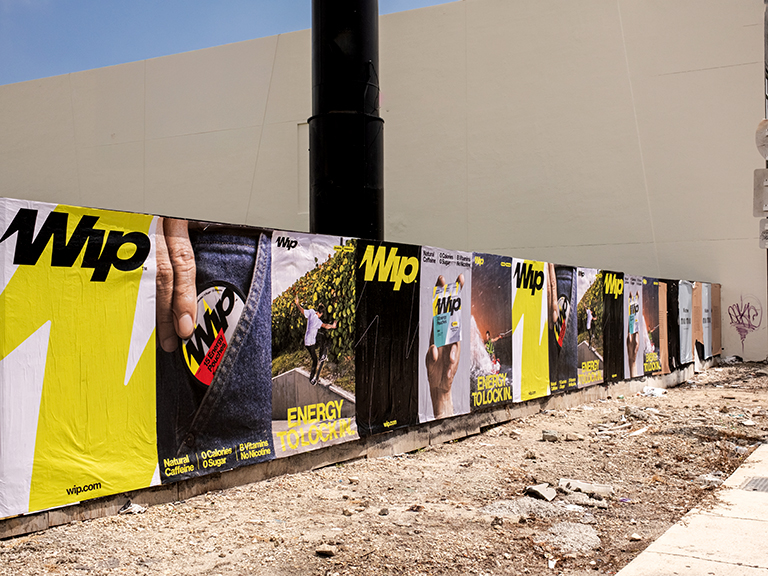
Guerrilla marketing in urban environments means creating brand presence through unconventional, non-traditional placements and activations that use the city itself as the canvas. Wheatpasting campaigns that place large-format brand posters at high-visibility locations in target neighborhoods. Sidewalk stencils at subway exits and busy pedestrian corridors. Ambient installations that create brand moments in unexpected urban contexts. These formats work in cities because they appear in the physical environment consumers already inhabit, at a scale and cultural register that commands attention without requiring active media consumption.
Street Teams and Brand Ambassadors
Urban street team programs deploy trained brand ambassadors directly in target neighborhoods – at markets, transit hubs, community events, and busy pedestrian locations. The effectiveness of urban street teams depends almost entirely on the quality and cultural appropriateness of the people deployed. An ambassador who understands and fits the neighborhood they’re working in creates very different consumer responses than one who doesn’t. AGM recruits and trains street teams specifically for each market and neighborhood context.
Mural Advertising
Brand murals have become one of the most culturally significant urban marketing formats. A well-executed mural in the right urban location is visible to thousands of people daily, earns consistent organic social documentation from community members and tourists, and builds sustained brand presence over months or years rather than weeks. The key is designing murals that function as genuine contributions to the visual culture of the neighborhood – not just large advertisements – which requires both artistic quality and cultural intelligence about the specific community context.
Sampling Activations at Urban Gathering Points
Urban markets, transit plazas, parks, and outdoor dining areas concentrate consumers in contexts where sampling activations work exceptionally well. In a city like New York, the density of high-quality sampling locations – from Union Square Greenmarket to the High Line to Brooklyn Bridge Park – means that a well-planned urban sampling program can reach significant volumes of target consumers with high geographic and demographic precision.
LED Billboard Trucks in Urban Environments
LED billboard trucks are particularly effective in urban environments because they can position for high-traffic periods and relocate as traffic patterns shift throughout the day. Morning commuter peak at a transit hub, midday pedestrian concentration in a shopping district, evening restaurant and entertainment corridor – a mobile LED billboard covers multiple audience segments that a fixed outdoor placement cannot reach. In event-dense urban environments, LED trucks can follow the audience through the day rather than waiting for it to pass a fixed location.
Urban Markets AGM Covers
Understanding which urban markets matter for your brand – and which specific neighborhoods within those markets – is a strategic question before it’s a logistics question. AGM operates across 50+ U.S. markets and has direct field experience in every major American city.
New York City
New York is the most complex urban marketing environment in the United States – five boroughs, hundreds of distinct neighborhoods, rigorous permitting requirements, and the most demanding and sophisticated consumer audience in the country. AGM has operated in New York since 2006 and maintains the deepest local market knowledge of any city in our network. We know which neighborhoods have the highest concentration of which consumer profiles, which locations produce the best sampling engagement rates, and how to navigate the permitting process efficiently across every borough.
Los Angeles
LA is a sprawling market that requires neighborhood-specific thinking even more than dense cities like New York. Silver Lake, Echo Park, West Hollywood, Venice, Culver City, Downtown, and Koreatown are not interchangeable – each has a distinct demographic composition, cultural identity, and brand receptivity profile. AGM’s LA operations cover the full geographic range of the metro area with the neighborhood intelligence that city-wide campaigns require.
Chicago, Miami, Atlanta, and Beyond
Every major American city has its own urban marketing dynamics – the neighborhoods that matter, the gathering places that concentrate target consumers, the permitting requirements that govern outdoor campaigns. AGM’s multi-market capabilities mean that a national urban marketing program doesn’t require managing multiple local agencies with inconsistent quality and documentation standards. We deploy our own teams or thoroughly vetted local partners with the same GPS-tracked documentation standard across all markets.
How to Choose an Urban Marketing Agency
Not all urban marketing agencies have the same capabilities or the same depth of local market knowledge. Here’s how to evaluate potential partners.
Actual Field Experience vs. Media Planning
Some agencies that call themselves “urban marketing agencies” are primarily media planning organizations that buy outdoor advertising in urban markets without genuine street-level operational capability. The distinction matters for formats like guerrilla marketing, sampling programs, and experiential activations that require real field operations: scouting, permitting, staffing, and on-site management. Ask directly: who will be on-site running the campaign? Are they your employees, or vendors you’re coordinating?
Neighborhood-Level Knowledge
Ask any prospective urban marketing agency to describe the target neighborhoods for your specific campaign in specific terms: foot traffic patterns, community gathering points, cultural dynamics, permitting requirements, and competitive brand presence. An agency with genuine local knowledge can answer these questions with specificity. One without it will give generic answers.
Documentation Standards
Ask to see a sample campaign report. GPS-tagged photos, timestamped video, engagement counts, and geographic documentation should be standard deliverables. An agency that can’t show you what a post-campaign report looks like hasn’t built the infrastructure to prove that campaigns ran as planned.
Urban Marketing at Different Campaign Scales
Urban marketing campaigns don’t require enterprise-scale budgets. The format scales efficiently from focused neighborhood programs to multi-city national campaigns, with each scale producing appropriate outcomes for the investment made.
Neighborhood-Level Programs
The most focused urban marketing programs target one or two specific neighborhoods in a single city – the areas where a brand’s highest-concentration target audience lives, shops, and gathers. A neighborhood-level program deploys street teams, sampling activations, and guerrilla visual presence precisely in these locations over a campaign period of two to four weeks. These focused programs are ideal for brand launches in new communities, testing campaign approaches before scaling, or deep community-building in a high-priority local market. Costs are accessible – a focused neighborhood program can produce genuine results at $10,000-$20,000 – making urban marketing available to brands that can’t yet afford multi-city campaigns.
City-Wide Multi-Neighborhood Programs
City-wide programs cover multiple neighborhoods simultaneously, building brand presence across a metro area’s key audience concentrations rather than focusing depth in one location. In New York, this might mean deploying across Williamsburg, Crown Heights, Harlem, and Astoria concurrently – building awareness across the city’s dispersed creative and professional communities simultaneously. City-wide programs require more staffing, more location permits, and more materials production – typically $30,000-$75,000 for a professional multi-week program – but produce city-scale brand presence that neighborhood programs can’t achieve.
Multi-City National Urban Programs
National urban marketing programs deploy across five, ten, or more major cities simultaneously or in sequenced waves. These programs are appropriate for product launches with national distribution, entertainment releases with urban demographic targets, and brands building urban market share across multiple metropolitan areas. AGM manages multi-city programs with consistent execution standards across all markets – the same GPS-tracked documentation, the same ambassador training standards, the same location quality requirements regardless of city. Multi-city programs typically range from $75,000-$250,000 depending on markets, formats, and duration.
What Great Urban Marketing Creative Looks Like
The creative execution of urban marketing campaigns needs to meet a higher standard than general advertising because urban audiences are exceptionally sophisticated evaluators of brand communication. Creative that works in a suburban mass media context often fails in urban environments where the audience is more attuned to cultural signals and more skeptical of inauthentic brand presence.
Cultural Fluency in Creative
Urban creative that performs well demonstrates knowledge of the specific cultural context it’s appearing in – not generic “urban cool” but specific neighborhood vernacular, visual language that fits the walls it appears on, and messaging that acknowledges the real community rather than a brand strategist’s approximation of it. This is where working with an agency that has direct community relationships matters most – cultural fluency can’t be briefed in from outside.
Designed for Organic Documentation
The best urban marketing creative is designed to be photographed and shared by the community members who encounter it – not because they’re incentivized to share, but because the creative is genuinely interesting to document. A striking mural in Bushwick, a clever sidewalk stencil at a Bedford Avenue subway exit, a visually distinctive sampling station at a Smorgasburg market – these earn organic social documentation because they’re genuinely compelling in their environment. This organic sharing multiplies the reach of physical urban placements beyond their direct impression counts, creating earned media value that extends the campaign budget.
Visual Hierarchy for Urban Speed
Urban visual communication happens at pedestrian walking speed and vehicle passing speed simultaneously. Creative that requires five seconds of attention fails in urban environments where visual noise is high and attention is compressed. Effective urban creative establishes brand, message, and action hierarchy in two seconds or less – which requires stripping design to essential elements and trusting visual language over verbal complexity for the first impression.
Urban Marketing for Specific Brand Objectives
Different brand objectives call for different urban marketing approaches. Understanding which tactical combination serves which objective helps brands allocate urban marketing investments more strategically.
Product Launch in an Urban Market
For a product entering an urban market for the first time, the primary objective is trial – getting the product into the hands of the right consumers and letting it demonstrate its own value. Sampling activations at high-relevance locations, combined with wheatpasting in the neighborhoods where target consumers concentrate, create the trial plus visual familiarity combination that converts awareness into purchase. The street-level program should be timed to coincide with retail placement so that consumers who sample the product can find it at the shelf within days of their sampling encounter.
Cultural Credibility Building
For brands that need to establish or rebuild cultural credibility in urban markets – fashion labels entering streetwear culture, consumer brands connecting with specific ethnic communities, lifestyle brands reaching young urban adults – the objective is community relationship building, not just impressions. This requires sustained presence: recurring community event presence, mural programs, ongoing street team visibility, and genuine community investment rather than one-time campaign parachuting. AGM’s community knowledge in New York and major markets enables the kind of sustained, culturally fluent presence that credibility-building requires over time.
Market Defense Against Urban Competitors
Established brands defending market share against new competitors entering their core urban markets use street-level marketing to reinforce community relationships and remind existing consumers of their brand’s neighborhood presence. A guerrilla marketing campaign that puts a brand back on the walls and sidewalks of its core neighborhoods signals continued investment and community presence at the moments when competitive alternatives are making noise.
Urban Marketing Budget Planning
Urban marketing campaigns scale efficiently across budget ranges, but the relationship between budget and outcome is not linear – it requires strategic allocation to the tactics that produce results for the specific objective.
Where Budget Has the Highest Leverage
Location quality and staffing quality are the two highest-leverage budget variables in urban marketing. An average location with excellent ambassadors outperforms a premium location with poor staff. An excellent location with excellent ambassadors produces outcomes that neither achieves independently. Budget that cuts corners on staffing quality or location scouting to spend more on materials and creative production is misallocated. AGM’s budget recommendations consistently prioritize these two elements above production spending.
Scale and Campaign Duration
Urban marketing campaigns build frequency and community familiarity over time. A one-day activation produces awareness. A three-weekend program in the same neighborhoods builds familiarity. A seasonal program over eight to twelve weeks builds genuine community relationship. The right duration depends on the objective: trial-driving programs can be effective over shorter windows; community relationship building requires sustained presence. Budget planning should reflect which objective the campaign is actually serving.
What does an urban marketing agency do?
An urban marketing agency specializes in brand campaigns designed for dense city environments – street-level guerrilla marketing, wheatpasting, sampling activations, brand ambassador programs, outdoor advertising, and experiential campaigns. They understand the specific geography, culture, permitting requirements, and consumer behavior patterns of major U.S. cities and design campaigns accordingly.
What makes urban marketing different from general marketing?
Urban marketing operates in environments with high pedestrian density, intense visual competition, strong neighborhood cultural identities, and sophisticated consumer audiences who are highly skeptical of inauthentic brand presence. Success requires cultural fluency, real local market knowledge, and execution quality that stands up to the scrutiny of urban audiences who are better at filtering undifferentiated advertising than almost any other consumer demographic.
What urban marketing tactics are most effective?
The most effective urban marketing tactics include guerrilla street campaigns (wheatpasting, sidewalk stencils, ambient installations), street team and brand ambassador programs, sampling activations at high-traffic urban locations, mural advertising, LED billboard truck routes, and community event presence. The right mix depends on the brand’s objectives and the specific target urban communities.
How do you target specific neighborhoods in urban marketing?
Urban neighborhood targeting requires understanding each neighborhood’s demographic composition, cultural identity, foot traffic patterns, community gathering points, and relationship with specific brand categories. Effective urban targeting is based on direct knowledge of the streets – built through years of field operations – not just census data or media buying demographics. AGM’s team has walked every major American city’s neighborhoods directly.
What cities does an urban marketing agency typically cover?
The major urban markets for brand campaigns include New York, Los Angeles, Chicago, Miami, Houston, Atlanta, Boston, Philadelphia, Seattle, Denver, San Francisco, and Washington D.C. The cities that matter most for a specific brand depend on where its target consumer concentrates geographically and where the brand’s retail or digital distribution is strongest.
How much does urban marketing cost?
Urban marketing campaign costs vary by format and scale. Single-market street campaigns start around $10,000-$20,000. Multi-format urban programs covering several neighborhoods run $25,000-$75,000. Multi-city urban campaigns across five to ten markets typically range from $75,000-$200,000 depending on formats deployed, staffing requirements, and campaign duration.
Is AGM an urban marketing agency?
Campaign Architect — American Guerrilla Marketing
Frequently Asked Questions
What does an urban marketing agency do?
An urban marketing agency specializes in brand campaigns designed for dense city environments – street-level guerrilla marketing, wheatpasting, sampling activations, brand ambassador programs, outdoor advertising, and experiential campaigns. They understand the specific geography, culture, permitting requirements, and consumer behavior patterns of major U.S. cities.
What makes urban marketing different from general marketing?
Urban marketing operates in environments with high pedestrian density, intense visual competition, strong neighborhood cultural identities, and sophisticated consumer audiences who are highly skeptical of inauthentic brand presence. Success requires cultural fluency, real local market knowledge, and execution quality that stands up to the scrutiny of urban audiences.
What urban marketing tactics are most effective?
The most effective urban marketing tactics include guerrilla street campaigns (wheatpasting, sidewalk stencils, ambient installations), street team and brand ambassador programs, sampling activations at high-traffic urban locations, mural advertising, LED billboard truck routes, and community event presence. The right mix depends on the brand’s objectives and target urban community.
How do you target specific neighborhoods in urban marketing?
Urban neighborhood targeting requires understanding each neighborhood’s demographic composition, cultural identity, foot traffic patterns, community gathering points, and relationship with specific brand categories. Effective urban targeting is based on direct knowledge of the streets, not just census data or media buying demographics.
What cities does an urban marketing agency typically cover?
The major urban markets for brand campaigns include New York, Los Angeles, Chicago, Miami, Houston, Atlanta, Boston, Philadelphia, Seattle, Denver, San Francisco, and Washington D.C. The cities that matter most for a specific brand depend on where its target consumer concentrates geographically.
How much does urban marketing cost?
Urban marketing campaign costs vary by format and scale. Single-market street campaigns start around $10,000-$20,000. Multi-format urban programs covering several neighborhoods run $25,000-$75,000. Multi-city urban campaigns across five to ten markets typically range from $75,000-$200,000 depending on formats, staffing, and campaign duration.
Is AGM an urban marketing agency?
Yes. AGM has been executing urban brand campaigns since 2006, starting in New York City and expanding to 50+ U.S. markets. Our team knows the streets of every major American city from direct field operations – we don’t manage urban campaigns from a distance. Contact us at [email protected] or (646) 776-2770.