The most memorable marketing campaigns of the last 30 years didn’t win because of media budget. They won because someone had an idea that was genuinely surprising, put it in an environment where consumers didn’t expect to see advertising, and executed it with enough craft and conviction that people couldn’t help talking about it. That’s the core premise of guerrilla marketing, and it hasn’t changed even as the media landscape has transformed around it.
Unconventional campaigns steal attention because they violate expectations. Consumers who walk the same streets, ride the same trains, and shop in the same stores every day have developed sophisticated filters that block out conventional advertising without conscious effort. A billboard in a standard billboard location doesn’t even register consciously for most urban consumers. The same visual message appearing somewhere it has no business being forces the brain to pay attention because unexpected stimuli trigger the same alert mechanisms that helped human ancestors survive in the wild.
This guide explores what makes guerrilla marketing campaigns genuinely unconventional, breaks down the tactics and formats that generate the largest organic reach, and shows how brands of any size can apply these principles to street-level campaigns that actually move consumers.
The Psychology Behind Why Unconventional Marketing Works
Understanding the psychological mechanisms behind guerrilla marketing effectiveness helps brands design campaigns that exploit these mechanisms intentionally rather than stumbling into them by accident.
Pattern Interruption
Human attention is dominated by pattern recognition. Our brains process familiar environments and stimuli with minimal conscious attention, freeing cognitive resources for novel inputs that might require a response. This is why we can walk the same route to work every day without consciously processing most of what we see. Unconventional marketing breaks the pattern, forcing the brain to process the unexpected input with full attention. That’s a gift that no media buy can manufacture.
Context Incongruity
When a brand message appears in a context where advertising doesn’t belong, the incongruity itself generates attention and often delight. A chalk outline of a person on a sidewalk that turns out to be an ad for a crime drama creates a moment of surprise that the consumer actively wants to photograph and share. The incongruity is the campaign. The medium isn’t just the message. The unexpected context is the message.
Earned Social Amplification
Genuinely surprising, well-crafted guerrilla marketing creates organic sharing behavior. Consumers who discover an unexpected brand activation photograph it and post it because it’s a discovery worth sharing, not because the brand asked them to. This social amplification multiplies the reach of physical installations dramatically beyond their direct impression count. A wheatpasted mural in Williamsburg that generates 50,000 organic social impressions reaches 50 times more people than walked past it on the street during its first week.
Categories of Unconventional Guerrilla Marketing That Consistently Deliver
Ambient Advertising on Unexpected Surfaces
Ambient advertising turns environmental surfaces into brand canvases in ways that consumers don’t expect. Crosswalk paintings that turn pedestrian crossings into brand moments. Elevator floor graphics that appear only when the doors open. Manhole cover and grate paintings that transform overlooked urban infrastructure into brand touchpoints. Escalator riser graphics that reveal a message to commuters descending into subway stations.
The power of ambient advertising comes from its relationship with the environment. When a brand message appears on a surface in a way that is visually integrated with or activated by that surface’s specific character, the campaign demonstrates a level of creative intelligence that generates genuine respect from consumers. It’s not just advertising. It’s a smart idea that happens to advertise.
Guerrilla Sampling and Pop-Up Experiences
Unexpected product experiences in unexpected locations remain one of the highest-engagement guerrilla formats. A brand that shows up with a fully equipped café experience in a subway station, a food truck that appears without announcement in a corporate lunch corridor, or a beauty brand that deploys a mobile salon on a busy street corner creates a consumer moment with authentic discovery energy that planned marketing events can rarely replicate.
The surprise element of these activations generates the organic social sharing and word-of-mouth that compounds their reach. But the execution quality determines whether the experience creates positive brand associations or becomes a chaotic, frustrating interaction. Our team has deployed hundreds of these activations with the operational infrastructure that keeps the consumer experience smooth regardless of the external environment’s unpredictability.
Stunt-Based Activations
Large-scale visual stunts that interrupt daily life generate media coverage and social amplification that no traditional advertising spend achieves at comparable cost. A seemingly impossible visual, an installation that appears overnight and generates neighborhood speculation about its origin, a branded intervention in a public space that creates a dramatic moment for passersby, these are the campaigns that end up in marketing case studies because they demonstrate the leverage available when creativity is the investment rather than media spend.
Stunt-based activations require careful legal and operational planning. Unauthorized placements create liability and force removal, destroying the investment and damaging brand reputation simultaneously. The most effective stunt campaigns are fully permitted, completely safe, and operationally sound, which is what allows them to remain in place long enough to generate the earned media and organic amplification that justifies the investment.
Experiential Brand Activations
Experiential activations that invite consumer participation create brand memories through personal engagement that passive advertising can’t produce. Interactive installations where consumers control or contribute to the experience, pop-up events that give consumers access to something they couldn’t experience anywhere else, and brand environments that create genuine emotional resonance all fit this category.
The best experiential activations are designed for the specific consumer and cultural context of their deployment location. An experiential campaign that works brilliantly in Brooklyn’s creative community requires different design thinking than one targeting Atlanta’s business district or Chicago’s festival culture. Generic experiential concepts deployed without geographic and cultural adaptation consistently underperform against campaigns built for the specific environment they’re entering.
Street-Level Guerrilla Tactics That Build Compound Brand Presence
Individual guerrilla marketing tactics create moments. Combined guerrilla tactics in the same geographic zone create compound brand presence that’s difficult for consumers to ignore regardless of which specific activation they encounter first. Here’s how we combine tactics for maximum impact:
Wheatpasting and Poster Campaigns
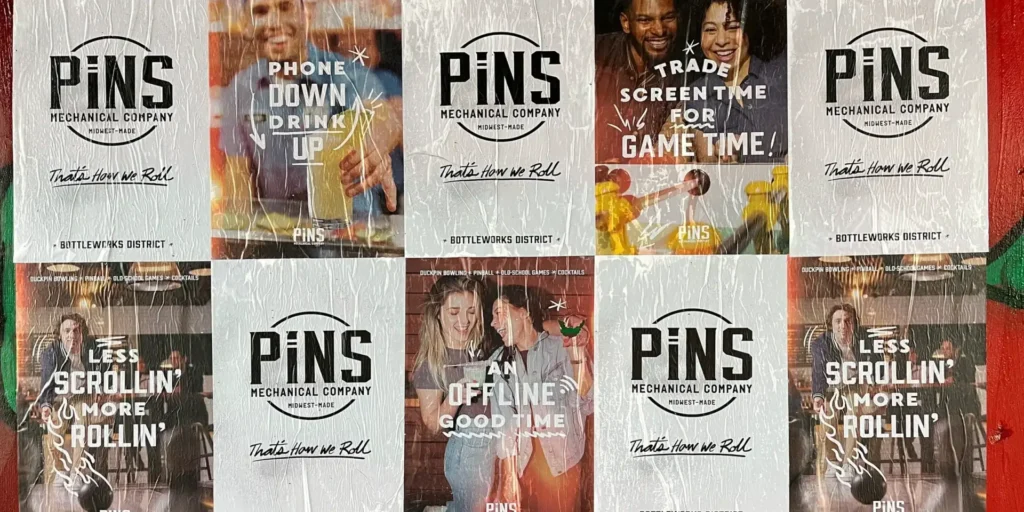
Large-format wheatpasted posters in high-traffic urban locations create bold visual brand presence that persists over days and weeks. The format has roots in street art culture that give it authenticity credibility beyond standard outdoor advertising formats. Executed with quality creative, wheatpasting in the right neighborhoods generates organic social coverage from consumers and local media who document compelling street art regardless of its commercial nature.
Sidewalk Stencils
Ground-level brand presence through sidewalk stencils reaches consumers in their direct line of sight during foot travel. Placed at high-traffic pedestrian locations like crosswalks, transit station entrances, and pedestrian corridors near retail destinations, stencils create repeated brand impressions for consumers who traverse the same routes daily. The repetition compounds recall even for consumers who don’t consciously notice individual stencil placements.
LED Billboard Trucks
LED billboard trucks bring high-impact moving visual advertising into street-level environments, creating brand presence on routes where static advertising doesn’t exist and adding dynamic visual energy to campaign activation zones. Routing trucks through target neighborhoods at peak consumer activity times compounds the reach of stationary guerrilla elements deployed in the same area.
Brand Ambassadors at Key Touchpoints
Human engagement turns ambient brand presence into direct consumer interaction. Deploying brand ambassadors at or near guerrilla marketing installations creates a layered campaign experience: the installation creates the visual brand moment; the ambassador converts that moment into a personal brand conversation. This combination produces higher conversion from awareness to consideration than either element generates independently.
What Separates Guerrilla Campaigns That Stole the Show from Those That Fizzled
Not every unconventional campaign becomes a case study. Many generate a brief moment of interest and then disappear without trace. The difference between show-stealing campaigns and forgettable ones comes down to a small number of decisive factors:
The Idea Has Genuine Surprise Value
If the concept can be described in a way that doesn’t generate a reaction from someone hearing it, it won’t generate a reaction in the field. The strongest guerrilla concepts produce an immediate response of “that’s brilliant” or “that’s audacious” when described in a sentence. If the reaction is “that’s fine” or “that could work,” the concept needs more development before deployment.
The Execution Matches the Concept’s Ambition
A brilliant concept executed with mediocre production values is worse than no campaign at all because it signals to consumers that the brand doesn’t actually believe in the idea. The physical craft quality of guerrilla marketing installations, whether wheatpasted posters, chalk art, ambient advertising elements, or experiential environments, must match the conceptual ambition. Consumers make instantaneous quality assessments that are difficult to reverse.
The Location Amplifies the Message
The best guerrilla campaigns are designed for a specific location in a way that makes the message and the environment mutually reinforcing. A campaign about speed deployed near a running track. A campaign about freshness deployed near a greenmarket. A campaign about urban culture deployed in the specific neighborhood where that culture is most concentrated. When the location is part of the concept, the campaign demonstrates intelligence that generates attention and respect.
There’s a Clear Brand Connection
Surprising activations that don’t clearly connect to a brand generate attention and social sharing but zero brand equity. The consumer walks away with a memory of an interesting experience but no memory of who created it. Every guerrilla marketing activation must be designed with a clear, memorable brand connection embedded in the core concept, not added as an afterthought.
Building an Unconventional Campaign for Your Brand
The barriers to building genuinely unconventional guerrilla marketing campaigns are lower than most brands assume. The primary inputs are creative thinking, operational expertise, and the willingness to execute something that feels different from conventional marketing. Budget is a real constraint but rarely the binding one. Here’s how to start:
Define the consumer moment you want to create. Where is your consumer? What are they doing? What is the environment around them? What unexpected brand intervention in that context would stop them, surprise them, and leave a positive brand memory? Start with that question before you think about format or medium.
Then work with a team that knows how to execute what you’ve designed in the real world with all its complexity: weather, permitting, logistics, staffing, and documentation. Creative ideas executed poorly become brand liabilities. The same ideas executed well become the campaigns people remember years later.
The AGM Approach to Unconventional Campaign Execution
At American Guerrilla Marketing, we’ve been executing unconventional street-level campaigns since our founding in Industry City, Brooklyn, NY. We operate across 50+ U.S. markets with the operational infrastructure to turn creative concepts into real-world campaigns that perform under actual field conditions.
Every campaign we deploy is GPS-tracked, photographically documented, and reported with performance analytics. We bring the same operational discipline to a 200-poster wheatpasting campaign in a single neighborhood as to a 20-market launch activation with brand ambassadors, LED billboard trucks, and multiple street-level elements. If you want to build something that steals the show, we’re the team that makes it happen.
Call us at (646) 776-2770 or contact our team to start the conversation about your next unconventional campaign.
Frequently Asked Questions About Unconventional Guerrilla Marketing
What makes guerrilla marketing unconventional?
Unconventional guerrilla marketing uses unexpected locations, formats, or interactions that break consumer expectations of where advertising appears and how it behaves. The surprise element generates attention and sharing behavior that conventional advertising cannot produce, even at much higher spend levels. The medium becoming the message is a key characteristic of the most effective unconventional campaigns.
What are some examples of effective unconventional guerrilla marketing?
Effective unconventional guerrilla marketing includes ambient advertising on unexpected surfaces like crosswalks and stairwells, interactive street installations that invite consumer participation, strategic deployment in locations where the brand message is amplified by environmental context, large-scale art-based activations, and surprise experiences in consumer environments where advertising is not expected.
How much does a guerrilla marketing campaign cost?
Guerrilla marketing campaigns vary widely in cost. Entry-level street-level activations like sidewalk stenciling or flyer distribution can run a few hundred to a few thousand dollars. Multi-city wheatpasting campaigns might run $5,000 to $25,000. Comprehensive multi-tactic campaigns with staffing, LED billboards, and multiple market deployments can reach six figures. Contact our team for a quote specific to your campaign concept.
What elements make guerrilla marketing campaigns go viral?
Campaigns that generate social sharing typically feature surprise or unexpectedness, high visual quality that photographs well, a clear brand connection to the activation, emotional resonance with the target audience, and a location that concentrates the target consumer. Campaigns that people photograph and share online extend their reach exponentially beyond the physical audience, creating the earned media effect that defines viral guerrilla campaigns.
Is guerrilla marketing legal?
Most guerrilla marketing tactics are legal when properly permitted and executed with property owner consent. Working with an experienced agency ensures all placements have appropriate permissions, permits, and legal compliance before execution begins. Unauthorized placements create brand liability and force removals that waste campaign investment and create negative brand associations.
How do you measure the success of a guerrilla marketing campaign?
Measure guerrilla marketing success through consumer impressions at activation sites, social media organic reach from consumer-generated content at the campaign, earned media coverage, brand search volume lift, and post-campaign sales tracking in activated markets. GPS documentation and photo reporting from AGM deployments provide accountability for every element of every campaign.
Can small brands run unconventional guerrilla marketing campaigns?
Yes. Guerrilla marketing was originally defined by its resourcefulness and creativity rather than budget size. Small brands in specific neighborhoods or cities can create memorable, high-impact street-level campaigns with relatively modest budgets by focusing on creativity, surprise, and precise geographic targeting rather than spending their way to reach. The best unconventional campaigns are idea-driven, not budget-driven.
Frequently Asked Questions
What is unconventional guerrilla marketing examples that stole the show?
American Guerrilla Marketing provides unconventional guerrilla marketing examples that stole the show services across 50+ U.S. markets. Every campaign is planned, scouted, executed, and GPS-documented by our field teams. We work with regional brands and Fortune 500 companies on campaigns that require real street-level execution and documented proof of performance.
How does AGM approach the show?
Our process starts with a market consultation to understand your goals, target audience, and budget. We then scout locations, handle any required permissions or permits, coordinate production and installation with our local crews, and provide a full GPS-tagged photo report after the campaign runs.
What markets does American Guerrilla Marketing cover for the show?
We operate in 50+ U.S. markets including New York, Los Angeles, Chicago, Miami, Houston, Atlanta, Seattle, Denver, Boston, and dozens of secondary markets. Contact us to confirm availability and pricing for your specific market.
How much does a the show campaign cost?
Campaign pricing depends on market, format, quantity, and duration. We work with budgets ranging from targeted single-market runs to national rollouts across multiple cities. Use our RFP Builder or contact us directly for a custom quote based on your specific campaign requirements.
How do I get started with the show through AGM?
The fastest way to get started is to submit your campaign details through our RFP Builder at americanguerrillamarketing.com, or contact us directly at [email protected] or (646) 776-2770. Our team typically responds within one business day with availability and initial pricing.