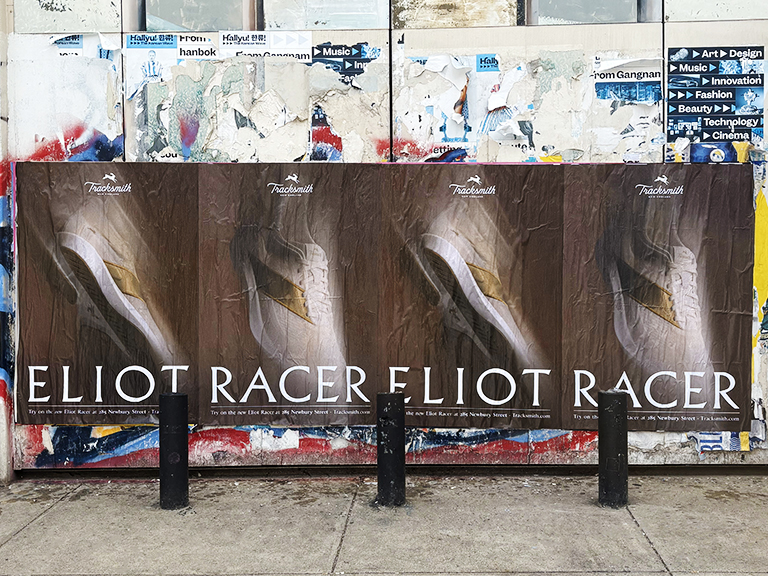
Ultimate Street Poster Solutions: Printing & Design
Street posters are still the rawest form of public conversation. When a wall carries your message at eye level, people read it, talk about it, and share it. That mix of scale, texture, and repetition turns casual glances into action. It is why global brands keep coming back to this medium. AGM is the leading specialist in the category, trusted by Nike, Wrangler, and EA Sports, and built to run creative, printing, and field operations as one coordinated system.
Street posters are not just about coverage. They shape culture at the block level. A great poster makes a neighborhood feel like something is happening now.
Why street posters still punch above their weight
Physical presence builds memory. People pass the same corners every day, and repetition compounds.
Smart placement finds audiences others miss. Posters catch pedestrians at the exact moment they make decisions: coffee, tickets, tonight’s plans.
Flexible scale and cost. You can blanket a few blocks or roll through five cities on a timeline that fits a launch.
Creative freedom. No ad blocker can mute a wall.
Campaigns start at $4,500 and bundle poster printing, installation, and proof photos, so approvals move fast and teams hit the street without friction.
Formats that move people Selecting the right size determines how far your message travels and how fast it reads.
Snipes: 11×17 inches. High-touch, high-density format for lightpoles, boutique windows, and coffee shop boards. Short copy, bold graphics.
Standard: 24×36 inches. The most versatile size for urban walls and fences. Great for 10 to 30 feet.
Large: 48×72 inches. Commanding visuals for building facades, plazas, and high-traffic arterials.
A useful rule: 1 inch of letter height reads at roughly 30 feet. If you want a headline legible at 90 feet, set it around 3 inches tall. That single guideline improves outcomes overnight.
Quick design rules that save the day
One big idea: one visual, one headline, one action.
High contrast beats intricate detail in the street.
Keep copy under 12 words for fast scans.
QR codes should be large, low-error versions with quiet zones.
Test on a wall-size mockup. Shrink the view to phone size at arm’s length to simulate distance.
Suggested sizes and viewing ranges
Format
Dimensions
Ideal viewing range
Typical placements
Snipe
11×17 in
5–15 ft
Poles, café windows, bulletin boards
Standard
24×36 in
10–30 ft
Brick walls, plywood fencing, kiosks
Large
48×72 in
30–150 ft
Facades, street plazas, long sightlines
Bus shelter
~48×68 to 48×70 in
20–100 ft
Transit shelters, street furniture
6-sheet panel
~47×68 in
30–150 ft
Bus shelters, kiosks
12-sheet panel
~94×68 in
50–300 ft
Small roadside billboards
Single vs. multi-panel layouts A single placement is powerful. Two or three in a row can stop traffic. Diptych and triptych campaigns stretch a visual across adjacent panels, widening the viewing angle and boosting recall. They require precise alignment and more field time, yet the payoff is real when you need a “takeover” feel or a narrative that unfolds across frames.
From artboard to brick wall: AGM’s streamlined workflow AGM manages the entire lifecycle so the creative you approve is the creative people see on the street.
Design proofs and preflight: Your team or ours. We set bleed, color profiles, and legibility at target distances.
Offset and large-format printing: In-house presses with UV-cured and latex options for durability and rich color.
Street-level placement: Insured installers with city experience and GPS-tracked routes for coverage you can verify.
Compliance checks: Permits where required, private wall agreements where smart, and photo proofing for every batch.
Turnaround can be as quick as 1–2 weeks for smaller drops once art is final. Multi-city waves usually run on a 3–4 week rhythm, timed to shipping, permits, and local crew schedules. Real-time tracking lets project managers reallocate crews as conditions change, keeping the plan intact.
Bring print to life with interactivity Posters can act like portals.
QR to AR: Scan and launch animations, product demos, or mini games. This is the fastest bridge between a static wall and a full digital story.
NFC tags: Tap to claim offers or ticket holds.
Smart finishes: Glow-in-the-dark ink for nightlife, scratch-off reveals, or reflective foils for headlights.
AGM’s AR layer add-ons begin around $5,000 and plug into the same field operations, creating a single report across print and digital touchpoints.
Built to last outdoors Weather and wear are part of street life. Production choices decide if your art looks fresh for weeks or fades in days.
Substrates: Synthetic papers and tear-resistant vinyl keep edges clean and resist soaking.
Inks and lamination: UV-cured systems and protective films hold color and block scuffs.
Anti-graffiti coatings: Make clean-ups easy without dulling colors.
Sustainable options: Non-PVC materials and eco inks, recycled or biodegradable stocks, and even plantable seed papers when the concept calls for it.
Packages and pricing that keep things simple AGM pricing is designed to be clear and fast to approve.
Campaigns start at $4,500 and include printing, installation, and proof photos.
Standard 24×36 runs are the most common all-in package.
Large-format 48×72 campaigns carry higher print and labor costs and are ideal for district-level dominance.
Sample package map
Package tier
What you get
Typical use case
Snipe city intro
500 snipes, 11×17, 2-week live time, proof photos
Boutique launches, grassroots events
Core street standard
200 posters, 24×36, 2-week live time, print + install + proofs
Album drops, retail promos, openings
Jumbo wall impact
100 posters, 48×72, targeted walls, proof photos
Film releases, fashion, product launches
AR boost add-on
QR to AR scene, analytics, basic landing page
Engagement and social amplification
Notes that matter
City, season, and access can affect rates. Sites with permits or private wall agreements may include fees.
Maintenance options replace damaged or removed sheets during the live window.
Creative concepting, advanced data reporting, and multi-city planning are available as add-ons.
Neighborhood activations that feel local Campaigns win when they fit the rhythm of the block. AGM plans by neighborhood, not only by city, and tailors art and pacing so the work feels native to the street.
Austin
Red River: Live music promotion is part of the fabric here. Gig posters, album art aesthetics, nights-and-weekends drops.
South Congress: Boutique-friendly runs with cleaner layouts and lifestyle imagery.
Downtown and 2nd Street: Event-forward headlines, strong dates, quick QR to RSVP.
Hollywood Blvd: Film premiere runs with cinematic key art and jumbo sheets near venues.
Melrose Ave: Lifestyle and sneaker culture with polished product visuals and strong color.
Arts District: Poster murals that bridge art and ads, often with QR that unlocks behind-the-scenes content.
Chicago
Wicker Park: Music and nightlife drops with repeat frequency near venues and late-night corridors.
River North: Dining and bar promotions with sharp photography and simple calls to action.
Logan Square: Political-style poster grids and bold typography for civic or cause campaigns.
Strategy that drives outcomes Good street work is a system. Here is how to make each element count.
Timing
Start 2–4 weeks ahead for local events. Stretch to 4–6 weeks for big openings and tours.
Pulse the city: teaser art first, then full information pieces in the final 10 days.
Frequency and reach
Repetition over distribution sprawl. Seeing the same visual three times on one block works better than a single poster lost across town.
Build mini networks around decision points: coffee clusters, venue rows, transit funnels.
Creative choices
Headline first, offer second, brand third. Eye, brain, memory, in that order.
Keep brand marks big enough to register at pace. If you need a loupe, it is too small.
Use two fonts maximum and lock your color palette to three primaries.
Interactivity and attribution
QR placement matters. Bottom right and near eye level reduce scan friction.
Short URLs as a backup for older phones.
Add a simple vanity metric: code variants by neighborhood to see which blocks pop.
Compliance and fieldcraft Local codes differ. AGM’s teams plan to the letter.
Permits or private wall agreements where required. City rules vary by district.
Insured crews with real-time GPS for accountability and quick adjustments.
Proof photos delivered as placements go live. You see what the street sees.
Designing for distance in one minute Use this quick sizing checklist when you lock your layout:
Pick your size: 11×17 for close quarters, 24×36 for general street, 48×72 for long reads.
Choose your headline height:
1 in letters for 30 ft
2 in for 60 ft
4–6 in for long boulevards
Aim for a 60 to 70 percent image area and 30 to 40 percent copy area.
Keep QR code modules at least 1 inch wide on 24×36 prints and larger for jumbo.
Export CMYK PDF with crop and bleed, outline fonts, and embed images at 150 to 300 dpi at scale.
Materials cheat sheet
Standard posters: Coated stock with UV inks. Good for 2 to 4 weeks in mild weather.
Synthetic paper: Waterproof, tear-resistant. Ideal for rainy or humid cities.
Vinyl: Heavy-duty for high-touch walls and long campaigns.
Eco options: Non-PVC films, recycled fibers, and seed paper for tactical stunts.
Field tech that keeps campaigns tight AGM runs installs with mobile devices tied to a live tracking system. Managers see crews moving through geo-fenced zones, reassign routes in real time, and confirm coverage with photo proofs. If a venue date shifts or a storm hits a quadrant, teams pivot the same day. That operational speed is why complex multi-city drops hold together under pressure.
How street posters lift overall marketing performance
They fill reach gaps. People who block ads online still see your walls.
They boost digital response. Search and social see lifts when the street is active.
They build social moments. Fans take photos against poster murals and share them without being asked.
They create a countdown. The city starts to feel the launch days before it happens.
Plan your first campaign with this quick brief
Goal: Awareness, foot traffic, app downloads, ticket sales, or all of the above.
Audience: Who, where, and when they pass the message.
Creative: One visual, one line, one action, plus QR or short URL.
Format: 11×17, 24×36, or 48×72 based on viewing distance and location.
Locations: 5 to 10 target clusters per city, mapped to your audience’s path.
Timing: Start date, pulse dates, and final surge.
Extras: AR layer, maintenance window, social amplification.
Measurement: Unique QR codes by neighborhood and a simple post-campaign readout.
AGM handles concept to placement in one line: design proofs → offset or large-format printing → street-level installs → compliance checks. Packages start at $4,500 and include printing, installation, and proof photos. Choose your neighborhoods, pick your format, and watch the city do the rest.