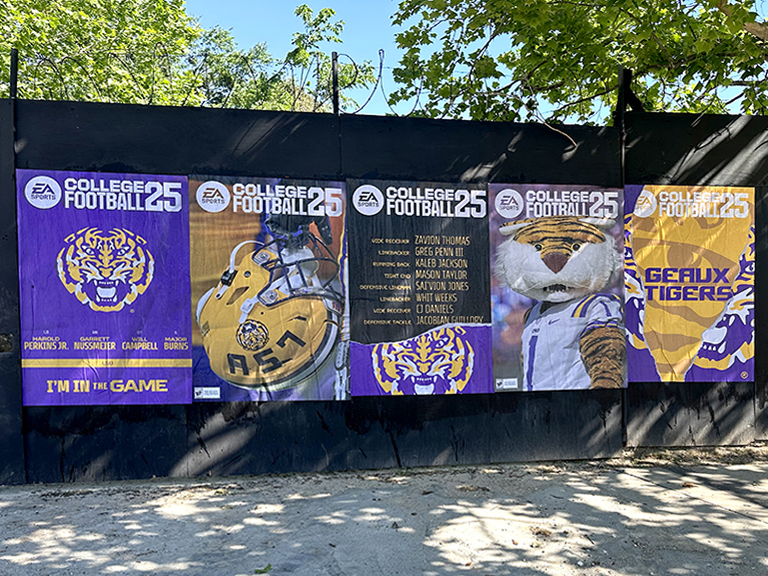
California is home to the densest concentration of major tradeshows and conventions in the United States. The Los Angeles Convention Center, Moscone Center in San Francisco, San Diego Convention Center, Anaheim Convention Center, and Sacramento Convention Center collectively host thousands of events every year, drawing millions of attendees from across the country and around the world. In markets this large and competitive, booth presence alone is not enough. The brands that dominate California tradeshows activate the streets.
Tradeshows california guerrilla marketing is the strategy of extending your brand beyond the exhibit hall into the physical environment where your target attendees live during the event. Hotel corridors, pedestrian plazas, transit stations, and the sidewalks between parking structures and convention entrances are all real estate that most exhibitors leave uncontested. Our team at American Guerrilla Marketing claims that real estate for you, with street-level campaigns that build brand recall before your competitors finish setting up their booths.
Why California’s Convention Geography Creates Exceptional Guerrilla Opportunities
California’s major convention cities share a characteristic that guerrilla marketing amplifies: dense hotel and entertainment districts within walking distance of convention facilities. Attendees at LA, SF, San Diego, and Anaheim shows are largely concentrated within a half-mile to one-mile radius of the venue for the duration of the event. They walk to restaurants. They walk to transit. They move predictably between their hotels and the convention center multiple times each day.
That predictable movement through concentrated geography is exactly what makes street-level campaigns so efficient at tradeshows. You are not paying for reach across a metropolitan area. You are saturating a specific, bounded zone with your brand message and hitting the same highly qualified individuals dozens of times over the course of the event window.
The competitive dynamic in California also favors guerrilla tactics. In markets where exhibitor budgets are high and booth hardware is sophisticated, differentiation comes from surprising and memorable experiences. A brand that shows up on the sidewalk, on the side of a building, and circling the convention center on a full-motion LED truck before the doors even open is operating in a different competitive category than the brand that spent the same budget on a slightly larger booth corner.
Guerrilla Marketing at the Los Angeles Convention Center
The Los Angeles Convention Center sits in the South Park neighborhood, surrounded by a dense hotel district along Figueroa Street and a growing mixed-use zone extending toward the Staples Center and L.A. LIVE complex. The walkable blocks between the Marriott, JW Marriott, and Ritz-Carlton towers and the LACC entrances on Pico Boulevard and Chick Hearn Court are primary deployment corridors for every tradeshow guerrilla tactic we deploy.
Sidewalk stencils along the Figueroa Street frontage and the Pico Boulevard approach to the convention entrances achieve maximum frequency with attendees commuting from the hotel cluster. The Olympic Boulevard corridor connecting the Metro Expo Line station to the LACC is a critical transit intercept point for attendees arriving by rail from downtown, Westside, and Santa Monica.
LED billboard trucks circling the LACC on Figueroa, Pico, Venice, and Chick Hearn Court routes create full-perimeter brand presence that is visible to every vehicle and pedestrian approaching the venue. Poster campaigns on permitted surfaces in the South Park and Fashion District neighborhoods reach both event attendees and the broader professional community that inhabits the zone around any major Los Angeles convention.
Guerrilla Marketing at Moscone Center in San Francisco
The Moscone Center anchors the SoMa district, surrounded by a dense hotel zone that includes the San Francisco Marriott Marquis, the W San Francisco, the Four Seasons, and dozens of mid-range properties within a four-block radius. The pedestrian density of SoMa, combined with the BART and Muni connections at Montgomery, Powell, and Civic Center stations, creates an urban grid that concentrates convention attendees on specific, predictable routes throughout the event window.
The Howard Street and Mission Street corridors flanking the Moscone campus are the highest-traffic pedestrian approaches. The 4th Street axis connecting the Marriott Marquis to the North Hall entrance is particularly high-value for directional stencil campaigns that guide attendees from hotel entry to your booth location on the show floor.
San Francisco’s walkable density also makes projection advertising especially effective. Evening foot traffic in SoMa, driven by the concentration of restaurants and bars along Folsom, Howard, and Brannan Streets, provides large live audiences for nighttime projection installations on available building facades within the convention district footprint.
Guerrilla Marketing at the San Diego Convention Center
The San Diego Convention Center occupies one of the most dramatically located venues in the country, sitting directly on the waterfront with the Gaslamp Quarter immediately to the north and the East Village to the northeast. The pedestrian density of the Gaslamp Quarter during major conventions is extraordinary, with attendees flooding the 16-block district’s bars, restaurants, and hotels throughout the event window.
Sidewalk stencil campaigns on the Gaslamp’s 5th and 6th Avenue pedestrian corridors achieve the highest frequency of any placement zone in San Diego. Every attendee staying in a Gaslamp hotel and dining at a Gaslamp restaurant passes these surfaces multiple times each day. A well-executed stencil campaign here achieves dozens of brand impressions per individual without any paid media spend.
LED truck routes along Harbor Drive, Convention Way, and the Gaslamp perimeter create maximum perimeter coverage of the convention district. During Comic-Con, E3 predecessor events, and major healthcare and technology conventions, these routes capture both the targeted convention audience and the broader San Diego population that creates ambient buzz around any major event in the city.
Guerrilla Marketing at the Anaheim Convention Center
The Anaheim Convention Center, one of the largest on the West Coast, sits adjacent to the Disneyland Resort complex. The immediate pedestrian environment is defined by the resort hotels that line Harbor Boulevard and the pedestrian bridges and walkways connecting the convention facility to the Grand Californian, Hilton Anaheim, Marriott, Sheraton, and other convention-adjacent properties.
Harbor Boulevard frontage is the primary vehicle and pedestrian corridor for the convention center, and LED trucks making repeated passes along this route achieve exceptional visibility during major events. The pedestrian bridges and protected walkways connecting hotels to the convention facility are controlled environments where directional stencil campaigns and brand ambassador positioning achieve very high attendee contact rates.
Anaheim also benefits from the broader tourist and entertainment audience that surrounds the Disneyland Resort. For consumer-facing brands, this creates an opportunity for broader reach beyond the convention audience during any major event at the center.
Sidewalk Stencils, Wheatpaste, and Projection Across California Markets
Each of California’s major convention markets has its own permitted surface landscape and pedestrian infrastructure, and we approach each one with market-specific knowledge built from prior deployments. In San Francisco, the compact SoMa grid concentrates our poster placements on permitted construction barriers and approved wall surfaces within a tight radius. In Los Angeles, the more vehicle-dependent environment makes LED truck routes and larger-format placements more impactful than the fine-grained pedestrian targeting that works in San Francisco.
Projection advertising in California markets requires advance site scouting to identify buildings with appropriate facade geometry, available electrical access, and sightlines that maximize audience exposure. In San Francisco’s Moscone zone and San Diego’s Gaslamp Quarter, building geometry and urban density create excellent projection surfaces with large live audiences during evening hours. In Los Angeles, projection works best at concentrated outdoor destinations like L.A. LIVE and the adjacent Staples Center entertainment complex during events that draw post-show crowds.
Street Teams and Brand Ambassadors at California Tradeshows
California’s tradeshow audiences tend to be sophisticated, particularly in the technology, entertainment, and life sciences sectors that dominate the convention calendars in the Bay Area and Los Angeles. Our brand ambassador programs are designed to match that sophistication, with briefings focused on substantive product knowledge and specific, value-driven conversations rather than generic promotional outreach.
We position ambassadors at hotel lobby clusters, transit stations, coffee shops within the convention district, and venue entrance points. In San Francisco, the BART station entrances and the major hotel corridors in SoMa are primary ambassador positions. In Los Angeles, the FigAt7th complex near the LACC and the Marriott hotel lobbies are key engagement zones.
Ambassador programs paired with physical guerrilla deployments create a layered attendee experience that builds brand familiarity from multiple touch points. An attendee who sees your sidewalk stencil on their morning walk, then encounters your LED truck during the lunch break, then is greeted by a knowledgeable ambassador at the convention entrance is primed for a productive booth conversation in a way that no single touch point can achieve independently.
Integrating Guerrilla Marketing with California’s Tradeshow Digital Landscape
California tradeshow audiences are among the most active social media users in any convention market. Technology, entertainment, and media events in San Francisco and Los Angeles draw attendees who document and share their conference experiences in real time. Physical guerrilla activations in these markets generate organic social amplification at rates that exceed most other geographies.
Design physical creative with shareability built in. Bold typography, unexpected visual elements, and location-specific cultural references all increase the likelihood that an attendee photographs and posts a piece of your street-level creative. In San Francisco and Los Angeles, QR codes embedded in physical placements that link to interactive digital experiences or exclusive booth content perform particularly well with tech-forward conference audiences.
Pair physical deployments with geo-targeted mobile advertising in the convention zone. Retarget attendees who have engaged with your content online or visited your landing page with mobile ads reinforcing your booth message. The combination of street-level visibility and digital remarketing in the same geography creates surround-sound brand exposure that no single channel achieves alone.
Managing Multi-City California Tradeshow Campaigns
For brands with a presence at multiple California tradeshows across a single season, we coordinate multi-city deployments with unified planning, consistent creative standards, and consolidated reporting. A brand exhibiting at Moscone in February, LACC in April, and San Diego Convention Center in July can work with our team to develop a campaign framework that maintains visual consistency while adapting to the specific geography and audience of each market.
Multi-city coordination also creates economies of scale. Shared creative assets, coordinated production runs for print materials, and unified crew briefing processes reduce per-market costs compared to managing each activation independently. We provide a single point of contact for all California markets and deliver unified reporting across every deployment.
Creative Strategy for California Tradeshow Guerrilla Campaigns
California tradeshow audiences are among the most visually sophisticated in the country. In San Francisco’s technology conference environment and Los Angeles’s entertainment and consumer brand show circuit, generic promotional creative does not break through. The creative strategy for California tradeshow guerrilla campaigns needs to be genuinely surprising, visually strong, and culturally native to the city in which it is deployed.
In San Francisco, SoMa’s design culture rewards clean, minimal creative with strong typographic execution over cluttered, maximalist designs. Large-format poster campaigns that would perform well in a trade-show-heavy Midwestern market may feel visually dated in the Bay Area design context. We work with clients’ creative teams on format and approach recommendations specific to each California market so campaign creative earns the attention it is designed to generate.
In Los Angeles, the entertainment industry context of most major LACC events means that creative needs to compete with a baseline of high-production-value visual design that the local audience sees constantly. LED truck content in the Los Angeles market benefits from video and motion graphics that match the production level of the entertainment content the city’s professional class encounters daily. Aspirational, cinematic creative outperforms static promotional design in the LA convention district context.
San Diego’s Gaslamp Quarter creates the most relaxed, hospitality-oriented tradeshow creative environment of California’s major markets. Playful, warm creative that invites rather than sells works well with the Gaslamp’s bar-and-restaurant atmosphere. Comic-Con’s creative traditions have established a local culture that appreciates bold visual creativity and rewards brands willing to commit to genuine creative risk-taking in the public space.
Compliance and Permitting Across California Markets
California’s outdoor advertising regulatory environment varies significantly by city. San Francisco has some of the most actively enforced outdoor advertising ordinances on the West Coast, with specific restrictions on what constitutes permitted versus unpermitted posting. Los Angeles’s rules differ by council district, and the Seaport and Gaslamp areas of San Diego have their own Business Improvement District and city permit frameworks.
We navigate all of these regulatory frameworks on behalf of our clients as a standard component of campaign planning in California. Every California deployment begins with a compliance review that maps permitted surfaces, confirms material specifications meet local standards, and identifies the regulatory pathway for any tactics that require advance notification or permission. Our team has executed campaigns in San Francisco, Los Angeles, San Diego, and Anaheim across hundreds of events, and we carry institutional regulatory knowledge that prevents the compliance errors that can derail a campaign and create liability for the exhibiting brand.
Targeting Specific California Tradeshow Audience Segments
California’s tradeshow landscape spans industries from technology and entertainment to healthcare, agriculture, and manufacturing. Each industry brings a distinct audience profile to the convention floor, and each profile has different characteristics that inform how guerrilla marketing creative and placement strategy should be calibrated.
Technology conference audiences in San Francisco are among the most marketing-literate in the country. They recognize guerrilla tactics immediately, evaluate them critically, and share the most genuinely creative ones widely. This audience rewards creative ambition and punishes generic promotional executions. A technology conference campaign in the SoMa district needs to bring something genuinely surprising to stand out from an audience that has seen every outdoor advertising format in the toolkit.
Healthcare and life sciences conference audiences at BCEC-scale events in Los Angeles are more conservative and professional in their orientation than tech audiences. For this segment, creative that demonstrates product credibility and connects to measurable patient or clinical outcomes is more effective than creative that prioritizes visual novelty. LED truck content for healthcare brands in Los Angeles should be information-forward, with messaging that the clinical professional audience can evaluate and engage with at their level of expertise.
Consumer product and retail show audiences at venues like the LA Mart or the San Diego Convention Center consumer expos are the most broadly accessible. Creative that connects to lifestyle aspiration, value, and product benefit drives the strongest conversion from street-level impression to booth visit for brands targeting this audience segment. Ambassador programs for consumer audiences should be structured around product demonstration and direct sales conversation rather than information collection or appointment scheduling.
Measuring ROI from California Tradeshow Guerrilla Marketing
The ROI measurement framework for California tradeshow campaigns mirrors our standard proof-of-performance approach with some market-specific enhancements. In California’s technology conference markets, QR code scan rates from physical placements tend to be significantly higher than national averages because the audience is habituated to QR-based engagement and equipped with the mobile tools to act on them immediately. We recommend QR integrations that connect to frictionless landing pages optimized for mobile completion, so the scan-to-conversion path is as short as possible for an attendee capturing a QR code during a busy show day.
Social amplification measurement is particularly important in California markets because the organic sharing rates from street-level creative in San Francisco and Los Angeles significantly exceed national averages. We track branded hashtag activity and monitor social platforms for organic mentions of campaign elements during the event window. The social amplification data provides a secondary reach metric that goes well beyond the direct impression count from physical placements, and it is a meaningful part of the total campaign ROI story in California’s social-media-active convention markets.
Frequently Asked Questions About Tradeshows California Guerrilla Marketing
What guerrilla marketing tactics work best at California tradeshows?
LED billboard trucks, sidewalk stencils, large-format wheatpaste poster campaigns, and street team activations perform consistently well across California’s major convention markets. The tactic mix should be tailored to the specific venue geography and the density of the surrounding hotel and transit footprint.
Can AGM run tradeshow guerrilla campaigns in multiple California cities simultaneously?
Yes. We operate across Los Angeles, San Francisco, San Diego, Anaheim, Sacramento, and other California markets simultaneously when campaigns require multi-city presence. Each market has dedicated crew and logistics management to ensure consistent execution.
How does guerrilla marketing around the Los Angeles Convention Center work?
We deploy sidewalk stencils, poster campaigns, and LED trucks across the South Park neighborhood, Figueroa Street corridor, and Pico-Union hotel zone surrounding the LACC. The surrounding walkable blocks and the hotel density along Figueroa and Olympic create strong pedestrian concentration during major events.
What proof of performance do you provide for California tradeshow campaigns?
Every deployment includes GPS-tagged photo documentation, timestamped crew logs, and LED truck route records. You receive a complete delivery report for every tactic deployed across every California market in your campaign.
How early should we book guerrilla marketing for a California tradeshow?
California markets, especially Los Angeles and San Francisco, have permit and compliance requirements that add lead time. We recommend booking eight or more weeks in advance for complex multi-tactic campaigns. Simpler activations can typically be executed with four to six weeks lead time.
Can you target Moscone Center attendees in San Francisco specifically?
Yes. The Moscone Center and surrounding SoMa district are well-mapped deployment zones for us. We know the hotel clusters, BART approaches, and pedestrian routes that concentrate attendee traffic during major San Francisco conventions.
Frequently Asked Questions
What is tradeshows california guerrilla marketing?
American Guerrilla Marketing provides tradeshows california guerrilla marketing services across 50+ U.S. markets. Every campaign is planned, scouted, executed, and GPS-documented by our field teams. We work with regional brands and Fortune 500 companies on campaigns that require real street-level execution and documented proof of performance.
How does AGM approach guerrilla marketing?
Our process starts with a market consultation to understand your goals, target audience, and budget. We then scout locations, handle any required permissions or permits, coordinate production and installation with our local crews, and provide a full GPS-tagged photo report after the campaign runs.
What markets does American Guerrilla Marketing cover for guerrilla marketing?
We operate in 50+ U.S. markets including New York, Los Angeles, Chicago, Miami, Houston, Atlanta, Seattle, Denver, Boston, and dozens of secondary markets. Contact us to confirm availability and pricing for your specific market.
How much does a guerrilla marketing campaign cost?
Campaign pricing depends on market, format, quantity, and duration. We work with budgets ranging from targeted single-market runs to national rollouts across multiple cities. Use our RFP Builder or contact us directly for a custom quote based on your specific campaign requirements.
How do I get started with guerrilla marketing through AGM?
The fastest way to get started is to submit your campaign details through our RFP Builder at americanguerrillamarketing.com, or contact us directly at [email protected] or (646) 776-2770. Our team typically responds within one business day with availability and initial pricing.