If you are sorting through top advertising companies in chicago, the real decision is not who has the flashiest reel. It is who can match your market, your channel mix, your deadline, and the way people actually move through Chicago.
Top Advertising Companies In Chicago is a search term people use when they are under pressure to make a smart agency decision fast. A founder may need a launch partner. A brand manager may need fresh creative in a market that has gone stale. A marketing lead may need a field team that can turn a plan into real street activity in less than two weeks. The phrase sounds simple, but the real question is always the same: what kind of agency do you need, what can they truly execute, and how does that match the city where you are trying to win attention?
We approach that question from the ground, not from a holding-company org chart. American Guerrilla Marketing works in the physical world. We see what audiences stop for, what they walk past, what they photograph, and what they ignore. In Chicago, that matters because people move through specific blocks, transit nodes, retail strips, event lines, and neighborhood rituals. Work that looks strong in a deck can still collapse in the street if the plan ignores how a city actually behaves.
This guide maps out the agency market in Chicago, the signs of a strong partner, the warning signs of a weak one, and the moments when a guerrilla team should sit beside a traditional agency instead of behind it. We are not trying to flatter every shop in town. We are trying to help brands avoid expensive mismatches and build programs that fit the city, the timeline, and the audience.
What People Usually Mean When They Search for a Top Agency
Most buyers are not looking for a trophy case. They are looking for confidence. They want to know whether an agency can take ownership of a messy brief, pull the signal out of the noise, and build work that people notice without wasting months. In a city like Chicago, that confidence has to be earned through judgment, speed, and a sharp read on the local market.
A so-called top agency usually combines five traits: clear strategic thinking, distinctive creative, strong production control, honest communication, and proof that the team can finish what it starts. Awards may help at the edges, but they do not fix late approvals, weak field operations, poor route logic, or creative that falls apart once it leaves the conference room.
Chicago rewards clarity, grit, and production discipline. The city notices work that respects block-by-block context. A serious agency knows which neighborhoods matter, which audience pockets overlap, what timing windows matter for launches, and how to sequence message, media, and physical presence. Those details are not trivia. They are the difference between a campaign that feels native to the city and one that feels imported.
The strongest agency relationships start with a blunt conversation about goals, budget shape, timing, risk tolerance, and what success should look like on day 7, day 30, and day 90. If an agency cannot have that talk clearly, do not expect sharp work later.
The Chicago Market and Why Local Fit Matters
Chicago is not one audience. It is a stack of micro-markets with different pace, price points, habits, and visual rules. Brands that treat the city as a single blob usually buy broad media, get broad reporting, and learn very little. Brands that break the market into street-level zones usually learn faster and spend smarter.
In practical terms, that means understanding places like River North, West Loop, Wicker Park, Logan Square, Fulton Market, and The Loop. Each area has its own rhythm, retail texture, and social behavior. A tactic that feels perfect in one zone can feel out of place two miles away. Strong agencies know the difference and plan around it from the start.
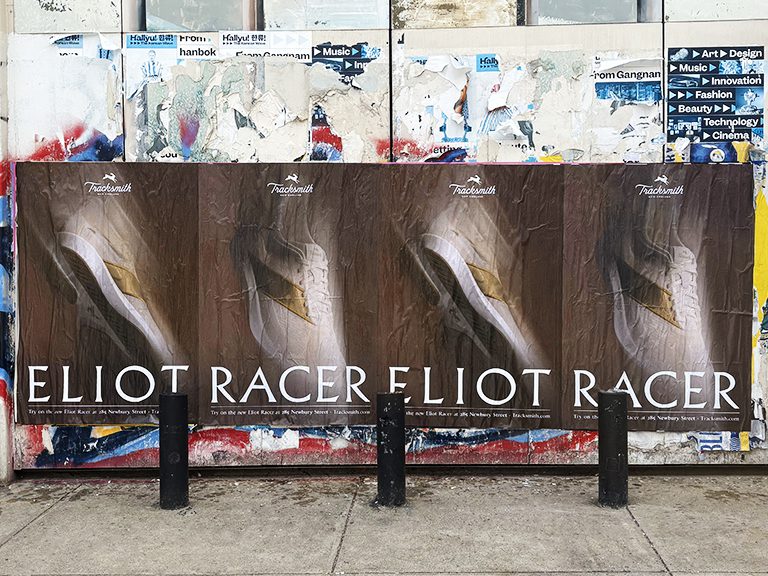
Chicago also has its own media physics. Think about CTA stations, corner retail windows, event corridors near the lake, and dense neighborhood poster runs. Think about how campaigns swell around McCormick Place, United Center events, summer festivals, and busy commuter routes. The best agencies are not just creative; they are realistic. They know what can be built, staged, routed, staffed, documented, and reported without drama.
Ten Agency Models That Often End Up on Shortlists
Full-service brand shop. Best for brands that need strategy, creative, production, and account structure under one roof. In practice, the best version of this model is defined by decision quality, not size. Ask who will actually lead the work, how often the senior team appears, and where the handoff points can fail.
Independent creative studio. Best for brands that want senior talent close to the work and a tighter review loop. In practice, the best version of this model is defined by decision quality, not size. Ask who will actually lead the work, how often the senior team appears, and where the handoff points can fail.
Media planning and buying group. Best for paid media-heavy programs where channel math matters as much as message. In practice, the best version of this model is defined by decision quality, not size. Ask who will actually lead the work, how often the senior team appears, and where the handoff points can fail.
Performance agency. Best for acquisition work tied to search, social, landing pages, and funnel testing. In practice, the best version of this model is defined by decision quality, not size. Ask who will actually lead the work, how often the senior team appears, and where the handoff points can fail.
PR and earned-media team. Best for launches that need press relationships, narrative framing, and fast response. In practice, the best version of this model is defined by decision quality, not size. Ask who will actually lead the work, how often the senior team appears, and where the handoff points can fail.
Experiential partner. Best for live events, sampling, and physical audience contact in a specific market. In practice, the best version of this model is defined by decision quality, not size. Ask who will actually lead the work, how often the senior team appears, and where the handoff points can fail.
Guerrilla marketing team. Best for street-level visibility, fast route coverage, poster campaigns, and neighborhood presence. In practice, the best version of this model is defined by decision quality, not size. Ask who will actually lead the work, how often the senior team appears, and where the handoff points can fail.
Retail activation agency. Best for in-store traffic, field support, demos, and conversion at point of sale. In practice, the best version of this model is defined by decision quality, not size. Ask who will actually lead the work, how often the senior team appears, and where the handoff points can fail.
Production-first shop. Best for asset creation when strategy already exists and execution quality is the gap. In practice, the best version of this model is defined by decision quality, not size. Ask who will actually lead the work, how often the senior team appears, and where the handoff points can fail.
Hybrid specialist roster. Best for brands that build a small bench of focused agencies instead of one giant lead partner. In practice, the best version of this model is defined by decision quality, not size. Ask who will actually lead the work, how often the senior team appears, and where the handoff points can fail.
This is why a list of names is only half useful. Even within the same city, two agencies with similar credentials can behave very differently. One may produce sharp thinking and clean execution. Another may sell senior talent in the pitch, then hand the work to a junior layer that is still learning how to protect scope, timing, and craft.
How AGM Evaluates Agency Quality from the Street Up
1. Strategy that can survive contact with reality
We look for planning that connects to actual human movement. If the strategy says the audience is young professionals, where do they spend time in Chicago? Which blocks, events, and retail patterns support that claim? What part of the city is noisy, what part is focused, and where can you earn interaction rather than buy a glance? Strong agencies answer those questions early.
2. Creative that can be understood at street speed
A deck can flatter weak creative because the audience is seated, patient, and already paying attention. The street is harsher. Someone walking, riding, or waiting in line gives you a second or two. The message has to read instantly. The tone has to fit the setting. The visual system has to hold up on paper, apparel, signage, packaging, handouts, and quick phone photos.
3. Operations that do not break under pressure
Agency quality shows up in the unglamorous details: staffing calls answered on time, replacement materials ready, route maps that make sense, backup plans for weather, field notes that help the client learn, and recap reports built from useful evidence rather than vague adjectives. Good agencies make the hard parts look quiet.
4. Reporting that says what happened
We prefer reporting built around photo documentation, route maps, distribution logs, staffing notes, and summary reports that explain what the team observed. That kind of reporting lets a brand make the next decision with more confidence. Soft storytelling without real proof is not enough.
A city campaign should leave a paper trail that a serious marketing lead can use: dates, locations, staffing, materials, field observations, photo documentation, route maps, and the next move. If the report feels cloudy, the execution probably was too.
Comparison Table: Which Agency Model Fits Which Need?
Agency Model
Best Fit
What To Ask
Where It Can Fail
Holding-company network
National scale with many channels
Who owns the day-to-day and how often are senior leaders in the room?
Process can get heavy and slow.
Independent creative shop
Brands seeking strong ideas and tight collaboration
How much production and media depth is in-house?
Scope can stretch the team thin.
Performance team
Demand capture and rapid testing
How are paid learnings shared with brand and retail teams?
Short-term math can crowd out brand memory.
Experiential agency
Live audience contact and event design
Who handles staffing, logistics, and recap documentation?
Beautiful concepts can strain field reality.
Guerrilla marketing partner
Street-level reach in specific neighborhoods
How are routes built and how is field proof delivered?
Weak local knowledge can waste placements.
Frequently Asked Questions
How should I compare top advertising companies in chicago?
Start by sorting agencies by actual role, not reputation. Separate full-service shops, performance teams, PR groups, experiential partners, and guerrilla operators. Then ask who will lead the work, how the city plan is built, and what proof you will receive after launch.
Do brands in Chicago need one agency or several?
Many do better with a small lead agency plus one or two specialists. That structure keeps strategy tight while giving field work, paid media, or production the attention each area needs.
When does a guerrilla marketing agency make sense?
A guerrilla partner makes sense when the campaign depends on physical presence, neighborhood coverage, route-based staffing, launch-week support, or street-level brand visibility that a traditional agency is not built to manage on its own.
What should a recap report include?
A useful recap should include dates, neighborhoods, route maps, staffing notes, material counts, photo documentation, and plain-language observations about what the team saw in the field.
How fast can AGM support a city campaign?
For many programs we can move from approved brief to active field execution in days, not months, as long as the message, materials, and operating plan are clear enough to support a clean rollout.