The Successful Marketer’s Weapon: Mobile LED Billboard Trucks in 2026
A mobile LED billboard truck is exactly what it sounds like: a commercial vehicle with a large-format full-motion LED display on its sides and/or rear, driven through target markets to deliver brand impressions to wherever the audience is. Unlike static billboards that wait for the audience to come to them, mobile billboard trucks go to the audience, routing through specific streets, event venues, campus corridors, and commercial districts with precision that no stationary format can match. In 2026, mobile LED billboard trucks have become one of the most tactically versatile formats in street-level advertising, used by political campaigns, consumer brands, entertainment companies, and event marketers to generate the kind of unavoidable, moving brand presence that stops traffic, literally and figuratively. This guide covers pricing, use cases, routing strategy, and how AGM integrates mobile billboard trucks into multi-format campaigns.
A mobile LED billboard truck is a specially equipped commercial vehicle fitted with LED display panels on the driver and passenger sides (and sometimes the rear). Panels range from 10×6 feet (smaller trucks, common in urban markets) to 14×48 feet for semi-trailer billboard trailers. Most single-vehicle mobile billboard units in the U.S. use medium-duty commercial trucks (box trucks or straight trucks) with LED display panels on both long sides, creating a driving billboard approximately 10–14 feet tall and 8–20 feet wide.
The LED display capability is what distinguishes modern mobile billboards from the older printed vinyl mobile billboard format (which still exists). LED panels display full-motion video creative, the same 15- or 30-second spots that run on digital screens, at high brightness (typically 5,000–7,500 nits for outdoor visibility in daylight) and full color. The truck can display different creative at different times of day, switch between multiple advertisers, and even display real-time data feeds or live social content on the panels.
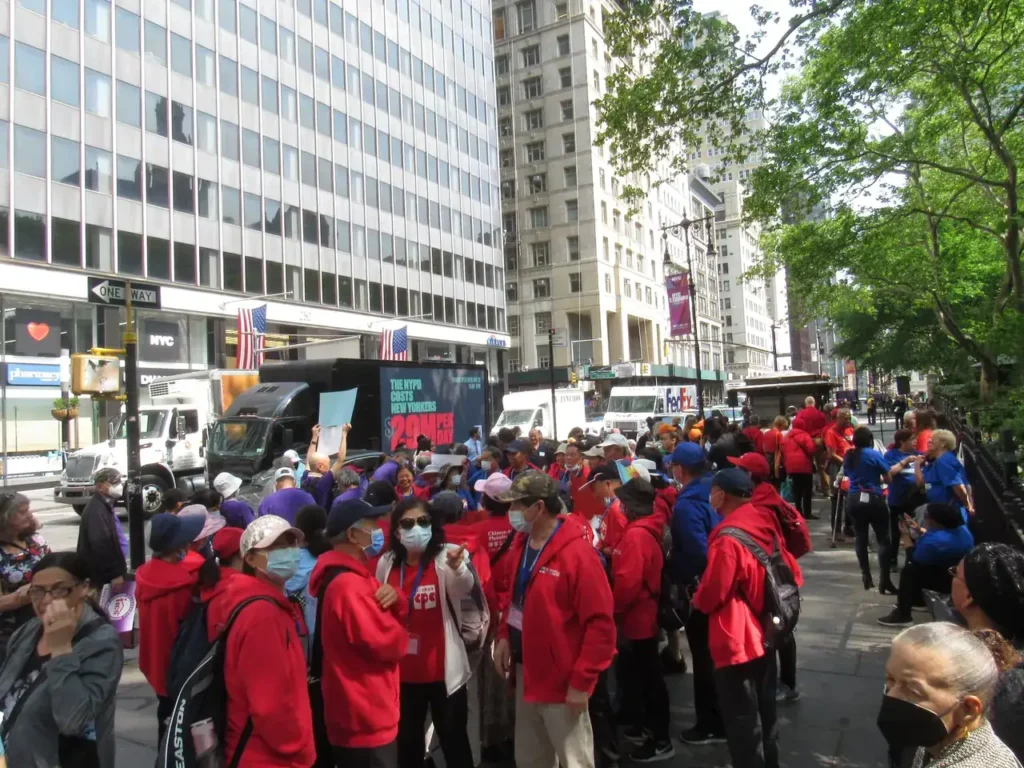
Mobile LED billboard trucks are operated by dedicated OOH companies in major U.S. markets. Operators include national fleet companies like LED Truck Media, Mobile Billboard Truck, and numerous regional operators. In New York City, where the concentration of potential advertisers and dense street-level audience is highest, the mobile billboard truck market is particularly active, trucks regularly route through Midtown Manhattan, the Meatpacking District, and the major event corridors in Brooklyn and Queens.
Mobile Billboard Truck Pricing: What to Budget in 2026
According to LED Truck Media’s 2026 published pricing guide, mobile LED billboard truck daily rates run $1,500–$5,000 per day for a single truck. That wide range reflects the significant variation between campaign types:
Standard market routing campaigns: A single truck, routing through a pre-defined target market area for 8 hours, displays a client’s creative to street-level audiences throughout the route. Pricing for this standard format in most major markets runs $1,500–$2,500/day.
Event-targeted deployments: A truck positioned adjacent to a specific event venue, a concert, sports game, conference, or festival, for a focused 4-6 hour activation window. Event deployments command a premium for the concentration of target audience and the tactical coordination required. Pricing runs $2,000–$4,000 for a focused event deployment.
Multi-truck market blitzes: Running 3–5 trucks simultaneously through different neighborhoods in a single market creates a full brand blanketing effect. Multi-truck programs are discounted per-unit from single-truck rates but require significant coordination. A 3-truck, 8-hour market blitz runs approximately $5,000–$12,000 depending on market.
Monthly extended deployments: Clients who run campaigns for 4+ weeks at a time negotiate significantly discounted daily rates, often $800–$1,500/day for monthly commitments. Extended deployments are most common for political campaigns, major retail promotions, and entertainment brand launches running for weeks rather than days.
Where Mobile LED Billboard Trucks Work Best
The mobile billboard truck format is route-dependent, the value of the buy is entirely determined by where the truck drives. Understanding the optimal routing conditions is the essential skill for effective mobile billboard deployment.
High-Density Urban Street Grids
Cities with grid street patterns and dense pedestrian populations are the ideal operating environment for mobile billboard trucks. Manhattan is the premier market in the United States: the combination of stop-and-go street traffic (slowing trucks to a viewing speed), extremely high pedestrian density on the sidewalks, and the high cultural value placed on visible brand presence in New York makes every Manhattan routing highly effective. A truck routing through Broadway from 14th Street to 42nd Street during evening rush hour encounters tens of thousands of pedestrians and commuters across that single route segment.
Chicago’s Michigan Avenue corridor, Los Angeles’s Sunset Strip and Hollywood Boulevard, Miami’s Brickell and Wynwood corridors, and Austin’s 6th Street and Congress Avenue are all high-value mobile billboard routing environments that deliver concentrated audience impressions per hour of operation.
Event Corridors
The highest per-hour audience density for mobile billboard trucks is achieved at major events: sports games, concerts, festivals, political rallies, conferences, and parades. A truck positioned on the primary pedestrian route between a transit station and a major arena, say, the walk from the 7 train stop to Citi Field in Queens, or the approach to Soldier Field in Chicago from the Museum Campus parking, reaches every attending fan in the arriving or departing crowd within a concentrated time window.
For sporting events, game-day deployments on the streets immediately surrounding the venue in the 2 hours before and 1 hour after the event deliver the maximum per-hour impression count achievable in most markets. A truck working the zone around T-Mobile Park in Seattle on a Mariners game night or around Chase Center in San Francisco before a Warriors playoff game reaches 20,000–40,000 event attendees in a 3-hour window.
Competitor Proximity Targeting
One of the highest-impact tactical uses of mobile billboard trucks is routing specifically around competitor locations. A brand that drives its LED truck through the block surrounding a competitor’s flagship store, retail location, or event on a high-traffic day delivers a competitive conquest message to exactly the audience that the competitor is trying to reach. This tactic, sometimes called “conquesting” in OOH media terminology, requires no permit beyond a commercial vehicle license for street operations and delivers brand awareness directly in the competitor’s customer pool.
Creative Requirements for Mobile LED Billboard Trucks
Mobile LED billboard creative requirements are specific and frequently misunderstood by brands submitting TV or digital creative for truck display. Key requirements:
Duration: Most mobile billboard truck operators run creative in 15-second loops on rotating cycles. A 30-second spot should be delivered as two 15-second cuts, or as a single 30-second file with the understanding that it will complete before the truck’s loop advances to the next advertiser. For full-loop ownership, buy a time-based program where your creative plays exclusively for the contracted period.
Brightness and contrast: Day-time LED viewing at 5,000+ nits requires designs with high contrast between background and foreground elements. Colors that appear rich and saturated on a studio monitor can appear washed out under direct sunlight on an outdoor LED panel. Test creative on an LED display in daylight conditions before committing to a production run.
Text scale: Viewers see the truck from sidewalk distances of 10–50 feet while in motion. Text smaller than approximately 1/12th of the panel height is typically unreadable at distance. Keep copy minimal: brand name, hero message, URL or phone number. No fine print. No details that require close reading.
File format: Most mobile LED systems accept MP4, MOV, or still JPG/PNG files. Get the specific technical specification from the operator before finalizing production, panel aspect ratio and pixel dimensions vary by truck manufacturer and LED configuration.
How AGM Uses Mobile Billboard Trucks in Integrated Campaigns
Mobile LED billboard trucks are one of the formats we deploy as part of multi-channel street campaign strategies for clients needing concentrated market-area impact in a compressed time window. The typical AGM integration scenario:
Street Poster Advertising covers the static, 24/7 visual presence in target neighborhoods, posters on walls and barriers that are visible around the clock for weeks. The mobile LED truck provides the moving, attention-commanding element on campaign launch days and key event windows. Street teams work the pedestrian environment simultaneously, creating direct human contact with the audience the truck and posters are building awareness with.
For a product launch in New York City, a standard AGM integrated day might include: 100 wheat paste posters deployed overnight in SoHo and Williamsburg, an LED truck routing Midtown Manhattan from 10 AM to 6 PM, and a 6-person street team distributing samples at the 23rd Street and 14th Street Union Square subway stations simultaneously. Each format reaches a different audience layer: the truck reaches vehicle and pedestrian traffic in Midtown; the posters build neighborhood presence in the downtown creative communities; the street teams deliver direct product contact to the morning and afternoon commuter audience.
Permitting and Legal Requirements for Mobile LED Billboard Trucks
Mobile billboard truck operation in the United States is primarily governed by local city ordinances rather than federal regulations. The legal space varies significantly by city:
New York City: Mobile billboard trucks are legal on NYC streets as commercial vehicles. There are no specific permits required for an LED truck driving standard commercial routes. However, certain events, parades, and restricted zones may require additional coordination with NYPD and city agencies. Trucks cannot park in metered or restricted zones while stationary, moving commercial vehicle rules apply.
Los Angeles: LA municipal code places restrictions on truck-mounted advertising in certain areas and requires commercial vehicle compliance. Some districts have specific regulations governing illuminated mobile advertising. An experienced local operator will know the specific route and operating constraints in LA markets.
Chicago: Chicago allows mobile billboard trucks under standard commercial vehicle codes. The downtown Chicago Loop has congestion pricing considerations for commercial vehicles that affect routing economics during peak hours.
Always work with operators who know their market’s legal environment. An operator who doesn’t know the city-specific rules for mobile billboard operations is an operator who will create legal exposure for your brand, and potentially have the truck stopped mid-campaign.
Route Strategy Is the Real Advantage of Mobile LED Billboard Trucks
Current 2026 pricing guides for mobile billboard advertising keep emphasizing flexibility, and that flexibility is the whole point. A truck is not just a moving screen. It is a route decision. The marketer can place the message in commute windows, nightlife districts, store corridors, convention perimeters, stadium ingress patterns, or competitor-heavy zones based on where attention is most valuable that day.
That mobility changes how campaigns should be planned. Instead of buying generalized city coverage, brands can sequence their day around audience behavior: office corridors in the morning, retail clusters at lunch, event districts in the evening, and social-content capture after dark. The more intentional the route logic, the more the truck behaves like precision outdoor media rather than novelty media.
Creative for LED Trucks Should Be Built for Motion, Not Mini-TV
The second big mistake is treating a truck screen like a television placement. People usually see an LED billboard truck for only a few seconds, often at an angle, often while walking or driving. That means the strongest creative uses oversized type, one dominant image, a single message, and loops that work from any entry point. Detailed story arcs, tiny disclaimers, and dense offer stacks do not survive the format.
When used well, mobile LED trucks also become content engines. The truck itself can be filmed rolling through high-value streets, creating proof-of-presence footage for social and sales recaps. That combination of live exposure and reusable content is why the format keeps showing up in launch campaigns, entertainment pushes, and event ambush plays.
Frequently Asked Questions About Mobile LED Billboard Trucks
How much does a mobile LED billboard truck cost per day?
Standard single-truck daily rates run $1,500–$5,000 depending on market, routing complexity, and campaign duration. Event-targeted deployments at the higher end of this range. Monthly extended campaigns negotiate to $800–$1,500/day. Multi-truck programs receive per-unit discounts.
What’s the reach of a mobile LED billboard truck in a major market?
An 8-hour routing day in Manhattan covers approximately 50–150 miles of street-level exposure depending on routing density. Estimated impression counts vary dramatically by route: a Midtown Manhattan day route through the Times Square and Grand Central corridors can deliver 200,000–500,000 impressions per day based on pedestrian foot traffic counts in those corridors. Event-targeted deployments deliver 15,000–50,000 impressions per event depending on venue capacity and pedestrian flow patterns.
Can I control the route of a mobile billboard truck?
Yes. Clients provide target routes, required locations, and time windows. Operators execute routing based on client specifications and provide GPS track logs of actual routes driven. Real-time route adjustment based on traffic conditions is standard, a client who wants the truck near a specific event should specify the target location and time window, not a rigid route that might be impossible during event-day traffic conditions.
What’s the difference between a mobile LED truck and a traditional printed mobile billboard?
A traditional printed mobile billboard uses vinyl-wrapped panels with static printed imagery, no motion, no changing content. An LED truck displays full-motion video creative at high brightness. LED trucks can run multiple advertisers, display time-sensitive content, and be updated remotely. Printed mobile billboards are less expensive ($300–$800/day) but lack motion, changing content, and the visual impact of a full-color LED display at night.
How do I book a mobile LED billboard truck campaign?
Contact American Guerrilla Marketing at americanguerrillamarketing.com/contact to discuss mobile LED truck deployment as part of an integrated street marketing campaign, or to coordinate a standalone truck program in any major U.S. market. Provide your target market, campaign dates, target routing zones, and creative specifications for a campaign quote.
Best Routes and Use Cases by City Type
In Manhattan, the best routes are usually slow traffic corridors with dense sidewalks, Midtown east-west crosstown routes, Broadway through the Flatiron and Union Square corridors, and event-heavy stretches near Madison Square Garden or the Javits Center. In Los Angeles, the strategy shifts toward event adjacency and nightlife concentration, Sunset Boulevard, Hollywood Boulevard, and routes around Crypto.com Arena and SoFi event days. In Austin and Nashville, downtown entertainment districts and festival corridors create the highest value. The route is the campaign. A mediocre truck on a perfect route beats a perfect truck on a weak route every time.
Mobile LED trucks are especially useful when the audience is moving unpredictably. Protests, game-day crowds, launches, conference districts, campus blitzes, and nightlife scenes are exactly where fixed media loses some advantage and mobile presence gains it.
Additional FAQ
Do mobile billboard trucks work better parked or moving?
Usually both, at different moments. Moving builds broad route visibility. Strategic parking near a venue or queue builds concentrated dwell-time impact. The best campaigns combine route movement with scheduled holding points at the highest-value locations.
How do you verify route delivery?
Require GPS route logs, time-stamped photos, and where possible, live check-in screenshots from the operator. Good vendors document route execution the same way good field marketing teams document activations.
Pricing and Scheduling Details
Truck Program
Typical Cost
Single truck, 4 hours
$800-$1,500
Single truck, full day
$1,500-$3,500
Multi-truck event saturation
$5,000-$25,000+
Price changes with city, route complexity, parking holds, night runs, and premium event windows. Buyers should confirm exactly how many hours are moving versus parked, what route reporting is included, and whether creative swaps are possible during the run.
Operational Notes
LED trucks are strongest when the route and schedule are matched to audience flow. Morning commuter loops, lunch-hour CBD circuits, game-day perimeter routes, and nightlife holding points all produce different results. The screen is only half the asset. The route plan is the other half.
FAQ Additions
What creative works best on LED trucks?
Short loops, bold typography, and high-contrast visuals. If the ad needs too much reading time, it is the wrong creative for the format.
Can LED trucks support urgent launches?
Yes. That’s one of their best use cases. They are faster to deploy than most fixed media and useful when timing matters.
Frequently Asked Questions
The Successful Marketer’s Weapon: Mobile LED Billboard Trucks in 2026 generates better results when placement, timing, creative, and local execution all work together. These questions cover the details brands usually need before launch, during rollout, and while evaluating performance.
Why do marketers use LED billboard trucks?
They offer route flexibility, strong visibility, and the ability to place messaging where and when the audience is most likely to see it.
What types of campaigns work best for mobile billboard trucks?
Launches, event support, political campaigns, nightlife promotion, retail openings, brand awareness bursts, and hyper local targeting often work especially well.
Should a mobile billboard truck keep moving or stay parked?
Both can work. Driving builds broader reach, while parking near key venues or high dwell areas can create stronger repeated exposure during a specific moment.
What creative works best on LED billboard trucks?
Large type, clear motion, short messages, and strong contrast perform best. The audience often sees the screen briefly, so the ad needs to be understood fast.
How do you plan an effective truck route?
Route planning should consider audience hotspots, traffic patterns, event timing, legal restrictions, and where the truck can safely pause for added visibility.
Can LED billboard trucks drive direct response?
Yes. They can support QR scans, short URLs, promo codes, social handles, and event attendance when the creative gives a clear next step.
What is the biggest mistake with mobile billboard trucks?
Using long copy or weak route planning is a common mistake. Good creative cannot fix a truck that spends its time in the wrong places.
How long should a truck campaign run?
That depends on the objective. Some campaigns need a few concentrated days around an event, while others benefit from repeated market coverage across multiple weeks.
How do you measure LED billboard truck performance?
Use route logs, GPS proof, traffic estimates, content capture, scans, direct traffic, and any market response tied to the truck schedule.