Viral challenges are participation machines, when the mechanics are right, they turn passive audiences into content creators and distribute a brand’s message through the social networks of millions of people who actively chose to participate. The Ice Bucket Challenge raised $115 million for ALS research in one summer. Chipotle’s #GuacDance generated 250,000 video submissions and 430 million TikTok video starts in 6 days. The ALS Association didn’t create the Ice Bucket Challenge, but brands that understand challenge mechanics can engineer comparable dynamics intentionally. This guide breaks down exactly what makes viral challenges work in 2026, how the algorithm environment has shifted, and how to build physical-world triggers that feed challenge participation at scale.
What Makes a Challenge Actually Go Viral: The Mechanics Behind Participation
Ad Age’s 2026 analysis of virality describes the current environment clearly: “Virality has shifted from mass reach to community-driven engagement.” The era of a single piece of content spreading to 100 million people through a monolithic social network is largely over. In 2026, viral challenges live and die within specific communities, and the challenge that achieves deep penetration in the right community is more valuable than broad surface-level spread across an undifferentiated mass audience.
The structural elements that make challenges spread within communities:
Participation is simple, specific, and replicable. The action required must be clear enough that someone can do it without instruction, watching the original post and knowing exactly how to participate. “Pour a bucket of ice water on your head and tag three friends” is perfectly specific. “Share your story about what makes you unique” is too vague, the barrier to participation is too high when people have to define what participation looks like.
There’s a social consequence for non-participation. The Ice Bucket Challenge was a dare, you were nominated by name, with a 24-hour deadline. Non-participation was publicly visible. That accountability mechanic drove the wildfire spread more than the cause itself. Dating apps use this mechanic constantly; challenges that incorporate a visible tag-and-nominate structure spread faster than open-ended participation invitations.
The action is inherently visible and documentable. Challenges that require video or photo documentation to prove participation are challenges designed for social media. The participation produces the content. The content is the campaign. This self-reinforcing loop is why challenges dominate TikTok, the platform that requires video content to participate is the perfect medium for challenge mechanics that require video.
The challenge expresses something true about the participant. #LikeAGirl worked because posting with that hashtag expressed a genuine identity statement, not just endorsing a brand, but claiming an supported identity. Challenges that let participants express something authentic about who they are, what they believe, or where they belong spread through identity-driven sharing rather than performance-driven compliance.
The 2026 Algorithm Shift: What It Means for Challenge Campaigns
The viral challenge environment in 2026 is fundamentally different from 2020–2022. Slateteams’ 2026 social media trends analysis confirms the shift: “By 2026, chasing one-off viral hits is less effective than building deep resonance in smaller, more engaged communities.” Platform algorithms have shifted away from amplifying raw viral spread toward rewarding content that generates sustained engagement within specific interest communities.
TikTok’s algorithm no longer surfaces everything to the For You Page (FYP) at equal velocity. Content that generates high watch time and completion rate within specific topic communities gets amplified within those communities first, then improved to broader audiences only if the community engagement is strong enough to justify the broad distribution. This means challenges that launch to cold, general audiences perform worse than challenges that seed into specific engaged communities and let the algorithm do the distribution work.
Instagram’s Reels algorithm similarly rewards content that connects to specific interest clusters rather than generic broad reach. Challenges designed for the fitness community, the cooking community, the gaming community, or the sustainability community consistently outperform identical challenges launched to general audiences, because the algorithm knows how to find the right people for niche content, and niche communities participate at higher rates.
The strategic implication: design challenges for a specific community, not for “everyone.” A challenge that resonates deeply with 500,000 engaged community members is more valuable than a challenge that achieves 5% engagement across 5 million indifferent reach impressions. Depth beats breadth in the 2026 algorithm environment.
Viral Challenge Examples That Reveal What Actually Works in 2026
The #GlowUpChallenge and Beauty Community Penetration
Beauty and personal care challenges that ask participants to show a before/after transformation, “glow up” content, consistently generate high participation in beauty communities because they serve the participant’s interest directly: showing off a personal achievement or transformation that they wanted to share anyway. The brand provides the format; the participant provides the content. This is the ideal challenge dynamic, the brand is a vehicle for self-expression, not the subject of the content.
#EcoSwitchChallenge and Values-Based Virality
Environmental challenges that ask participants to share one sustainable switch they’ve made generate community participation by giving environmentally-conscious audiences a format to express their values. The brand that creates a values-aligned challenge for a community that already holds those values is inserting itself into an ongoing cultural conversation rather than trying to start one from scratch. Brand insertion into existing cultural conversations spreads faster and generates more genuine engagement than brand-created cultural moments launched cold.
Chipotle’s #GuacDance: Platform-Native Challenge Design
The #GuacDance succeeded because it was designed specifically for TikTok’s dance challenge mechanics, the platform’s highest-participation format, and launched on National Avocado Day with a time-limited urgency frame. The three elements that made it work: platform-native format (TikTok dance), specific timing (a named day with cultural meaning), and simple clear action (dance, share, use the hashtag). No brand message to communicate, no features to highlight, just a participatory format that generated content the platform was designed to amplify.
Designing a Viral Challenge Campaign: The Step-by-Step Framework
Step 1: Identify the Community You’re Targeting
Don’t design a challenge for “young adults” or “our customers.” Design for a specific interest community with its own cultural language, platform preferences, and internal social dynamics. The challenge should feel like it came from inside the community, native to their interests and format preferences, not like an outsider brand elbowing into their space.
Step 2: Design the Participation Action Around the Community’s Existing Behavior
What does this community already do naturally on the platform? Fitness communities already post workout videos. Cooking communities already post recipe attempts. Gaming communities already post gameplay clips. Design a challenge that uses those existing behaviors and adds a brand-relevant frame, don’t try to import a foreign behavior. Work with what the community already does.
Step 3: Build in the Social Mechanics That Drive Spread
At minimum, include: a named hashtag (searchable, ownable, short), a tagging mechanism (nominate specific friends), and a time element (24-hour deadline, end-of-week cutoff, daily challenge structure). Optional but powerful: a prize or recognition element for the best submissions, brand amplification of the best user content is itself a participation incentive.
Step 4: Seed With Authentic Community Voices
The first 48 hours determine whether a challenge reaches critical mass or dies quietly. Seed the challenge with authentic community voices, micro-influencers who genuinely engage with the community, not celebrity mega-influencers who participate performatively. A challenge launched by 20 trusted community members simultaneously has significantly more organic-feeling launch velocity than the same challenge announced by one celebrity with 10 million followers.
Step 5: Amplify With Paid Media at the Right Moment
Paid amplification should accelerate momentum at the point of critical mass, not manufacture momentum from zero. Boost paid promotion when organic metrics show the challenge is generating genuine participation, when watch time and completion rates are high, when UGC volume is growing, when the community hashtag is showing velocity. Paid promotion of content that organic audiences aren’t engaging with signals to the algorithm that you’re trying to buy attention, which it penalizes.
How Physical-World Triggers Turbocharge Challenge Participation
The most underutilized strategy in viral challenge campaigns is the physical-world trigger, a real-world installation, activation, or event that gives people a physical context to document, share, and challenge others from.
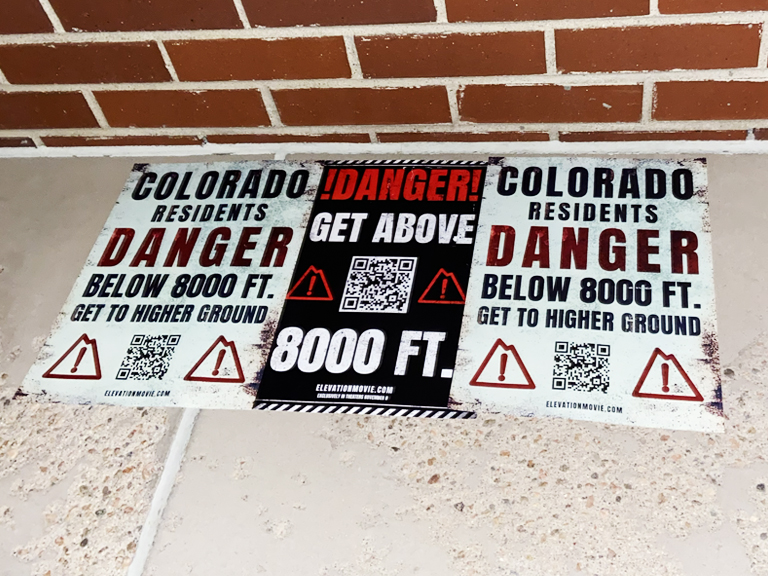
When AGM wheat pastes a campaign that includes a challenge mechanic, a QR code on the poster that launches the challenge page, a hashtag prompt built into the poster creative, a visual that’s inherently shareable, the physical posters in Williamsburg, Silver Lake, Wicker Park, and similar high-cultural-credibility neighborhoods become challenge seed points. Someone walks past a distinctive poster, photographs it, posts it with the hashtag, and the physical campaign generates digital challenge participation.
Street team activations are even more direct: ambassadors can demonstrate the challenge in person, film participants on-site with proper consent, and create the initial seed content that launches the challenge with authentic, location-specific context. A flash mob in Times Square, a coordinated street performance in Pioneer Courthouse Square in Portland, or a pop-up installation at the Flea at Brooklyn Steel becomes the documentary content that seeds the challenge while simultaneously generating earned media from event witnesses.
The physical-to-digital loop is one of AGM’s core strategic advantages for challenge-integrated campaigns. Physical presence generates real-world documentation moments. Documentation moments seed platform challenges. Challenge participation extends the campaign’s reach far beyond any paid media budget could alone. Contact americanguerrillamarketing.com/contact to discuss challenge-integrated physical campaigns.
Measuring Viral Challenge Campaign Success
Track these metrics in priority order:
Unique participation volume: Total unique users creating content with the campaign hashtag. This is the fundamental effectiveness metric, how many people chose to participate.
Engagement rate on UGC: Average likes, shares, and comments on user-generated challenge content. High engagement on UGC indicates genuine community resonance, not just volume participation driven by paid seeding.
Earned media impressions: Total impressions generated by UGC posts, the aggregate reach of all participant content. This is the actual reach multiplier that makes viral challenges valuable.
Brand sentiment in challenge content: Social listening analysis of UGC for brand sentiment indicators, positive, neutral, or negative association. High participation with neutral or negative sentiment is not a successful challenge campaign.
Viral Challenges Spread When Participation Feels Easy and Identity Feels Visible
The reason challenges keep working is not mystery, it is design. People join when the action is simple enough to imitate quickly and visible enough to say something about them. The best recent examples, from creator-led beauty challenges to cause-based participation formats, make the participant look fun, informed, generous, or in on the joke. That identity signal is stronger than the mechanic itself.
That is why challenge briefs should focus on imitation friction. Can a person understand the assignment in five seconds? Can they recreate it without expensive gear? Is there a recognizable visual or audio cue that instantly links their post to the wider trend? If those answers are yes, the odds of spread increase. If the brand loads the concept with too many rules, it stops feeling like culture and starts feeling like homework.
Brands Need a Conversion Plan Before the Trend Peaks
Viral attention is only useful if it moves somewhere. The common mistake is celebrating views after the challenge has already peaked. Better planning connects the trend to a landing page, waitlist, offer, or retail event while the momentum is still building. That can include creator seeding, paid amplification of high-performing participant posts, and physical activations that let the challenge escape the screen and show up in the real world.
For brands that already use guerrilla marketing, that offline extension can be powerful. A challenge hashtag can appear on posters, sampling carts, event signage, or pop-up installations to tell participants exactly where to continue the story. The internet spreads the idea. The field campaign gives it a place to land.
The Best Challenge Ideas Are Built for Remixing
Creators rarely spread a branded idea because the brand asks nicely. They spread it when the format leaves room for personality. That means the prompt should be recognizable but flexible, structured enough to travel, loose enough to invite variation. The moment every participant starts looking identical, the trend usually flattens because people stop feeling ownership over it.
Brands that want to take a viral idea from attention to action can pair the online challenge with a real-world rollout, retail moment, or street activation. If you need help turning a social concept into an integrated campaign people can actually encounter offline, AGM is reachable at americanguerrillamarketing.com/contact.
Frequently Asked Questions About Viral Challenges
Can any brand create a viral challenge?
Any brand can create a challenge. Whether it spreads depends on the quality of the mechanics, the authenticity of the community fit, and frankly, some degree of luck with timing and algorithm behavior. Brands with strong existing community relationships have a structural advantage. Brands attempting to create challenges for communities they don’t genuinely belong to consistently underperform.
How long does a viral challenge last?
Peak participation windows for most challenges are 1–4 weeks. Platform algorithm amplification typically peaks in the first 7–14 days and tapers as new content overtakes the challenge in the algorithm’s attention. Plan for a 4-week active window and build the campaign to maximize that window, seed, amplify at peak momentum, celebrate top participants, extend with brand amplification of the best UGC.
Do viral challenges work on all platforms?
TikTok is the dominant platform for challenge mechanics in 2026, followed by Instagram Reels. YouTube Shorts has growing challenge participation. Twitter/X supports hashtag challenges but without the video participation mechanic that drives high-volume content creation. Platform selection should match the community you’re targeting, go where your community actually creates and consumes content.
What’s the biggest mistake brands make with viral challenges?
Launching a challenge to no audience and expecting organic spread to do all the work. A challenge launched to a brand’s owned social audience of 10,000 followers will not self-propagate to millions without either community pre-seeding or paid amplification. The participation mechanics must exist, but so must an initial audience large and engaged enough to generate the velocity that triggers algorithmic amplification.
Why Most Brand Challenges Stall After Launch
Most brand challenges die because the brand mistakes announcement for momentum. Posting the launch asset is not the hard part. The hard part is making participation feel socially rewarding enough that people mimic it voluntarily. If the challenge has no community fit, no identity value, and no fun, no amount of paid reach can save it for long.
The other failure is not creating enough usable examples. People participate when they can instantly see what “doing it right” looks like. If the first wave of seeded posts is too polished or too sparse, normal users don’t know how to jump in. More practical seeding beats fancier seeding almost every time.
Additional FAQ
How many seeded creators do you need at launch?
Enough to make the challenge feel real in the community, usually 15 to 30 useful seeded examples is a healthier starting point than one giant influencer blast. Distribution from multiple believable accounts looks organic and gives people several participation models to copy.
Can an offline event launch a viral challenge?
Yes. In many cases it works better than a pure digital launch because the event creates original footage, witness energy, and natural social proof. A flash activation or street installation can become the ignition point for the hashtag if the action is easy to replicate afterwards.
Challenge Design Framework
The cleanest viral-challenge framework is: one action, one visual cue, one social reward. If the action takes too long to explain, it will stall. If the visual result is not instantly recognizable in-feed, it will stall. If participants don’t gain status, humor, belonging, or self-expression by joining, it will stall. The campaigns people remember feel playable, not just watchable.
Offline seed events can help because they provide a first wave of believable examples. A street activation in SoHo, a campus launch in Austin, or a festival kickoff in Miami creates human footage with real audience reaction. That often gives the challenge more authenticity than a studio-shot influencer post alone.
Longer FAQ
How long should a challenge run?
Plan for a short ignition window and a longer amplification window. If participation doesn’t start quickly, extending the campaign timeline rarely fixes the core issue.
Can brands force virality with budget?
No. Budget can buy reach and creator seeding. It cannot manufacture genuine participation if the behavior itself is weak.
What’s the biggest sign a challenge will fail?
People only comment on the launch post but do not imitate it. Attention without replication is not a challenge, it’s just a post.
Frequently Asked Questions
The Power of Viral Challenges: How They Capture Attention and Build Brands in 2026 generates better results when placement, timing, creative, and local execution all work together. These questions cover the details brands usually need before launch, during rollout, and while evaluating performance.
Why do viral challenges spread so quickly?
They spread when the action is easy to copy, the result is visible, and people feel like participating says something about them or connects them to a larger moment.
Do viral challenges have to be funny to work?
No. Humor helps, but challenges can also spread through competition, creativity, social identity, cause related participation, or pure novelty.
What makes a brand challenge easy to join?
Simple rules, a low production barrier, and a clear example help a lot. If people need too much explanation, the challenge loses momentum.
How do brands avoid a forced viral challenge?
Start with behavior that feels native to the platform and audience. A challenge should feel like something people want to do, not homework assigned by a brand.
Should viral challenges include a prize?
A prize can help participation, but it is rarely enough on its own. The format still needs to be entertaining, social, or personally rewarding.
What platforms are best for viral challenges?
Short form video platforms are especially strong because imitation is easy there, but the right platform depends on where the audience already creates and shares content.
What is the biggest risk in launching a viral challenge?
The biggest risk is low participation that makes the campaign look staged or irrelevant. Poor moderation and off brand user content can also become a problem.
How long should a viral challenge run?
Keep the launch window tight enough to create urgency, then extend only if real momentum appears. Most challenges lose energy if the brand drags them out too long.
Can viral challenges support business goals?
Yes, if they connect to awareness, content creation, traffic, app installs, or product trial in a way the team can actually measure.
How do you measure a viral challenge?
Look at participation volume, video views, shares, creator quality, sentiment, hashtag use, traffic, and any downstream conversion tied to the campaign.
Related Pages and Articles