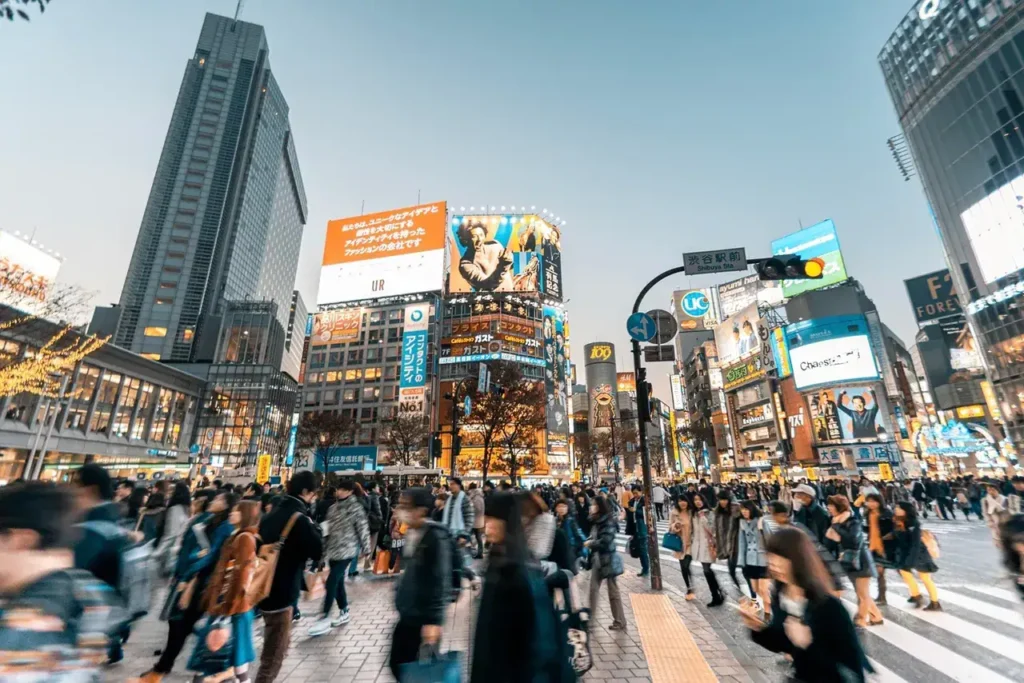
International advertising is undergoing a structural transformation driven by technology, consumer behavior shifts, regulatory changes, and cultural forces that are reshaping how global brands reach audiences across markets. The playbook that worked in 2015 — a global creative platform translated into local languages, media bought through global network deals, performance measured against standardized global KPIs — is increasingly insufficient. The future of international advertising requires more sophisticated cultural engagement, more flexible creative production, more locally intelligent media strategy, and stronger accountability for the outcomes that advertising actually produces.
American Guerrilla Marketing plans and executes campaigns across 50+ U.S. markets, working with brands that include international companies entering the U.S. market and U.S. companies expanding internationally. We operate out of Industry City, Brooklyn, NY. The street-level marketing intelligence we develop — understanding how culture, neighborhood context, and audience behavior shape campaign effectiveness — applies internationally as directly as it applies domestically. This guide covers the key trends and predictions that are shaping international advertising’s future, with practical implications for brand and campaign planning now.
AI-Driven Creative Production and Localization
Artificial intelligence has already begun transforming international advertising creative production, and the pace of change is accelerating. The implications for global campaigns are significant — but not uniformly positive. Understanding what AI genuinely improves and what it undermines is essential for brands planning international campaigns in the current environment.
What AI Improves: Scale, Speed, Variation
AI creative tools enable international advertisers to generate market-specific creative variations at production volumes previously requiring prohibitive time and budget investment. A campaign that previously required eight weeks and $200,000 to adapt for twelve international markets can now be adapted in two weeks at a fraction of the cost. AI-driven image generation, copy adaptation, and video editing tools allow local marketing teams to rapidly produce market-specific assets from a global brand platform, reducing the production bottleneck that historically forced brands to choose between creative quality and market breadth.
What AI Risks: Authentic vs. Efficient Inauthenticity
The same AI tools that reduce production costs also create the risk of efficient inauthenticity at scale. AI-generated cultural adaptation — without genuine cultural oversight from people with deep market roots — produces content that may be technically localized but culturally hollow. As AI-localized content proliferates, the brands that distinguish themselves through genuine cultural intelligence and authentic market engagement will create differentiation that AI-only competitors cannot match. This is the cultural authenticity premium becoming more valuable as AI lowers the cost of its absence.
Programmatic DOOH: Global Out-of-Home Advertising
Programmatic digital out-of-home advertising has emerged as one of the fastest-growing channels in international media buying, enabling global brands to run unified creative campaigns across multiple countries through a single buying interface with real-time optimization and dynamic creative adaptation. The programmatic DOOH infrastructure that already exists in the U.S., U.K., Australia, and Western Europe is now being rapidly deployed in Southeast Asia, Latin America, the Middle East, and Sub-Saharan Africa — creating genuine global OOH reach that was structurally impossible five years ago.
Dynamic Creative Across Time Zones
Programmatic DOOH enables dynamic creative adaptation based on local conditions — weather, time of day, local events, sports scores, real-time audience data — across international markets simultaneously. A campaign can show winter creative in the Southern Hemisphere while showing summer content in the Northern Hemisphere on the same buying day. Sports creative can be swapped to celebration or consolation messaging in real time based on local game outcomes. This level of dynamic relevance across international markets was previously impossible at any reasonable cost or operational complexity.
The Measurement Gap
Despite programmatic DOOH’s reach and targeting advances, international OOH measurement remains inconsistent across markets. The Geopath measurement methodology standard in the U.S. does not apply in most international markets, and verification of impression delivery across diverse international OOH inventory varies significantly in quality and methodology. International DOOH buyers should build verification and audit provisions into campaign contracts and resist accepting impression guarantees that lack verifiable measurement backing.
The Cultural Authenticity Imperative
Consumer research consistently shows that brand authenticity — and specifically cultural authenticity in international markets — is an increasing driver of purchase intent and brand preference across major markets. In markets where global brands are perceived as culturally indifferent or superficially localized, local brand alternatives are capturing market share by offering genuine cultural alignment that global brands cannot replicate through headquarters-driven adaptation.
Local Ownership of International Campaigns
The future of international advertising favors brands that genuinely localize strategy — not just creative — at the market level. This means market-level P&L responsibility, local marketing leadership with real authority, and creative strategies that originate from local market insight rather than being filtered down from global headquarters. Brands that achieve genuine localization of strategy (not just execution) consistently outperform their competitors in international markets over five-year timeframes.
Community and Physical Presence as Authenticity Proof
In market after market, brands are discovering that digital-only international strategies are insufficient authenticity signals. Physical community presence — through street-level marketing, local event activation, community sponsorships, and direct investment in local cultural life — provides the authenticity signal that mass media campaigns can only claim. Our guerrilla marketing approach — planting brand presence physically in community space — is an authenticity strategy as much as an awareness strategy. International brands that invest in street-level presence in new markets signal genuine market commitment in a way that advertising-only approaches cannot.
Platform Fragmentation and the End of Global Reach
The global advertising landscape is fragmenting. TikTok, Instagram, YouTube, Twitter/X, and Facebook have very different audience profiles and algorithm environments across markets. China’s domestic social and search ecosystem is entirely separate. Japan’s LINE messaging platform, Russia’s VK (before international withdrawal), India’s dominant regional apps, and dozens of market-specific platforms mean that “global digital advertising” increasingly requires managing different platforms in different markets with genuinely different content strategies.
Regional Platform Strategy
International advertisers in 2026 need regional platform strategies rather than global platform strategies. The U.S.-centric assumption that a Meta + Google + TikTok strategy covers the global digital advertising landscape is operationally false in most major international markets. Southeast Asian markets require WeChat and Line adjacency strategies. Indian markets require detailed planning around regional language apps and local social platforms. Middle Eastern markets require awareness of geopolitical platform restrictions. Building regional platform competence is the necessary prerequisite for effective international digital advertising going forward.
Sustainability and Ethical Brand Positioning
Sustainability requirements for international brands are accelerating, driven by regulatory pressure (particularly in the EU), consumer expectation in developed markets, and ESG-linked investor requirements. The advertising implications are significant: brands must now demonstrate (not just claim) sustainability commitments through advertising content, media choices, production practices, and partner selection. International campaigns that make sustainability claims without verifiable commitments create greenwashing liability that is increasingly legally and reputationally risky.
Sustainable Advertising Production
The advertising production industry is developing sustainability standards — lower-carbon production methods, sustainable supply chains for physical marketing materials, recycled and recyclable OOH print substrates. For international brands with strong sustainability positioning, production practice alignment with environmental standards in local markets is increasingly a campaign planning requirement. Wheatpasting and OOH campaigns using sustainably sourced materials and environmentally responsible installation practices are increasingly the standard for sustainability-forward brands.
The Future of Street-Level Marketing Globally
Street-level and experiential marketing will become more valuable in international advertising — not less — as digital channels saturate and consumer trust in digital advertising declines further. In market after market, research shows that physical presence creates the authenticity and community belonging that digital campaigns cannot. The brands that will win in international markets over the next decade are those that understand how to combine global digital scale with genuine local physical presence — creating campaigns that reach audiences both in their digital environment and in their physical community.
Guerrilla Marketing as Market Entry Strategy
For brands entering new international markets, street-level guerrilla marketing provides a uniquely credible market entry signal. A brand that invests in neighborhood-level street presence — experiential activations, ambassador programs, community-integrated creative — signals genuine market commitment in a way that digital-only launches cannot. The investment cost of credible street-level market entry in a new international market is typically far lower than the brand equity cost of a digital-only launch perceived as superficial or uncommitted.
Frequently Asked Questions: The Future of International Advertising
What are the biggest trends shaping international advertising in 2026?
AI-driven creative personalization at market scale, programmatic DOOH enabling global OOH campaigns, increasing consumer demand for genuine cultural authenticity, sustainability requirements affecting brand positioning in developed markets, and the fragmentation of global attention across regional social and streaming platforms that reduce single-platform global strategy effectiveness.
How is AI changing international advertising?
AI enables market-specific creative variations at scale, real-time media buying optimization across markets, and more efficient content translation. The risk is AI-generated localization without cultural oversight — creating efficient inauthenticity at scale. Human cultural review from people with genuine market roots remains essential as AI handles production efficiency.
What is the future of out-of-home advertising in international markets?
Programmatic DOOH is the dominant trend — enabling global brands to run unified creative across multiple countries with dynamic adaptation based on weather, time of day, local events, and audience data. International DOOH infrastructure is being built with programmatic capability in Southeast Asia, Latin America, and Sub-Saharan Africa — creating genuine global OOH reach that was structurally impossible five years ago.
How should brands think about cultural authenticity in the age of AI?
As AI makes global content production faster and cheaper, cultural authenticity becomes more important as a differentiator. Brands using AI for efficiency while investing in genuine cultural intelligence will produce resonant work. Brands using AI to cut cultural investment costs will produce campaigns that feel generically localized and authentically connected to no specific market.
Which emerging markets are most important for international advertising growth?
India, Indonesia, Brazil, Nigeria, and Sub-Saharan Africa broadly represent the most significant growth opportunities. India’s digital economy is growing at exceptional rates. Indonesia has 270+ million people with rapidly increasing smartphone penetration. Brazil anchors Latin America. Nigeria and South Africa lead Sub-Saharan Africa’s advertising development. Each requires distinct cultural and media strategy.
What role will street-level marketing play in the future of international advertising?
An increasingly important one. As digital channels saturate and consumer trust in digital advertising declines, physical presence in community space provides the authenticity signal that digital cannot replicate. International brands that invest in street-level presence in new markets signal genuine commitment in ways that advertising-only approaches cannot achieve — and that commitment becomes a competitive differentiator as digital-only market entry becomes the crowded default.
Frequently Asked Questions
What is the future of international advertising predictions and trends?
American Guerrilla Marketing provides the future of international advertising predictions and trends services across 50+ U.S. markets. Every campaign is planned, scouted, executed, and GPS-documented by our field teams. We work with regional brands and Fortune 500 companies on campaigns that require real street-level execution and documented proof of performance.
How does AGM approach and trends?
Our process starts with a market consultation to understand your goals, target audience, and budget. We then scout locations, handle any required permissions or permits, coordinate production and installation with our local crews, and provide a full GPS-tagged photo report after the campaign runs.
What markets does American Guerrilla Marketing cover for and trends?
We operate in 50+ U.S. markets including New York, Los Angeles, Chicago, Miami, Houston, Atlanta, Seattle, Denver, Boston, and dozens of secondary markets. Contact us to confirm availability and pricing for your specific market.
How much does a and trends campaign cost?
Campaign pricing depends on market, format, quantity, and duration. We work with budgets ranging from targeted single-market runs to national rollouts across multiple cities. Use our RFP Builder or contact us directly for a custom quote based on your specific campaign requirements.
How do I get started with and trends through AGM?
The fastest way to get started is to submit your campaign details through our RFP Builder at americanguerrillamarketing.com, or contact us directly at [email protected] or (646) 776-2770. Our team typically responds within one business day with availability and initial pricing.