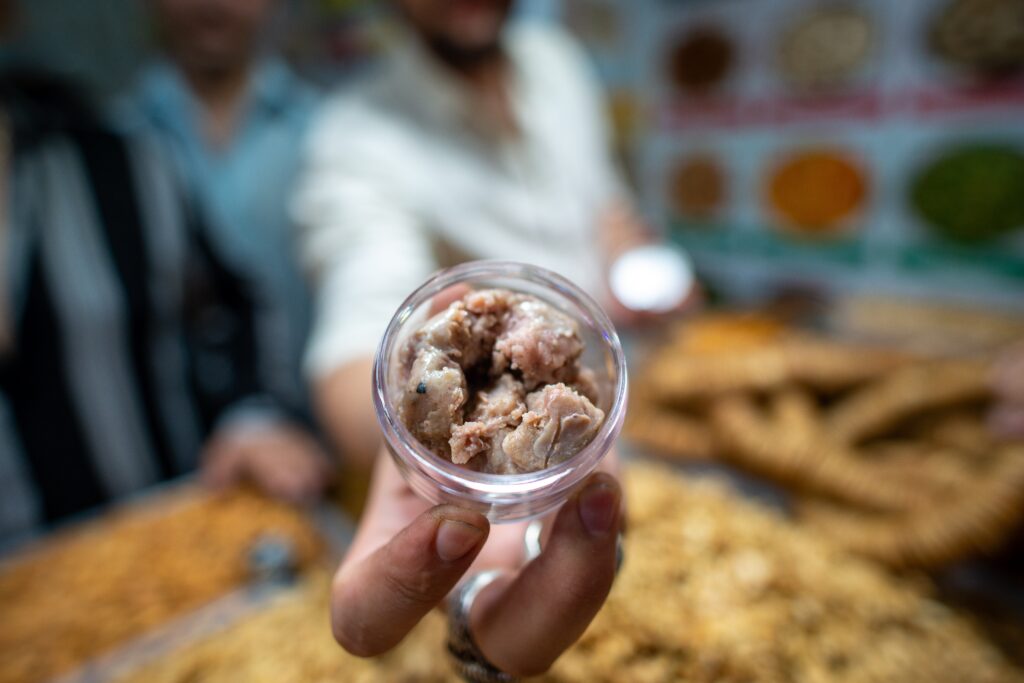
Student product sampling is the most direct path to brand trial available in college marketing. No digital format, no campus advertisement, no brand awareness campaign creates the same opportunity as putting a product directly in a student’s hands in a context where they actually try it. That moment of first experience, especially when it is accompanied by a genuine peer recommendation and happens in the social context of campus life, creates brand memories that follow students far beyond graduation.
At American Guerrilla Marketing, based at Industry City in Brooklyn, our team has run student product sampling programs across the country for brands that understood the value of this direct brand trial moment. We design the distribution strategy, staff programs with students who genuinely believe in the product, identify the campus locations and timing that maximize encounter volume and quality, and build the opt-in collection systems that convert sampling moments into ongoing brand relationships.
This article covers everything about effective student product sampling: why it works, where and when to run it, how to staff it, and how to convert trial to lasting student loyalty.
The Economics of Student Product Sampling
Student product sampling generates value through several economic mechanisms that compound:
Direct trial value: Every student who tries the product is a potential first-time buyer. Without sampling, that student might never encounter the product at retail in a context where they would choose to try it over familiar alternatives. Sampling eliminates the purchase barrier that prevents first trial.
Habit formation timing: Students are forming brand habits during college for the first time in their independent adult lives. A positive sampling experience at age 19 can establish a brand preference that persists for decades. The lifetime value of a habit established through college sampling is dramatically higher than the cost of the sample and the staffing to deliver it.
Social amplification: Campus social networks are among the densest peer influence environments in existence. A student who receives a sample they love is immediately surrounded by potential word-of-mouth recipients. The friend who is handed a bite of the product, the roommate who sees it on the kitchen counter, the classmate who asks what it is: these secondary encounters multiply the reach of each sample distributed.
Data acquisition: Opt-in collection during sampling programs builds first-party student contact data that enables ongoing brand communication well beyond the sampling event. A sampling program that generates 500 email opt-ins creates 500 qualified, brand-interested student contacts who can be marketed to at a fraction of the cost of cold acquisition.
Where Student Sampling Generates the Best Results
Location selection is the most critical operational variable in student sampling program design. Here is how our team identifies the highest-value sampling locations at each target campus:
Dining facility approaches: Students pass dining halls and student unions on predictable schedules multiple times per day. Morning, midday, and dinner periods create dense, predictable traffic concentrations. A team positioned at a dining facility approach during the lunch rush at a large university can reach hundreds of students per hour with minimal movement.
Main campus pedestrian crossings: The heavily used crossings and corridors between major academic buildings during class change periods generate another concentrated student traffic window. These positions require precise timing since the peak lasts only 10 to 15 minutes per class change but generates very high per-hour encounter counts.
Campus-adjacent commercial areas: The coffee shops, restaurants, and casual dining spots students use daily offer high-dwell-time sampling environments. Students sitting in a coffee shop working on assignments or socializing are more receptive to a sampling interaction and more likely to have a full product conversation than students in transit between destinations.
Athletic facilities and events: Campus recreation centers, gym facilities, and athletic events concentrate students in contexts particularly receptive to health, nutrition, and lifestyle product categories. The audience-product alignment at these locations often exceeds that of general campus pedestrian areas.
Residence hall common areas: Evening sampling in residence hall common areas reaches students in their most relaxed, socially active campus moment. These environments allow for more extended product conversations and higher opt-in collection rates than transit-based sampling positions.
Staffing Student Sampling Programs
The staffing approach determines the quality of sampling interactions at least as much as the location or timing. Our strong preference for student sampling programs is always student ambassadors over external promotional staff.
When a fellow student hands you a sample of something they genuinely use and like, the social proof of that interaction is immediate and real. You are receiving a peer recommendation in the most literal possible form: your actual peer is handing you something they recommend. That dynamic is what external promotional staff cannot replicate regardless of their training.
We recruit student sampling staff through campus networks, prioritizing students who are already users of the product or who have demonstrated genuine affinity for the brand category. We screen for authentic enthusiasm, strong social energy, and the ability to approach peers naturally and warmly. Training covers product knowledge, distribution logistics, opt-in collection, and natural conversation approach for sampling interactions.
Timing Student Sampling for Maximum Impact
Within-day timing for student sampling should be matched to the specific student population’s daily movement patterns at each campus. Standard high-value windows include:
Morning (8am to 10am): High pedestrian traffic, students moving to early classes. Best for morning-context products: energy drinks, coffee alternatives, breakfast snacks.
Midday (11:30am to 1:30pm): Highest daily traffic at most campuses during the lunch rush. Best for general consumer products with broad student appeal.
Afternoon (2pm to 5pm): Class change traffic and post-class movement toward campus-adjacent commercial areas. Good for afternoon snack, beverage, and general lifestyle product categories.
Evening (5pm to 8pm): Dinner period and early evening social transition. Good for evening consumption categories and social/lifestyle brands.
Pairing Sampling With OOH for Maximum Program Impact
Wheatpasted art in campus neighborhoods in the weeks before and during sampling programs builds visual brand familiarity that makes sampling interactions land with more impact. Students who recognize the brand from neighborhood posters are more receptive to sampling interactions than those encountering the brand for the first time from a stranger. Sidewalk stencils near sampling positions add environmental brand context. LED trucks on campus-adjacent streets during sampling periods create mass brand awareness that primes students for ambassador interactions.
Why is product sampling particularly valuable with college students?
College students are forming brand habits for the first time in their adult lives. They are budget-conscious, making free trial especially compelling. They are highly social, meaning a good product experience spreads rapidly through peer networks. And they are in concentrated geographic areas that make sampling programs highly efficient per dollar spent.
Where should student product sampling campaigns be deployed?
The highest-performing student sampling locations are the places students pass through predictably at the times they are most receptive. Dining hall and student union approaches during meal periods are the most consistent. Main campus pedestrian crossings during class changes are high volume. Campus-adjacent coffee shops and dining areas are excellent dwell-time environments.
What is the difference between student sampling and general consumer sampling?
Student sampling operates in a peer-dense environment where a good product experience is immediately shared with nearby friends. It also happens during a life phase when brand habits are highly malleable, making trial-to-loyalty conversion rates higher than in the general adult population.
Should student sampling programs use student ambassadors or external staff?
Student ambassadors dramatically outperform external staff in student sampling programs. When a fellow student hands you a product they genuinely like with authentic enthusiasm, the resulting brand experience is qualitatively different from a generic promotional handoff. We strongly recommend student-staffed sampling programs for college markets.
What volume of samples should we plan for a student sampling program?
A single-day activation with a four-person team at a medium-size university typically distributes 400 to 1,200 samples. For multi-day or semester-long programs, total sample volumes in the tens of thousands are achievable at major schools. We help plan quantities based on realistic distribution rates calibrated to each specific campus context.
Can student product sampling programs collect opt-ins?
Yes. Sampling programs are among the most effective opt-in collection contexts available. The reciprocity dynamic of receiving a free sample makes students more willing to provide contact information. We structure opt-in collection as a transparent, low-friction offer, and the resulting student contact lists are valuable first-party data assets for post-sampling marketing sequences.
How do we convert sampling trial to repeat purchase?
The conversion from trial to repeat purchase is driven by product quality first, followed by strategic follow-up. Opt-ins collected during sampling feed email sequences that deliver purchase incentives, brand story content, and ongoing brand relationship touchpoints. Ambassador follow-up within the social network creates additional nudges toward first purchase.
Campaign Architect – American Guerrilla Marketing
Frequently Asked Questions
Why is product sampling particularly valuable with college students?
College students are forming brand habits for the first time in their adult lives. They are budget-conscious, making free trial especially compelling. They are highly social, meaning a good product experience spreads rapidly through peer networks. And they are in concentrated geographic areas that make sampling programs highly efficient per dollar spent.
Where should student product sampling campaigns be deployed?
The highest-performing student sampling locations are the places students pass through predictably at the times they are most receptive. Dining hall and student union approaches during meal periods are the most consistent. Main campus pedestrian crossings during class changes are high volume. Campus-adjacent coffee shops and dining areas are excellent dwell-time environments.
What is the difference between student sampling and general consumer sampling?
Student sampling operates in a peer-dense environment where a good product experience is immediately shared with nearby friends. It also happens during a life phase when brand habits are highly malleable, making trial-to-loyalty conversion rates higher than in the general adult population.
Should student sampling programs use student ambassadors or external staff?
Student ambassadors dramatically outperform external staff in student sampling programs. When a fellow student hands you a product they genuinely like with authentic enthusiasm, the resulting brand experience is qualitatively different from a generic promotional handoff. We strongly recommend student-staffed sampling programs for college markets.
What volume of samples should we plan for a student sampling program?
A single-day activation with a four-person team at a medium-size university typically distributes 400 to 1,200 samples. For multi-day or semester-long programs, total sample volumes in the tens of thousands are achievable at major schools. We help plan quantities based on realistic distribution rates calibrated to each specific campus context.
Can student product sampling programs collect opt-ins?
Yes. Sampling programs are among the most effective opt-in collection contexts available. The reciprocity dynamic of receiving a free sample makes students more willing to provide contact information. We structure opt-in collection as a transparent, low-friction offer, and the resulting student contact lists are valuable first-party data assets for post-sampling marketing sequences.
How do we convert sampling trial to repeat purchase?
The conversion from trial to repeat purchase is driven by product quality first, followed by strategic follow-up. Opt-ins collected during sampling feed email sequences that deliver purchase incentives, brand story content, and ongoing brand relationship touchpoints. Ambassador follow-up within the social network creates additional nudges toward first purchase.
How early should a brand start planning?
For most campaigns, the smart move is to start planning at least two to four weeks before the launch window so production, routing, staffing, and reporting are all lined up.
What makes one market perform better than another?
Market fit depends on audience density, neighborhood behavior, route efficiency, and whether the creative belongs in that setting. The busiest city is not always the best city.
Can AGM bundle this with other services?
Yes. AGM often combines this work with supporting formats so the campaign has stronger repetition and cleaner reporting across the whole run.
How does AGM quote pages like this?
We quote from official rate cards where they apply, then scope the remaining production, staffing, and routing details to the actual job.