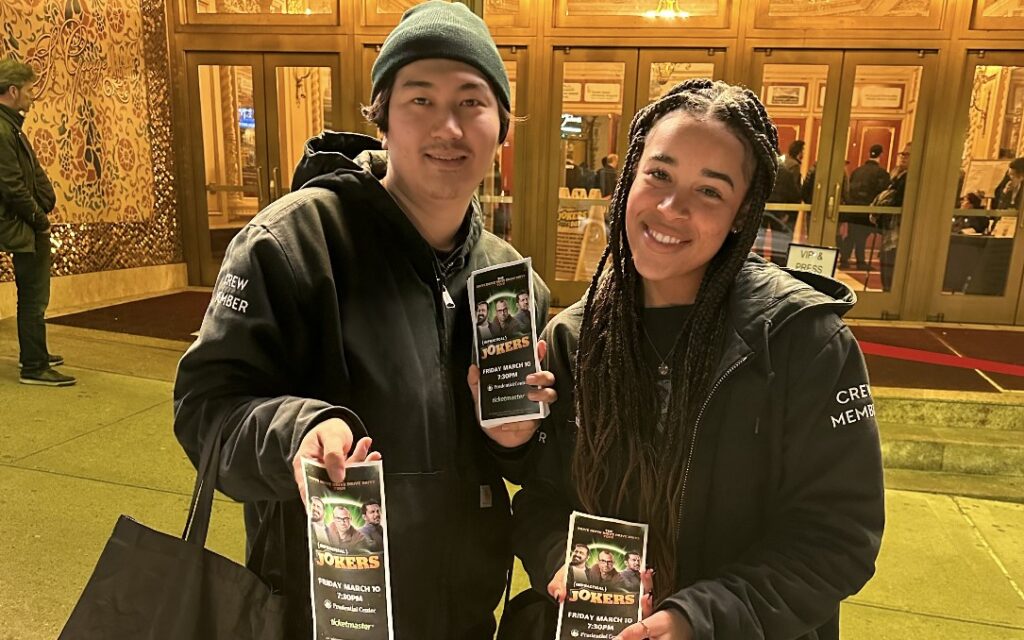
Street teams marketing combines the human element of direct personal interaction with the strategic discipline of a managed marketing program. It is the field marketing channel that consumer brands use to create brand awareness, drive product trial, build community presence, and generate the kind of first-person consumer experience that no digital format can produce.
We run street teams marketing programs for brands across North America. Our programs cover product sampling, brand awareness building, event-adjacent activations, retail foot traffic generation, and consumer data collection. We bring the recruitment, training, management, and reporting discipline that turns street team activity from a tactical gesture into a measurable marketing channel.
Street teams marketing works for the fundamental reason that people trust people more than they trust advertisements. A trained, genuine brand ambassador who is clearly knowledgeable about a product, who answers questions honestly, and who creates a real moment of product engagement is delivering a message with credibility that no paid ad can approximate. That credibility converts to purchase behavior at rates that make the investment worth making.
AGM Field Note: Street teams marketing is most powerful when it is integrated with the brand’s other channels. The street team creates the first impression. Digital and retail channels reinforce it and convert it. The brands that design for this integration see dramatically better results than those that run street teams as a standalone effort.
When a brand enters a new city or geographic market, street teams marketing builds the initial consumer awareness that makes every other marketing channel in that market more effective. A consumer who has encountered your brand through a street team and had a positive experience is primed for the digital advertising, retail placement, and word-of-mouth that follow. The street team creates the foundation. The other channels build on it.
Product Launch
At product launch, street teams marketing generates the initial trial volume that starts the consumer feedback cycle, builds the retail velocity that secures shelf space, and creates the community-level word of mouth that accelerates organic growth. A product launch without a street team component relies entirely on advertising and hope for retail trial. A product launch with a street team component creates real consumer advocates from the first week.
Competitive Repositioning
When a brand needs to reclaim consumer share from a competitor, street teams marketing is the most direct tool available. Deploying in the competitor’s strongest neighborhoods, creating direct comparison moments, and building the personal brand relationship that the competitor has only maintained through advertising creates a disruption that is harder to ignore than a digital campaign in the same territory.
Community Building
For brands with strong community identity, street teams marketing builds the neighborhood-level presence that makes the brand feel local rather than corporate. Regular street team presence in a community creates the feeling of an ongoing relationship rather than a one-time commercial transaction. Over time, that relationship translates into the kind of consumer loyalty that is much harder to build through any media-bought channel.
Marketing Objective
Street Team Role
Timeline
Market entry
First consumer contact, awareness seeding
4-8 weeks at launch
Product launch
Trial generation, velocity building
2-4 weeks intensive
Competitive conquesting
Direct comparison, preference shift
6-12 weeks sustained
Community building
Ongoing presence, relationship building
Continuous monthly
Event amplification
Adjacent activation, social generation
Event duration
Street Teams Marketing Integration
Street teams marketing delivers its highest return when it is integrated with the brand’s other marketing channels. The integration works in multiple directions and requires planning from both the field marketing side and the brand’s other marketing teams.
When digital advertising geo-targets consumers in the same neighborhoods where street teams are deployed, those consumers encounter the brand through two different channels in a short period. The digital ad creates recognition. The street team encounter creates the personal moment. The combination of recognition and personal connection drives higher conversion than either channel alone.
When retail promotions are timed to coincide with street team deployments in adjacent neighborhoods, the consumer who encounters the brand on the street and then finds it on sale at their grocery store the same week has multiple reasons to buy in a single week. The accumulated momentum of multiple positive brand encounters in a short window is a consumer acquisition mechanism that no single channel can replicate on its own.
AGM Field Note: The best street teams marketing programs are designed with the consumer process in mind, not just the deployment logistics. What happens to the consumer after the street team encounter? Where do they go next? How does the brand stay in their awareness? Design for the process, not just the moment.
Pricing and Program Structure
Standard tier is $389.99 per 6-hour shift. Professional tier is $489.99 per 6-hour shift with lead generation and supervisor coverage. Premium tier is $589.99 per 6-hour shift with advanced demonstrations, live check-ins, full analytics, and field manager. Multi-market programs and sustained programs of three months or more receive volume-based pricing adjustments. Contact us for a complete proposal tailored to your objectives and markets.
How do I start a street team or sampling program with AGM?
Call us at (646) 776-2770 or email [email protected]. We will ask the right questions about your brand, your consumer, your objective, and your timeline, and give you an honest assessment of what is achievable and what it will cost. Most standard programs can be deployed within two to three weeks of a confirmed brief. We move quickly and we build programs that are worth running.
What markets does AGM cover?
We have active field teams in New York, Los Angeles, Chicago, Miami, Austin, Atlanta, Boston, Seattle, Denver, Philadelphia, Dallas, Houston, San Francisco, and more. Partner networks extend our reach to secondary and tertiary markets across North America. Contact us to confirm coverage in your specific target markets.
What is included in AGM’s field reporting?
Daily shift reports covering interactions logged, samples distributed, locations covered with GPS confirmation, consumer feedback themes, and field management observations. Final campaign reports covering all metrics, location performance analysis, consumer feedback summary, and recommendations for future programs. Our reporting is specific, honest, and actionable.
How are ambassadors managed during active shifts?
Through active field supervision with GPS tracking, photo documentation, and regular check-ins throughout each shift. Our field supervisors are deployed on-the-ground, not managing remotely from a desk. Active management is what keeps ambassador performance consistent throughout the shift and throughout the program duration.
What does ambassador training include?
Brand-specific product knowledge, brand voice and key messages, consumer approach protocols, how to handle common questions and objections, conversion follow-through methods, field reporting requirements, and safety protocols. Training is delivered through written briefing documents and live pre-deployment sessions. No ambassador goes into the field without being thoroughly prepared for the specific campaign they are representing.
Can AGM handle multi-city campaigns?
Yes. We coordinate multi-market campaigns under a unified brief with market-specific field teams operating under the same standards. We have run campaigns spanning eight or more cities simultaneously. Unified reporting makes cross-market performance comparison straightforward. Contact us with your specific market requirements to confirm coverage and logistics.
What is the minimum budget for working with AGM?
Programs start at $389.99 per 6-hour shift for Standard tier ambassadors with a five-day minimum. A focused single-market, single-ambassador program over five days is the minimum program structure we recommend for generating meaningful data and a useful sample of consumer contacts. Smaller activations are possible but we are honest when a budget is too constrained to produce results worth measuring.
Do you work with brands outside of consumer goods?
Yes. We have built field marketing programs for technology companies, entertainment brands, financial services firms, professional services organizations, and nonprofits. The tactics adapt to the brand and objective. The recruitment, training, and management standards remain the same regardless of category.
How does AGM measure program ROI?
We build the measurement framework before the first shift. For retail programs, we compare sales velocity on sampling days versus non-sampling days. For sampling programs, we track samples distributed, interactions logged, consumer feedback, and conversion observations. For digital acquisition programs, we track downloads, sign-ups, and QR code engagement. The right measurement framework depends on the campaign objective and we define it with the brand before the program starts.
Why American Guerrilla Marketing
American Guerrilla Marketing has spent years building field marketing programs for brands that take their consumer relationships seriously. We are not a staffing platform. We are a field marketing company with genuine expertise in the challenge of creating brand moments in the physical world and measuring their commercial impact.
Our differentiation is in the details: the recruitment process that finds ambassadors who genuinely fit the brand, the training investment that prepares them for real consumer conversations rather than scripted interactions, the field management infrastructure that keeps performance consistent throughout every shift, and the reporting quality that gives brands information they can act on rather than metrics they can file away.
We work with brands at every stage of growth, from first-launch products with no market recognition to established national brands defending their consumer relationships. The tactics adapt. The standards do not. Call us at (646) 776-2770 to talk about what we can build for you.
Field Marketing as a Business Growth Strategy
Field marketing programs, including street teams, brand ambassador programs, and product sampling campaigns, are among the most direct contributors to measurable business growth available to consumer brands. They generate the trial that drives first purchase. They build the community presence that drives repeat purchase. They collect the consumer intelligence that drives smarter product and marketing decisions. And they create the brand momentum that makes every other marketing investment more effective.
The brands that allocate a consistent portion of their marketing budget to field marketing over multiple years build consumer relationships that brands relying solely on media advertising cannot match. The consumer who has tried your product in person, who has had a genuine conversation with someone who represents your brand and knows it well, and who has made a positive association between your brand and a real moment in their daily life is a fundamentally different customer than the consumer who has only seen your advertising. The first consumer has a relationship. The second has an awareness. Relationships drive the repeat purchase, the recommendation, and the loyalty that build business value over time.
We have watched brands build from zero market recognition to category leaders in their distribution footprint through consistent investment in field marketing alongside their digital and retail strategies. The trajectory is not accidental. It is the predictable result of building genuine consumer relationships through direct contact over time. Field marketing is the channel that does that work. Digital advertising can create awareness at scale. Field marketing creates the relationships that convert awareness into loyalty.
Building a Year-Round Field Marketing Calendar
The most strategically effective field marketing programs are built around a year-round calendar that aligns deployment timing to the consumer moments, seasonal patterns, and event windows that maximize program effectiveness. Here is how we think about annual field marketing calendar planning for our clients.
January and February are strong months for health, wellness, and fitness brands targeting New Year resolution consumers who are actively seeking new products in these categories. The post-holiday period also creates strong trial opportunity for food and beverage brands as consumers who received product as gifts look for the retail outlet to repurchase.
March through May is one of the highest-impact windows of the year for most consumer categories. Spring brings renewed outdoor activity, increased consumer foot traffic in urban neighborhoods, and the beginning of the outdoor event season that creates the concentrated consumer environments that make field marketing particularly productive. Welcome Week and spring semester campus programs generate some of the highest per-shift contact volumes of any period in the year.
June through August is summer, which concentrates consumer activity around outdoor events, beach and park environments, and festival seasons. Food and beverage, fitness, and lifestyle brands see some of their highest sampling program performance during summer deployments. The outdoor venue density in summer is the highest of the year and the consumer mindset during this period, relaxed, social, and open to new experiences, is one of the most favorable of any season for building new consumer relationships.
September and October bring back-to-school, market re-entry after summer, and the beginning of the holiday season ramp-up. Fall is one of the strongest consumer engagement periods for most categories and one of the best investment windows for brands that want to build consumer relationships before the holiday purchase season peaks in November and December.
November and December are high-purchase-intent periods that create strong retail sampling and street team opportunities for brands positioned in categories that benefit from holiday gifting, seasonal flavors, and year-end purchase motivation. Event-based field marketing at holiday markets and community celebrations is particularly productive for the right brand categories during this period.
The Consumer process and Field Marketing
Understanding where field marketing fits in the consumer’s process from non-awareness to loyal customer is essential for designing programs that produce the right kind of value at each stage.
At the non-awareness stage, the consumer has no existing knowledge of the brand. Street team programs and product sampling at high-traffic locations generate the first exposure. This first exposure is the most valuable if it is a live product trial because the consumer leaves the interaction with a genuine product experience rather than just an advertising exposure that they may or may not remember.
At the consideration stage, the consumer is aware of the brand but has not yet committed to purchase. Sampling programs near retail locations, event-adjacent sampling programs, and ambassador interactions that answer the consumer’s specific questions and address their specific objections are the field marketing tools most effective at this stage. The goal is to remove the remaining uncertainty that is preventing the first purchase decision.
At the first purchase stage, the consumer is ready to buy. A street team ambassador who can direct this consumer to the nearest retail location, provide a coupon or QR code that adds value to the purchase decision, or facilitate a direct purchase on the spot converts this stage at the highest rate. The proximity between the positive field marketing interaction and the purchase opportunity is the most critical variable at this stage.
At the loyalty stage, the consumer has purchased and is deciding whether to purchase again. Field marketing supports loyalty through ongoing brand presence in the consumer’s environment, through ambassador interactions that reinforce positive brand associations, and through sampling of new products or new flavors that expand the consumer’s engagement with the brand. Loyalty-stage field marketing is often neglected in favor of acquisition programs, but the investment in retaining and deepening the relationship with existing consumers is consistently one of the highest-return uses of field marketing budget.
How We Measure Field Marketing Return
Measuring the return on field marketing investment is more nuanced than measuring digital advertising return, but it is thoroughly doable when the measurement framework is built before the program starts rather than reverse-engineered after it ends. Here is how we approach field marketing measurement for our clients.
For retail-focused programs, the primary commercial measurement is sales velocity lift on deployment days versus non-deployment days at each sampled store location. This requires access to point-of-sale data from the retail partner, which most brands can negotiate as part of their retail relationship. The lift calculation is straightforward: total units sold on sampling days divided by total units sold on non-sampling days over the same period gives you the sampling lift multiplier. When that multiplier is greater than 1, the sampling program is driving incremental purchase. When it is substantially greater than 1, the program is delivering strong commercial return.
For street-level and event programs without a direct retail measurement point, we measure commercial return through a combination of consumer self-reported purchase intent captured through ambassador interactions, coupon and QR code redemption rates, and correlation analysis comparing digital and retail engagement metrics in deployment zones during and after the program versus comparable control periods. These measures are not as precisely attributable as point-of-sale data but they provide directional evidence of commercial impact that is sufficient for informed program evaluation and investment decision-making.
We build the measurement framework specific to each program before the first shift and deliver the analysis in a final report format that is useful for internal justification conversations as well as for planning the next program. Our goal is to give brands the data they need to make confident decisions about their field marketing investment, not just to report on activity that the program produced.
Integrating Field Marketing With Your Existing Programs
Field marketing works best as an integrated channel within a broader marketing program rather than as a standalone investment. Here is how integration with the most common complementary channels works.
Digital advertising integration. Geo-targeted digital advertising in the same geographic zones as active field marketing deployments creates a layered consumer encounter that drives stronger brand recall than either channel alone. The consumer who has seen your brand’s ad on social media and then encounters your ambassador in person in the same neighborhood is receiving reinforced brand messaging from two qualitatively different channels simultaneously. We help brands plan the geographic and timing alignment of their field and digital programs.
Retail promotion integration. Field marketing programs that run alongside in-store promotions, price reductions, or display features create a combined pull-and-push dynamic that drives purchase velocity more effectively than either element alone. The field marketing creates awareness and trial. The in-store promotion creates urgency and purchase incentive. We coordinate timing of field programs to align with retail promotion windows whenever the two can be synchronized.
PR and earned media integration. Field marketing activations that are designed with earned media potential built in can generate press coverage and social media sharing that extends the campaign’s reach far beyond the consumers directly engaged by the field team. We help brands design activations that have genuine newsworthiness or social shareability, and we coordinate timing of activations with PR outreach to maximize the earned media opportunity from field activities.
Email and owned channel integration. Consumer data collected during field marketing programs feeds the brand’s owned marketing channels when it is structured correctly. Email addresses, phone numbers, and social follows collected during ambassador interactions with existing consumers or qualified prospects are direct additions to the brand’s owned audience. We design data collection into programs for brands that want to build their owned channels through their field marketing investment.
The American Guerrilla Marketing Difference
American Guerrilla Marketing was built on the conviction that field marketing, done with genuine discipline and genuine care, is the most powerful consumer marketing investment available to brands that are serious about building real consumer relationships rather than just media metrics. We bring that conviction to every program we build and every client relationship we maintain.
Our recruitment process is more disciplined than the industry standard because we know that the person standing in front of the consumer is the entire program in that moment. Our training investment is higher than the industry standard because we know that an undertrained ambassador is a brand liability, not a brand asset. Our management infrastructure is more strong than the industry standard because we know that unmanaged field teams perform at the minimum rather than the maximum. And our reporting is more specific than the industry standard because we know that the brand cannot make good decisions from bad data.
These investments cost more than the industry minimum. They are worth every dollar when measured against the performance difference between a program built with this level of care and one built to a budget without it. We are not the cheapest field marketing option. We are the option that produces results worth the investment.
Call us at (646) 776-2770 or email [email protected] to start building your program. We are ready for the hard questions and confident in the honest answers we will give you. American Guerrilla Marketing. Field marketing that builds brands in the real world.
Field Marketing That Moves the Needle
Every field marketing program we build is designed around a central question: what specific consumer behavior change are we trying to produce, and what is the most direct field marketing path to producing it? That question sounds simple. Most marketing programs are not actually built around it. They are built around activity: how many ambassadors, how many shifts, how many samples. Activity without a behavior change objective is expensive logistics. Behavior change, produced through disciplined field execution, is marketing.
The consumer behavior we are most commonly trying to produce is trial-to-purchase conversion. The consumer who has never bought your product needs a reason to take the risk of a first purchase. The most effective reason is personal experience of the product before the purchase. Field marketing creates that experience at scale, in the right locations, with the right consumers, supported by the training and management that makes the experience positive and the conversion follow-through that gives the consumer a clear path from positive experience to purchase action.
The second most common behavior we target is repeat purchase and loyalty development. A consumer who has already purchased once is your most cost-effective next customer. Field marketing supports repeat purchase through ongoing brand presence in the consumer’s environment, through sampling of new products that expand the consumer’s engagement with the brand, and through ambassador interactions that reinforce positive brand associations and remind consumers who have lapsed to re-engage. The repeat purchase rate from consumers who have had multiple positive field marketing interactions with a brand is significantly higher than from consumers whose relationship with the brand is mediated entirely through advertising.
Third, we frequently target social amplification: the behavior of sharing a brand experience with others through social media, word of mouth, or community recommendation. Field marketing creates shareable moments in a way that advertising cannot. A consumer who had a memorable, positive, surprise encounter with a brand’s street team is more likely to tell someone about it than a consumer who saw an advertisement for the same brand. We design activations with shareable moment potential built in, and we track the social content generated from our programs as an indicator of the program’s community-level impact.
These three behavior change objectives, trial-to-purchase, repeat purchase, and social amplification, are the primary commercial value drivers of field marketing investment. Programs that produce all three simultaneously are the highest-returning field marketing investments available. Programs that produce only one of the three are still worth running when that single objective aligns with the brand’s current priority. The key is being deliberate about which objective the program is optimized for rather than hoping that all three happen by default.
We build every program around a specific objective, measure against it specifically, and report on it honestly. That is the discipline that separates field marketing that builds brands from field marketing that just spends budgets. Call us at (646) 776-2770 to talk about what we can build for you.