Spring changes how consumers behave. They go outside. They spend more. They discover new things. Brands that show up in the right places with the right energy during spring capture customers they keep through the rest of the year.
Spring is the marketing season most brands under-plan for. Summer gets the big budget. Holiday gets the biggest. Spring, which sits between the post-holiday slowdown and the summer rush, often gets treated as a transitional period rather than a genuine opportunity. That is a mistake, and brands that get this right gain a consistent competitive advantage.
Consumer behavior shifts in measurable ways in spring. Foot traffic in retail districts increases. Time spent outdoors climbs. Spending on new experiences, categories connected to outdoor life, home improvement, fitness, and fresh food all spike. The consumer’s openness to trying new things is genuinely higher in spring than in any other season. This is the window you should be capitalizing on.
At American Guerrilla Marketing, we have run spring campaigns for brands in every major US market. We know which tactics work in spring, which venues fill up in April and May, and how to put a brand in front of the right consumer at the exact moment when they are most likely to become a loyal customer. This guide covers our best spring marketing ideas and explains the strategic thinking behind each one.
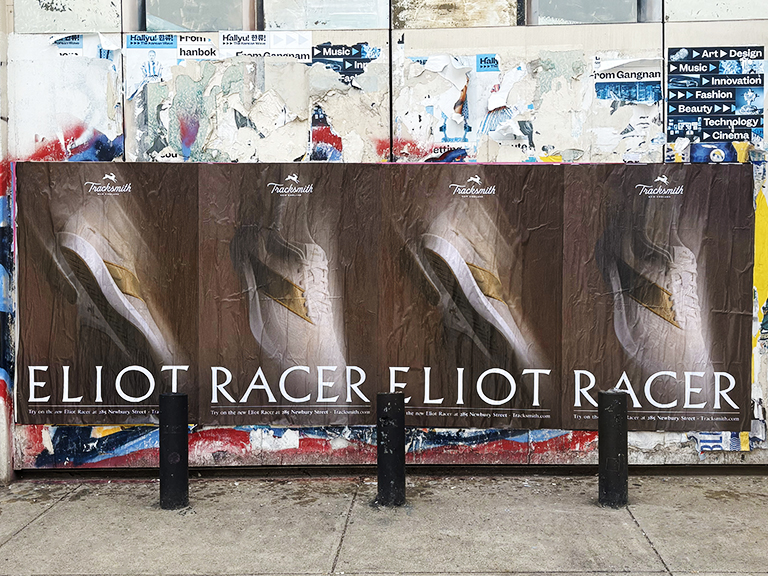
The first week of spring weather, whenever it arrives in your market, is the highest-receptivity window for outdoor advertising. Consumers who have spent three months moving quickly through the cold are suddenly slowing down. They are looking around. They are noticing things. A street poster campaign launched at the leading edge of spring weather gets seen by these newly attentive eyes before the competitive advertising environment fills up.
We recommend launching spring poster campaigns in mid-March in most northern US markets. This is before peak spring events begin but after the psychological shift to spring energy has already happened. The posters greet consumers as they start moving through their neighborhoods more slowly and more deliberately. The frequency you build with the right placements during this window creates recognition that pays off in purchase behavior through April and May.
Spring poster creative should feel energetic and seasonal without being literal. Bright colors, outdoor settings, and messaging that connects to themes of renewal and activity land better than continuation of winter-toned creative. You do not need flowers on your poster. You need energy, clarity, and a visual presence that matches the mood of a city coming back to life.
Spring Marketing Idea: Own the Saturday Farmers Market
Saturday farmers markets are one of the single best spring marketing venues available to consumer brands. They draw thousands of exactly the right consumer: health-conscious, community-oriented, willing to try new things, and in a relaxed purchase mindset. The farmers market shopper on a Saturday morning is the ideal state for a brand to find them.
Being present at the farmers market does not require being an official vendor, though that is one approach. Sampling activations near market entrances and exits, brand ambassador presence within the market as a participating brand or partner, and partnerships with existing market vendors who carry complementary products all create market presence without requiring a full vendor setup.
The community character of farmers markets means that brands need to approach the presence with genuine respect for the setting. An aggressive or obviously commercial activation that disrupts the market atmosphere will be noticed negatively. A brand that contributes something useful, shows up regularly across the season, and engages attendees with genuine warmth becomes part of the market community. That community membership is what drives lasting loyalty.
Spring Marketing Idea: Partner With Spring Events and Runs
Spring charity runs, community 5Ks, cycling events, and neighborhood sports leagues all return in March and April. These events draw large, concentrated audiences of the exact consumers that most wellness, food, beverage, athletic, and lifestyle brands want to reach. The physical and community nature of these events makes them ideal activation environments.
Participation as an event sponsor typically provides some combination of sampling access, branding at the event, and presence at the registration or finish line area. For brands willing to invest more, full activation zones with branded elements, interactive experiences, and giveaways create more memorable consumer encounters than logo placement alone.
The key to spring event sponsorship is choosing events that attract your actual target consumer rather than just any high-traffic event. A healthy snack brand at a 5K finish line is contextually relevant. The same brand at a county fair might reach more people but fewer of the right ones. Relevance of the event to your brand’s identity amplifies the impact of your presence.
Spring Marketing Idea
Optimal Timing
Budget Range
Primary Benefit
Outdoor poster campaign
Mid-March through May
$5,000 – $30,000
Awareness, frequency
Farmers market presence
April through June
$3,000 – $15,000/market
Product trial, community connection
Event/run sponsorship
April through May
$5,000 – $50,000
Brand association, trial
Park activation
April through June
$10,000 – $75,000
Lifestyle alignment, social content
Neighborhood micro-campaign
March through May
$5,000 – $20,000
Local awareness, saturation
Spring Marketing Idea: Activate in Urban Parks
Urban parks in spring are extraordinary marketing environments. Prospect Park, Central Park, Lincoln Park, Dolores Park, the National Mall, and their equivalents in every major city fill up on the first warm weekends of spring with enormous crowds of people who are genuinely happy to be outside after months of cold weather. This emotional openness translates directly to receptivity for brand encounters.
Park activations need to provide genuine value to the people already there. A brand that sets up a charging station, a free yoga class, a picnic supply station, or a well-designed photo moment gives the park community something useful or entertaining. The exchange of value creates positive brand association that a purely commercial presence cannot achieve.
Check the specific regulations for your target parks before planning. Most major urban parks have rules about commercial activities within their boundaries. Some have formal application processes for brand activations. Planning in January or February gives you enough lead time to navigate these processes before the spring season opens.
Spring Marketing Idea: Refresh Your OOH Creative
If your brand has ongoing outdoor advertising running through winter, spring is the right time for a creative refresh. Winter-toned creative running into April looks out of season. A spring refresh with updated visuals, seasonal messaging, and brighter color energy signals that the brand is current and alive.
The spring OOH refresh does not require rebuilding the entire campaign. Updating the hero image, adjusting the color palette, adding a seasonal message, or featuring spring-relevant product applications all give the campaign a fresh feel without the full cost of a new campaign concept. For brands with ongoing transit or billboard placements, the spring refresh is a standard part of annual campaign management that pays dividends in consumer receptivity.
Spring Marketing Idea: Create a Mural for Spring
Spring is the ideal season for a mural installation. The weather allows outdoor painting work. People are spending more time outdoors and will encounter the mural as it goes up and in the weeks following. The visual energy and color that characterize effective murals align naturally with spring’s aesthetic of color and renewal.
A mural installation in the right neighborhood creates a brand touchpoint that lasts well beyond the spring season. It becomes part of the visual identity of the block. People photograph it and share it online. They walk past it every day and build a cumulative impression of the brand that individual poster campaigns cannot replicate. The spring launch timing means the mural is introduced when foot traffic and consumer attention are both rising, which creates the optimal conditions for a new mural to establish itself in the neighborhood’s visual environment.
Spring is a relationship-building season: The brands that win in spring are not necessarily the ones that spend the most. They are the ones that show up in the most relevant places, engage the most genuinely, and create the kind of interactions that consumers remember and talk about. Spring marketing at its best is about earning your place in the consumer’s world during a season when they are actively exploring that world.
Spring Marketing Idea: Launch a Social-Physical Campaign
Spring is an ideal time to combine physical street presence with a social media component that extends the campaign’s reach beyond the people who physically encounter your outdoor advertising. A campaign that uses a distinctive visual element in its street creative and then uses that same element as the basis for a social challenge or sharing campaign creates a link between the physical and digital that multiplies total reach without proportionally increasing cost.
The physical posters drive awareness among the people who walk past them. The social component reaches their networks through shared content. A well-designed link between the two, whether through a specific hashtag, a QR code that leads to something worth sharing, or a visual element that encourages people to photograph themselves with the poster, creates a self-amplifying campaign loop that makes the physical investment work harder.
Spring is particularly well-suited to this approach because consumers are more likely to be photographing and sharing their outdoor experiences during spring than during winter. A street poster or activation that appears in the same visual field as the spring experiences people are already documenting, enjoying parks, visiting markets, attending events, benefits from the organic sharing behavior that spring inspires.
Spring Marketing Idea: Support Community Clean-Up and Gardening Initiatives
Spring community cleanup events and neighborhood gardening programs are one of the most underused brand association opportunities available. These initiatives draw genuinely community-minded people who respond very positively to brand participation that feels authentic rather than commercial.
A brand that provides tools, materials, plants, or refreshments for a community cleanup day earns genuine goodwill from the people who participate. A food or beverage brand that sponsors a community garden’s opening day creates a natural product placement in a setting where consumption and community are already linked. The cost of this kind of community participation is modest. The brand equity earned is disproportionate to the investment.
Spring Marketing Idea: Run a Micro-Campaign in Your Key Neighborhood
Spring brand partnerships are another underused tactic. Two non-competing brands that share the same target consumer can combine their spring budgets to create joint activations that are larger and more impactful than either brand could produce independently. A healthy beverage brand and an outdoor clothing brand sharing a booth at a spring market, a fitness studio and a food delivery service co-hosting a community workout event, a coffee brand and a bookshop creating a spring reading series together. These co-marketing partnerships make spring investment go further while creating new audience access for both brands involved.
Rather than spreading spring marketing budget across a wide geography, concentrating it in the specific neighborhood or two where your target consumer is most concentrated produces the density and frequency that drives real awareness and recall. A micro-campaign that covers every poster location, every community event, and every relevant venue in a single neighborhood for six weeks creates the impression of ubiquity that a thin city-wide campaign cannot achieve at the same budget level.
The micro-campaign approach works especially well for food brands trying to drive velocity at specific retail locations, for local businesses announcing a new location or service, and for brands entering a specific market for the first time. The concentrated presence in a small geography creates the kind of word-of-mouth momentum that later spreads to adjacent neighborhoods and markets.
Spring Marketing Idea: Deploy Street Teams When Foot Traffic Peaks
Spring foot traffic builds unevenly across a city. The first warm Saturday draws people to the waterfront. A 70-degree Tuesday afternoon fills coffee shop patios by 3 PM. Commuter corridors that felt empty in February suddenly have people walking slowly and looking around. These foot traffic surges are predictable enough to plan against if you know your market.
Street teams positioned at high-traffic nodes during peak spring hours turn ambient foot traffic into direct brand encounters. A sampling team near the entrance to a park on a warm weekend afternoon can hit several hundred qualified consumers in a four-hour deployment. A team at a commuter plaza during evening rush on a warm day reaches professionals leaving work in a good mood. Each deployment needs to be matched to the right location and the right time window, because spring foot traffic is concentrated in specific places at specific hours rather than spread evenly across the day.
Street team briefing matters more in spring than in any other season because the consumer environment changes week to week. The team that worked well at a cold-weather transit station needs different messaging, a different energy, and different materials for a warm-weather park deployment. Brief your teams for the specific environment they will be entering, more than for the brand they are representing. Spring street teams that feel native to the spaces they work in outperform ones that are clearly just executing a scripted activation.
Track which deployment locations perform best by measuring samples distributed per hour and opt-in rates per contact. These numbers tell you where your target consumer is concentrating during spring and give you data that informs more than this season’s street team strategy but next spring’s campaign planning as well.
Frequently Asked Questions
What are the most effective spring marketing ideas?
The most consistently effective spring marketing ideas include outdoor poster campaigns launched in March, sampling activations at farmers markets and community events, event and run sponsorships, park activations with genuine consumer value, and neighborhood micro-campaigns that create density and frequency in the most important geographic zones for the brand.
When should I start planning a spring marketing campaign?
Start planning in January. The best spring venues, event sponsorship slots, and OOH advertising spaces book up in January and February. Brands that wait until March to start planning spring campaigns are already behind for the peak spring window. A spring campaign that launches in mid-March requires planning that starts at least eight weeks earlier.
What is the best spring marketing idea for a food brand?
For food brands, farmers market sampling is consistently the highest-ROI spring tactic. The farmers market environment is a natural context for food discovery. Consumers are specifically in a food-oriented mindset. The community and quality signals of the farmers market environment align with what most food brands want consumers to feel about their products. Pair this with a street poster campaign
How do I make spring marketing feel authentic?
Authenticity in spring marketing comes from showing up in genuinely relevant places, engaging in the activities that your target consumer actually cares about during spring, and offering something that makes their spring experience better rather than interrupting it. Brands that participate authentically in spring communities, rather than parachuting in for a logo placement, earn the kind of trust
What spring events are best for brand activations?
The best spring events are the ones that attract your specific target consumer in a mindset that is aligned with your brand’s message. Farmers markets for food and wellness brands. Charity runs for athletic and health brands. Garden events for home and lifestyle brands. Music and arts festivals for entertainment and lifestyle brands. Match the event to your consumer and your brand identity, more t
How much should I budget for a spring marketing campaign?
A meaningful single-market spring campaign with a poster push and one or two event activations can run $15,000 to $40,000. A multi-tactic spring campaign across a major metro area covering postering, sampling, park activations, and event sponsorship could run $75,000 to $150,000 or more. The right budget is one that creates enough presence in the right places to actually be noticed and remembered
Does spring marketing work for B2B brands?
Spring marketing works for any brand that serves a consumer or professional who changes their behavior or mindset in spring. B2B brands can benefit from spring conferences, networking events, and trade shows. They can also benefit from spring initiatives that support the business goals of their clients. A B2B marketing agency that supports clients with spring campaign planning, a commercial real e