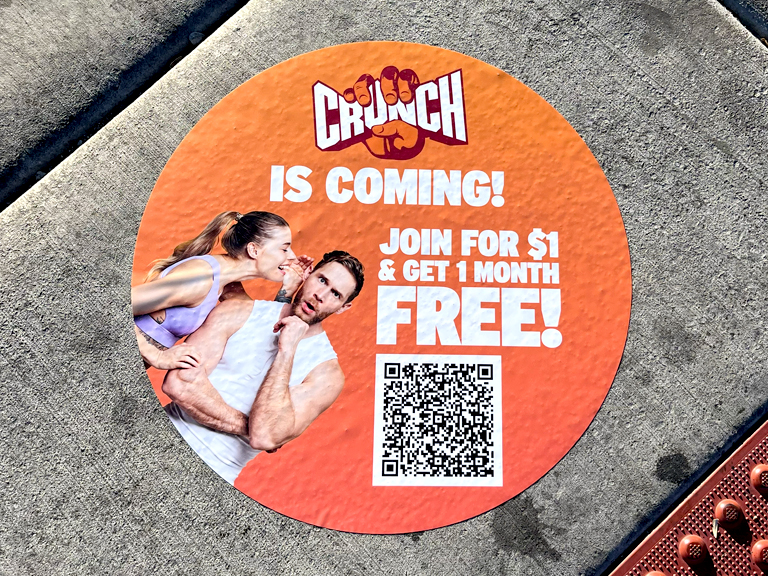
Sports Marketing Firms Chicago: Street-Level Campaigns That Work
Chicago has some of the best sports venue environments in the country for street-level marketing. Here is how we run campaigns near Wrigley, United Center, and Soldier Field.
Chicago is one of the best sports cities in the country for street-level marketing. The venue geography here is unusual: three of the city’s major sports facilities, Wrigley Field, United Center, and Soldier Field, are each embedded in dense residential and commercial neighborhoods with high pedestrian traffic, strong local identity, and fan bases that extend well beyond the stadium footprint. That geography creates marketing opportunities that do not exist in suburban arena markets or in cities where stadiums are surrounded by surface parking lots.
At American Guerrilla Marketing, we run sports marketing campaigns in Chicago year-round. We have worked the approach streets around Wrigley Field for Cubs and baseball clients, the West Madison Street corridor toward United Center for Bulls and Blackhawks campaigns, and the Museum Campus approach to Soldier Field for Bears and large event clients. We know what works in each environment because we have been doing it in each environment.
This guide covers the sports marketing environment in Chicago, the venue-specific opportunities we have identified and used, the formats that perform best in this market, and what to expect from a sports marketing firm operating at the street level in one of America’s premier sports cities.
Chicago’s Venue Geography: Why It Matters for Sports Marketing
Understanding the physical environment around each Chicago sports venue is the starting point for any sports marketing campaign in this city. Each venue has a distinct surrounding neighborhood, distinct transit infrastructure, and distinct fan arrival patterns. Campaigns that treat them interchangeably produce generic results.
Wrigley Field and the Wrigleyville Corridor
Wrigley Field at 1060 West Addison Street sits in the middle of Wrigleyville, a densely populated North Side neighborhood where the bars, restaurants, and retail on Clark Street and Sheffield Avenue depend heavily on Cubs game traffic. The fan arrival pattern here is spread across a wide time window, some fans arrive hours before first pitch for the Wrigleyville bar scene, others walk directly from the Addison Red Line station just before gates open.
The pedestrian density on Clark Street between Belmont and Addison on a Cubs game day is among the highest of any sports venue approach in the US. We have run street team deployments on this corridor for client brands and for the Cubs organization’s own promotional campaigns. The target density and the foot traffic quality are both exceptional. Fans are engaged, social, and carrying phones. The right activation on Clark Street between Belmont and Addison on a warm summer afternoon reaches a highly activated audience.
United Center and the West Madison Corridor
United Center at 1901 West Madison Street is Chicago’s basketball and hockey arena. The approach from the Loop is along West Madison Street, and the character of the approach shifts from urban commercial to residential as you move west. The key activation zone for United Center games is the several blocks immediately west of Damen Avenue on West Madison, where foot traffic from both the CTA Pink and Green Line stop at Damen and from walk-in fans from the nearby Fulton Market and West Loop neighborhoods concentrates before entering the arena.
This corridor is more compact than the Wrigley approach, which means street team deployments can cover a higher percentage of the arriving crowd with fewer team members. We typically deploy four to six brand ambassadors on the West Madison corridor for United Center events, with a primary position between the Damen stop and the arena entrance.
Soldier Field and the Museum Campus Approach
Soldier Field at 1410 Museum Campus Drive has the most unusual approach environment of Chicago’s major venues. The Museum Campus sits on the lakefront south of Grant Park, and most fans arrive by car via Lake Shore Drive or by foot from the Roosevelt CTA stop on the Red, Green, and Orange Lines. The approach is more spread out than Wrigley or United Center, and the surrounding environment is more open, the Museum Campus park spaces rather than commercial corridors.
Street-level activations near Soldier Field work best on the Roosevelt Road pedestrian approach and in the area around the Roosevelt CTA stop where foot traffic concentrates before the walk to the stadium. LED truck advertising on Lake Shore Drive and Michigan Avenue is also highly effective for Soldier Field events because it intercepts the vehicular traffic heading to the venue.
What to Look for in a Chicago Sports Marketing Firm
Chicago has a range of marketing agencies that describe themselves as sports marketing firms. Most of them are digital agencies, media buyers, or event production companies that have a sports division. What they are usually not is a field-level street marketing operator with real experience running campaigns in the approach corridors of Chicago’s venues.
Here is what separates a genuine street-level sports marketing firm from a full-service agency with a sports practice:
Field Team Presence in Chicago
A genuine Chicago sports marketing firm has field teams in the city, more than office staff. They have brand ambassadors who know the Wrigleyville neighborhood, who have worked the United Center corridor, who understand the logistics of reaching fans near Soldier Field. Ask any prospective agency firm to name the field manager they would assign to your Chicago campaign and describe their experience in the specific venue neighborhoods.
Knowledge of Venue-Specific Logistics
Every venue has its own logistics environment. Wrigley Field has specific parking and approach dynamics that change based on game time and day of week. United Center has a different surrounding infrastructure for weekday evening games versus weekend afternoon games. A sports marketing firm that has actually operated in these environments knows those logistics. One that has not will figure them out at your expense.
A Track Record in the Sports and Entertainment Category
Sports marketing campaigns for sponsor brands, team partnerships, and event promotions have a specific quality standard. Ask for examples of previous sports marketing campaigns the firm has run in Chicago or other comparable markets. The documentation should show real field activations with measurable outputs, more than creative campaigns that lived on screens.
Chicago-specific field note: The weather matters more here than in almost any other US sports market. A street team campaign built for May game weather needs a contingency plan for April cold and a contingency plan for July heat. We build weather protocols into every Chicago outdoor campaign, backup deployment locations, shelter strategies for ambassador teams, and rain-day activation adjustments that keep the campaign moving regardless of conditions.
Sports Marketing in Chicago Beyond the Big Three Venues
Wrigley Field, United Center, and Soldier Field are Chicago’s flagship venues, but the sports marketing opportunity in Chicago extends beyond them. Guaranteed Rate Field on the South Side hosts the White Sox. Wintrust Arena in the South Loop hosts the Sky and DePaul basketball. Wintrust Arena sits in the same South Loop neighborhood where SeatGeek Stadium hosts Chicago Fire soccer. Each of these venues has its own approach environment and its own fan demographic.
For brands targeting South Side or diverse Chicago audiences, a campaign in the guaranteed Rate Field neighborhood, near the 35th-Bronzeville-IIT Red Line station, reaches a completely different demographic profile than a Wrigleyville campaign. We have run campaigns at multiple Chicago venues and understand the neighborhood-level variation in audience character across this city’s sports geography.
Chicago Sports Fan Demographics: What the Data Tells Us About Activation Targets
Chicago’s sports fan demographics vary significantly by sport and by venue neighborhood, which matters for sponsor brands trying to choose where to deploy their marketing dollars in this market.
Cubs fans skew toward young adults and college-educated demographics in the 25-to-40 age range, concentrated on the North Side. The Wrigleyville bar scene has made Wrigley games a social event as much as a sports event, and the crowd on Clark Street on a summer afternoon reflects that: well-dressed, affluent, social, and photographically active. Brands targeting this demographic, craft beer, financial apps, premium food and beverage, consumer tech, are well-positioned for Wrigleyville activations.
Bulls fans during playoff runs skew younger, with a broader age range and higher African-American representation than the Cubs demographic. The West Madison approach draws from a wider area of the city, including the South and West Sides. White Sox fans on the South Side represent yet another distinct demographic, with deep South Side neighborhood identity and a different brand affinity profile than the North Side.
Understanding these demographic differences is the starting point for smart Chicago sports marketing. A campaign that activates at Wrigley Field and United Center with the same message and same materials treats fundamentally different audiences identically. The best campaigns are adapted at the message level, even when the format is the same.
Multi-Season Sports Marketing Programs in Chicago
The Chicago sports calendar runs year-round: the Cubs and White Sox seasons from April through October, the Bulls and Blackhawks seasons from October through June, the Bears from August through January. A brand that wants consistent sports-adjacent presence in the Chicago market can maintain it across all four seasons using the venue geography as an anchor.
We have built multi-season sports marketing programs for brands that want to associate themselves with Chicago’s sports culture broadly rather than with a single team or venue. The approach: rotating deployments in Wrigleyville during baseball season, West Madison deployments during basketball and hockey season, and Soldier Field area activations for Bears games and large events at the lakefront. The brand becomes part of the Chicago sports experience, more than a one-game activation.
Sports marketing ROI note: The return on investment from street-level sports marketing in Chicago compounds over a season. Fans who encounter your brand at a Cubs game in May, see your stencil outside United Center in November, and have your product sampled near Soldier Field in September have had three separate positive brand interactions in a sports context. That pattern of association is exactly what official sports sponsorships are designed to create, but it can be built at a fraction of official sponsorship cost through consistent street-level presence.
Pre-Game and Post-Game Activation Windows in Chicago
The most effective window for street-level sports marketing in Chicago is the 90 to 120 minutes before game time. This is when fans are converging on the venue, when the energy is highest, and when the approach corridors are at their densest pedestrian traffic levels. We position our field teams to arrive before the fan wave peaks and deploy through the full pre-game window.
Post-game is a second high-value window that most Chicago sports marketing campaigns ignore. After a Cubs win at Wrigley Field, the Wrigleyville bar district is packed with celebrating fans who are in one of the most receptive brand moods of their entire week. A street team working the Clark Street corridor post-game with a relevant brand message or product sample reaches an audience that is emotionally activated and open to engagement in a way that cold pedestrian traffic on a regular Tuesday afternoon is not.
We build post-game protocols into every multi-deployment Chicago campaign. The pre-game team shifts positions or is supplemented by a secondary post-game team, and the messaging shifts slightly to match the emotional context of fans who have just experienced the game rather than fans who are heading toward it.
Chicago Sports Marketing and the Broader Midwest Market
Chicago is the anchor market for Midwest sports marketing campaigns. Brands that activate here can extend their campaigns to Milwaukee, Indianapolis, Detroit, and Minneapolis in the same campaign cycle, using Chicago as the primary market and reaching the broader Midwest fan base through regional deployments. The cost efficiency of this hub-and-spoke approach is significant: campaign materials produced for Chicago can be adapted and redeployed in regional markets at a fraction of new campaign production cost.
We coordinate multi-market Midwest campaigns with Chicago as the hub. Our field teams in each Midwest market use the same campaign materials and reporting format, allowing us to produce consolidated reports across all markets for client review. The Midwest sports fan demographic is particularly valuable for brands targeting middle-income households, family demographics, and working adult consumers, profiles that Chicago and its surrounding region represent at scale.
AGM’s Approach and Field Experience
American Guerrilla Marketing has executed campaigns in this category across major US markets. Our field experience informs every recommendation here, from location selection to team structure to documentation standards. We approach each campaign with the same core operational discipline: walk every planned stop location before launch, source field teams locally in every market, document every activation systematically, and report with specific figures rather than approximations.
The campaigns that perform at the highest level in this category share consistent characteristics regardless of budget: precise audience targeting in specific physical environments rather than broad coverage, activation mechanics that deliver genuine consumer value rather than simply displaying brand messaging, locally sourced field teams who know their market and can engage its audience authentically, and systematic documentation that produces usable assets while proving the campaign executed as planned. These principles apply at every budget level. A $5,000 campaign and a $150,000 campaign both need them to perform at their potential.
The first strategic conversation for any campaign in this category is about audience concentration: where does the specific target consumer spend time in the specific target markets, and at what times are they most receptive to the kind of engagement this campaign is designed to create? That question determines every subsequent decision — the locations, the timing, the team structure, the activation mechanics. Start there, and the campaign plan develops with much greater clarity and efficiency than if the planning process starts with tactics or with budget allocation and works backward to audience strategy.
We work with clients at every stage of campaign development, from initial market analysis and audience targeting through full campaign production, field execution, and post-campaign reporting. If you are in the early stages of planning, we can help you define the audience targeting strategy and identify the highest-value stop locations in your target markets before any tactical production begins. If you have an existing plan and need field execution support, we can source and manage the local teams, handle logistics, and deliver the documentation. Contact us to discuss where you are in the process and what support your campaign needs.
Frequently Asked Questions
What do sports marketing firms in Chicago do?
Sports marketing firms in Chicago help brands activate in the context of professional and collegiate sports. Services typically include street team deployments near venues, sponsor activation management, event marketing, poster and flyer campaigns in venue neighborhoods, LED truck advertising on approach roads, and product sampling programs for fan audiences.
How much does a Chicago sports marketing campaign cost?
A single-game street team deployment in Chicago runs between $1,200 and $3,500 depending on team size and duration. Full-season programs covering multiple games and venues across a full sports season are priced based on the number of game dates, venues, and activation complexity. We provide detailed proposals based on specific campaign parameters.
Do you run sports marketing campaigns at Wrigley Field specifically?
Yes. Wrigley Field and the Wrigleyville neighborhood are among the most active environments we work in for Chicago sports marketing. The Clark Street corridor, the approach from the Addison Red Line stop, and the Sheffield Avenue side streets are all locations where we have run street team and sampling activations for sponsor and promotional clients.
Can you run campaigns near United Center for Bulls and Blackhawks games?
Yes. We run campaigns on the West Madison Street approach to United Center for both Bulls and Blackhawks game dates. Typical deployments start 90 to 120 minutes before tip-off or puck drop and run through the game start window.
Do you need to be an official team sponsor to run marketing near a Chicago venue?
No. Street-level activations on public sidewalks and approach corridors do not require official team sponsorship. Our campaigns operate in the public right-of-way surrounding venues, independent of any official team or venue relationship. Official sponsorships provide access to in-venue placement; street-level campaigns reach the same fans in public space.
What is the best sports marketing format for reaching Chicago sports fans?
Street teams on approach corridors are the highest direct-contact format for Chicago sports marketing. LED truck advertising on the primary approach roads is the highest-reach format. A poster campaign in the venue neighborhood is the best format for sustained pre-game presence across multiple game dates. The combination of all three produces the best overall results.
Can you run Chicago sports marketing campaigns on short notice?
For street team deployments, we can typically turn around a campaign in one to two weeks depending on materials needs. Stencil and poster campaigns require two to three weeks minimum for design approval and production. LED truck activations require one week minimum for availability and route planning. The more lead time, the better the result.
Do you run sports marketing campaigns at Soldier Field?
Yes. We run campaigns on the Museum Campus approach and on the Roosevelt Road pedestrian corridor for Bears games and large events at Soldier Field. LED truck advertising on Lake Shore Drive and Michigan Avenue is also a format we use for Soldier Field clients.