
November 20, 2026
Snipe Advertising for Cleveland Brands
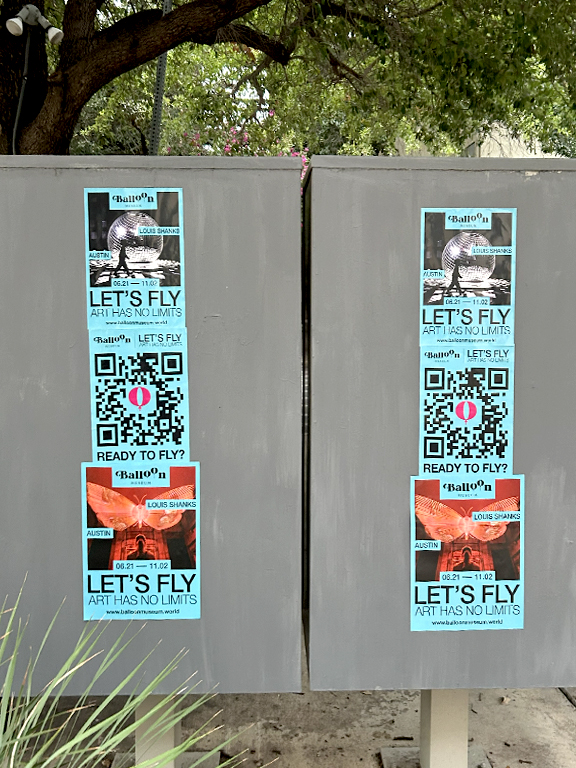
Snipe Advertising is the small-format cousin of a poster run. Compact panels, repeated, placed at eye level along a route somebody actually walks or drives. Done properly it reads as frequency rather than as a single statement.
In most markets the default substrate for that work is vertical public infrastructure. Poles, posts, sign backs, barricades. That is the mental model nearly every brand arrives with, and in Cleveland it is the wrong one.
I will say this plainly because it saves everybody a wasted call. We run Cleveland as a private-permission market. Utility poles, signposts, city furniture and bridge structures get treated as closed inventory. Not as a risk to price in, not as something to try on a quiet night. Closed.
That sounds like it kills the format here. It does not. It redirects it, because Cleveland happens to have more workable private vertical surface than almost any comparable market, and most of it belongs to somebody with a phone number.
This page is about where snipes actually land in Cleveland, what the lake and the road salt do to them, and how a brand gets permission for the surfaces worth having.
Why the pole route is closed in this city
Ohio municipalities generally regulate signage through a zoning sign code, and separately police material affixed in the public right-of-way. That is a two-track structure, and it means a surface can be a problem under one track even when nobody has thought about it under the other.
I am not going to tell you what is legal or illegal in Cleveland. That is a grey area, it varies by municipality, enforcement is inconsistent, and the answer turns on who owns the surface, what the local ordinance says, and whether permission exists. Anyone giving you a cleaner answer than that is guessing with confidence.
What I will tell you is the behavioural read. Nothing about Cleveland’s posture suggests tolerance for unsanctioned material on public assets, and the enforcement culture here is complaint-driven rather than patrol-driven. That combination is worse for a brand than heavy patrolling would be, not better.
Here is why. Heavy patrolling produces a fast, impersonal correction. Complaint-driven enforcement produces a neighbour, a business owner or a development organisation who noticed, who formed an opinion about the brand on the panel, and who tells other people. The panel comes down either way. The difference is that one version costs the client a morning and the other costs them the district.
Cleveland’s commercial strips are small and socially connected. Ohio City’s residential and business population along West 25th Street is engaged and vocal. Material that reads as unsanctioned there gets reported quickly. That is not a hypothetical risk to weigh against reach. It is the normal outcome.
So the pole route is closed, and what replaces it is better anyway.
Construction hoarding is the real Cleveland snipe inventory
If I had to name the single cleanest large-format route in this city, it is construction hoarding and scaffolding.
There is a lot of it. The near west side and downtown both carry ongoing development activity, and hoarding goes up around it as a matter of course. Every run of it is controlled by a named contractor or developer, which means there is an organisation with a decision maker rather than an absent individual.
Hoarding suits snipe work structurally. It is flat, continuous, at eye level, and it runs along the pavement for a length that supports repetition. A single panel on a hoarding run is weak. Eight panels spaced along forty metres of it is the format working the way it is supposed to.
It is also temporary by design, which changes the permission conversation completely. Asking a developer for a time-limited posting agreement on a surface that is itself coming down in four months is a reasonable ask. Asking a building owner for the same thing on a permanent facade is a much bigger one.
The other private vertical worth knowing about in Cleveland: fence lines on redevelopment parcels, lot-edge barriers, and the blank side returns of older masonry buildings where the wall meets the pavement. The city’s large inventory of older masonry, blank party walls and long-term redevelopment sites produces an unusual quantity of this.
One warning that applies to all of it. Vacant does not mean unowned. A parcel that has sat empty for years still has a title, and a long-absent owner is exactly the party most likely to object after the fact. The discipline here is title-level clarity: know who controls the surface, get consent in writing, and set the removal date before anything goes up.
Salt, snow banks and the bottom metre
Snipe panels sit low. That is the format. It is also the specific thing Cleveland punishes.
De-icing salt spray off the arterials coats the lower section of poles, hoardings and wall faces throughout the winter. It leaves staining, and more importantly it attacks adhesion at the bottom edge of anything mounted low. A snipe panel at eye level on a hoarding beside Detroit Avenue is sitting directly in that spray line for months.
Lake-effect snow compounds it. Cold Canadian air crossing Lake Erie picks up moisture and dumps it on the southern shore, which is Cleveland. The resulting snow is wet and heavy, it sits on every horizontal edge, and on a snipe panel the horizontal edge is the top of the panel, at face height. It soaks the substrate from the top down, then refreezes.
Snow banks are the third problem, and this one is purely logistical. Plowed snow piles along the kerb exactly where a snipe run wants to be. It blocks access to the lower part of the hoarding, it narrows the sidewalk so a crew is working in a single-file channel beside traffic, and it buries panels placed before the snowfall.
Cleveland can also lock into long sub-freezing stretches. The city logged an unusually long run of days without a thaw in February 2026. Through a stretch like that, anything adhesive-mounted is being asked to bond in conditions it was not designed for.
The material answer is to go up. Even inside a workable winter window, we place higher than we otherwise would and we accept that the panel is slightly less comfortable to read in exchange for it surviving. Below roughly a metre on any salted corridor, we do not place at all in winter.
The scheduling answer is simpler. May through September is the working season for street-level work in Cleveland. December through February gets planned conservatively, with alternate dates, and with the forecast treated as a hard gate rather than a concern.
One genuinely good piece of news. Cloud is Cleveland’s baseline, cloudy days are the norm, and January is typically the gloomiest month. That means UV load is low and fade is a slow problem here. A panel that survives the water will keep its colour. In this city the enemy is moisture, not sun, and that is the reverse of what most buyers expect.
District by district: where snipes earn their place
Snipe advertising works on routes, which means the question in Cleveland is which routes have enough continuous walkable frontage to support repetition. Not every valuable district does.
West 25th Street, Ohio City. The strongest snipe route in the city. Continuous commercial frontage, the densest bar and food concentration on the near west side, and the West Side Market pulling daytime traffic through. The catch is the one named above: this is the most socially monitored corridor in Cleveland. Permission is not optional, and panels that read as unsanctioned come down fast.
Detroit Avenue through Gordon Square. Detroit-Shoreway sits between Lake Erie and I-90, roughly West 45th to West 85th, with Gordon Square as the retail hub. Detroit Avenue is an arterial, which means two things for snipes. Frontage is more spread out than Ohio City, so a run needs more length to build frequency. And it carries vehicle traffic at speed, so panel content has to survive being read at pace rather than at a stroll.
East 4th Street and the Warehouse District. East 4th is a short pedestrianised block, the heart of downtown dining. Short is the operative word. It is a concentrated audience on a tight footprint, so a snipe run there is dense and brief rather than extended. It is also a managed, curated environment, so permission is a building and district management conversation.
Tremont. Tree-lined, Victorian, with a dense cluster of churches and a concentrated gallery and independent restaurant scene. One of the oldest neighbourhoods in Ohio. Beautiful, culturally weighted, and genuinely difficult for snipe work because the streets are residential in character and the commercial frontage is interspersed rather than continuous. We will run Tremont for the right content, and we will tell most clients to put the volume on West 25th instead.
University Circle. Museums, green space and Case Western Reserve University, with a real college-town feel. Good for the format during the academic terms. Its foot traffic follows the academic year and collapses over summer, which is the opposite rhythm to the rest of the city and catches people out.
Edgewater. Lakeside, beach access, outdoor lifestyle, seasonal foot traffic. Recreational rather than commercial. Weak for snipes.
Crew reality on a split-city snipe run
Cleveland is a multi-trip city, and snipe work feels that more than almost any other format, because snipes are placement-heavy. A poster run is a smaller number of larger decisions. A snipe run is a lot of small ones, each one taking a minute, each one needing the crew to be in the right spot.
The corridors are individually walkable and geographically separated. Ohio City and Tremont sit west across the Cuyahoga from downtown. Gordon Square is further west along Detroit Avenue. University Circle is well to the east. A crew walks within a district and drives between them, and the honest unit of planning is a full night per two districts.
Parking shapes the night. Downtown is predominantly paid lots and decks with some metered street parking. Ohio City and Tremont have narrow residential streets with heavy resident parking, which makes a small vehicle and a short carry the only realistic model. Gordon Square along Detroit Avenue is the easiest of the group, because an arterial strip offers more kerb availability.
Timing varies more between Cleveland districts than people expect. East 4th and the Warehouse District stay busy until bar close on weekends, so they work better midweek or after 2am. West 25th behaves the same way. Gordon Square and Tremont go quiet comparatively early, which makes mid-evening genuinely workable there, and that is useful, because it lets a crew stack an early district before a late one in the same night.
Event days override everything. On Browns, Guardians and Cavaliers days the downtown decks fill and the surrounding streets stop working. We check the sports calendar before committing nights.
Weekday daytime downtown has an office population and reasonable movement. Evenings outside event nights empty out quickly. That is good for working room and bad for anonymity, because a crew becomes the only activity on the block.
What goes wrong, and what we talk Cleveland clients out of
Pole runs. The most common ask, and a flat no here. Clients sometimes push on the grounds that they have seen material on poles in Cleveland. Seeing it is not evidence that it was permitted or that it ended well.
One district described as a city buy. A snipe run on West 25th covers Ohio City. That is a legitimate campaign and it may be exactly right. It is not Cleveland coverage, and letting it be reported internally as such guarantees a disappointing debrief.
Too few panels over too much ground. Snipes work through repetition. Spreading a small panel count across Ohio City, Gordon Square and downtown produces three campaigns nobody notices. We would rather do one corridor properly. This is the single most frequent argument we have with buyers and we have yet to regret winning it.
Straight product content in the arts districts. Gordon Square and Tremont are self-consciously arts districts with active neighbourhood development organisations and venue operators who function as gatekeepers. Culture-aligned content gets welcomed there. Commercial content gets tolerated at best. The route in is through those organisations and operators, not around them.
Low placement on salted corridors in winter. Covered above. We go high or we do not place.
Fixed dates in March or April. Cleveland spring is genuinely unpredictable, swinging between mud-season rain and late snow, and it does not stabilise until the lake breeze settles things around May. We book spring windows with alternates, never immovable nights.
University Circle in July. The academic calendar runs that district. A summer run there is a run into an empty neighbourhood.
Timing a snipe run against Cleveland’s calendar
Snipes reward being in place before an audience arrives, which makes the local calendar more actionable for this format than for most.
Guardians baseball at Progressive Field is the steadiest recurring downtown footfall generator of the warm months. It is a rhythm rather than a spike, and rhythm is what a frequency format wants.
Browns home season at Huntington Bank Field runs from September into winter, each home game concentrating a large crowd downtown and on the lakefront. Huntington Bank Field also hosts stadium concerts in late spring and summer drawing comparable numbers.
Cavaliers basketball through the winter is the one thing reliably pulling people downtown in January and February. Worth knowing, and worth being honest that it is the hardest window to physically execute in.
The Cleveland International Film Festival runs in April downtown, drawing filmmakers and audiences into the core. It marked its 50th year in 2026. The Cleveland Thyagaraja Festival, an annual Indian classical music festival, runs in early April. Late summer brings the Cleveland National Air Show on the lakefront and the Great Lakes Burning River Fest. The Great Big Home and Garden Show in late January into early February is a rare midwinter convention-scale draw.
University Circle runs on Case Western Reserve’s terms. Plan around the academic year there, not the civic one.
When to add a poster run on top
Snipes build frequency. They are not built to make a statement, and a brand that needs one big surface in a district will not get it from panel repetition no matter how many panels go up.
That is where Wheatpasting & Poster Campaigns earns its place alongside a snipe buy. Cleveland’s stock of older masonry, blank party walls and long-term redevelopment sites gives you large flat private surfaces in exactly the districts where snipes run. A large pasted surface anchoring a corridor, with snipe panels building frequency along the approach to it, is the strongest version of street-level work in this city.
It also shares the permission work. If the title research and the owner conversation have already happened for a hoarding run, extending that into a larger pasted surface on the same parcel is a small additional ask rather than a new campaign.
The one thing I would not do is replace the snipe layer with posters entirely. Repetition along a route is what makes someone walking West 25th feel like a brand is present rather than placed. Posters alone read as a single impression. The layering is the point.
Frequently asked questions
What is the difference between snipes and posters in Cleveland?
Snipes are small repeated panels placed along a route to build frequency. Posters are larger single surfaces that make a statement. In Cleveland the practical difference is substrate: snipes want continuous eye-level frontage like construction hoarding along West 25th, while posters want the city’s blank masonry party walls. Most strong campaigns here use both layers together.
Can you place snipes on utility poles in Cleveland?
We do not. We treat public infrastructure, meaning poles, signposts, city furniture and bridge structures, as closed inventory in this market and work on private surfaces with documented owner consent instead. Posting is a grey area that varies by municipality and depends on ownership, ordinance and permission, and Cleveland’s complaint-driven enforcement culture makes unsanctioned placement a reputational risk to the brand.
Where does snipe advertising work best in Cleveland?
West 25th Street in Ohio City is the strongest route, with continuous commercial frontage and dense foot traffic. Detroit Avenue through Gordon Square works for longer runs at a more spread-out scale. East 4th Street downtown is dense but short. University Circle performs well during Case Western Reserve’s academic terms and empties out over the summer.
How many panels does a snipe run need?
More than most clients first propose, concentrated in fewer districts. Frequency is the mechanism, so a small panel count spread across Ohio City, Gordon Square and downtown produces three runs nobody registers. We would rather put the whole count on one corridor and have it actually land than cover the map thinly.
Does winter rule out snipe advertising here?
It does not rule it out, but it changes everything. Lake-effect snow soaks panels from the top edge, de-icing salt spray attacks the bottom metre on any arterial, and snow banks block kerbside access. We place higher, build alternate dates into any December through March schedule, and treat the forecast as a hard gate rather than a guideline.
Who removes the panels when the run ends?
We do, on a date agreed in writing before placement. In Cleveland that commitment is often what makes permission possible, particularly with contractors managing hoarding and with the neighbourhood development organisations in Gordon Square and Tremont. Leaving material up past its term costs future access to these districts, which is worth more than any one campaign.
Request a campaign quote
Tell us which Cleveland audience you are actually after and how fixed your dates are. Those two answers decide the corridor, the panel count, the season and whether snipes alone will do the job.
We will tell you which route carries your content, where the private surface exists, what the salt line and the lake do to your run length, and where we think a smaller, denser buy beats a wider one.
Request a campaign quote and we will build it around the surfaces we can actually get permission for.
Livy Phillips American Guerrilla Marketing Nationwide poster, snipe, decal, projection and LED truck campaigns americanguerrillamarketing.com

Ready to Run Your Campaign?
Call us or email us. We’ll tell you exactly what we can do in your market and what it costs.
Related Service
Explore similar advertising solutions offered by American Guerrilla Marketing.
American Guerrilla Marketing — Los Angeles
Street-level campaigns in Los Angeles and nationwide. Wheatpasting, LED trucks, street teams, and more.
(646) 776-2770
Related Articles
-
How Snipes Are Mounted: Timelines and Permissions
November 20, 2026
-
Snipe Advertising for Tulsa Brands
November 20, 2026
-
Snipe Advertising for Columbus Brands
November 19, 2026
-
How Snipe Advertising Actually Works: A Crew’s Guide
November 19, 2026
-
Snipe Advertising for Portland Brands
November 19, 2026