Sidewalk Stencils Los Angeles: What Works, Where It Runs, and the Regulatory Landscape
Los Angeles’s walkable creative neighborhoods create strong environments for sidewalk stencil campaigns in Silver Lake, Fairfax, the Arts District, and beyond. This guide covers the regulatory environment and where stencil campaigns deliver in LA.
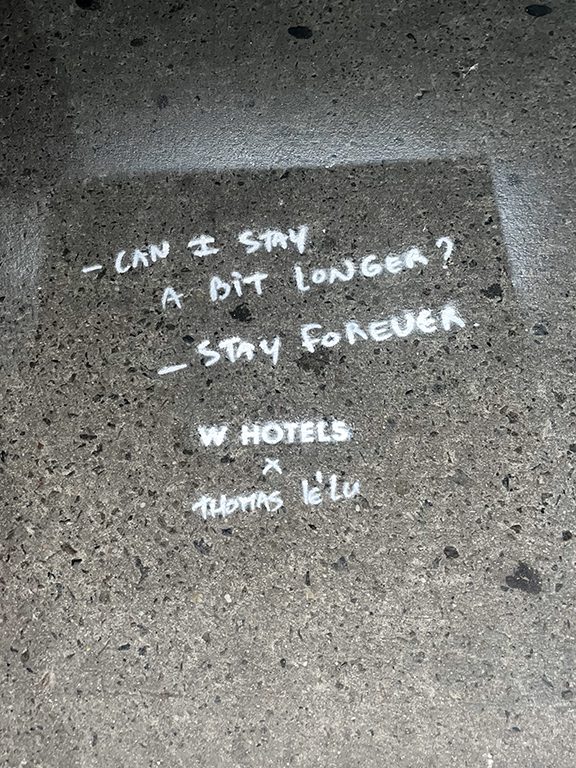
Sidewalk stencil campaigns create ground-level brand impressions at the natural downward gaze point of pedestrian movement. In Los Angeles, we deploy stencils at high-foot-traffic intersections, event approaches, transit station exits, and pedestrian corridors where audiences are naturally looking down at the street-level environment.
This guide covers where sidewalk stencil campaigns run in Los Angeles, which neighborhoods and event contexts produce the best results, and what the regulatory and operational environment looks like for this format.
The sidewalk stencil format exploits a simple behavioral insight: pedestrians look down. In high-foot-traffic environments, the majority of pedestrians spend a significant portion of their attention on the ground surface directly in front of them. A well-placed, well-designed stencil in this sightline creates a brand impression that’s genuinely difficult to miss.
LA sidewalk stencil campaigns are particularly effective for entertainment industry product launches, streetwear and fashion brand activations on Fairfax and Melrose, and event directional campaigns at major music and film events.
AGM Field Note: Sidewalk stencils are most effective when deployed as a directional or event-approach format rather than a standalone brand awareness tool. “This way to [event]” or “[event] tonight” directional stencils create action-driving impressions that complement broader campaign awareness formats.
Where Stencil Campaigns Run in Los Angeles
Silver Lake and Echo Park
Sunset Boulevard and the side streets of Silver Lake create strong sidewalk stencil environments for music, entertainment, and lifestyle brands targeting the creative-class demographic.
Fairfax District
Fairfax Avenue between Melrose and Beverly creates a fashion and streetwear-forward stencil environment. Product launches, sneaker releases, and streetwear brand campaigns perform exceptionally well with stencil activations here.
Arts District DTLA
The Arts District’s warehouse and gallery corridors create strong stencil environments for art-adjacent and tech brand campaigns. The flat, smooth industrial sidewalks hold stencil impressions well.
West Hollywood Santa Monica Boulevard
The Santa Monica Boulevard corridor through WeHo and the pedestrian zones near major event venues create strong entertainment-campaign stencil environments.
Venice Boardwalk Approaches
The approaches to the Venice Boardwalk on Ocean Front Walk and the side streets connecting parking areas to the beach create strong stencil environments for mass-market brand awareness campaigns.
Koreatown Wilshire Corridor
The Wilshire Boulevard and Olympic Boulevard corridors through Koreatown create stencil environments reaching one of LA’s most densely populated urban communities.
Regulatory Environment for Sidewalk Stencils in Los Angeles
Los Angeles has multiple jurisdictions that affect sidewalk stencil campaigns: the City of LA, West Hollywood, Santa Monica, Culver City, and others each have their own regulatory frameworks. Water-soluble chalk-based applications are generally treated as temporary and fall within a permissive zone in most LA jurisdictions, but we always research the specific regulatory status for each proposed location.
We always advise clients on the full regulatory picture before executing sidewalk stencil campaigns. The specific risk profile varies by material choice, surface type, and location. We work within the regulatory parameters appropriate for each client’s risk tolerance and campaign objectives.
Stencil Campaign Applications: Where This Format Shines
Event approaches and venue directionals: Creating a path from transit stations or parking to event venues
Product launch awareness: High-impression ground-level branding in pedestrian corridors near launch venues
Retail and pop-up store promotion: Driving foot traffic to a specific location through directional stencil series
Film and TV promotion: Creating immersive street-level movie marketing moments
App and tech brand awareness: URL or QR code stencils in high-tech-worker corridors
Bar and nightlife promotion: Pre-opening awareness in the entertainment corridor approaching the venue
Festival and event promotion: Multi-block directional campaigns from transit stops to festival gates
Stencil Materials and Applications
Material Type
Durability
Best Application
Legal Risk Profile
Water-soluble chalk paint
3-7 days
Events, short-term campaigns
Lowest risk, most permissible
Temporary adhesive sticker
7-14 days
Directional campaigns
Moderate, surface-dependent
Oil-based spray (on permitted surfaces)
2-4 weeks
Longer-duration campaigns
Requires surface permission
Reverse graffiti (pressure washing)
30-90 days
Long-duration brand campaigns
Typically low risk, surface-dependent
Campaign Planning and Lead Times
Sidewalk stencil campaigns in Los Angeles require 2-3 weeks of planning from brief to deployment: stencil design and fabrication (7-10 days), location scouting and surface approval (5-7 days), and crew scheduling (3-5 days). Campaigns tied to specific events should be planned with additional buffer.
Reporting and Documentation
Every sidewalk stencil placement is photographed before and immediately after application. Clients receive a photo documentation package showing all stencil locations, surface conditions, and creative execution quality. Reports are delivered within 24 hours of campaign deployment.
Sidewalk Stencil Creative: What Works at Ground Level
Sidewalk stencil creative operates under constraints that most brand design doesn’t encounter. The surface is horizontal rather than vertical, the viewing distance is typically 0-6 feet, and the audience is in motion. These constraints drive specific creative requirements: high contrast between stencil color and surface color, text limited to 3-5 words maximum, and a primary visual element that reads instantly from an oblique angle.
We review stencil creative specifically for ground-level performance before production. Creative that looks strong in an elevation view may fail at the oblique viewing angle natural for pedestrians looking ahead on a sidewalk. We advise on creative modifications that optimize for actual viewing conditions.
Tactical Deployment: Making Every Stencil Location Count in Los Angeles
Stencil location selection in Los Angeles is a precision exercise. The most productive locations are those where foot traffic concentrates at a natural chokepoint: crosswalk approaches, narrow pedestrian corridors, ramp approaches, escalator exits, and pedestrian bridge pathways. In these locations, every pedestrian’s eye line passes over the stencil placement. In open, wide sidewalks, impression density drops significantly.
We map stencil deployments by walking target routes in advance and identifying the specific surface spots that create the highest natural viewing angle and foot traffic concentration. This pre-deployment scouting is what ensures that our stencil placements deliver genuine impressions rather than just occupying space on the ground.
Complementing Sidewalk Stencils with Other Formats
Sidewalk stencils work best as one layer of a multi-format campaign rather than as a standalone execution. The ground-level impression created by a stencil complements the eye-level impressions from wheat paste campaigns, creating a surround-sound effect where consumers encounter the brand both looking ahead and looking down. This multi-level approach increases the impression frequency within the campaign zone without requiring additional geographic reach.
For event approach campaigns specifically, we recommend combining stencil directional messaging (“Follow the yellow arrow to [Brand] opening”) with wheat paste posters at eye level in the same corridor. The stencils guide foot traffic; the posters confirm destination and build brand context. The combination has consistently outperformed either format alone in our event marketing campaigns.
Post-Campaign Assessment
After a sidewalk stencil campaign in Los Angeles, we evaluate campaign effectiveness through several channels: social media documentation (organic photos taken by pedestrians of compelling stencil work), web traffic increases in campaign market areas, and client-reported increases in foot traffic or inquiry volume at target locations. For event campaigns, we track attendance data against pre-campaign projections.
We report on all documented social media posts featuring campaign stencils as part of the post-campaign wrap. This social amplification data, combined with the physical placement documentation, gives clients a full picture of campaign reach beyond the direct pedestrian impression count.
Working Within Local Regulatory Frameworks in Los Angeles
Sidewalk stencil campaigns require careful regulatory navigation in Los Angeles and every other market we operate in. Our approach prioritizes compliance through material selection: water-soluble chalk-based applications in most markets fall within permissible temporary art and commercial expression provisions. For campaigns requiring longer duration, we work with private property access and alternative surface materials that comply with specific local ordinances.
We always brief clients on the specific regulatory status of their proposed campaign before execution and adjust material selection and surface targeting to ensure compliance with the applicable framework. Our goal is maximum campaign impact within the legal parameters of each specific market.
The Business Case for Guerrilla Marketing
Guerrilla marketing consistently delivers strong return on investment when executed professionally. The reasons are structural: physical campaigns operate in an environment with far less competitive saturation than digital advertising, where millions of brands compete for the same inventory. A well-placed wheat paste campaign in the right neighborhood reaches a concentrated target audience with a physical brand impression that persists in the environment for days or weeks, generating repeated exposures at a cost structure that’s highly competitive with comparable digital reach.
The second structural advantage is memorability. Research consistently shows that physical advertising generates stronger brand recall than digital advertising. When a consumer sees your brand on their street, in the neighborhood where they live and walk, it creates a real-world context for the brand that digital advertising cannot manufacture. That physical-world familiarity translates into greater receptiveness when the consumer encounters the brand in other contexts, including digital ones.
Third, guerrilla marketing creates organic social media amplification that multiplies the paid investment. Compelling street-level creative gets photographed and shared by the audiences who encounter it. In markets with strong social media documentation culture, like New York, Los Angeles, Miami, and Austin, this organic amplification routinely extends campaign reach by multiples of the original physical footprint. We track this amplification as part of our post-campaign reporting.
Understanding Your Target Audience at Street Level
The most common planning failure we see in guerrilla marketing is demographic targeting that isn’t specific enough to drive useful campaign decisions. “18-34 urban professionals” describes tens of millions of people across hundreds of neighborhoods. The campaign planning question is: where do the specific 18-34 urban professionals who are likely to buy your product actually walk, congregate, and spend their time in the target city?
Answering that question requires neighborhood-level audience intelligence, not just broad demographic data. We assess pedestrian corridor demographics using a combination of census tract data, business category mapping (what kinds of businesses are in this area and who do they attract?), public transit ridership profiles, and our own accumulated market knowledge from years of campaign execution. That neighborhood-level specificity is what allows us to allocate campaign budget to the corridors where the actual target audience is, not just the corridors that sound strategically appealing in a presentation.
We also consider behavioral targeting beyond demographics. The 32-year-old professional who goes to CrossFit, drinks craft beer, and browses sneaker releases is a different campaign target than the 32-year-old professional who goes to the farmers market, shops at Whole Foods, and attends gallery openings, even if their demographics are identical. Behavior-based geographic targeting, using the types of businesses in a neighborhood as a proxy for the behavioral profile of the audience, allows for precision that demographic data alone cannot provide.
Campaign Timing: When Guerrilla Marketing Lands Hardest
Timing is one of the most underappreciated variables in guerrilla marketing campaign planning. The same creative, in the same location, at the wrong time of year or the wrong point in the consumer’s decision journey, delivers dramatically weaker results than the same campaign at the optimal moment. We analyze timing as a core component of every campaign plan.
For brand launches, timing guerrilla campaigns to coincide with the beginning of the target audience’s consideration cycle is critical. For entertainment campaigns, the timing window before ticket sales open is optimal for awareness, while the final week before the event is optimal for action driving. For retail campaigns, the weeks immediately preceding peak shopping seasons (spring fashion, holiday, back to school) capture consumers at their highest purchase intent moment.
We also consider competitive timing. If a major competitor is known to be planning a campaign launch in the same market, getting your campaign into the market first creates the visual context for the subsequent competitive presence rather than the other way around. Early mover advantage in street-level marketing is real and worth planning around.
What Happens After the Campaign: Sustaining Momentum
One of the most common questions we hear after a successful campaign launch is: how do we maintain this momentum? The answer depends on the campaign objective, but generally involves a sustained presence program that keeps the brand visible in the target market without the full investment of a launch campaign.
For brands targeting ongoing consumer awareness in a specific market, monthly or quarterly wheat paste campaigns in core neighborhoods maintain the visual presence that builds long-term brand familiarity. For brands that launch seasonally, recurring pre-season campaigns create the anticipation that accelerates each new season’s sales velocity. For brands that have achieved initial awareness and are focused on retention, community event presence programs and ongoing brand ambassador activities maintain human-level brand connection in the target communities.
We design ongoing campaign programs that fit our clients’ budgets and objectives. The most effective ongoing programs are designed at the campaign launch stage, building the maintenance program into the initial campaign architecture rather than treating it as an afterthought.
The AGM Difference: What Sets Our Campaigns Apart
American Guerrilla Marketing executes street-level campaigns differently from most vendors in the market. The differences that matter most to our clients are: operational depth (we have installation crews with specific local knowledge in every major US market and many international cities, not a patchwork of subcontractors we’ve never met), documentation standards (every placement is photographed with geo-tagging, not a representative sample), creative collaboration (we bring format-specific expertise to every campaign brief, not just execution of whatever the client sends us), and campaign architecture experience (we design multi-format, multi-neighborhood campaign programs based on what actually works, not what sounds good in a proposal).
We’ve run campaigns for brands at every scale, from independent restaurant groups running their first neighborhood awareness program to major entertainment companies executing simultaneous 30-market campaigns. The process is the same regardless of scale: a detailed brief, a thoughtful campaign architecture recommendation, precise execution with real-time oversight, and thorough documentation that proves value delivered.
If you’re considering a street-level marketing campaign, we’d be glad to talk through what the right approach looks like for your specific brand, market, and objective. Contact us at the link below.
Field-Tested Insights: What We’ve Learned Running Hundreds of Campaigns
After executing campaigns for hundreds of clients across every major US market and several international cities, we’ve accumulated a body of field knowledge that informs every campaign we plan. Here are the insights that matter most for brands considering a street-level marketing investment.
The first is that neighborhood specificity beats broad coverage almost every time. A concentrated campaign in three highly targeted neighborhoods consistently outperforms a diluted campaign spread across eight. The impression frequency in the targeted zones builds genuine brand recognition; the diluted campaign creates scattered impressions that don’t compound into awareness the same way. When budget forces a choice, we always recommend going deep before going broad.
The second insight is that the best campaigns are planned backward from the consumer’s behavior, not forward from the brand’s comfort zone. The question is never “where should our brand be?” but rather “where is our target consumer actually walking, at what times, and what is their mindset in that environment?” Those answers drive placement strategy more reliably than any other input.
Third: creative that looks bold in a design presentation often fails on the street. The street visual environment is complex, competing, and constantly in motion. Creative that wins on the street is simple, high-contrast, and communicates its core message in under two seconds. We review campaign creative specifically for street performance before production, and we recommend modifications when we see elements that will underperform in the physical environment.
Building Long-Term Street Presence
The most valuable outcome of a successful guerrilla marketing campaign isn’t the awareness generated by a single execution. It’s the foundation for an ongoing street-level presence program that builds brand familiarity in target markets over time. The brands that benefit most from guerrilla marketing are those that treat it as a sustained channel, not a one-time activation.
We work with clients to design ongoing presence programs that fit their budgets and campaign calendars. A monthly wheat paste campaign in core neighborhoods, refreshed with new creative each cycle, builds the kind of cumulative visual brand presence that creates genuine consumer familiarity. That familiarity reduces friction at every other brand touchpoint, from digital advertising to retail shelf to direct sales conversations.
For brands with seasonal marketing patterns, we design campaign calendars that align street-level investments with peak consumer attention windows. Pre-season pushes that establish brand presence before competitors launch their campaigns, event-adjacent campaigns that intercept the target audience at high-attention moments, and post-peak retention campaigns that maintain awareness when competitive spending drops all contribute to a more efficient annual marketing investment.
Risk Management in Outdoor Campaigns
Every outdoor marketing campaign carries some degree of operational and regulatory risk. The risks that matter most are: creative that doesn’t land as intended with the target audience, placements that are removed faster than anticipated due to cleanup activity, weather events that damage installations before the target campaign period, and regulatory enforcement actions in specific locations.
We manage these risks deliberately. Creative is reviewed for street performance before production commits. Placement strategies account for expected cleanup cycles in specific neighborhoods. Weather-resistant materials are specified for markets and seasons where weather exposure is a campaign risk factor. And our local market knowledge in every major US market gives us current intelligence on regulatory enforcement patterns that inform placement decisions.
When unexpected issues arise during campaigns, we respond quickly. Placements that are removed before their expected duration are either re-posted (within the campaign scope) or documented for client notification. Street teams that encounter unexpected venue restrictions are redirected to adjacent deployment zones in real time. We manage campaigns dynamically, not rigidly, because the street environment doesn’t hold still.
Case for Investment: Calculating the True Cost of Street-Level Marketing
Comparing guerrilla marketing to digital advertising on a raw cost basis misses the most important distinction: what you’re buying. Digital advertising buys impressions that are often viewed in a high-distraction, low-receptivity context by an audience that may or may not be in a relevant mindset. Street-level advertising buys impressions in a real-world environment where the consumer is physically present, spatially oriented, and encounters the brand in the context of their daily life.
The real comparison is not cost-per-impression but cost-per-meaningful-impression: impressions that occur when the consumer is attentive, in a relevant physical context, and not simultaneously competing with other content for their attention. By that metric, well-executed street-level campaigns frequently deliver stronger ROI than the nominal cost-per-impression comparison with digital advertising would suggest.
We encourage clients to build a meaningful-impression framework for evaluating their campaign investment rather than defaulting to the raw impression metrics that digital advertising has trained the marketing industry to use. The inputs are different for physical campaigns, but the output, genuine brand awareness and consumer behavior change, is what ultimately matters.
Frequently Asked Questions
What is a sidewalk stencil campaign and how does it work in Los Angeles?
Sidewalk stencil campaigns use custom-cut stencils and water-soluble or chalk-based paint to create ground-level brand impressions on sidewalks and pavement. In Los Angeles, we deploy stencils at high-foot-traffic locations, event approaches, and pedestrian corridors to create impressions that reach audiences with a natural downward gaze. Every stencil location is scouted, documented, and reported.
Are sidewalk stencil campaigns legal in Los Angeles?
Los Angeles has multiple jurisdictions that affect sidewalk stencil campaigns: the City of LA, West Hollywood, Santa Monica, Culver City, and others each have their own regulatory frameworks. Water-soluble chalk-based applications are generally treated as temporary and fall within a permissive zone in most LA jurisdictions, but we always research the specific regulatory status for each proposed location.
How long do sidewalk stencils last in Los Angeles?
Water-soluble stencil applications typically last 5-14 days depending on foot traffic, weather, and surface type. High-traffic areas see faster wear. We advise on material selection and realistic duration expectations based on specific deployment locations and conditions in Los Angeles.
What surfaces work best for sidewalk stencils in Los Angeles?
Concrete sidewalks, pavement, and textured ground surfaces are the most effective for sidewalk stencil campaigns. Smooth concrete holds the clearest impression. Paver surfaces and rough asphalt produce a more textured visual effect. We scout surfaces in advance to ensure compatibility with the stencil format and creative specifications.
What size can sidewalk stencils be in Los Angeles?
We produce stencils in a range of sizes from small directional markers (6″x6″) to large ground-level brand impressions (36″x36″ or larger). The optimal size depends on the pedestrian flow pattern of the specific deployment location and the creative format. We recommend stencil sizing as part of campaign design consultation.
Where are the best locations for sidewalk stencils in Los Angeles?
High-foot-traffic pedestrian intersections, crosswalk approaches, transit station exits, venue approach paths, and outdoor event corridors are the most effective sidewalk stencil locations. We scout and recommend specific locations based on your target demographic and campaign objectives in Los Angeles.
What industries use sidewalk stencil campaigns most in Los Angeles?
Event marketers, film and television promoters, retail brands, food and beverage companies, cannabis brands, and tech startups are the most frequent users of sidewalk stencil campaigns. The format is particularly effective for event-timed campaigns where directing pedestrian awareness to a specific venue or pop-up is the primary goal.
How do sidewalk stencils complement wheat paste poster campaigns?
Sidewalk stencils reach a different angle of attention than poster campaigns. Posters are seen at eye level; stencils are seen in the natural downward gaze of pedestrian movement. The two formats work together to create multi-level brand impressions across a campaign corridor, reinforcing messaging at both eye level and ground level simultaneously.