
November 12, 2026
Sidewalk Decal Permit Requirements: Planning Guide
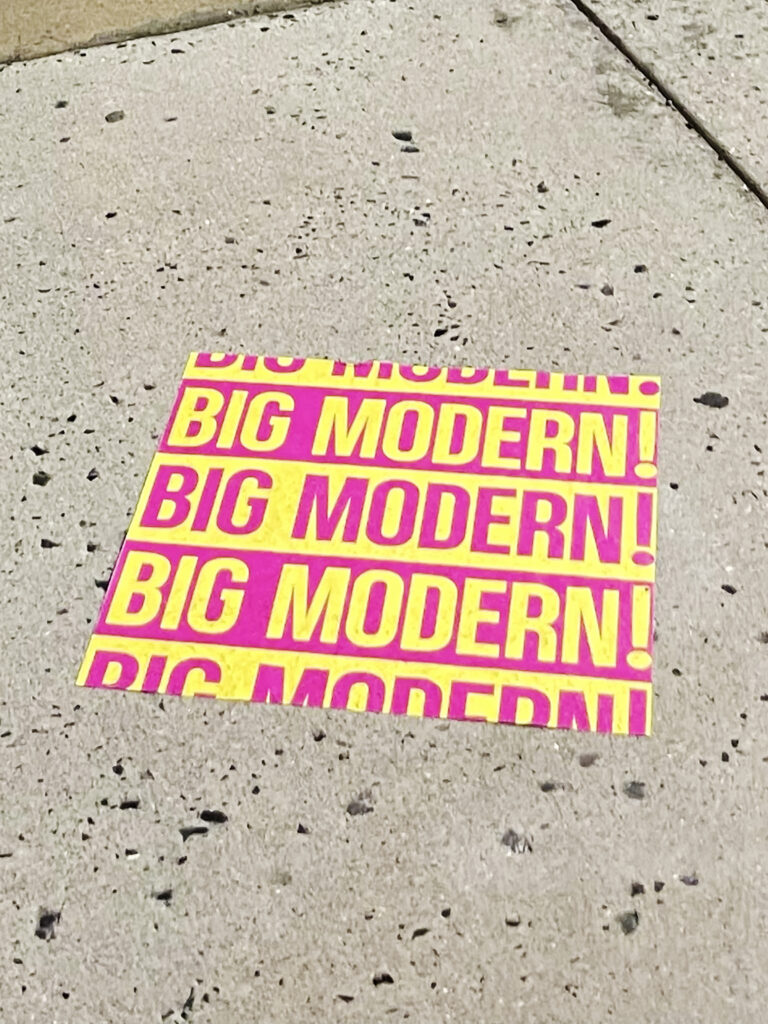
The question clients ask is “do we need a permit for sidewalk decals.”
The honest answer is that there is no single answer, and anyone who gives you a clean yes or no across markets is guessing. This is a grey area. Requirements vary by municipality and frequently by district within a municipality. Enforcement is inconsistent. The outcome on any given piece of ground depends on who owns it, what the local ordinance says about markings in that context, and whether permission exists from whoever controls the surface.
What I can give you is the process. Not a legal position, a working method: how we establish who controls a piece of ground, who we ask, what we document, how long it takes, and how a campaign gets planned so permission work happens early instead of becoming the thing that delays the install.
I run these campaigns. The permission stage is where the schedule is won or lost, and most clients allow a fraction of the time it actually needs.
Nothing here is legal advice. For a definitive reading on a specific city or site, that belongs with counsel and with the property owner.
The distinction that decides everything: who owns the ground
Before anything else, you establish whether the target ground is public right of way or private property.
This sounds obvious and it is routinely wrong in client plans, because the boundary is frequently not where it feels like it should be.
A great many of the best pedestrian positions in American cities sit on private ground that reads as public space. Building forecourts. Plazas in front of office towers. Retail centre walkways. Campus paths. Arcade frontages. Transit-adjacent concourses. Courtyards. Setbacks between a building line and the sidewalk proper. People walk across them all day assuming they are public sidewalk, and they are not.
That matters enormously, because the permission route is completely different.
On private ground, the question is a property question. There is an owner or a manager, they can grant permission, and once they have, the campaign has a defensible basis on that ground. This is where this format works best and it is where we push every campaign we can.
On public right of way, the question becomes a municipal one, and it is unsettled. Rules on ground markings in the public way differ by city, sometimes by district, sometimes by whether the activity is tied to an event or a construction permit. Enforcement varies. This is the grey area and we treat it as one.
So step one of planning is not creative and not location shortlisting. It is a survey that records, for each candidate position, what the ground appears to be and who plausibly controls it.
Phase one: corridor survey and ownership mapping
Somebody walks the corridor. Not a map exercise, a street exercise, and recently, because ground conditions and construction change constantly.
For each candidate position the survey records the surface type and texture, whether the concrete is sound, drainage behaviour, foot traffic direction and volume, shade and exposure, and the apparent property boundary. Building setbacks, paving changes, bollard lines and signage often indicate where private ground begins, though none of them is definitive.
From that we build a position list split into three groups.
Private, controller identifiable. The strongest positions. A named building, a managed retail property, a campus, a venue. These go into the permission queue immediately.
Private, controller unclear. Worth chasing, but the chase takes time and some will not resolve.
Public right of way. Treated as the grey area they are, with the client fully informed about what that means before anything is scheduled.
The practical goal is to build the campaign spine from the first group. A corridor plan that rests entirely on the third group is a plan with no stable positions in it, and I say so at this stage rather than after.
Phase two: who you actually ask, and what they need
Permission on private ground is not one conversation. It is finding the right person, and the right person is rarely the first person you reach.
For an office or mixed-use building it is usually the property manager rather than the owner, and often an asset manager above them for anything unusual. For a managed retail property it is the centre management office, and frequently a marketing lead who handles on-site activity. For a campus it is a facilities or events office. For a venue it is operations. For a corridor with a business improvement district or similar organisation, that organisation often knows who controls what and can shorten the process considerably.
What they will want to know, in roughly this order:
The surface question is the one that decides it. Property managers have almost always had a bad experience with something stuck to their ground. The thing that unlocks permission is a specific answer about adhesive grade, a removal date, and a commitment that the surface comes back as it was.
So the material specification is part of the permission conversation, not a decision made afterwards. Removable adhesive grade chosen up front, matte textured laminate, simple outlines, scheduled removal. All of that is easier to approve than “vinyl decals.”
Insurance and contractor documentation is a routine requirement on managed property, and campaigns stall because nobody asked early what the property needs on file. Ask in the first conversation.
Get the permission in writing, with dates, positions and the removal commitment stated. Verbal approval from a helpful person who then changes job is not a basis for a campaign.
Phase three: the public right of way question
Where a campaign genuinely needs positions in the public way, the picture is different and I will not dress it up.
There is no uniform national framework for ground markings. Some municipalities address the subject in ordinance, some do not, some address it only in specific contexts such as construction, special events or street closures. Interpretation varies between departments. Enforcement varies between districts and over time.
What we do not do is tell a client that something is allowed or not allowed. That determination is not ours to make, and anyone in this industry who offers it casually should worry you.
What we do instead:
We make the ownership position explicit, so the client knows which of their positions sit on unsettled ground.
We recommend that the client’s counsel review the specific municipality where the public-way portion is material to the campaign. Counsel reading the actual local code beats an operator’s generalisation every time.
We look for an alternative. In most corridors there is private ground within a short distance that catches comparable foot traffic. Moving a position a few strides to a permissioned forecourt frequently solves the whole problem, and this is the single most useful thing we do at planning stage.
We look at whether the activity attaches to something that already has standing. Ground graphics within an event footprint, inside a permitted street closure, or on a construction site under an existing permission sit in a different context from an unattached placement on an open sidewalk.
And we keep documentation and removal commitments tight, because those reduce exposure regardless of how the underlying question resolves.
Phase four: timeline, and why it is longer than you think
Here is where campaigns break.
Clients typically budget for print and install. Permission work is the long pole and it is governed by other people’s calendars.
Property management responses are not fast. A first approach often takes days to reach the right person, and the decision may need a second internal approval. Managed retail properties frequently have a defined process and a submission cycle. Campuses and institutions can be slower again. Insurance documentation review adds time on managed property.
Material and print lead time runs partly in parallel, but not fully, because the final size and position list depends on what permission came back.
Install itself has its own constraint that surprises people. Ground graphic installation depends on ground temperature being within the adhesive bonding window, and ground temperature lags air temperature considerably. In cooler seasons installs run during the warmest part of the day rather than overnight, and a cold snap can push a date. Surface preparation also needs the footprint cleaned and fully dried before application, and drying time is not something you can compress.
The practical planning rule I give clients: start permission work before you finalise creative, not after. The position list shapes the artwork sizes anyway, and running them in series adds weeks for no reason.
If a campaign has a hard date and the permission runway is genuinely too short, I will say so and propose a different format rather than let the plan assume approvals that will not arrive. Posters on permissioned hoarding or Projection Advertising often fit a tighter window.
Phase five: install, documentation and the record
The install itself is where the permission work pays off, because a permissioned install is calm.
Crew sizes are small for this format, typically two people working a position list with a vehicle. Surface preparation first: clean the footprint properly and let it dry fully. Then application, working air out from the centre with firm pressure and working the perimeter down hard, because the perimeter is what fails.
Every position is photographed at install with location captured. That record does several jobs. It confirms to the property manager that the installation matches what they approved. It is the baseline for inspection. And it is the list that removal works from.
The documentation set that should exist at the end of install day: written permission per private position with dates, the position log with photographs and locations, the material specification including adhesive grade, the inspection schedule, and the removal date.
If an operator cannot produce that set, the campaign is not really planned. It is just installed.
Phase six: inspection and the commitments you made
Permission is granted on the basis of promises, and the promises have to be kept for the corridor to remain available next time.
Inspection visits run against the position log and look for lifted or curling edges, trapped air that has become a raised area, tears, worn bands through the main walking line, grime filling the laminate texture, and standing water pooling on the graphic. Any lifted edge or tear gets repaired properly or that unit gets removed. There is no option where it stays as it is.
Cadence tightens with foot traffic and with wet weather. The first inspection should come early enough to catch installation issues while they are cheap, and further visits should follow significant weather.
Property managers should know who to contact and how quickly we respond. That one piece of coordination does more for a long term relationship with a location than any part of the pitch.
Phase seven: removal, which is the actual test
Removal is the part of the campaign the property owner remembers.
It is scheduled as its own visit against the position log, on the date stated in the permission. Adhesive grade was chosen at specification precisely so this visit is clean rather than a scraping job. Residue gets dealt with, not left. Positions get photographed after removal.
A half-removed graphic is worse underfoot than a whole one, so partial removal is not a finishing option.
The reason this matters beyond courtesy is simple. The corridors worth working are finite. An operator who leaves residue on a forecourt has closed that position permanently and made the next conversation on that street harder for everyone. We scope removal from the start and we do not treat it as the bit at the end that gets squeezed.
Multi-market campaigns and why one answer does not travel
A campaign running ground graphics in several cities is not one permission project repeated. It is several separate projects that happen to share artwork.
The ownership pattern differs by city. Some downtowns are dominated by large managed properties with plaza frontage, which means a high proportion of approachable private ground and a relatively clean permission path. Others are continuous small storefronts on narrow public sidewalk, where almost nothing is private and the position mix has to change completely.
The ground itself differs. Poured concrete, brick pavers, bluestone, asphalt and stamped decorative surfaces all behave differently under adhesive, and a single film specification shipped to five markets will perform well in two of them. We specify per corridor rather than per campaign.
The climate differs, and climate sets the install window. A spring install date that is comfortable in one market may be below the ground temperature threshold in another on the same week, which means staggered install dates rather than a synchronised national launch.
And the local processes differ. Managed property submission cycles, documentation requirements and response times vary enough that a schedule built on one market’s experience will miss in another.
The planning consequence is straightforward. Run the survey and permission work in every market in parallel, early, and accept that the position counts will not come back even. A market that yields eight strong permissioned positions is worth more than one with thirty uncertain ones, and the plan should be allowed to reflect that rather than forcing equal weight everywhere.
What we talk clients out of
Leaving permission to the end. The most common planning error and the one that kills dates.
Building a corridor plan entirely on public right of way. No stable positions, maximum exposure, and usually unnecessary when private ground sits a few strides away.
Assuming a plaza is public. Check. The good news is that it usually being private is an advantage, not an obstacle.
Permanent adhesive to improve durability. It makes removal a problem, risks residue, and on older spalling concrete can pull surface material. Property managers approve removable grades far more readily.
Gloss finish. It reduces friction on a walking surface, worse when wet, and throws glare so the graphic disappears at the angle people approach from. Textured matte is the specification and it also makes the permission conversation easier.
Intricate die-cut shapes. Every notch is an edge waiting to lift, and lifted edges are what bring a property manager’s attention down on a campaign.
Positions on stairs, ramps, thresholds, transitions, grates or standing water. We move them regardless of what the client wants there.
Campaigns with no inspection schedule. Permission was granted on promises. An unattended campaign breaks them slowly.
Treating one city’s answer as the answer. A multi-market campaign needs the question asked separately in each market, and often a different position mix in each.
Frequently asked questions
Do sidewalk decals require a permit?
There is no single answer, and this is a grey area. Requirements vary by municipality and often by district, enforcement is inconsistent, and the outcome depends on whether the ground is public right of way or private property and what the local ordinance says. The practical route is permission from an identifiable private property controller. For specific cities, consult counsel.
How do we know if ground is public or private?
Survey it rather than assuming. Many of the best pedestrian positions sit on private ground that reads as public space: building forecourts, office plazas, retail walkways, campus paths, arcades and setbacks. Paving changes, bollard lines and building setbacks often hint at the boundary, but confirmation comes from identifying and contacting the property manager or owner.
Who do we actually ask for permission?
Usually the property manager rather than the owner, and for managed retail a centre management or marketing office. Campuses route through facilities or events, venues through operations. Business improvement district organisations often know who controls which stretch and can shorten the process considerably. Get approval in writing with positions, dates and the removal commitment stated.
How long does permission work take?
Longer than most plans allow, because it runs on other people’s calendars. Reaching the right person takes days, decisions may need second internal approvals, managed properties often have submission cycles, and insurance documentation review adds time. Start permission work before finalising creative rather than after, since the position list shapes artwork sizes anyway.
What do property managers care about most?
The surface. Almost all of them have had a bad experience with something stuck to their ground. What unlocks approval is a specific answer on adhesive grade, a stated removal date and a commitment that the surface comes back as it was. Material specification therefore belongs in the permission conversation, not as a later decision.
What happens at the end of the campaign?
Removal runs as its own scheduled visit against the position log, on the date stated in the permission, with residue dealt with and positions photographed afterwards. Adhesive grade is chosen at specification so removal is clean. Partial removal is not an option, since a half-removed graphic behaves worse underfoot than an intact one.
Request a campaign quote
Tell us the corridor and the dates, and we will survey the ground, map which positions are private and approachable, flag which sit in unsettled territory, run the permission conversations, and come back with a position plan, a material specification, an inspection schedule and a removal date.
Request a campaign quote.

Ready to Run Your Campaign?
Call us or email us. We’ll tell you exactly what we can do in your market and what it costs.
Related Services
Explore similar advertising solutions offered by American Guerrilla Marketing.
American Guerrilla Marketing — Los Angeles
Street-level campaigns in Los Angeles and nationwide. Wheatpasting, LED trucks, street teams, and more.
(646) 776-2770
Related Articles
-
Sidewalk Decals & Stencils in Long Beach
November 12, 2026
-
How Sidewalk Decals & Stencils Runs in Milwaukee
November 12, 2026
-
Sidewalk Decals & Stencils in Nashville: How It Runs
November 11, 2026
-
Sidewalk Decals & Stencils in Tempe: How It Runs
November 11, 2026
-
Sidewalk Decals & Stencils in Oklahoma City
November 11, 2026