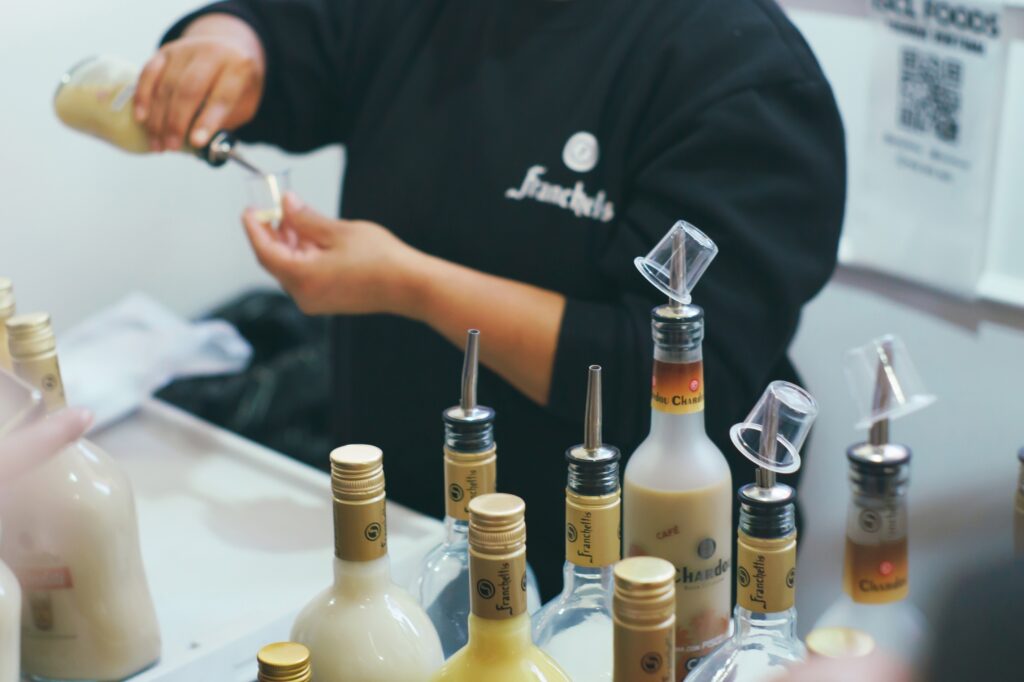
Showdrop is a digital sampling platform that connects consumer brands with consumers through app-driven sample requests and retail kiosk distribution. It is a technology-forward approach to product trial that uses digital infrastructure to manage sample discovery, request, and fulfillment. It operates in a different category than the physical street team and ambassador-based sampling programs that we run at American Guerrilla Marketing, but it is worth understanding how the two approaches compare and what each delivers.
We run field-managed sampling programs with trained human ambassadors in retail, street, campus, and event environments. The central difference between what we do and what digital platforms like Showdrop do is the human interaction layer. Our ambassadors do not just distribute samples. They create a live brand moment, answer questions on the spot, manage the conversion follow-through, and collect real-time field data on consumer reactions. That layer is what drives the conversion from trial to purchase at the rates that make in-person sampling programs worth the investment.
This guide covers the environment of product sampling: how digital platforms like Showdrop work, where they fit relative to in-person sampling programs, how to think about the trade-offs between them, and when each approach makes sense for a brand at a specific stage of growth.
AGM Field Note: Digital sampling platforms are distribution technology. In-person sampling programs are brand-building technology. The question is not which is better in the abstract. The question is which produces the consumer behavior you need from the consumer you are targeting at this stage of your brand’s growth.
Digital sampling platforms like Showdrop connect consumers with product samples through technology. The general model works like this: a consumer discovers a sample opportunity through the platform’s app or website, requests the sample, and receives it either by mail or through a participating retail kiosk. The brand pays for the samples distributed and for the consumer data generated through the platform.
The advantages of this model are scale and targeting precision. Digital platforms can reach consumers across a wide geographic area without requiring field teams in each market. They can target specific consumer segments based on stated preferences, purchase history, or demographic data. They generate structured digital data on who requested samples and, in some cases, whether those consumers subsequently purchased.
The limitations are equally real. The consumer who requests a sample through an app is not in the same moment of engagement as the consumer who encounters a brand ambassador at their commuter station on a Tuesday morning. The sample that arrives in a box a week after it was requested lacks the contextual energy of a sample handed in a high-engagement moment. The human interaction that converts a skeptical passerby into a motivated buyer does not exist in a digital sampling flow.
Dimension
Digital Sampling Platforms
In-Person Ambassador Sampling
Geographic reach
Broad, national/regional
Market-specific, targeted
Consumer interaction
Digital, asynchronous
Live, conversational
Conversion mechanism
Follow-up digital touchpoints
Real-time, ambassador-driven
Consumer data collected
Digital behavior, stated preferences
Live feedback, real-time reactions
Brand experience quality
Package-driven, lower control
Human-driven, high control
Setup speed
Fast once platform enrolled
2-4 weeks for program design and execution
What In-Person Sampling Does That Digital Platforms Cannot
The core argument for in-person sampling over digital platform distribution is not speed or scale. Digital platforms win on both of those dimensions in most cases. The argument is about the quality of the brand moment created and the conversion rate from that moment to purchase behavior.
The Real-Time Conversation
When a consumer encounters a brand ambassador who knows the product inside out, who can answer the exact question the consumer has in that moment, and who can tailor the pitch to what they observe about the consumer in real time, the interaction is categorically different from a digital sample request flow. The ambassador reads the consumer, responds to their cues, and creates a personalized mini-experience that a digital platform cannot replicate. That personalization is what drives the conversion rate advantage of in-person sampling.
The Moment of Context
A sample handed at a farmers market in the produce section, by a person who is obviously a food enthusiast, creates a brand association with quality and authenticity that a mailed sample in a box with five other samples cannot create. Context is everything in brand perception. In-person sampling creates positive context in a way that asynchronous digital fulfillment does not.
The Social Amplification Moment
A live brand activation creates social content opportunities that a mailed sample does not. Consumers who have a positive experience at a brand activation share it on social media in real time. They tag the brand, they show their followers, and they create organic advocacy content that extends the campaign’s reach. This social amplification is a real and measurable bonus of in-person sampling programs that is largely absent from digital platform distribution.
The Competitive Intelligence
What consumers say when they try your product in a live sampling interaction is some of the most valuable consumer research available to a brand. What questions do they ask? What competitor do they compare it to? What price would make them buy on the spot? This qualitative intelligence is captured in our field reporting and used to improve both the sampling program and the brand’s broader marketing strategy. It is not captured in a digital sample request flow.
AGM Field Note: Digital sampling platforms and in-person sampling programs are not mutually exclusive. The brands that use both channels intelligently get the geographic reach of digital distribution combined with the conversion power of live ambassador interaction. The two channels complement each other when they are designed to work together.
When Digital Platforms Make Sense
We are honest about the situations where digital sampling platforms are a better fit than in-person programs. These include:
Brands that need to reach consumers across a very wide geographic footprint simultaneously and do not have the budget to field teams in dozens of markets. Brands that are testing multiple product formats or flavors simultaneously and need to reach a broad consumer base with each. Brands that are building a digital first-party data asset as a primary objective alongside trial. Brands in categories where the consumer discovery process is primarily digital and the sample request is a natural extension of that digital process.
For these situations, a digital sampling platform can be the right primary channel. For brands that need the conversion power of live interaction, the brand control of a managed ambassador program, the real-time consumer feedback of field research, and the social content generation of a live activation, in-person sampling is the stronger investment.
Building an In-Person Sampling Program
Our in-person sampling programs are built at three service tiers. Standard Ambassador is $389.99 per 6-hour shift, including route coverage, GPS tracking, photo documentation, and brand briefing. Professional Ambassador is $489.99 per 6-hour shift, adding deeper product knowledge, lead generation, supervisor coverage, and social content options. Premium Ambassador is $589.99 per 6-hour shift, with advanced demonstrations, live check-ins, full analytics, and on-site field manager.
We design programs that integrate with digital sampling efforts when brands are running both simultaneously. Our field teams can drive consumers to digital registration flows, collect data that feeds digital marketing lists, and generate social content that supports digital campaigns running in the same markets. The integration is built into the campaign design rather than bolted on afterward.
Frequently Asked Questions About Sampling Programs
Can we run both a digital sampling platform and an in-person program simultaneously?
Yes, and the combination often outperforms either channel alone. The digital platform generates broad awareness and reaches consumers who are not accessible through field teams. The in-person program creates the high-conversion brand moments that the digital platform cannot produce. When both are running in the same market during the same campaign window, they reinforce each other’s effectiveness through multiple consumer touchpoints.
How does in-person sampling perform versus digital sampling for conversion rate?
In-person sampling consistently produces higher same-day and near-term conversion rates than digital sampling across most product categories. The live interaction, the immediate retail access, and the personal recommendation all contribute to a conversion rate advantage. The exact differential varies by category, product quality, ambassador quality, and retail proximity. We track conversion rate data across our programs and can share benchmarks relevant to your category during the planning conversation.
What is the best sampling program design for a brand that is new to the market?
For a new market entry, we recommend a combination approach: a focused in-person street and retail program in the primary target market to build the consumer relationship and generate retail velocity, combined with a digital sampling or content-marketing program that builds broader awareness in adjacent markets. The in-person program does the heavy lifting on conversion. The digital program builds the awareness base that the in-person program converts.
How do we attribute sales to a specific sampling channel when running multiple simultaneously?
Attribution is challenging when multiple sampling channels are running at the same time, but there are methods that give directional clarity. Geographic separation, where each channel operates primarily in different markets, allows market-level comparison. Channel-specific coupon codes or QR codes allow direct attribution by channel. Consumer surveys asking how they first heard of or tried the product provide self-reported channel attribution data. We help brands design attribution frameworks that make multi-channel measurement tractable rather than impossible.
Does in-person sampling work for online-only brands?
Yes. In-person sampling for online-only brands drives website traffic, app downloads, and e-commerce purchases rather than retail purchases. The ambassador interaction includes a clear prompt to visit the brand’s website or scan a QR code to make the first purchase. We have run in-person sampling programs for direct-to-consumer brands that drove meaningful e-commerce acquisition at cost-per-acquisition rates that compared favorably with digital advertising in the same market.
What is the minimum program size for an effective in-person sampling program?
A program with a single ambassador working three to five shifts can generate meaningful trial and consumer feedback in a focused market. It will not produce the same volume as a larger program, but it will produce real data on consumer response and real brand moments that can be used as the foundation for a larger program. We build programs at all scales and recommend starting small and scaling up based on results when budget constraints require it.
How do we handle consumer data collected during in-person sampling programs?
Consumer data collected during our programs is the brand’s property. We collect it using the methods agreed in the program brief, deliver it in the agreed format, and do not use or share it for any purpose outside the campaign. For programs collecting personally identifiable information including emails or phone numbers, we build appropriate disclosure language into the data collection interaction so that consumers understand what they are sharing and why.
Can in-person sampling programs target specific zip codes or neighborhoods?
Yes. Geographic precision is one of the key advantages of in-person sampling programs compared to digital alternatives. We can deploy ambassadors specifically in the neighborhoods, corridors, and retail zones that match your target consumer profile. For hyperlocal campaigns where targeting a specific three-block radius matters as much as reaching the right consumer type, in-person programs are the most precise tool available.
What happens to unsold samples at the end of a shift?
Unsold samples are handled according to the plan established in the program brief. Options include return to the brand, secured storage for the next shift, donation to a specified organization, or disposal. We document ending inventory at each shift and provide a complete sample accountability log as part of campaign reporting. Brands always know what happened to every unit provided for sampling.
Finding the Right Sampling Approach for Your Brand
Digital platforms and in-person programs each serve a purpose in a brand’s sampling strategy. The question is not which is better but which produces the consumer behavior you need from the consumer you are targeting. For brands that need the conversion power of live human interaction, in-person ambassador sampling is the answer. For brands that need geographic scale at a digital cost structure, platforms have their role.
We are the right partner for in-person sampling programs. Call us to build a program that delivers what digital distribution cannot.
The In-Person Sampling Advantage in Detail
The case for in-person ambassador sampling over digital platform distribution is built on several concrete advantages that produce measurably different consumer outcomes. Here is the detailed breakdown.
Context Creation
In-person sampling creates a context that is intrinsically connected to the consumer’s immediate environment and purchasing reality. A sample handed at a farmers market by someone who knows the product’s sourcing story, who can tell you which farmer grew the grain and why it matters, creates a brand context that is qualitatively different from the same sample arriving in a box with five other samples from five other brands a week after you requested it online. Context is what creates brand memory that is deep enough to drive repeat purchase.
The Conversion Conversation
The trained ambassador’s ability to have a real conversion conversation is the most significant mechanical advantage of in-person sampling over digital alternatives. After a consumer tastes a product and reacts positively, an ambassador can identify that reaction, acknowledge it, explain why the product produces that reaction through its formulation or sourcing, address any concern about price or availability, and give the consumer a clear and compelling reason to put the product in their cart right now. That sequence of tailored conversational moves is not replicable by any digital follow-up mechanism.
Brand Personality Communication
The ambassador is the human expression of the brand’s personality. For brands that are trying to communicate a specific personality, whether that is irreverent, sophisticated, community-oriented, scientifically rigorous, or environmentally committed, the ambassador creates a live, human version of that personality that the consumer can interact with. The consumer’s impression of the brand’s character from a well-executed ambassador interaction is more vivid, more memorable, and more durable than any digital brand communication can create.
Hybrid Sampling Programs
The most sophisticated sampling strategies use both in-person and digital distribution channels in a coordinated hybrid approach. Here is how we build hybrid programs that get the best from both models.
The in-person sampling component handles the conversion work: reaching consumers in the highest-purchase-intent moments, creating the live brand moments that drive deep brand memory, generating the real-time consumer feedback that informs immediate program refinement, and building the direct consumer relationships that produce the most durable brand loyalty. It focuses on quality of interaction over breadth of reach.
The digital sampling component handles the reach work: distributing samples to consumers across a wide geographic footprint, reaching consumers who are not accessible through field teams in secondary and tertiary markets, and building the database of interested consumers that supports ongoing digital marketing. It prioritizes scale over interaction depth.
When both components are running simultaneously in the same market, they create a layered presence that makes the brand feel both accessible and personal. The consumer who received a digital sample request confirmation and then encountered a brand ambassador in person will experience the brand as both technologically sophisticated and genuinely human, which is a powerful combination for most consumer categories.
Choosing Between Platforms and People
The practical decision between a digital sampling platform and an in-person sampling program comes down to three variables: what the product needs to demonstrate, who the target consumer is and how they are most effectively reached, and what the brand’s conversion priority is relative to its reach priority.
Products with strong sensory qualities that are best communicated through direct experience should prioritize in-person sampling. Products that need broad geographic trial and where the product speaks for itself through taste, feel, or use will often get more value from digital distribution. Most products benefit from both, deployed in proportions that reflect the brand’s specific objectives at its current stage of growth.
We help brands think through this allocation decision honestly, without a bias toward recommending in-person sampling for every situation. There are brands and products for which a digital platform is a better primary channel. For those brands, we say so and explain why. For brands that need the conversion power of in-person interaction, we build the program that delivers it.
What Our Clients Say About Working With AGM
We let the results speak, but client feedback shapes how we build every subsequent program. The pattern we hear most consistently is that the combination of ambassador quality, active field management, and reporting specificity separates our programs from what brands experienced with other field marketing providers. Ambassadors who are thoroughly briefed and genuinely engaged with the brand produce interactions that clients recognize as qualitatively different from what less disciplined programs deliver. Management that is visibly present in the field rather than checking in remotely from a desk produces performance consistency that brands notice in the data. And reporting that tells a brand exactly what happened, where, and why gives them the information they need to justify the investment and build the next program with confidence.
We are not the cheapest option in the market. We are not trying to be. We are the option that produces results you can measure, report internally, and build on. For brands that have been through a disappointing sampling or street team program and want to understand what the right partner relationship looks like, we are ready to have that conversation honestly.
Next Steps
Whether you are planning your first field marketing program or your fiftieth, the path to a program that produces results is the same: a clear objective, a specific target consumer, an honest budget assessment, and a partner with the field infrastructure and management discipline to execute at the quality level the investment requires.
We are that partner. Call us at (646) 776-2770 or email [email protected]. We will ask the right questions, give you honest answers about what is achievable in your market and timeline, and build you a program that earns its budget. American Guerrilla Marketing has been doing this work in cities across North America for years. We know what works. Let us put that knowledge to work for your brand.
The AGM Difference
American Guerrilla Marketing is a field marketing company with deep roots in the guerrilla and street-level marketing world. We were built on the idea that direct, human, physical marketing is uniquely powerful precisely because so much of the marketing environment has moved digital. When every brand is competing for attention on the same platforms with the same formats, the brand that shows up in person stands out. We help brands show up in person, in the right places, with the right people, at the right times, with the discipline and infrastructure to do it consistently and measure it accurately.
Our team includes strategists who have built field marketing programs for emerging brands and established national names, field managers who have coordinated deployments across dozens of markets simultaneously, recruiters who know how to find the ambassadors who will genuinely represent a brand rather than just show up and do a job, trainers who build the product knowledge and conversion skills that turn sampling shifts into sales lift, and data analysts who turn field activity into reporting that is worth reading and acting on.
We operate across North America with field teams in major markets including New York, Los Angeles, Chicago, Miami, Austin, Atlanta, Boston, Seattle, Denver, Philadelphia, Dallas, Houston, San Francisco, and more. We also have partner networks in secondary and tertiary markets that extend our geographic coverage to virtually any US market a brand needs to reach. Multi-market programs are coordinated centrally but executed locally, ensuring both the strategic coherence of a unified brand presence and the tactical precision of local market knowledge.
We are built for brands that take their consumer relationships seriously, that invest in the quality of their brand’s first impression, and that want field marketing partners who bring genuine strategic value rather than just field labor. If that describes your brand, we are ready to talk. Call us at (646) 776-2770 or email [email protected].
Field Marketing as a Competitive Advantage
In most consumer categories, field marketing is still underutilized relative to its impact. The majority of marketing budget goes to digital channels where every brand is competing for the same attention with the same formats. The brands that allocate a meaningful portion of their marketing investment to field marketing, street teams, and sampling programs are working in less crowded channels where the relative impact per dollar is often significantly higher than in digital.
This is not an argument against digital marketing. It is an argument for channel diversification that includes the physical world. Consumers live in the physical world. They eat food, use personal care products, buy beverages, and make a hundred consumer choices in physical retail and social environments every week. The brands that show up in those physical moments with genuine human presence and compelling product experience build consumer relationships that purely digital brands cannot replicate.
We build field marketing programs for brands that understand this dynamic. We help them show up in the physical world in ways that are strategic, accountable, and measurable. And we help them integrate that physical presence with the digital channels they are running to create a consumer experience that is both broad in reach and deep in impact. That integration is the future of effective consumer marketing for brands that want to own their category relationships rather than just buy them through media spend.