Roadshow Marketing Services | American Guerrilla Marketing
A roadshow is one of the most powerful marketing formats available to brands that want to build real presence across multiple cities in a short window. You are not waiting for people to find you online. You are showing up in their city, their neighborhood, their street, and giving them a reason to engage with your brand in person. Done right, a roadshow creates momentum that compounds. Each city you hit adds to the story. Each activation generates content. Each interaction builds the case that this brand is real, present, and worth paying attention to.
Done wrong, a roadshow is an expensive logistics exercise that produces some photos, a lot of receipts, and no meaningful change in brand awareness or sales. The difference between the two outcomes is almost entirely in the planning and execution.
We are American Guerrilla Marketing. We plan and execute roadshow marketing campaigns for brands that want to show up in multiple cities in a coordinated, high-impact way. This guide covers what roadshow marketing services actually involve, what separates a good roadshow from a bad one, how to select your markets, how to structure each stop, and what it takes to make the whole thing work at scale.
The term “roadshow” gets used loosely. In finance, it refers to investor presentation tours. In entertainment, it means a touring production. In marketing, it describes a brand campaign that visits multiple cities in sequence. The specifics of what that looks like depend on the brand’s goals and the format of each activation.
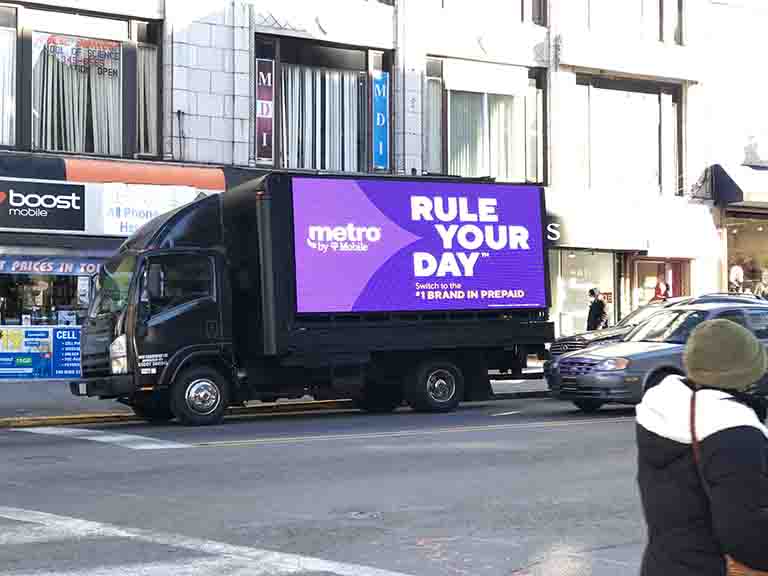
A marketing roadshow might involve a branded vehicle, a pop-up experience, a street team, an event presence, or some combination of all of these. The connecting thread is that the brand is physically present in multiple markets in a defined window of time, delivering a consistent brand experience with local variations that make each stop feel relevant to its specific audience.
Roadshow Format
Best For
Typical Markets Per Tour
Branded Vehicle Tour
CPG brands, food and beverage, consumer tech
5 to 15 cities over 4 to 8 weeks
Pop-Up Experience Tour
Fashion, beauty, lifestyle brands
4 to 10 cities over 3 to 6 weeks
Street Team + Event Roadshow
Entertainment, music, gaming, app launches
6 to 20 cities over 6 to 12 weeks
Corporate or B2B Roadshow
Technology, financial services, professional services
5 to 12 cities over 4 to 8 weeks
Retail Activation Tour
Brands launching into new retail accounts
Tied to retail footprint, 3 to 8 markets
Why Roadshows Work: The Physics of Physical Presence
There is something about a brand that shows up in person that digital marketing cannot replicate. A brand that runs social ads in a city is present in people’s feeds. A brand that physically arrives in that city and activates on its streets is present in reality. Those two things create different kinds of exposures.
The physical impression is stronger because it engages more senses. The person who walks past your branded activation on Wacker Drive in Chicago sees it, possibly smells it if there are product samples involved, definitely hears the ambient sound of the activation, and may interact with a real person who represents the brand. That is five to ten seconds of multi-sensory brand engagement that no digital impression can come close to matching.
The social impression of a roadshow is also different from typical brand content. People who see a roadshow activation happening in their city share it because it is unexpected. They are not sharing an ad. They are sharing a moment. That organic social content generated by a well-executed roadshow reaches people who trust the person sharing it in a way that paid social content cannot achieve.
A digital ad reaches people in their feed. A roadshow activation reaches people in their world. The difference is more than reach. It is the quality of the impression and the trust that comes with a real moment in a real place.
How to Select Markets for a Brand Roadshow
Market selection is one of the most important decisions in roadshow planning. The instinct is often to hit the biggest cities: New York, Los Angeles, Chicago, Houston, Phoenix. But biggest is not always best. The right markets for your roadshow are the ones where your target audience is most concentrated and where physical marketing has the highest likelihood of creating the outcome you are looking for.
Here is how we approach market selection for roadshow campaigns.
Start with your existing customer data. Where are your current customers concentrated? Where do you have the strongest online following or the highest purchase rates? These are your warmest markets. An activation in a market where people already know your brand creates more social amplification and more immediate conversion than one in a cold market.
Identify expansion markets strategically. Where do you want to grow? What cities represent the next tier of opportunity? A roadshow can be a powerful market entry tool if you use it to establish brand presence before your product or service formally launches in a new geography.
Consider the logistics of travel between markets. A roadshow that requires three days of travel and setup between every stop is expensive and exhausting. Geographic clustering makes tours more efficient. Northeast tour: Boston, New York, Philadelphia, Washington DC. Midwest tour: Chicago, Detroit, Columbus, Indianapolis. West Coast tour: Portland, Seattle, San Francisco, Los Angeles. Smart routing reduces travel costs and keeps the team energized through the full tour.
Look at the event calendar in each market. The best roadshow activations happen alongside or adjacent to events that your target audience is already attending. A brand targeting music fans should know which cities have major music events during the tour window. A brand targeting fitness enthusiasts should know when the major races and outdoor events are happening. Arrival timing that overlaps with relevant events dramatically increases the density of your target audience at each stop.
Structuring Each Roadshow Stop for Maximum Impact
A roadshow stop that runs for one day and hits one location is a missed opportunity. The brands that get the most out of their roadshow investments think in terms of layers at each stop: what happens the day before, what happens during the main activation, and what happens in the days after.
Pre-stop seeding. In the week before your roadshow arrives in a city, seed local media, local influencers, and your existing customers in that market with content that builds anticipation. A short video showing the tour vehicle approaching or a teaser about what will happen when the brand arrives in their city creates momentum before the activation even begins.
Activation day structure. Plan the day with multiple locations or time windows rather than a single fixed point. Start in a neighborhood that indexes high for your core audience. Move to a second location in the afternoon to reach a different concentration of target consumers. End with an evening event or a curated experience for a smaller group of VIPs or influencers. The layered structure creates more content, more interactions, and more social moments throughout the day.
Post-stop amplification. The day after the activation in each city, publish the content from that stop. Social posts, behind-the-scenes photos, short video clips, consumer testimonials from interactions. This extends the reach of the physical activation into digital channels and builds anticipation in the next city on the tour.
What Good Roadshow Documentation Looks Like
A roadshow without documentation is a roadshow that happened in a forest with no one watching. Every stop needs to produce evidence that the campaign happened, who it reached, and what they responded to. Here is what good roadshow documentation includes.
Real-time field reporting. At each stop, the team should be submitting field reports throughout the day with estimated engagement counts, notable interactions, logistical notes, and initial content captured. This keeps the client informed in real time and allows for adjustments mid-tour if something is or is not working.
Photo and video documentation. Every activation should produce a library of photos and video clips suitable for social, press, and internal reporting. This includes wide shots that show scale, detail shots that show brand presentation quality, and candid shots that show real consumer reactions and interactions.
Consumer data capture. Every roadshow stop should include a mechanism for capturing consumer data: email sign-ups, text message opt-ins, survey responses, or direct engagement metrics. This data becomes a key deliverable of the campaign, turning a physical marketing investment into a lasting asset for future marketing.
End-of-tour recap report. After the full tour, produce a comprehensive recap that covers every stop, total engagement across all markets, content generated, social performance of campaign-related posts, consumer data captured, and any notable media coverage. This report is the deliverable that justifies the investment and informs the planning of the next campaign.
Common Mistakes in Roadshow Marketing
We have seen roadshows go wrong in predictable ways. Here are the mistakes to avoid.
Too many markets, too little time. Brands sometimes want to hit twelve cities in six weeks and end up with two days per city including travel. That is not enough time to execute a high-quality activation, generate good content, and create meaningful local presence. Better to hit six cities well than twelve cities poorly.
Generic activation formats. A roadshow that delivers the exact same activation in every market feels inauthentic and misses the opportunity to connect with local culture. Smart roadshows have a consistent brand experience but local variations that make each stop feel relevant to that specific city and community.
Ignoring local media and influencers. Every city on your tour has local media outlets, neighborhood blogs, and local influencers who cover what is happening in their city. Engaging these contacts before and during each stop amplifies the reach of the activation into communities you would not otherwise reach. A ten-minute call with a local food blog editor before the stop can result in coverage that reaches tens of thousands of readers in the tour city.
No measurement plan. A roadshow without a measurement plan is a roadshow that you cannot justify repeating. Define your KPIs before the tour begins: total interactions, consumer data captured, social exposures generated, media coverage earned, and any direct revenue or conversion attributable to tour markets. Track these metrics throughout the tour and report them clearly at the end.
The best roadshows are more than logistics projects. They are content engines. Every stop should produce social content, press coverage, consumer data, and internal documentation that extends the value of the campaign far beyond the days when the activation was physically running.
Roadshow Budgeting: What to Expect
Roadshow budgets vary enormously based on the format, the number of markets, and the complexity of the activation. Here is a rough framework to help you think about costs.
Vehicle rental or purchase, fuel, permits, storage
$5,000 to $30,000 for full tour
Activation Build
Branded materials, display, sampling equipment
$3,000 to $25,000 depending on format
Location Fees and Permits
Event space, street permits, venue fees
$500 to $5,000 per market
Product and Sampling
Product samples, promotional materials
Varies by product and sample count
Agency Management Fee
Planning, execution, reporting
$15,000 to $75,000 for full tour
A well-executed five-city roadshow for a consumer brand can run anywhere from $40,000 to $150,000 depending on the format and the activation depth at each stop. A simpler ten-city street team roadshow might be achieved in the $30,000 to $60,000 range. A fully built experiential pop-up touring fifteen cities would run significantly higher.
How American Guerrilla Marketing Executes Roadshows
We have planned and executed roadshow campaigns for brands in consumer goods, entertainment, technology, and food and beverage. We know how to staff a multi-city tour, how to build activation materials that travel well, how to coordinate local logistics in each market, and how to document the campaign in ways that produce value beyond the activation days themselves.
We cover the initial tour planning and market selection through field staff recruitment and training, activation build, on-the-road logistics management, daily reporting, content capture, and end-of-tour recaps. We are more than a staffing agency that puts people in markets. We are a campaign agency that manages the full arc of a roadshow from strategy through documentation.
If you are planning a roadshow and want a partner who has actually done this work in cities across the country, contact us and we will walk you through what we would build for your brand.
What is a marketing roadshow?
A marketing roadshow is a campaign where a brand physically activates in multiple cities over a defined period of time. Each city gets a version of the brand activation, creating physical presence and real consumer interactions across multiple markets. Roadshows can involve branded vehicles, pop-up experiences, street teams, event appearances, or a combination of formats.
How many cities should a brand roadshow cover?
The right number depends on your goals, budget, and timeline. Five to ten cities is a common range for a first roadshow. More markets require more staff, more logistics, and more budget. Start with a number that lets you execute each stop well rather than rushing through too many cities with inadequate time at each one.
How long should a brand spend in each market on a roadshow?
Two to three days per market allows for thorough activation, content generation, and local media or influencer engagement. A single-day stop is possible for smaller activations but limits your ability to hit multiple locations and audience segments within the market. Budget for two days per city if possible.
What makes a roadshow activation memorable?
Unexpectedness, quality of interaction, and local relevance. A branded experience that shows up in a neighborhood unexpectedly, delivers a high-quality interaction with a real person, and references something specific to that local community creates a stronger impression than a generic activation that could happen anywhere.
How do you generate social content during a roadshow?
Designate a focused content creator for each roadshow tour. This person’s job is to capture photos and video throughout each activation day, edit and post real-time content, engage with user-generated posts from people at the activation, and build a content library for each stop. Do not rely on the field team to capture content in between their other responsibilities.
What permits do you need for a roadshow activation?
Permits vary significantly by city and by activation format. Street activations typically require a temporary use permit from the city. Food and beverage sampling may require health department permits. Vehicle-based activations may require parking permits or specific zones. A good roadshow agency handles permit research and application for each market as part of the planning process.
How do you measure the success of a roadshow?
Key metrics include total consumer interactions across all markets, consumer data captured (emails, opt-ins), social content generated and its organic reach, earned media coverage, and any direct revenue or conversion attributable to tour markets. Before the tour begins, establish which of these metrics are most important for your specific business goals.
What is the best time of year to run a roadshow?
Spring and fall are generally the best windows because weather is favorable in most U.S. markets and competition for consumer attention is lower than in the summer peak and holiday season. Summer roadshows work well for brands targeting outdoor-oriented audiences. Winter roadshows are challenging in northern markets due to weather but can work for indoor-focused brands in southern markets.
Can a roadshow work for a B2B brand?
Yes. B2B roadshows typically focus on targeted meetings, industry events, and hosted experiences rather than street-level consumer activations. A technology company visiting five cities to meet with enterprise clients, host dinner events for prospects, and appear at industry conferences is running a B2B roadshow. The format is different but the principle of building presence through physical visits to multiple markets is the same.
Does American Guerrilla Marketing handle the full roadshow or just specific parts?
We offer full-service roadshow management from initial planning through end-of-tour reporting. We also work with clients who have done some of the planning themselves and need a field execution partner to staff and manage the activations in each market. Either way, we bring the operational infrastructure and market expertise to make multi-city campaigns work efficiently.
Frequently Asked Questions
What is a marketing roadshow?
A marketing roadshow is a campaign where a brand physically activates in multiple cities over a defined period of time. Each city gets a version of the brand activation, creating physical presence and real consumer interactions across multiple markets. Roadshows can involve branded vehicles, pop-up experiences, street teams, event appearances, or a combination of formats.
How many cities should a brand roadshow cover?
The right number depends on your goals, budget, and timeline. Five to ten cities is a common range for a first roadshow. More markets require more staff, more logistics, and more budget. Start with a number that lets you execute each stop well rather than rushing through too many cities with inadequate time at each one.
How long should a brand spend in each market on a roadshow?
Two to three days per market allows for thorough activation, content generation, and local media or influencer engagement. A single-day stop is possible for smaller activations but limits your ability to hit multiple locations and audience segments within the market. Budget for two days per city if possible.
What makes a roadshow activation memorable?
Unexpectedness, quality of interaction, and local relevance. A branded experience that shows up in a neighborhood unexpectedly, delivers a high-quality interaction with a real person, and references something specific to that local community creates a stronger impression than a generic activation that could happen anywhere.
How do you generate social content during a roadshow?
Designate a focused content creator for each roadshow tour. This person’s job is to capture photos and video throughout each activation day, edit and post real-time content, engage with user-generated posts from people at the activation, and build a content library for each stop. Do not rely on the field team to capture content in between their other responsibilities.
What permits do you need for a roadshow activation?
Permits vary significantly by city and by activation format. Street activations typically require a temporary use permit from the city. Food and beverage sampling may require health department permits. Vehicle-based activations may require parking permits or specific zones. A good roadshow agency handles permit research and application for each market as part of the planning process.
Key metrics include total consumer interactions across all markets, consumer data captured (emails, opt-ins), social content generated and its organic reach, earned media coverage, and any direct revenue or conversion attributable to tour markets. Before the tour begins, establish which of these metrics are most important for your specific business goals.