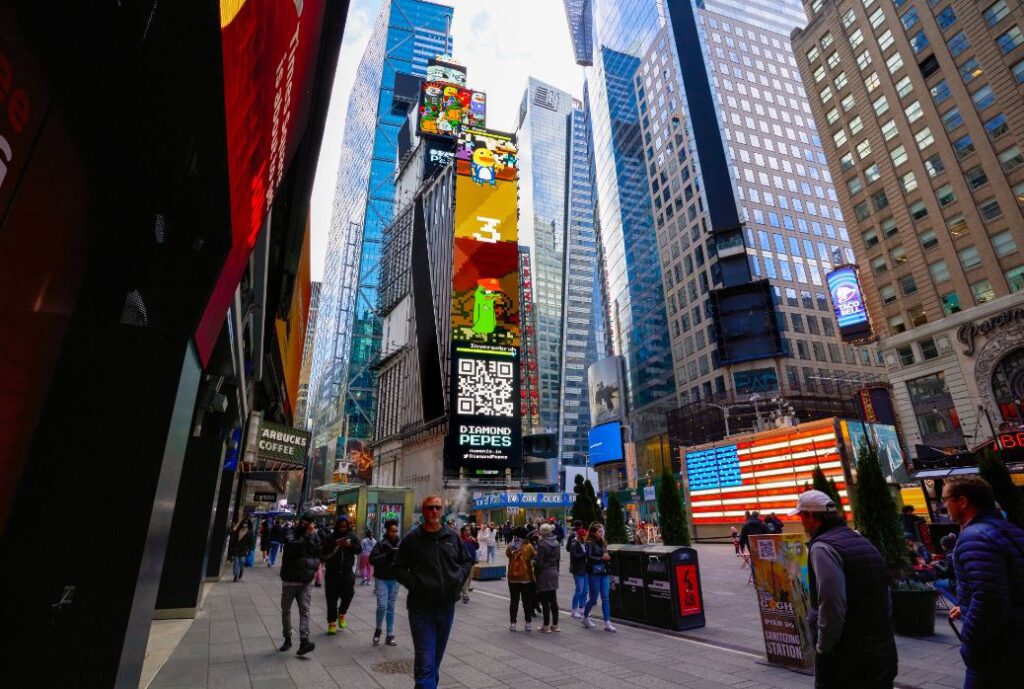
Programmatic out-of-home advertising has been one of the fastest-growing segments in media buying for the past five years. The appeal is straightforward: take the data-driven, audience-targeted, real-time bidding mechanics that transformed digital advertising and apply them to the physical world of billboards, transit screens, and venue displays. The reality is more nuanced than the pitch, and understanding where programmatic OOH excels and where it falls short is essential for any media buyer who’s considering adding it to their plan.
This guide breaks down how programmatic OOH actually works, what inventory is available through the major platforms, what it costs versus traditional OOH buys, and when the programmatic approach makes sense for your campaign objectives. We also cover how street-level guerrilla marketing fills the physical gaps that digital OOH inventory can’t reach, because understanding the full landscape is how you build campaigns that perform rather than just check boxes.
Our team executes both traditional OOH coordination and street-level guerrilla marketing across 50+ U.S. markets. We’ve seen what programmatic OOH can and can’t do from the campaign execution side, and this guide reflects that field perspective.
How Programmatic OOH Works: The Technology Stack
Programmatic OOH operates through a technology stack adapted from digital advertising’s programmatic infrastructure. On the demand side, brands and agencies use DSPs (demand-side platforms) to specify targeting parameters, creative, budget, and bid floors. On the supply side, OOH operators make their digital inventory available through SSPs (supply-side platforms). The platform infrastructure matches demand to supply in near-real-time, delivering ads to screens when the specified audience parameters are met.
The Key Platforms
The major programmatic OOH platforms in the U.S. market are Vistar Media, Place Exchange, and Broadsign. Each aggregates inventory from multiple OOH operators and offers different toolsets for audience targeting, creative management, and measurement. Vistar is widely considered the market leader in terms of inventory depth. Place Exchange has strong transit and urban panel inventory. Broadsign is the dominant content management system on the operator side and increasingly important on the programmatic buying side as well.
Most major OOH operators — Lamar, Clear Channel, Outfront, JCDecaux, and the transit media companies — participate in at least one of these platforms. Independent operators vary in participation. The result is that programmatic OOH inventory is comprehensive but not complete: some of the best individual locations in a given market may not be available programmatically.
Audience Targeting in Programmatic OOH
The audience targeting in programmatic OOH works through mobility data overlays, not traditional cookie-based tracking. Location data from mobile devices is used to build audience segments based on where people go: what retail categories they visit, what neighborhoods they frequent, what activities their movement patterns suggest. A programmatic OOH buy can target “people who have visited gyms in the past 30 days” or “frequent convenience store shoppers” by identifying the screens in locations those audiences pass through.
This is a genuinely powerful capability, but it has important limitations. The targeting parameters are probabilistic, not deterministic. The data is aggregated and anonymized. And the targeting optimizes for audience presence near screens, not for audience receptivity or engagement state. A person walking past a digital billboard while checking their phone is “targeted” but may not be meaningfully exposed to the creative.
What Inventory Is Available Programmatically
Programmatic OOH inventory broadly falls into four categories: roadside digital billboards, transit screens, venue screens, and urban digital panels. The quality and coverage of each category varies by market.
Digital Billboards
Digital billboards are the most available programmatic inventory category. Lamar, Clear Channel, and Outfront have made substantial portions of their digital billboard networks available through programmatic platforms. In major markets, a programmatic buyer can access dozens to hundreds of digital billboard faces through a single platform buy. The limitation is that the premium roadside inventory (highest-traffic locations, landmark placements) is often committed through direct deals and not available programmatically, or available programmatically only at premium CPMs that exceed what a direct buy would cost.
Transit Screens
Transit screen inventory is available programmatically in most major markets. Subway and commuter rail systems with digital advertising infrastructure (New York, Chicago, LA Metro, DC Metro, Philadelphia, Boston) expose some or all of their screen inventory through programmatic platforms. Transit screen programmatic buys allow audience targeting based on line, station type, and time of day, which is genuinely valuable for commuter-audience campaigns.
Venue Screens
Venue screens inside gyms, convenience stores, gas stations, medical offices, and retail locations form the fastest-growing segment of programmatic OOH inventory. Networks like Outfront Studio, Alfi, and various vertical-specific providers have built substantial venue screen footprints. The dwell time in venue environments (a 15-minute gym wait, a 5-minute gas station fill-up) makes these screens more attentive ad environments than quick-exposure billboard formats.
What Programmatic OOH Costs: A Practical Framework
Programmatic OOH CPMs vary significantly across inventory types, markets, and targeting parameters. Roadside digital billboard inventory in major markets typically clears at $10-$30 CPM through programmatic platforms, though premium locations with heavy audience targeting can push significantly higher. Transit and venue screens typically run $5-$20 CPM on a programmatic basis.
Minimum campaign budgets on most programmatic OOH platforms start at $1,000-$5,000, making the format accessible for small campaigns in a way that traditional OOH (with its 4-week contract minimums and minimum orders) is not. For campaigns with $25,000+ budgets, direct OOH buys often produce lower effective CPMs than programmatic for equivalent inventory, because the agency/platform fees in programmatic can add 20-30% to the underlying media cost.
When to Use Programmatic OOH vs. Traditional OOH
The decision between programmatic and traditional OOH ultimately comes down to what the campaign needs: flexibility or efficiency.
When Programmatic OOH Makes Sense
Programmatic OOH is the right tool when you need campaign flexibility and audience targeting precision rather than the lowest possible CPM. Short-burst campaigns (one to two weeks) that don’t justify 4-week traditional contracts, campaigns tied to specific audience behaviors or locations, dynamic creative that needs to respond to data triggers (weather, sports scores, inventory levels), and campaigns that need rapid iteration based on performance data are all well-served by programmatic OOH platforms.
When Traditional OOH Makes More Sense
Traditional OOH direct buys make more sense when you have specific high-value locations in mind, when the campaign runs long enough to make 4-week or 8-week contracts efficient, or when the inventory you need isn’t available programmatically. The premium roadside locations that anchor a brand’s OOH presence in a major market are almost always better acquired through direct negotiation than through programmatic bidding.
The Street-Level Gap That Programmatic OOH Doesn’t Fill
Programmatic OOH is screen-centric. It reaches people through digital displays on roadsides, in transit stations, and in venues. What it doesn’t reach is the textured, ground-level environment where people actually walk, gather, and spend unstructured time. The block in front of a bar, the alley adjacent to a market, the wall on the pedestrian path from transit to a retail district — these surfaces don’t exist in any programmatic OOH platform’s inventory.
This is where guerrilla marketing fills the gap. Wheatpaste poster campaigns reach audiences in the exact physical environments that digital OOH screens don’t cover. Sidewalk stencils operate at ground level in pedestrian zones. Brand ambassador street teams create human encounters that no screen-based format can replicate. LED billboard trucks bring digital OOH mobility to the blocks and routes that fixed screens don’t serve.
The strongest out-of-home campaigns we see combine programmatic or traditional OOH for broad reach in the digital screen environment with street-level guerrilla formats for the ground-level, human-encounter layer that creates brand memories rather than just impressions.
Measurement and Attribution in Programmatic OOH
Programmatic OOH platforms offer more sophisticated measurement than traditional OOH, primarily through mobile device tracking to measure post-exposure behavior. Vistar and Place Exchange both offer foot traffic lift studies that compare location visit rates for exposed versus unexposed audiences. These studies produce measurable attribution data that traditional OOH cannot provide.
The methodology relies on mobile device exposure proximity to screens and subsequent device location tracking. The approach is directionally useful but subject to several sources of noise: GPS accuracy in urban environments, multi-touch attribution complexity, and the challenge of isolating the OOH contribution from concurrent digital and other media. Treating programmatic OOH attribution as one data signal among many is the appropriate frame, not as definitive proof of campaign causation.
Frequently Asked Questions
What is programmatic OOH advertising?
Programmatic OOH (out-of-home) advertising is the automated buying and selling of digital out-of-home (DOOH) inventory through technology platforms that enable real-time bidding, audience targeting, and dynamic creative delivery. Unlike traditional OOH buys that involve direct negotiations with media owners, programmatic OOH lets buyers purchase digital billboard, transit screen, and venue display inventory through DSPs using data-driven audience parameters.
What is the difference between programmatic OOH and traditional OOH?
Traditional OOH involves direct contracts with media owners for specific inventory over fixed periods (typically 4-week cycles). Programmatic OOH enables real-time or near-real-time inventory purchasing through automated platforms with audience targeting overlays, dynamic creative capabilities, and flexible budget management. Programmatic also enables data-driven measurement and attribution that traditional static OOH cannot provide.
How much does programmatic OOH advertising cost?
Programmatic OOH CPMs vary significantly by market and screen type. Premium digital billboards in major markets typically run $10-$40 CPM. Transit and venue screens range from $5-$25 CPM. Most platforms have minimum campaign budgets in the $1,000-$5,000 range. Traditional direct OOH buys often produce lower overall CPMs for longer campaigns, while programmatic offers flexibility and targeting precision at a premium.
What types of screens are available through programmatic OOH platforms?
Programmatic OOH inventory includes digital billboards, transit station screens (subway, bus, airport), venue screens (gyms, stadiums, retail), roadside digital displays, and urban panel networks. The available inventory depends on which supply-side platforms each operator participates in. Major programmatic OOH platforms include Vistar Media, Place Exchange, and Broadsign.
When should I use programmatic OOH instead of traditional OOH?
Programmatic OOH is well-suited for campaigns requiring flexible timelines, audience targeting beyond location alone, dynamic creative that responds to data triggers (weather, time of day, events), or short-burst campaigns that don’t fit the traditional 4-week cycle. Traditional OOH is typically more cost-efficient for campaigns with fixed, long-term placement needs on specific high-value inventory.
How does guerrilla marketing complement programmatic OOH?
Programmatic OOH operates in the digital screen environment. Guerrilla marketing operates at street level, on surfaces and in spaces that digital OOH doesn’t reach. Wheatpaste campaigns, sidewalk stencils, street teams, and LED billboard trucks complement a programmatic OOH buy by filling the physical gaps in the digital inventory landscape and creating brand encounters at ground level where people are actually walking.