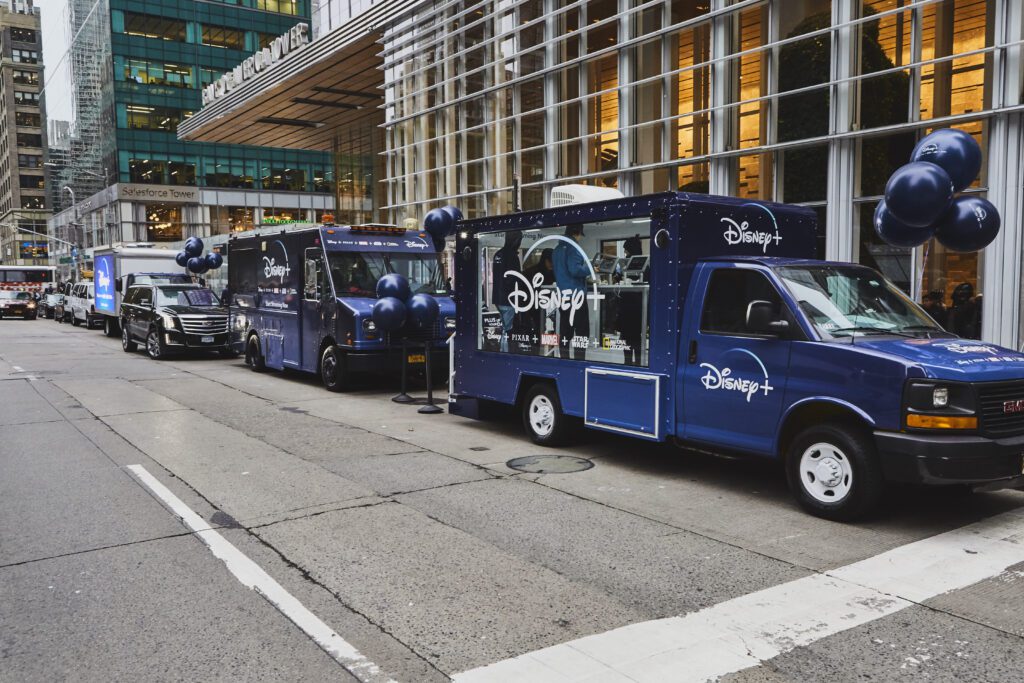
Pop-up event marketing creates physical encounters that consumers remember — and the brands that use it well understand that the event itself is only part of the strategy.
Pop-up event marketing is one of the most direct forms of brand communication available. You go where the consumer is. You create a physical environment that represents what the brand stands for. You put knowledgeable, enthusiastic people in that environment to have real conversations. And you give the consumer a reason to stop, engage, and remember the encounter after they leave.
This is the form of marketing where you cannot fake it. The consumer is physically present. The staff are physically present. The product, the space, the interaction — everything is real and immediate in a way that no digital format replicates. When it is executed well, the result is brand affinity that is difficult to achieve through any other means. When it is executed poorly, that failure is also immediately apparent to everyone who witnesses it.
We have run pop-up event marketing programs across consumer goods, beverage, beauty, apparel, tech, and food categories in markets from New York City to Los Angeles to Chicago to Miami. The campaigns we are most proud of are the ones where the strategy, the creative, and the execution all aligned with the specific business problem the brand was trying to solve — and the results were clear and measurable.
The category is broad. Pop-up event marketing includes sampling activations on city streets, temporary retail spaces in market districts, branded presences at festivals and sporting events, mobile truck campaigns, flash activations in transit hubs, and fully custom experiential installations in unexpected urban spaces. What all of these formats share is the temporary, physical, direct-to-consumer nature of the brand encounter.
What distinguishes pop-up event marketing from traditional event marketing is scale and intention. Traditional event marketing tends to mean brand sponsorships at large, existing events: sports games, music festivals, trade conferences. Pop-up event marketing tends to mean brand-created, brand-controlled events — even small ones — that happen on the brand’s own terms, in locations and formats chosen specifically because they reach the right audience in the right context.
The distinction matters because it determines how much control the brand has over the consumer experience. At a sponsored event, the brand is one of many competing for attention within an environment created and controlled by someone else. At a brand-created pop-up event, the brand controls the space, the staff, the message, the consumer flow, and the takeaway. That control is worth something — both in terms of experience quality and in terms of the brand’s ability to measure and attribute results.
Why Pop-Up Events Work: The Marketing Fundamentals
Pop-up event marketing works because it operates on the right side of several well-established marketing fundamentals simultaneously.
Physical Trial is the Strongest Purchase Driver
For most consumer product categories, trial is the most effective driver of initial purchase. A consumer who has used a product — tasted it, touched it, smelled it, worn it, operated it — is dramatically more likely to buy it than a consumer who has only read about it or seen an ad for it. Pop-up event marketing creates direct trial at scale. In a single well-designed activation over two days in a high-foot-traffic urban location, a food or beverage brand can generate thousands of direct trial moments that translate to measurable retail sales lift in that market.
Attention is Earned, Not Assumed
Digital advertising operates in an environment where consumer attention is finite and contested. Ad blockers, skipping behavior, and the cognitive filtering of ubiquitous digital advertising all reduce the effective attention that paid media delivers. A pop-up event marketing activation earns attention rather than purchasing it. The consumer chooses to engage — they walk up, they stop, they participate. That chosen engagement is worth more to brand recall and purchase intent than forced exposure to an ad they are trying to ignore.
Sharing Extends Reach Organically
A well-designed pop-up event generates organic social content from attendees. That content reaches the social networks of everyone who shares it — networks that are typically composed of people with similar demographics and interests to the attendee. The organic reach from a successful pop-up event can be many times the number of people who were physically present. This organic amplification is not guaranteed and does not happen automatically, but it is reliably achievable with deliberate design choices and a content strategy built into the activation from the start.
Context Creates Receptivity
A consumer encountered at a farmers market is in a discovery mindset about food and beverage products. A consumer encountered near a gym is in a fitness mindset. A consumer at an arts event is in a cultural consumption mindset. Pop-up event marketing can place a brand encounter precisely in the context where the consumer’s mindset is most aligned with the brand’s message — dramatically increasing the receptivity of the encounter without any additional investment in persuasion.
The best pop-up events feel like discovering something, not like being marketed to. The difference between those two experiences is entirely in how the activation is designed — and it determines whether consumers engage enthusiastically or walk past.
Planning a Pop-Up Event Marketing Campaign
Effective pop-up event marketing campaigns are built on a clear planning sequence. Skipping steps in the planning process consistently creates problems during execution that could have been avoided.
Step 1: Define the Objective Precisely
The campaign objective needs to be specific enough to generate concrete decisions about format, location, timing, and measurement. “Build brand awareness” is not a sufficiently specific objective. “Increase brand awareness among 25-35 year old women in the Los Angeles market by X points, measured by brand tracking survey, within 60 days of the activation” is specific enough to make design decisions against. The level of specificity in the objective determines the level of strategic discipline in everything that follows.
Step 2: Define the Target Consumer and Their Behavior
Understanding where the target consumer spends time, at what times, in which specific locations in the target market, is the foundation of effective location strategy. This requires actual research: demographic data about different neighborhoods, foot traffic data about specific sites, behavioral research about when and where the target consumer is most active and most receptive. This work takes time and budget but determines the quality of every location decision that follows.
Step 3: Select Format and Scale
The format choice flows from the objective and the consumer behavioral data. A trial-focused campaign for a food product needs an activation format that delivers efficient, high-quality sampling. A brand awareness campaign for a fashion brand needs a format that generates strong visual content and cultural resonance. A direct sales campaign for a DTC brand needs a format that converts attendance into purchase. The format needs to be calibrated to what the campaign is actually trying to achieve, not to what is most impressive or most visually ambitious.
Step 4: Location Scouting and Logistics
Every location on the activation plan needs to be pre-scouted in person before being committed to. Digital mapping and foot traffic data provide strong starting points, but they do not tell you whether a location has adequate power access, favorable sight lines from the street, reasonable parking or loading access, or environmental conditions that will affect the activation. We scout every location for every campaign we run. Skipping this step is where operational problems originate.
Step 5: Staff Recruitment and Training
Staff recruitment begins from the moment the campaign plan is finalized. Good brand ambassadors in specific markets are in demand and book up quickly. Training — covering product knowledge, brand story, interaction protocols, data capture procedures, and content responsibilities — needs to be completed before the campaign launches, not the night before. Staff quality is the most variable element of any pop-up event campaign and consistently the most impactful on results.
Step 6: Content Strategy and Social Planning
The content strategy for the campaign needs to be built before launch. This covers: which platforms to prioritize; what content types to produce and at what frequency; how to promote event locations in advance; how to encourage and amplify attendee content during the event; and how to manage social content after the event closes. The social amplification of a pop-up event does not happen automatically. It requires a specific plan and dedicated execution resources.
Pop-Up Event Formats and Their Characteristics
Event Format
Duration
Best Campaign Goal
Typical Cost Range
Street Sampling Activation
1 – 3 days
Product trial, awareness
$10,000 – $35,000
Pop-Up Retail Event
3 – 14 days
Sales, brand experience
$25,000 – $100,000
Festival / Event Integration
2 – 5 days
Awareness, trial at events
$20,000 – $80,000
Mobile Truck Tour Stop
1 day per stop
Multi-market sampling, sales
$5,000 – $20,000 per stop
Experiential Installation
3 – 10 days
Brand awareness, social content
$75,000 – $350,000
Operating in Major Markets
Each major U.S. market has distinct operational characteristics for pop-up event marketing. Understanding these differences is essential for planning programs that work logistically and deliver the right audience reach.
New York City
New York offers the highest concentration of consumer audience in the country and the most complex operational environment. Permits are required for most public-space activations. Street regulations are strictly enforced. Sound amplification requires specific approvals. The logistics challenges are real, but the audience density reward for navigating them is also real. A well-located pop-up event in SoHo, Williamsburg, or the Meatpacking District reaches a consumer audience that is difficult to replicate in any other single market.
Los Angeles
Los Angeles has a more diffuse urban geography that requires a different approach than dense East Coast markets. Foot traffic is concentrated in specific areas — Silver Lake, Melrose, Venice, Santa Monica, and parts of Downtown — rather than across the city as a whole. The city’s car-dependent culture affects logistics but also reduces competition for prime street-level activation sites compared to New York. Outdoor activations are viable year-round, which is a significant operational advantage for campaign planning.
Chicago
Chicago has a strong pop-up culture and an audience that responds enthusiastically to experiential marketing when it is done well. Wicker Park, River North, Lincoln Park, and the West Loop all offer strong activation contexts for lifestyle brands. Weather is the primary seasonal constraint: winter months significantly reduce the viability of outdoor activations, while spring through fall offer excellent outdoor activation conditions. The city’s strong food and beverage culture makes it a particularly effective market for those categories.
Miami
Miami’s Wynwood neighborhood is one of the best single-neighborhood activation contexts in the country for lifestyle, art, fashion, and beverage brands. The walls, galleries, restaurants, and cultural density of Wynwood create a natural environment for brand experiences that fit that cultural context. South Beach and Brickell offer different but also strong activation environments for premium consumer brands. The year-round outdoor climate is a significant operational advantage for brands running national multi-market campaigns.
Measuring Pop-Up Event Marketing Results
Measurement design for pop-up event marketing campaigns needs to be built into the program plan before the event launches. Post-hoc measurement is always less reliable than pre-planned measurement because the baseline data is often unavailable after the fact.
The standard measurement framework for a pop-up event campaign covers:
Attendance and interaction counts — actual direct consumer contacts at the activation, counted by field staff or measured through technology where feasible
Sample or product distribution volume — units of product distributed or sold during the activation
Data captures — email opt-ins, social follows, survey completions, or other CRM data points collected during the activation
Content volume and reach — photos and videos posted to social media from the activation and the audience they reached
Retail sales lift — measured through retail scan data in the activation market against a comparable control market or time period
Brand tracking — changes in awareness, consideration, and preference scores in the activation market
Not every campaign will have all of these metrics available. But the measurement plan should specify which ones will be tracked, how they will be tracked, and what targets they are measured against — before the activation opens, not after it closes.
Building a Pop-Up Event Marketing Calendar
Brands that run pop-up event marketing as an ongoing strategy rather than an occasional tactic benefit from building an annual event marketing calendar that plans the full year’s activation program in advance. This proactive planning captures event opportunities at optimal times, allows for advance promotion that drives attendance, and creates a programming consistency that builds the brand’s presence in the market over time rather than appearing episodically.
An annual pop-up event marketing calendar for a consumer brand typically includes: spring launch activations as consumers emerge from winter with fresh engagement and spending patterns, summer outdoor programming timed to peak foot traffic in key markets, fall activations aligned with back-to-school and seasonal consumption pattern shifts, and holiday-adjacent events timed to the year’s highest consumer spending and gifting occasions. Within this seasonal structure, specific event dates are chosen based on the event calendar in each target market and the specific retail programming the brand has planned with its retail partners.
The calendar planning process also includes pre-activation preparation timelines for each event: when location scouting needs to be completed, when permit applications need to be filed, when staff recruitment and training needs to be finished, when social content for pre-event promotion needs to be created and scheduled. Working backward from each event date with specific preparation milestones prevents the last-minute scramble that degrades execution quality.
Event Marketing Frequency and Audience Saturation
A question brands often face in ongoing pop-up event marketing programs is how often to appear in the same market before the audience becomes saturated — before the same consumers have encountered the activation enough times that additional appearances generate diminishing returns. The answer depends on the brand’s target consumer base and how quickly that base turns over with new people who have not yet encountered the brand.
In markets with significant consumer turnover — college towns, tourist-heavy urban neighborhoods, areas with high residential mobility — brands can appear at similar locations more frequently because the audience is constantly refreshed with new people who have not yet had the brand encounter. In more stable residential neighborhoods with established consumer bases, higher frequency requires more variation in the activation format and content to remain interesting to repeat encounterers.
Pop-Up Event Marketing ROI Framework
Calculating the return on investment from pop-up event marketing programs requires building a framework that captures all the value the program creates, not just the immediate sales generated. The full value framework covers direct outcomes (immediate purchase conversions, CRM captures), short-term outcomes (first purchase conversions from CRM follow-up, retail sales lift in activation markets over the following four to six weeks), and long-term outcomes (retention rates and lifetime purchase value of activation-acquired customers compared against other acquisition channels).
The comparison benchmark matters significantly for ROI interpretation. Comparing pop-up event marketing ROI against digital advertising CPMs produces a misleading comparison because the nature and quality of the consumer encounter are not equivalent. A more appropriate comparison is against other channels designed to create trial: coupon programs (which drive trial through financial incentive rather than direct experience), retail sampling (which is a closely analogous format), and influencer gifting programs (which create trial among a specific audience through sampling and advocacy). These comparisons reveal the relative efficiency of pop-up event marketing as a trial generation and consumer acquisition channel.
The long-term retention and lifetime value comparison is the most important measure for brands that are using pop-up event marketing as a customer acquisition strategy rather than a pure awareness campaign. Activation-acquired customers who are converted through genuine product trial and positive brand encounter tend to have higher retention rates than customers acquired through promotional incentives, because their purchase decision is based on product preference rather than price advantage. Tracking the purchase behavior of activation-acquired customer cohorts over twelve, twenty-four, and thirty-six months provides the clearest evidence of this lifetime value premium — and the most compelling justification for continued pop-up event marketing investment.
Building Long-Term Program Value
The full value of a well-executed activation program is not captured in the metrics from a single campaign. The most valuable activation programs are the ones that improve and compound over time — where each iteration generates learning that makes the next iteration more effective, where retailer and venue relationships deepen over multiple program cycles, where staff quality improves as the best ambassadors gain experience with the brand, and where consumer community presence builds as repeated encounters create familiarity and recognition.
Building this long-term program value requires treating activation investment as an ongoing commitment rather than a series of independent campaigns. Each campaign generates information: which locations performed best, which interaction approaches converted most reliably, what staff qualities made the biggest difference, how the consumer responded to the brand story and product. That information is only valuable if it is captured, analyzed, and applied to improve the subsequent program. Programs that do not close this learning loop repeat the same mistakes and miss the same opportunities cycle after cycle.
The organizational infrastructure for long-term activation programs includes: a consistent measurement framework that captures comparable data across all program cycles, a performance analysis process that extracts actionable insights from each cycle’s data, a program management structure with continuity across cycles rather than re-starting with a new team for each campaign, and a budget commitment that reflects the compounding value of sustained investment over episodic campaign spending.
Staff Development and Retention
The brand ambassadors who represent a brand in the field over multiple program cycles develop a depth of product knowledge, brand understanding, and consumer engagement skill that new hires cannot match. A brand ambassador who has been running a brand’s sampling program for two years knows how different consumer types respond to different engagement approaches, has answers to every question they are likely to encounter, and can adapt their interaction style based on years of field experience with the brand. That accumulated competence is genuinely valuable and difficult to replace when it leaves.
Investing in staff retention for high-performing brand ambassadors is one of the most cost-effective investments in activation program quality available. The combination of competitive compensation, genuine recognition of contribution, opportunities to advance within the program (from ambassador to field supervisor, for example), and a working environment that is genuinely positive and well-managed retains the people whose performance makes the program excellent. The cost of this investment is consistently less than the cost of recruiting, training, and developing the next generation of ambassadors to replace those who leave.
Consumer process Integration
Activation programs reach their full potential only when they are designed as components of an integrated consumer process rather than as standalone marketing events. The consumer who encounters a brand at an activation and has a positive experience needs a clear, frictionless path from that encounter to first purchase, and from first purchase to repeat purchase, for the activation investment to fully realize its commercial value.
The first transition — from activation encounter to first purchase — is supported by: a first-purchase incentive delivered at the activation event (a digital coupon, a loyalty program sign-up with a welcome discount, a QR code that provides a direct path to online or retail purchase), a follow-up CRM communication within 48 to 72 hours that reinforces the positive encounter and re-delivers the purchase incentive, and a retail distribution point that is accessible from the activation location so consumers can act on their purchase intent while it is fresh.
The second transition — from first purchase to repeat purchase — is supported by: a post-purchase CRM sequence that provides additional value (usage tips, recipe ideas, additional product information) rather than just promotional offers, a loyalty program that rewards repeat purchase with increasing value, and ongoing activation presence in the markets where the brand is building its consumer base. Brands that manage all of these transitions deliberately consistently achieve higher lifetime value from activation-acquired customers than those that focus exclusively on the activation event itself.
The measurement of this full consumer process — from first activation encounter through CRM capture, first purchase, repeat purchase, and eventually brand advocacy — requires data infrastructure that most brands have not fully built. The investment in this measurement infrastructure is justified by the strategic clarity it provides: knowing which activation formats, which market contexts, and which interaction designs create the highest-value long-term consumer relationships is the most important knowledge input for making activation investment decisions well.
Working with AGM on Your Activation Program
American Guerrilla Marketing designs, produces, and manages brand activation programs across all major U.S. markets. Our work spans pop-up events, mobile truck programs, retail activation campaigns, roadshow tours, sponsorship activations, and custom experiential installations. We have operated in New York City since the company’s founding and have built the field infrastructure, retailer relationships, and staff networks that make activation programs work reliably across the markets our clients need to reach.
Our process starts with understanding the specific business objective the activation program needs to achieve. We do not accept generic objectives. We ask: what specifically needs to happen in the consumer’s mind or behavior as a result of this program? Who is the specific consumer? Where are they? When are they most receptive? What encounter design will create the behavior change the brand needs? Those answers determine the program design, not the other way around.
Our production approach prioritizes execution quality over visual elaborateness. We have consistently found that a well-positioned activation with excellent staff and a quality consumer interaction delivers more commercial value than an elaborate production with mediocre execution. We invest the budget where it generates the most value in the consumer encounter, not where it photographs best in a portfolio.
Our reporting tells clients what actually happened in the field: interaction counts, product distributed, data captured, content generated, and an honest assessment of what worked and what would be done differently. We do not produce reports designed to justify the agency’s continued engagement. We produce reports designed to help clients make better decisions about how to invest in subsequent programs.
Every activation program we manage is covered by comprehensive field documentation: daily field reports during the program, photo documentation from every activation stop, and a post-program analysis that covers performance by location and market, staff observations, and specific recommendations for subsequent program cycles. Clients who engage with this reporting seriously run consistently better programs over time because the learning compounds.
We work with brands across food, beverage, beauty, personal care, technology, and lifestyle categories. We work with emerging brands that are building their consumer base from scratch and with established brands that are defending market position or expanding into new geographies. The strategic challenges are different at each stage, but the core operational principles — field execution quality, location intelligence, staff investment, measurement rigor — apply at every scale.
If you have a specific activation objective and you are trying to determine whether there is a program format and approach that can help you achieve it effectively and efficiently, we are worth a conversation. We will tell you honestly what we think will work and what we think will not, and we will give you a specific program recommendation that reflects our genuine assessment of what will produce the results you need.
Frequently Asked Questions
What is pop-up event marketing?
Pop-up event marketing uses temporary brand events — appearing for hours, days, or a few weeks in unexpected or strategic locations — to create direct consumer encounters with a brand. These events generate trial, awareness, social content, and brand affinity in ways that traditional advertising cannot replicate.
How do you promote a pop-up event marketing campaign?
Promotion for pop-up events typically combines social media announcements with geo-targeted digital ads in the area where the event will appear, PR outreach to local media, partnerships with local influencers, and street-level promotion in the immediate area. Pre-event promotion drives planned attendance. Social sharing during the event drives organic reach.
What is the typical budget for a pop-up event?
Pop-up event budgets range from $10,000 for a simple single-day sampling event to $500,000 or more for a multi-day, multi-market, custom-built experiential installation. Most effective single-market pop-up event programs run $25,000 to $100,000 including production, staffing, and logistics.
How do you measure pop-up event marketing results?
Measurement covers attendance and direct interaction counts, product sampling volume, data captures (opt-ins, social follows), content generated and its reach, retail sales lift in the activation market, and any direct on-site revenue. AGM provides photo documentation, attendance counts, and summary reports for every program.